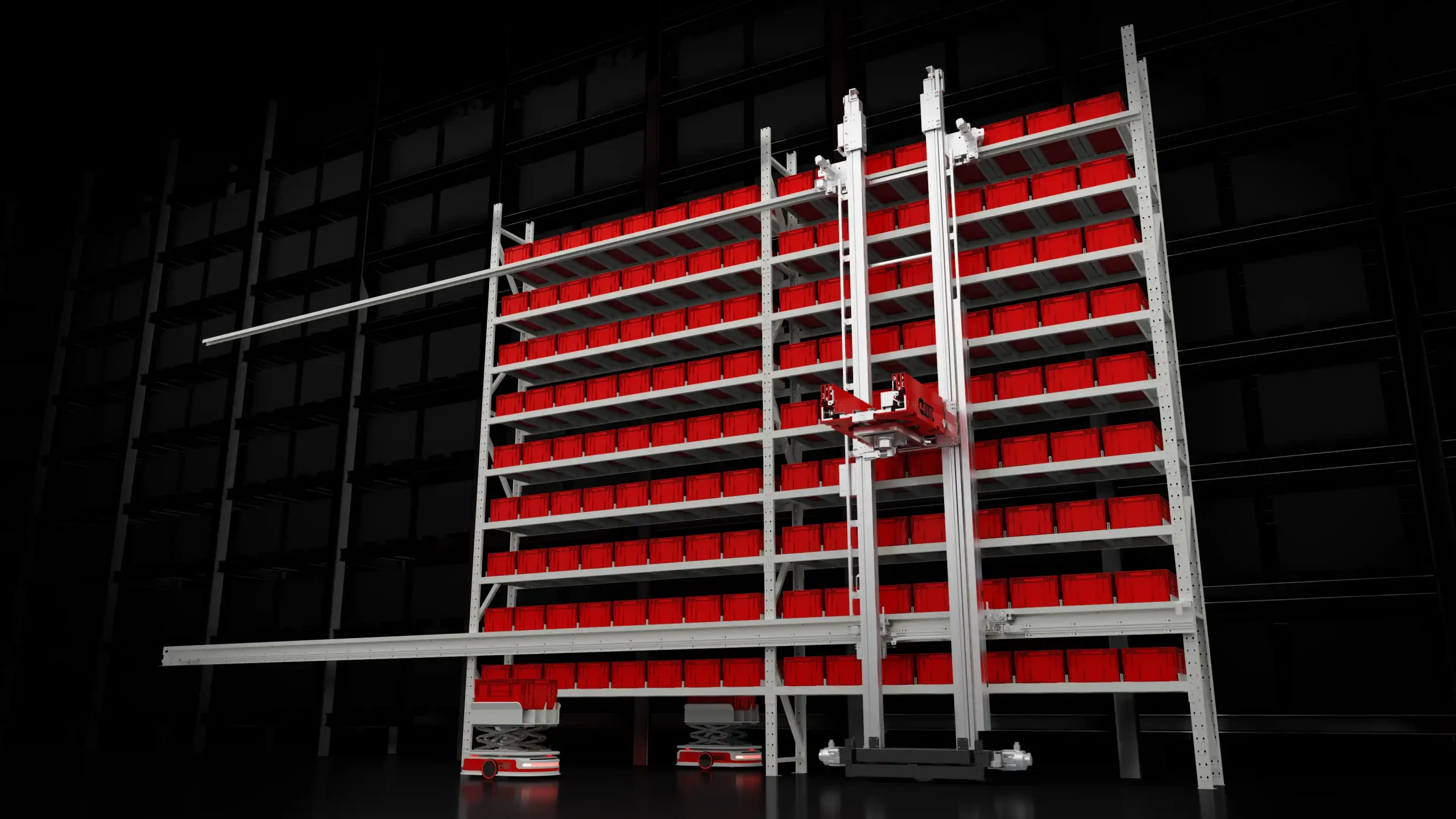
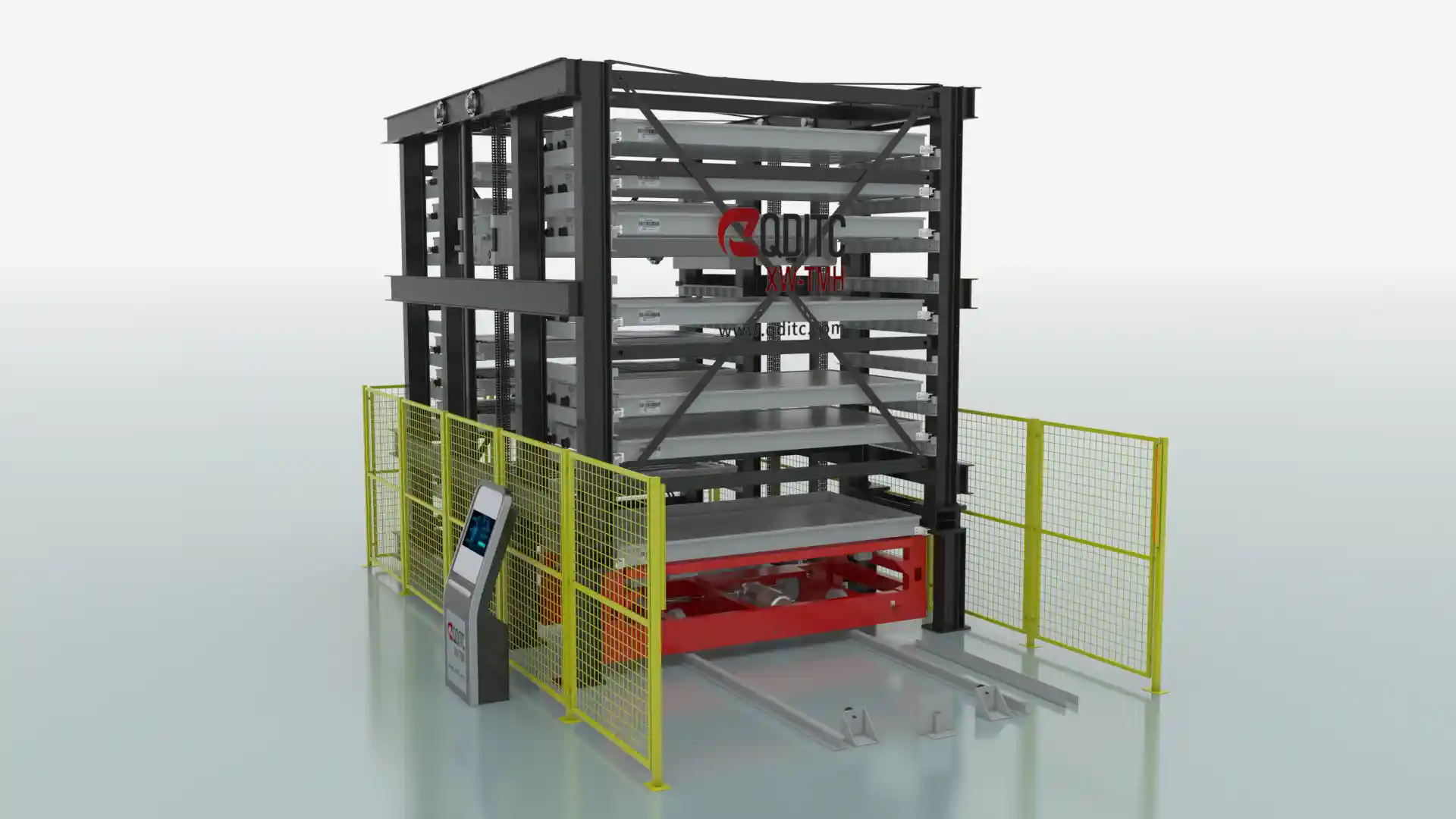
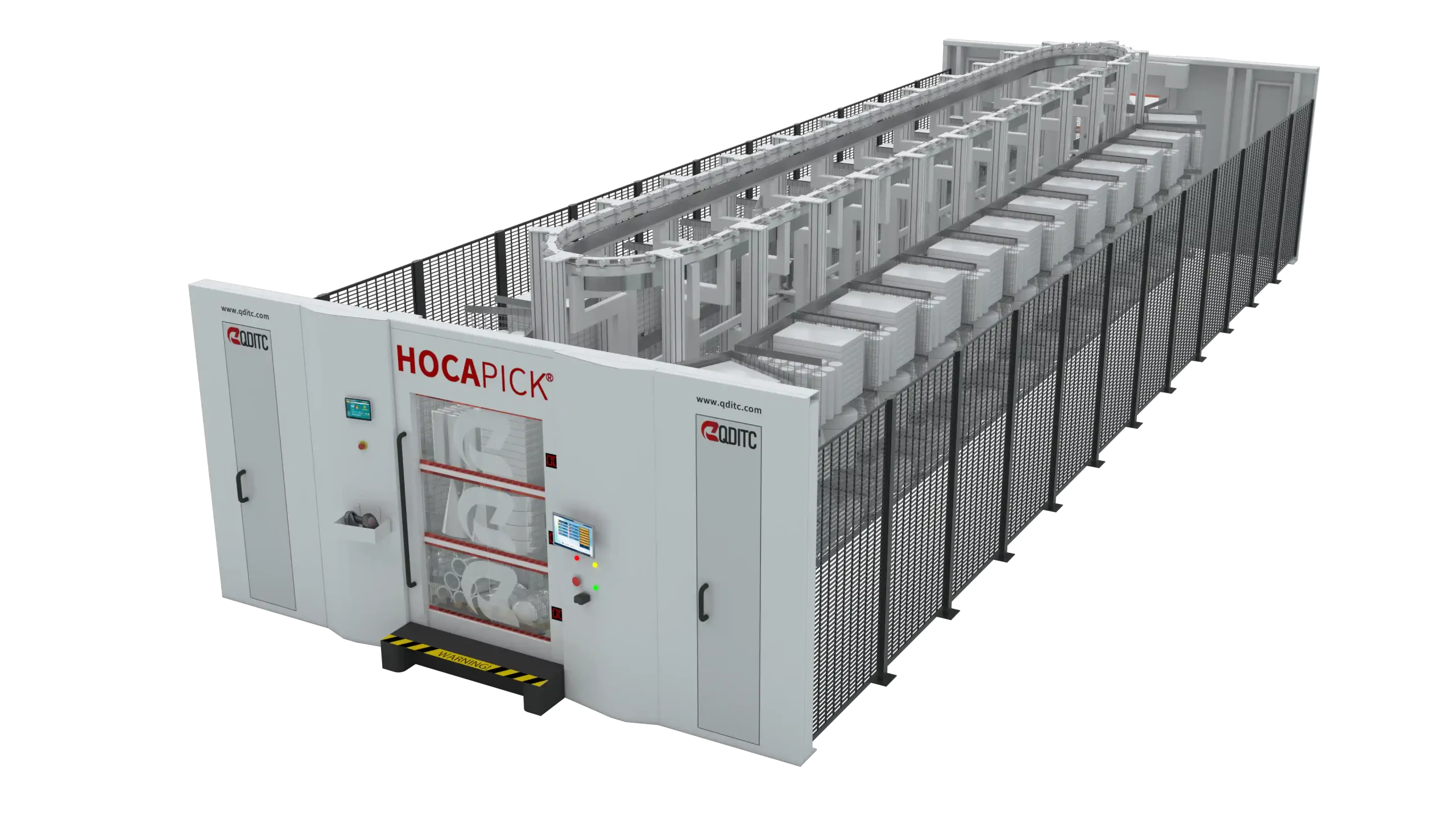
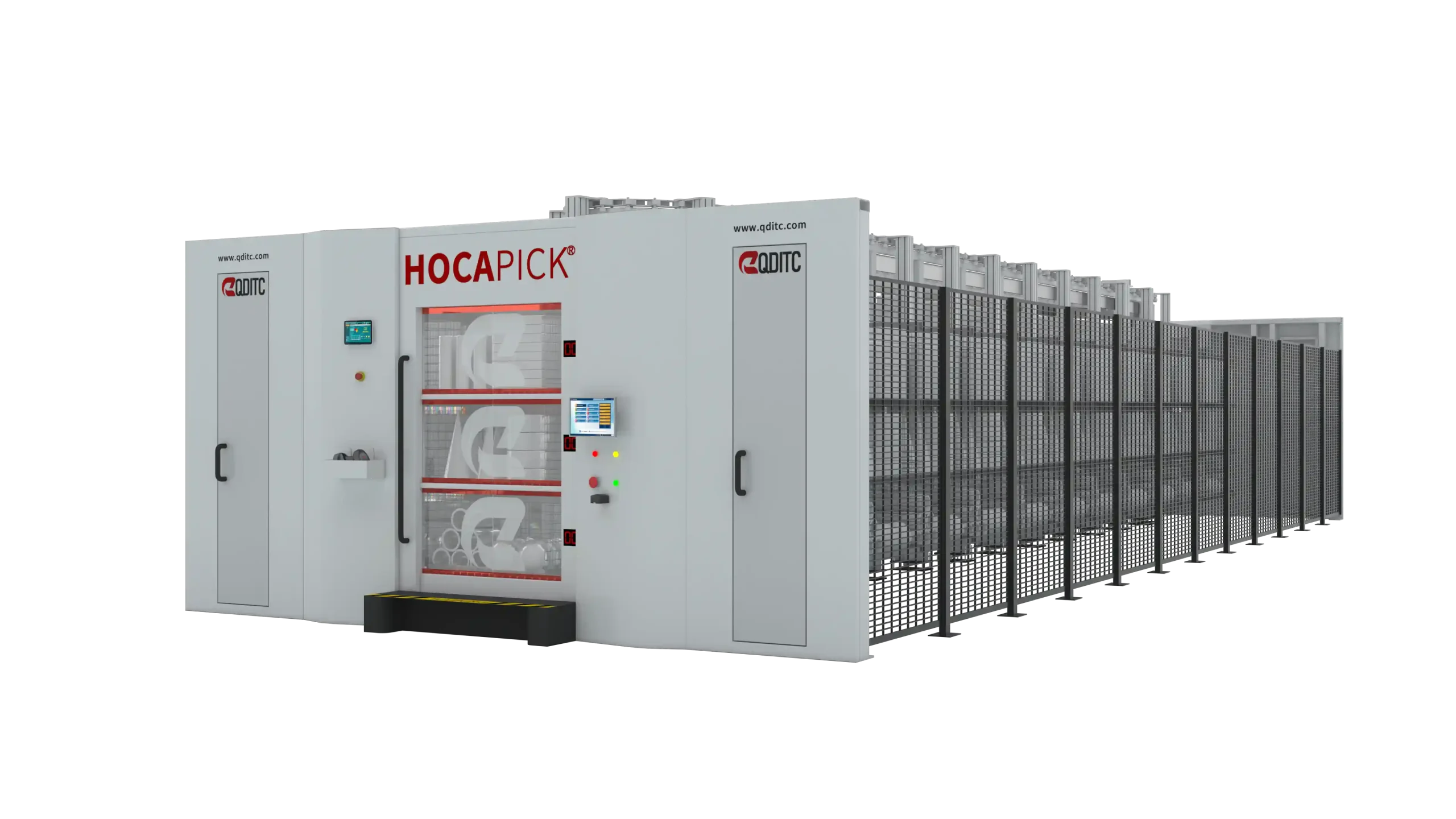
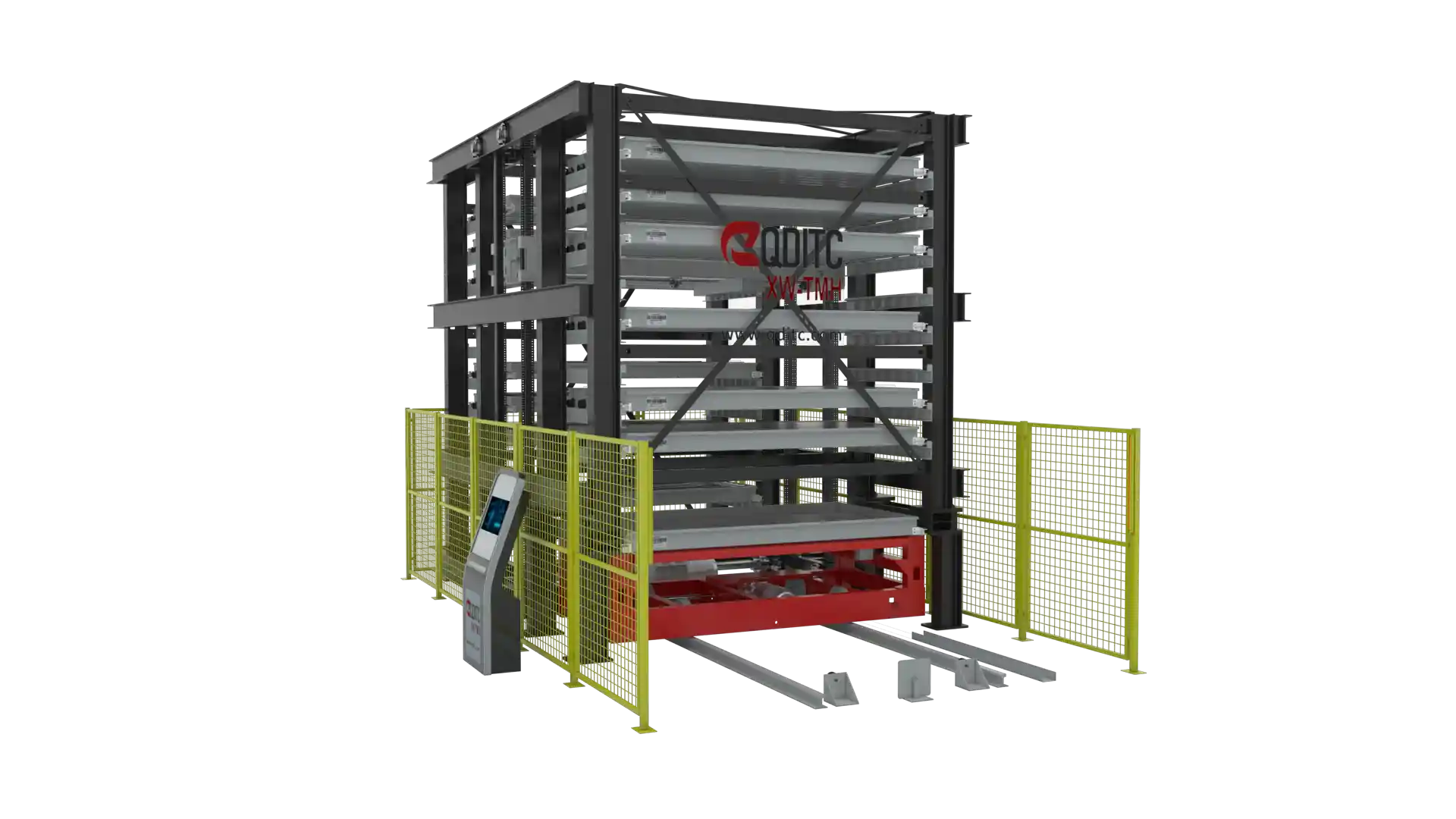
Secure Automated Bin Storage for Detention Centers and Institutions

Detention centers, correctional facilities, and institutional environments face a storage challenge that most warehouse planners never encounter: every item must be accounted for, access must be controlled down to the individual user, and retrieval errors carry consequences far beyond operational inefficiency. Personal property, contraband-sensitive supplies, uniforms, and documentation all require storage systems that combine security with speed. Automated bin storage addresses this intersection directly, replacing manual cage systems and open shelving with enclosed vertical units that log every transaction and restrict access by credential.
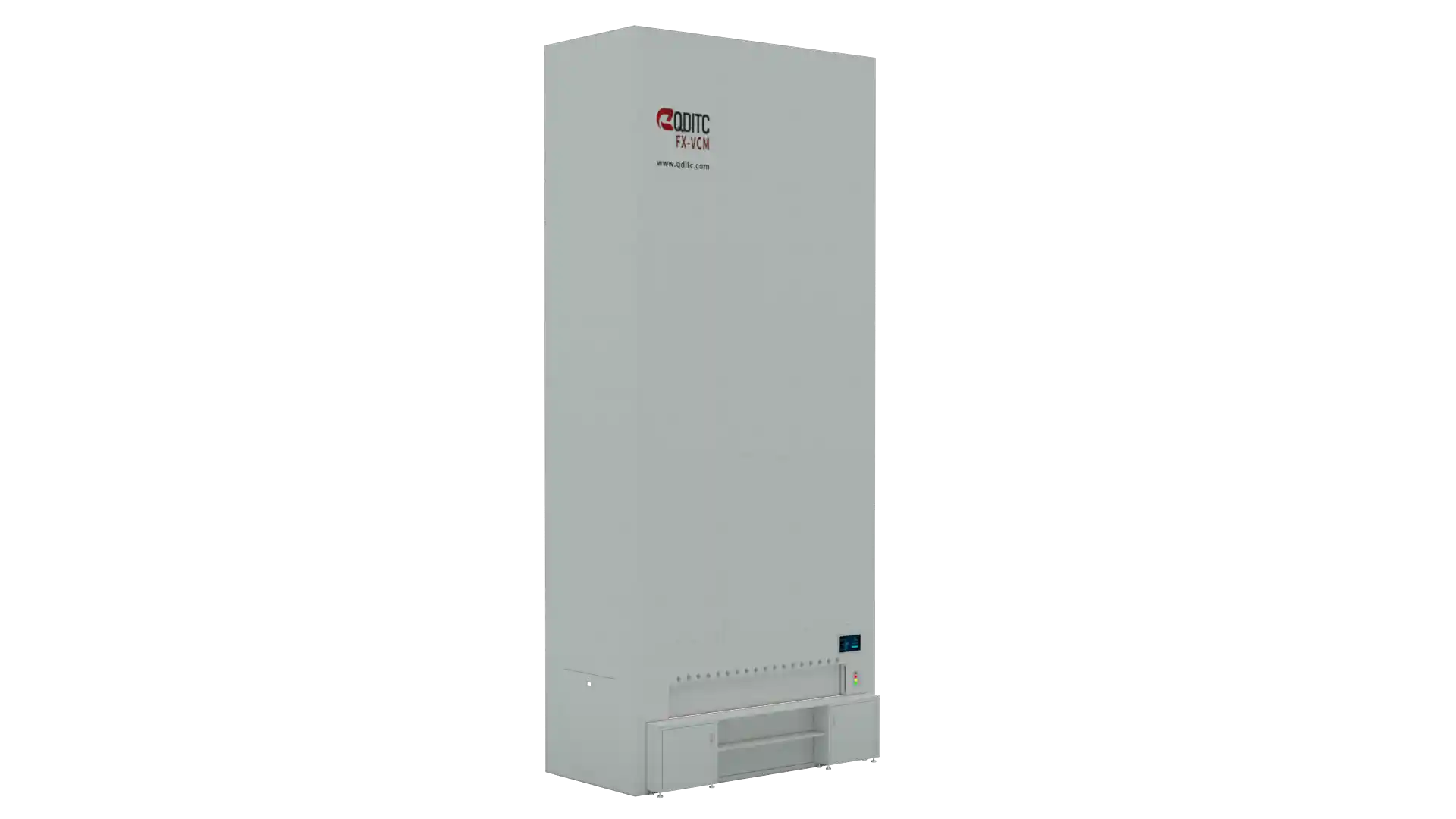
VCM1

Why Traditional Storage Fails in Secure Institutional Environments

Open shelving and manual cage storage create audit gaps that institutional administrators cannot afford. When staff retrieve items from unlocked bins, no system records who accessed what or when. Inventory counts rely on periodic manual checks, and discrepancies surface only after the fact. In detention settings, this gap becomes a security vulnerability: missing items may indicate theft, contraband introduction, or procedural failures that require investigation.

The physical footprint of traditional storage compounds the problem. Correctional facilities and institutional buildings rarely have surplus floor space. Expanding storage horizontally means sacrificing program areas, medical space, or administrative functions. Vertical expansion through mezzanines adds structural cost and complicates emergency egress planning.

Manual retrieval also introduces labor inefficiency. Staff walk aisles, search bins, and return items by memory. In high-turnover environments where personal property moves in and out daily, this retrieval model consumes hours that could be allocated to supervision or programming.

How Automated Bin Storage Systems Work in Secure Settings

Automated bin storage systems use vertical rotation or vertical lift mechanisms to bring stored bins to an operator at a fixed access point. The operator never enters the storage area. Instead, the system retrieves the requested bin, presents it at an ergonomic height, and records the transaction in software.

System TypeRetrieval MechanismBest Application
Vertical Carousel ModuleRotating shelves on a loopHigh-volume small items, uniforms, personal property bags
Vertical Lift ModuleExtractor moves trays verticallyMixed-size items, heavier loads, tools
Vertical Sort ModuleTelescopic forks retrieve individual binsSingle-item access, evidence storage, medication

For detention and institutional use, the vertical carousel module often fits the operational profile best. The FX-VCM system, for example, rotates storage bins on a continuous loop within an enclosed cabinet. Staff request an item through a touchscreen or barcode scan, and the system delivers the correct bin to the access window. The entire transaction is logged with user ID, timestamp, and item identifier.
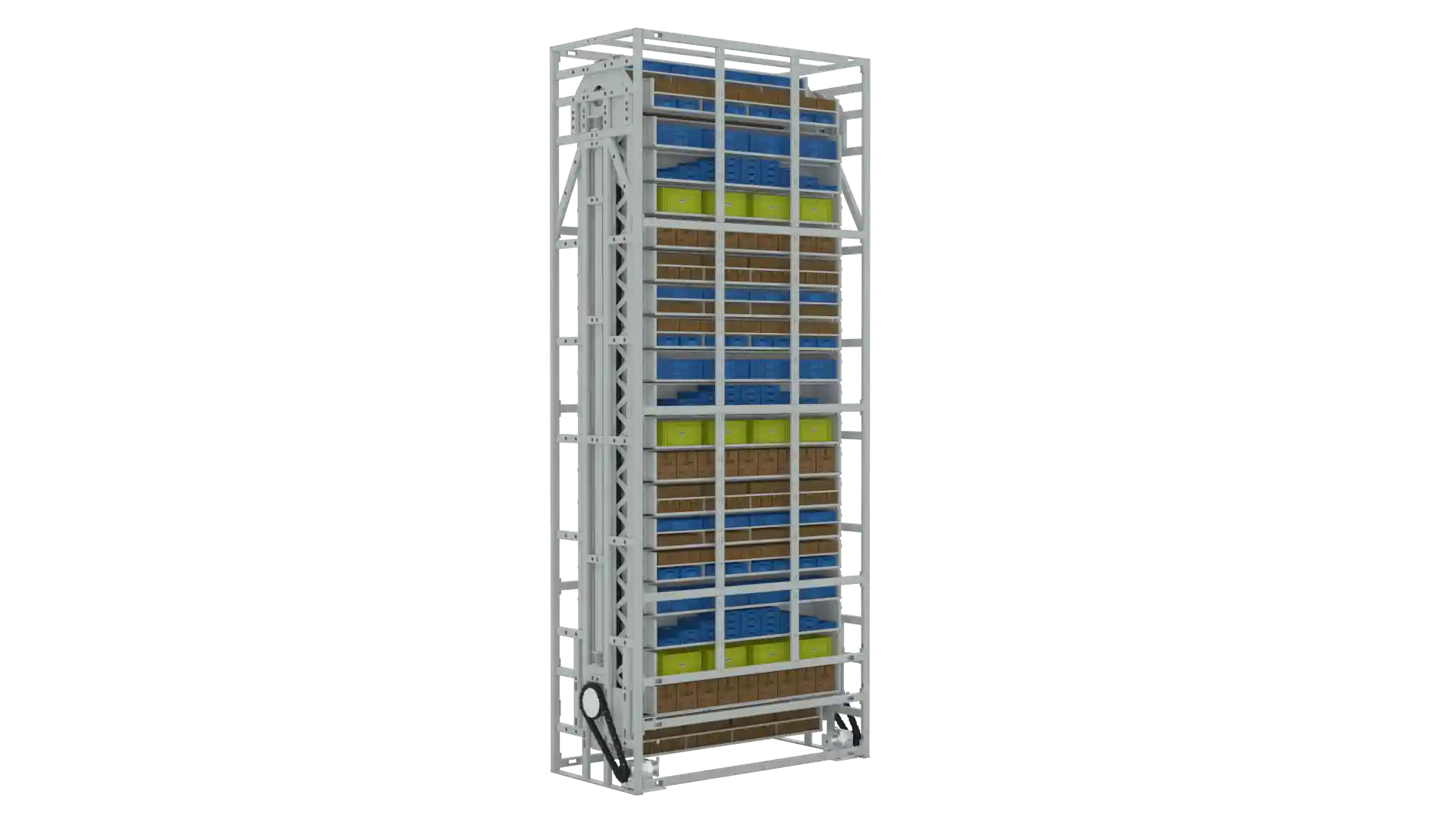
VCM2

Security Features That Matter for Correctional and Institutional Facilities

Automated storage systems designed for secure environments include features that general warehouse equipment lacks:

Credential-based access control. Each retrieval requires authentication. Systems integrate with facility ID cards, PIN codes, or biometric readers. Unauthorized personnel cannot activate the machine.

Transaction logging. Every access event writes to a database. Administrators can audit who retrieved which item, when, and for how long the access window remained open. This audit trail satisfies chain-of-custody requirements for evidence, medication, and personal property.

Enclosed storage volume. Items remain inside a locked cabinet until retrieved. Unlike open shelving, the system does not expose inventory to casual observation or opportunistic access.

Tamper detection. Sensors can detect forced entry attempts or abnormal access patterns. Integration with facility security systems triggers alerts when anomalies occur.

Restricted item flagging. Software can flag specific bins or items that require supervisor override before release. Contraband-sensitive supplies or high-value property can be segregated within the same system.

These features address the specific failure modes that institutional administrators encounter: unauthorized access, missing documentation, and audit gaps during investigations.

Operational Benefits Beyond Security

Security drives the initial interest in automated bin storage for detention centers, but operational improvements often determine the long-term ROI calculation.

Floor space recovery. Vertical storage systems occupy a fraction of the footprint that equivalent horizontal shelving requires. A single vertical carousel can replace multiple rows of static shelving, freeing floor space for other functions. In facilities where construction costs run high and expansion options are limited, this density matters.

Retrieval speed. Automated systems deliver items in seconds rather than the minutes required for manual search. For personal property processing during intake and release, faster retrieval reduces bottlenecks and shortens processing times.

Inventory accuracy. When every transaction is logged and every item has a fixed location, cycle counts become verification rather than discovery. Discrepancies surface immediately rather than during quarterly audits.

Labor reallocation. Staff previously assigned to storage room management can be reassigned to direct supervision or programming. The system handles retrieval; staff handle the interaction with residents or patients.

If your facility processes more than fifty personal property transactions per day, the labor savings alone often justify the equipment cost within three to five years.
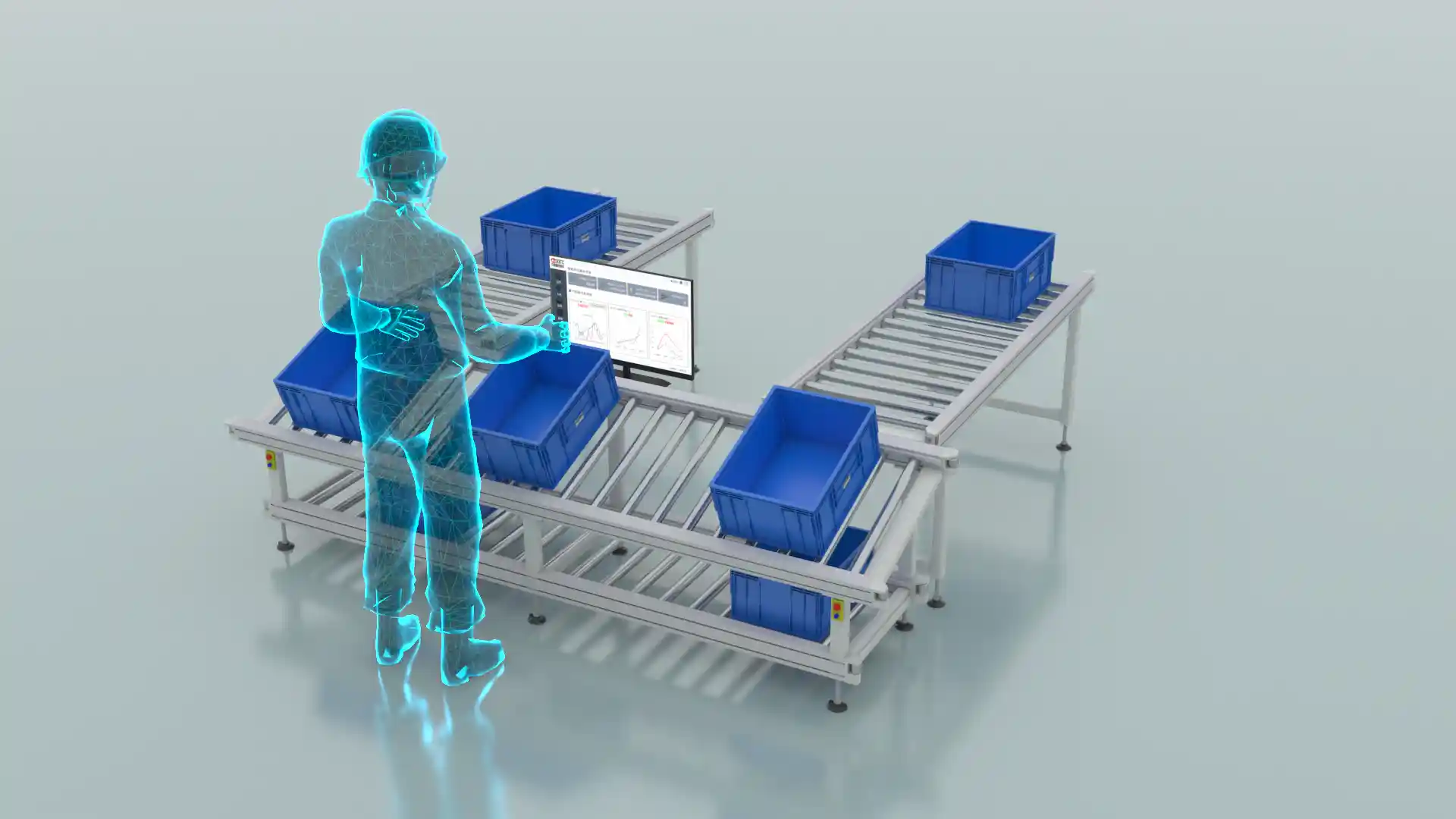
PICKUPSTATION1

Sizing and Configuration for Institutional Applications

Selecting the right automated storage system requires matching equipment specifications to operational requirements. The key variables include:

Bin dimensions. Personal property bags, uniform sets, and document boxes have different size profiles. Systems must accommodate the largest common item without wasting space on smaller items. Adjustable shelf heights within the carousel allow mixed storage.

Weight capacity. Institutional storage often includes heavier items than typical warehouse applications: tool kits, equipment cases, bulk supplies. The FX-VCM system handles rotating tables with different material box configurations, but weight limits per shelf and total system capacity must be confirmed against actual inventory profiles.

Throughput requirements. Intake and release cycles create peak demand periods. A system that retrieves one bin per minute may suffice for steady-state operations but create queues during shift changes or mass movements. Dual-access configurations or multiple units address throughput constraints.

Ceiling height. Vertical systems require clear height for installation. Existing mechanical systems, sprinkler heads, and structural elements constrain maximum unit height. Site surveys before specification prevent costly redesigns.

Software integration. Standalone systems work, but integration with facility management software, offender management systems, or inventory databases multiplies the value. API availability and integration support should be evaluated during vendor selection.

SpecificationTypical Range for Institutional Use
Unit height3 to 10 meters
Footprint2 to 8 square meters
Bin capacity50 to 500 bins per unit
Weight per bin5 to 50 kg
Retrieval time10 to 45 seconds

Implementation Considerations for Secure Facilities

Installing automated storage in a detention center or institutional facility differs from warehouse deployment. Security protocols, construction access, and operational continuity create constraints that general contractors may not anticipate.

Security clearances. Installation personnel require background checks and facility-specific clearances. Vendor teams unfamiliar with correctional environments may underestimate the time required for access approvals.

Construction windows. Active facilities cannot shut down for extended installation periods. Phased installation, night work, or temporary storage arrangements may be necessary to maintain operations during deployment.

Training requirements. Staff must learn new retrieval procedures. Training should cover normal operations, error recovery, and emergency manual access. Facilities with high staff turnover need documented procedures and refresher training protocols.

Maintenance access. Automated systems require periodic maintenance. Service contracts should specify response times, parts availability, and technician clearance requirements. A system that cannot be serviced promptly becomes a liability rather than an asset.
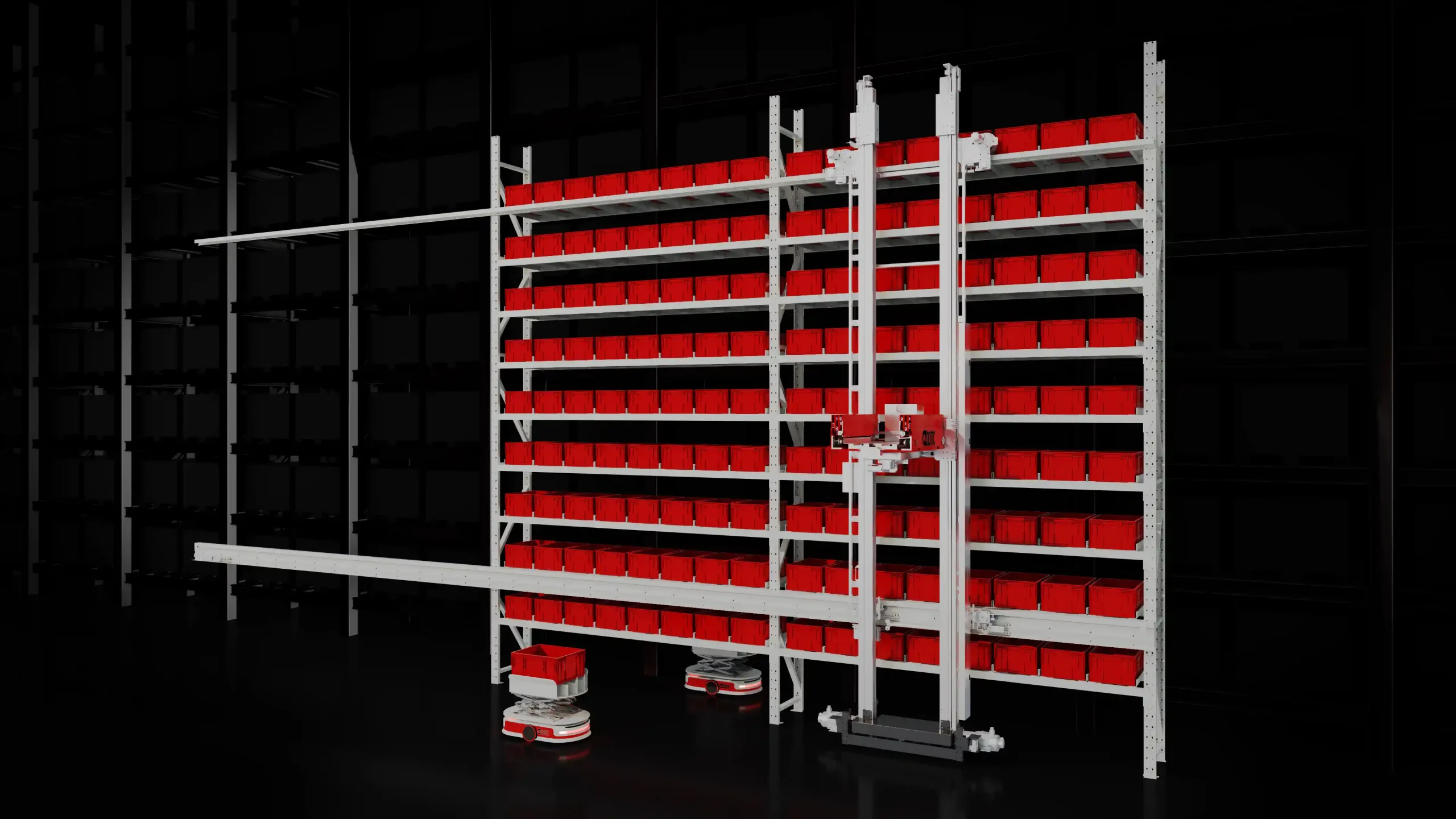
RACKBOT 1

When Automated Bin Storage Makes Sense for Your Facility

Not every institution needs automated storage. The decision depends on volume, security requirements, and available capital.

Automated systems make sense when:

  • Daily transaction volume exceeds fifty retrievals
  • Audit requirements demand transaction-level documentation
  • Floor space constraints prevent horizontal expansion
  • Staff labor costs for manual storage management are significant
  • Security incidents related to storage access have occurred

Manual systems may remain appropriate for:

  • Low-volume storage with infrequent access
  • Facilities with abundant floor space and low construction costs
  • Environments where power reliability is uncertain
  • Budgets that cannot accommodate capital equipment purchases

The calculation is facility-specific. If your current storage system has produced audit findings, security incidents, or chronic inventory discrepancies, automated storage addresses the root cause rather than the symptoms.

For facilities evaluating automated bin storage, the next step is a site assessment that matches equipment specifications to your operational profile. Share your facility layout, transaction volumes, and security requirements with our team at miaocp@qditc.com or call +86 15262759399 to discuss configuration options.

Common Questions About Automated Bin Storage for Institutions

What types of items can be stored in automated bin systems?

Automated bin storage accommodates most items that fit within standard bin dimensions: personal property bags, uniforms, documents, medications, tools, and small equipment. The key constraint is bin size and weight capacity rather than item type. Systems with adjustable shelf heights handle mixed inventories effectively. Items requiring climate control or specialized containment may need supplementary storage solutions, so it is worth confirming your full inventory profile before finalizing specifications.

How do automated systems handle power outages or equipment failures?

Quality systems include manual override mechanisms that allow staff to access stored items during power failures. Battery backup maintains software state and transaction logs during brief outages. For extended outages, documented manual retrieval procedures should be part of facility emergency protocols. Maintenance contracts with guaranteed response times minimize downtime from equipment failures. If your facility experiences frequent power interruptions, discuss backup power integration during system specification.

Can automated storage integrate with existing facility management software?

Most modern automated storage systems offer API integration with facility management, offender management, or inventory systems. Integration allows transaction data to flow directly into existing databases without manual entry. The complexity of integration depends on both the storage system and the target software. During vendor evaluation, request documentation of previous integrations with similar systems and confirm that integration support is included in the service agreement.

What is the typical installation timeline for a detention facility?

Installation timelines range from four to twelve weeks depending on system size, site preparation requirements, and facility access constraints. Security clearances for installation personnel often add two to four weeks to the schedule. Phased installation approaches minimize operational disruption but extend total project duration. For accurate timeline estimates, share your facility’s access protocols and construction windows with the equipment supplier early in the planning process.

How does transaction logging work for audit and investigation purposes?

Every retrieval event records user identification, timestamp, bin location, and access duration in a searchable database. Reports can be generated by user, by item, by date range, or by exception criteria. For investigations, administrators can reconstruct the complete access history of any stored item. Data retention periods should be configured to match your facility’s audit and legal hold requirements. If your facility has specific chain-of-custody documentation standards, confirm that the system’s reporting capabilities meet those requirements before purchase.

If you’re interested, check out these related articles:

WCS vs WMS: Essential Differences for Warehouse Managers
WMS Software for China Manufacturing: Pricing & Implementation
Intelligent ASRS Solution for SME Factories: Affordable Entry Options
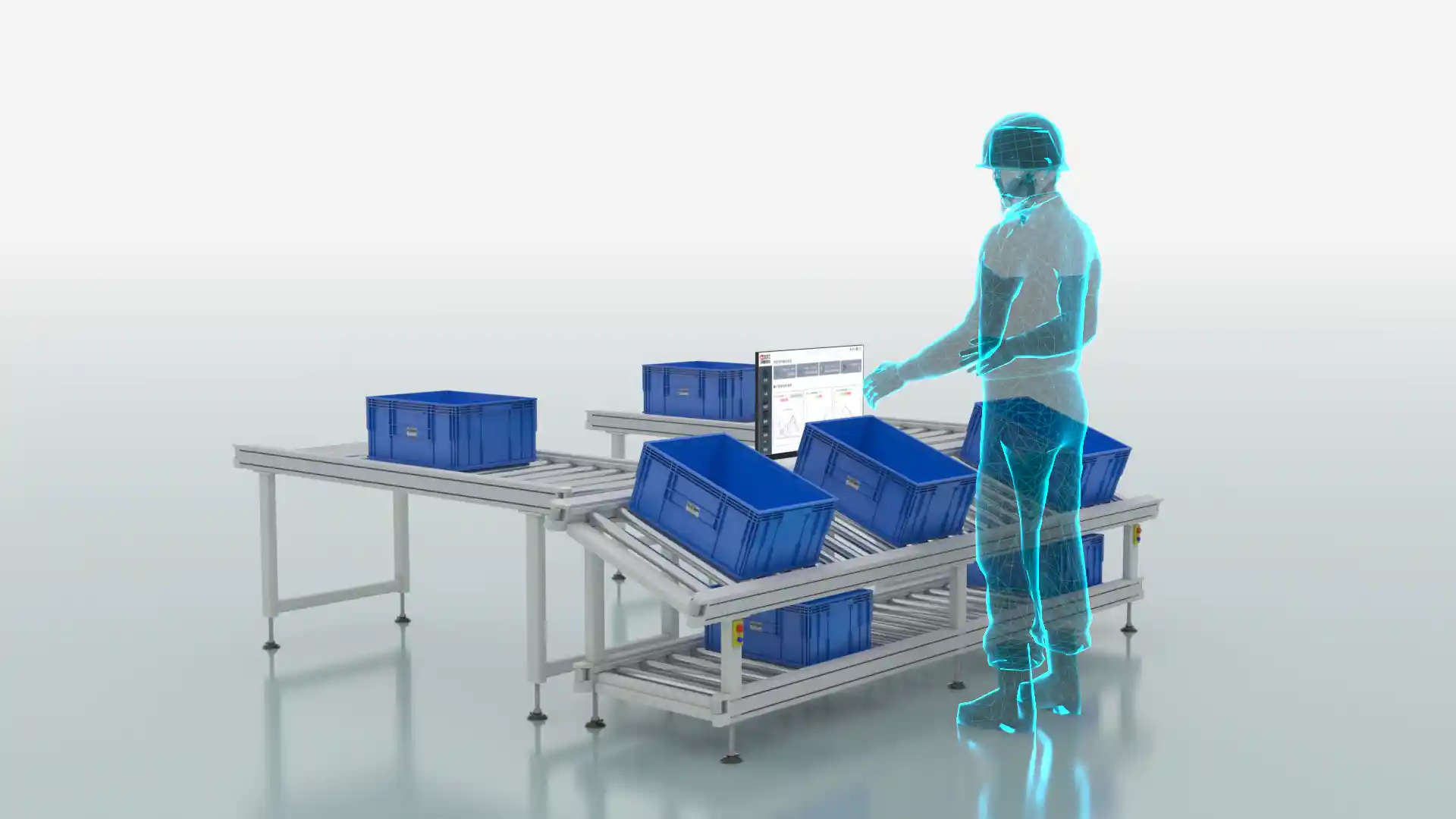
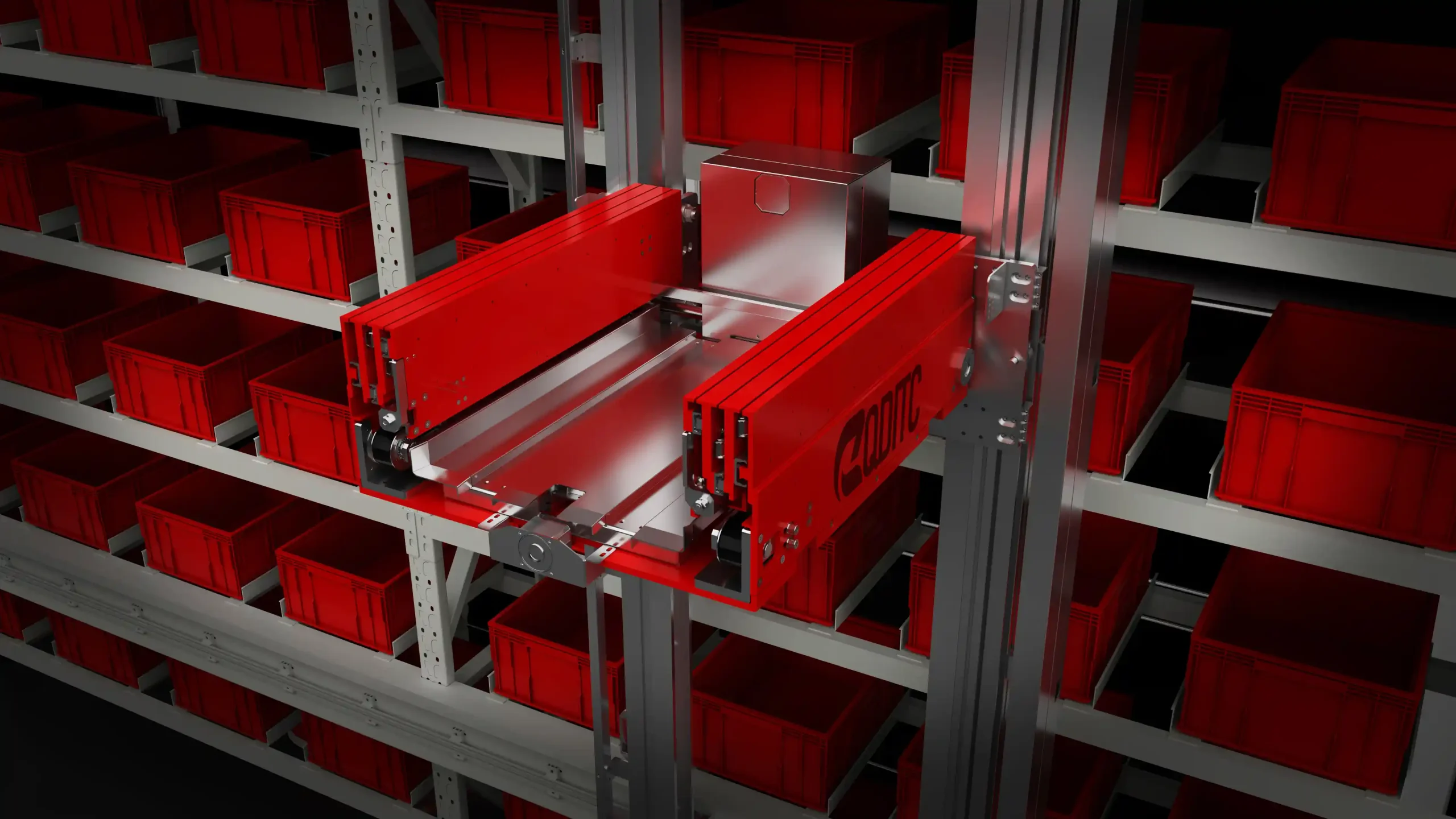
Hardware Organizer Systems: Manual Bins vs Automated Fastener Storage

Manufacturing facilities managing thousands of fastener SKUs face a decision that directly impacts production uptime: continue with manual bin systems that operators know, or invest in automated storage that eliminates the search time killing assembly line efficiency. I have worked with plants running both approaches, and the answer depends less on budget than on how many unique part numbers you handle daily and how often wrong fasteners reach the line. A facility with 500 SKUs and stable demand operates differently than one managing 8,000 fastener variants across multiple production cells. This comparison breaks down where manual organization still works, where automated systems pay back within 18 months, and the hybrid configurations that often make the most sense for high-mix fastener management.

Why Fastener Management Creates Unique Storage Challenges

Fasteners present storage problems that general inventory systems handle poorly. A single product assembly might require M3 through M12 screws in multiple lengths, thread pitches, head styles, and material grades. The visual similarity between a zinc-plated M6x20 and a stainless M6x25 creates picking errors that manual systems struggle to prevent.

VCM1

The consequences extend beyond incorrect assembly. A wrong fastener in an automotive safety component triggers quality holds. In electronics manufacturing, a magnetic screw in a sensitive assembly causes field failures. These are not inventory discrepancies that reconciliation catches later. They are production problems that surface at final test or, worse, at customer sites.

Volume compounds the challenge. A mid-sized manufacturing operation might consume 50,000 fasteners daily across 200 active SKUs. Manual bin systems require operators to locate, identify, and count small parts repeatedly. Each transaction takes 30 to 90 seconds depending on bin organization and operator familiarity. Multiply that across hundreds of daily picks, and search time becomes a measurable percentage of labor cost.

ChallengeManual System ImpactAutomated System Response
Visual similarityRelies on operator attention and labelingSystem-directed picking with location verification
High SKU countExpanded floor space, longer search timesVertical density, software-managed locations
Consumption velocityFrequent replenishment, stockout riskIntegrated inventory tracking, reorder triggers
Traceability requirementsManual logging, audit burdenAutomatic transaction records

How Manual Bin Systems Perform in Low-SKU Environments

Manual hardware organizer systems work effectively under specific conditions. When SKU counts stay below 300, when operators handle the same parts repeatedly, and when consumption patterns remain stable, well-organized bin systems deliver acceptable performance at minimal capital cost.

The economics favor manual approaches for small operations. A complete manual fastener organization system with bins, labels, and shelving costs between $2,000 and $15,000 depending on scale. Implementation takes days rather than months. Training requirements are minimal because operators already understand the concept.

I have seen manual systems perform well in job shops where the same technicians manage their own fastener inventory. They know where parts are because they put them there. They notice when stock runs low because they see the bins daily. The system works because human memory and attention substitute for technology.

The failure mode appears when any of these conditions change. New operators do not share institutional knowledge about bin locations. Production increases strain the physical layout. SKU proliferation from new products or customer requirements overwhelms the organizational scheme. What worked at 200 SKUs becomes chaotic at 600.

PICKUPSTATION1

Manual systems also struggle with accountability. When a bin shows zero stock but the system says otherwise, finding the discrepancy requires physical counting. When wrong parts reach assembly, tracing the error back to its source is often impossible. These gaps matter increasingly as customers demand documented traceability.

Where Automated Fastener Storage Delivers Measurable Returns

Automated storage systems justify their cost through three mechanisms: labor reduction, error prevention, and space recovery. The relative importance of each varies by operation, but facilities that benefit most typically see gains across all three.

Labor savings come from eliminating search time. An automated vertical carousel module like the FX-VCM presents the correct bin directly to the operator. The pick takes 5 to 15 seconds regardless of how many SKUs the system holds. A facility picking 400 fastener transactions daily might save 4 to 6 labor hours through automation. At loaded labor rates of $35 to $50 per hour, annual savings reach $50,000 to $100,000 from picking efficiency alone.

Error reduction delivers harder-to-quantify but often larger benefits. Automated systems with pick-to-light or software-directed picking achieve accuracy rates above 99.9%. For operations where a single wrong fastener triggers a quality event costing $5,000 in investigation time and rework, preventing two errors monthly justifies significant investment.

Space recovery matters in facilities where floor space carries real cost. Vertical carousel systems store fasteners in a footprint 80% smaller than equivalent bin shelving. A manufacturing plant paying $15 per square foot annually recovers $30,000 or more by consolidating fastener storage vertically.

Cost FactorManual System (500 SKUs)Automated VCM (500 SKUs)
Initial investment$8,000 to $15,000$45,000 to $85,000
Floor space required400 to 600 sq ft60 to 100 sq ft
Annual labor (picking)$45,000 to $70,000$15,000 to $25,000
Error-related costs$20,000 to $60,000$2,000 to $8,000
Typical payback periodN/A14 to 24 months

What Factors Determine the Right System for Your Operation

The decision between manual and automated fastener storage depends on operational parameters that vary significantly across facilities. SKU count provides the starting point but not the complete picture.

VCM2

Operations managing fewer than 300 fastener SKUs with stable demand and experienced operators often find manual systems adequate. The investment in automation does not pay back quickly enough when search times are already short and error rates are acceptable.

Between 300 and 1,000 SKUs, the calculation shifts. Manual systems require increasingly elaborate organization schemes. Operators spend more time searching. Error rates climb as visual similarity between parts increases. This range represents the strongest business case for automated storage.

Above 1,000 SKUs, automation becomes nearly mandatory for efficient operation. Manual systems at this scale require excessive floor space, generate unacceptable error rates, and create training burdens that undermine workforce flexibility.

Beyond SKU count, consider these factors:

Pick frequency matters more than total inventory. A facility with 500 SKUs but 800 daily picks benefits more from automation than one with 800 SKUs and 200 daily picks. Automation saves time per transaction, so transaction volume drives payback.

Traceability requirements increasingly favor automated systems. Customers in automotive, aerospace, and medical device supply chains demand documented proof of correct part usage. Automated systems generate this documentation automatically. Manual systems require additional logging that slows operations and introduces recording errors.

Workforce stability affects the calculation. Operations with high turnover lose the institutional knowledge that makes manual systems work. Automated systems reduce training time and maintain consistent performance regardless of operator experience.

If your operation sits in the transition zone between manual and automated approaches, it is worth discussing your specific parameters before committing to either direction. Send your SKU count, daily pick volume, and current error rates to miaocp@qitc.com or call +86 15262759399 to determine which approach fits your situation.

How Hybrid Configurations Bridge Manual and Automated Approaches

Many facilities find that neither pure manual nor fully automated systems match their requirements. Hybrid configurations place automated storage where it delivers the highest return while maintaining manual systems for lower-velocity items.

The typical hybrid approach automates high-turn fasteners while keeping slow-moving items in conventional storage. If 20% of SKUs account for 80% of picks, automating that 20% captures most of the labor savings at a fraction of full automation cost.

PICKUPSTATION2

A vertical carousel module handling 200 high-velocity fastener SKUs might cost $55,000 installed. Manual bin storage handles the remaining 400 slow-moving SKUs for another $8,000. Total investment of $63,000 captures 75% of the labor savings that full automation would deliver at $120,000 or more.

Integration between automated and manual zones requires attention. Operators need clear procedures for which items come from which system. Inventory management software should track both zones with consistent logic. Physical layout should minimize travel between picking locations.

The PG-VLM vertical lift module offers another hybrid possibility for operations with mixed fastener sizes. Standard small-parts carousels handle screws, nuts, and washers efficiently. Larger fasteners, specialty hardware, and kitted assemblies store better in lift modules with adjustable tray heights. Combining both technologies in a single picking zone creates flexibility that neither offers alone.

Selecting Equipment That Matches Fastener Storage Requirements

Automated storage equipment varies significantly in capability and cost. Matching equipment to actual requirements prevents both under-investment that limits benefits and over-investment that delays payback.

Vertical carousel modules suit most fastener storage applications. The FX-VCM design rotates shelves vertically to present items at an ergonomic picking height. Shelf configurations accommodate bins of various sizes, allowing mixed storage of different fastener categories. Rotation speed and picking software determine throughput capacity.

For operations requiring higher throughput or larger fastener inventories, vertical lift modules offer greater flexibility. The PG-VLM stores trays rather than rotating shelves, allowing dynamic height adjustment based on tray contents. A single unit can store fasteners in shallow bins on some trays while accommodating bulkier hardware on others.

gq-smartload3

Horizontal carousel modules serve facilities with height restrictions. The FXH-HCM rotates bins horizontally rather than vertically, fitting into spaces where ceiling height limits vertical equipment. Throughput typically exceeds vertical carousels because multiple bins can move simultaneously.

Equipment TypeBest ApplicationTypical CapacityThroughput
Vertical Carousel (FX-VCM)Standard fastener storage, moderate volume200 to 800 SKUs150 to 250 picks/hour
Vertical Lift Module (PG-VLM)Mixed sizes, heavy items, high density500 to 2,000 SKUs100 to 180 picks/hour
Horizontal Carousel (FXH-HCM)Height-restricted spaces, high throughput300 to 1,200 SKUs200 to 350 picks/hour

Software capability matters as much as hardware. Inventory management integration ensures automated systems communicate with existing ERP or MRP platforms. Pick-to-light guidance reduces training requirements and improves accuracy. Batch picking optimization groups orders to minimize carousel rotations.

When evaluating equipment suppliers, ask about integration with your existing systems, training and support availability, and spare parts lead times. A lower equipment price means little if integration delays extend implementation by months or support gaps create extended downtime.

Taking the Next Step Toward Optimized Fastener Management

The gap between manual bin systems and automated storage represents one of the clearer ROI calculations in manufacturing operations. Facilities that have outgrown manual organization typically see payback within two years while gaining accuracy improvements that prevent quality events worth many times the equipment cost.

Whether your operation needs a single vertical carousel to handle high-velocity fasteners or a comprehensive automated storage system managing thousands of SKUs, the starting point is understanding your current state. Document your SKU count, daily pick volume, current error rates, and available floor space. These parameters determine which equipment configurations make economic sense.

QDITC has implemented fastener storage solutions across manufacturing environments ranging from electronics assembly to heavy equipment production. Share your current fastener management challenges and operational parameters at miaocp@qitc.com or +86 15262759399. We will identify whether manual optimization, targeted automation, or a hybrid approach delivers the best return for your specific situation.

Common Questions About Fastener Storage Systems

What SKU count justifies moving from manual bins to automated storage?

The threshold depends on pick frequency more than raw SKU count. Operations with 300 to 500 SKUs and high daily pick volumes often see faster payback than those with 800 SKUs and moderate activity. As a general guideline, facilities exceeding 400 daily fastener picks should evaluate automation regardless of SKU count. Below 200 daily picks, manual systems usually remain cost-effective unless error rates or traceability requirements drive the decision. If your pick volume falls in the middle range, send your specific numbers and we can model the payback for your situation.

How long does implementation take for automated fastener storage?

Standard vertical carousel installations complete in 4 to 8 weeks from order to operation. This includes equipment delivery, installation, software configuration, and operator training. More complex implementations involving multiple units, custom integration with existing systems, or specialized bin configurations extend to 10 to 14 weeks. The longest phase is typically software integration with existing inventory management platforms, which varies based on your current systems.

Can automated systems handle the full range of fastener sizes and types?

Modern vertical storage systems accommodate fasteners from M1 micro screws through M24 bolts and larger specialty hardware. Bin configurations within the carousel adjust to match part sizes, with smaller divisions for tiny fasteners and larger compartments for bulky items. The PG-VLM vertical lift module handles the widest size range because tray heights adjust dynamically. If your inventory includes unusual fastener types or packaging, share the specifications and we can confirm compatibility with specific equipment models.

What accuracy rates do automated systems achieve compared to manual picking?

Well-implemented automated systems with pick-to-light guidance achieve accuracy rates between 99.7% and 99.95%. Manual bin systems typically run between 97% and 99% accuracy depending on operator experience and organizational quality. The difference sounds small in percentage terms but compounds significantly at volume. A facility making 500 daily picks sees 5 to 15 errors daily with manual systems versus 1 to 2 weekly with automation. For operations where fastener errors trigger quality events or customer complaints, this improvement often justifies automation independent of labor savings.

How do automated systems integrate with existing inventory management software?

Most automated storage equipment supports standard integration protocols including direct database connections, API interfaces, and file-based data exchange. The FX-VCM and PG-VLM systems include open interfaces that connect with major ERP platforms and warehouse management systems. Integration complexity depends on your existing software architecture and what data needs to flow between systems. Before selecting equipment, confirm your current inventory platform and transaction requirements so we can verify integration approach and timeline.

If you’re interested, check out these related articles:

ASRS Solutions for China Manufacturing: Factory Pricing & Integration Guide
ASRS for E-Commerce: Boosting High-Volume Order Picking Efficiency

Warehouse Automation: A Strategic Guide for Modern Supply Chains

Modern supply chains face increasing pressure to optimize efficiency, reduce costs, and enhance responsiveness. Warehouse automation offers a strategic pathway to address these challenges, integrating advanced technologies to streamline operations from receiving to dispatch. This approach allows businesses to manage inventory with greater precision and fulfill orders at an accelerated pace, ensuring competitive advantage in a dynamic market.

What Warehouse Automation Actually Means Today

Warehouse automation refers to the application of technology to perform tasks within a warehouse or distribution center with minimal human intervention. This evolution moves beyond simple mechanization to incorporate sophisticated systems that manage, move, and store goods intelligently. Initially, automation involved basic conveyor systems and automated guided vehicles for material transport. Today, the landscape includes industrial IoT for warehouses, which connects devices and sensors to gather real-time data, and smart warehouses that utilize artificial intelligence and machine learning to predict demand, optimize storage, and orchestrate complex operations.

The shift towards digital transformation in logistics is driven by several factors. Rising labor costs and shortages, coupled with increasing customer expectations for faster delivery, necessitate more efficient operational models. Automation provides the scalability required to meet fluctuating demand, particularly in sectors like e-commerce fulfillment. Companies embracing this digital upgrading are better positioned for future growth. They gain not just speed, but also enhanced accuracy and safety, reducing errors and improving working conditions. The future of warehouse automation points towards highly integrated systems where every component communicates, creating a cohesive and adaptive operational environment.

Which Technologies Form the Backbone of Modern Systems

The backbone of modern warehouse automation consists of diverse technologies, each designed to address specific operational needs. These range from automated storage and retrieval systems that maximize vertical space to robotics in logistics handling complex picking tasks. Understanding these components is vital for informed decision-making regarding system implementation.

RACKBOT

Here is a comparison of some key automated storage solutions:

FeatureFX-VCM: Vertical Carousel ModulePG-VLM: Vertical Lift ModuleFXH-HCM: Horizontal Carousel ModuleSmartLoad-RackBot
ApplicationSmall parts, tools, documentsUltra-long, heavy materialsLimited height, dense storageHigh-speed, multi-directional
Space UseVertical, high-densityVertical, high-densityHorizontal, denseVertical, compact footprint
CapacityVarious items, up to 100kg/trayUp to 1000kg/trayShelves as storage unitsHigh throughput, flexible
TechnologyVertical rotationVertical lift, modular panelsHorizontal rotation, chain driveRobotic shuttle system
Key BenefitCost-effective, versatileHeavy-duty, large item storageOptimized shortest path, multi-layerFast, energy-efficient, adaptable

How Different Automation Systems Handle Specific Tasks

Warehouse automation systems encompass a broad spectrum of technologies tailored to various functions. Automated Guided Vehicles and Autonomous Mobile Robots transport goods across the facility without human drivers. Automated Storage and Retrieval Systems like vertical carousels and vertical lift modules optimize storage density and retrieval speed. Conveyor systems and sortation systems efficiently move and direct items to their next destination. Robotics in warehousing, including picking and packing automation, handle repetitive tasks with precision. Each system contributes to a more streamlined and productive material handling environment.

Tailored solutions are crucial for different storage spaces and materials. A standard approach rarely fits all. Expertise in industrial warehousing equipment allows for the design and implementation of systems that precisely match a client’s operational footprint and material characteristics.

Where the Real ROI Shows Up After Implementation

Implementing warehouse automation delivers significant strategic benefits, translating into measurable return on investment. The primary advantages include enhanced operational efficiency, substantial cost reduction in warehousing, and improved inventory management automation. By automating repetitive tasks, businesses can reallocate human resources to more complex, value-added activities. This strategic shift addresses labor shortages in logistics while increasing overall productivity.

Consider a manufacturing client who struggled with slow order fulfillment and high error rates. A combination of vertical storage systems and automated picking solutions was implemented. The outcome was a 30% reduction in order picking time and a 25% decrease in picking errors within six months. This directly contributed to improved customer satisfaction and a tangible ROI through labor savings and reduced returns. Scalability of automation solutions also means businesses can easily adapt to growth or market changes without extensive infrastructure overhauls. This flexibility is vital for distribution center optimization and achieving manufacturing automation benefits.

If your operation faces similar throughput constraints or accuracy issues, it is worth discussing which system configuration would address your specific bottlenecks before committing to a full implementation.

Why Efficiency Gains Translate Directly to Cost Savings

Warehouse automation improves efficiency by accelerating task completion, reducing manual labor, and minimizing human error. Automated systems operate consistently, often 24/7, leading to higher throughput and faster order fulfillment automation. Costs are reduced through decreased labor expenses, optimized space utilization, and lower operational overheads like heating or lighting in automated zones. Furthermore, precise inventory management automation reduces waste from misplaced or expired goods, contributing directly to the bottom line. These combined factors create a compelling case for investment in automated solutions.

Well-designed automation systems deliver significant long-term value and operational improvements. The focus should always be on providing solutions that align with specific business objectives, ensuring that the investment yields maximum benefit.

What Makes Implementation Succeed or Fail

Implementing warehouse automation is a complex undertaking that requires careful planning and execution. Common implementation challenges include initial capital investment, integrating new systems with existing infrastructure, and managing organizational change. A successful deployment hinges on a clear understanding of current processes and a phased approach to integration.

Best practices for implementation include:

  1. Conduct a thorough assessment: Analyze current workflows, identify bottlenecks, and define specific objectives for automation.
  2. Select appropriate technology: Choose systems that align with your operational needs, budget, and future growth projections.
  3. Plan for integration: Ensure compatibility between new automated equipment and existing Warehouse Management System or Warehouse Execution System.
  4. Prioritize safety: Implement robust safety protocols and training programs for personnel working alongside automated systems.
  5. Manage change effectively: Communicate benefits to the workforce and provide comprehensive training to facilitate adaptation to new roles.
  6. Start small and scale: Consider piloting solutions in a smaller area before full-scale deployment to mitigate risks.

Expert consultation and customized solutions are paramount for successful implementation. Years of experience in providing correct solutions means understanding the nuances of integrating complex systems, from artificial intelligence in warehousing to machine learning in logistics. Guiding clients through every step ensures a smooth transition and optimal performance.

Where Automated Manufacturing and Distribution Are Heading

The future of automated manufacturing and distribution will be characterized by even greater intelligence, connectivity, and adaptability. Further advancements in smart warehouses are expected, where AI in logistics and predictive analytics will enable self-optimizing operations. These systems will anticipate demand, manage inventory proactively, and dynamically route tasks to available resources.

Human-robot collaboration will become more prevalent, with robots handling strenuous or repetitive tasks while humans focus on oversight, problem-solving, and intricate processes. E-commerce fulfillment will continue to drive innovation, pushing for faster, more accurate, and highly personalized delivery experiences. Sustainable warehousing practices will also gain traction, with automation contributing to reduced energy consumption and waste. Technologies like blockchain in supply chain management will enhance transparency and traceability, creating a more resilient and trustworthy global logistics network. The trajectory is clear: an increasingly intelligent, integrated, and efficient supply chain.

Frequently Asked Questions

Is warehouse automation only for large enterprises?

No, warehouse automation is increasingly scalable and accessible for businesses of all sizes. Solutions range from simple automated material handling equipment to complex integrated systems, allowing even small to medium-sized enterprises to benefit from improved operational efficiency and cost savings.

How long does it take to see ROI from warehouse automation?

The timeframe for Return on Investment varies significantly based on the system’s complexity, initial investment, and operational improvements. Typically, businesses can expect to see tangible benefits and a positive ROI within 1 to 3 years, driven by reduced labor costs and increased throughput.

What are the cybersecurity risks associated with smart warehouses?

Smart warehouses, relying on interconnected systems, face risks like data breaches and operational disruption. Robust cybersecurity measures, including network segmentation, encryption, and regular audits, are crucial to protect sensitive data and ensure the continuous, secure operation of industrial IoT for warehouses.

Can existing warehouses be automated, or do I need a new facility?

Many existing warehouses can be successfully automated through retrofitting and modular solutions. While a new facility offers a blank slate, modern warehouse automation systems are designed with flexibility to integrate into current layouts, optimizing existing space and infrastructure.

How does automation impact the existing workforce?

Automation typically shifts workforce roles from manual, repetitive tasks to supervision, maintenance, and data analysis. While some roles may change, automation often creates new, higher-skilled positions and improves overall safety in automated warehouses by reducing human exposure to hazardous activities. To discuss how automation might fit your specific operational requirements, contact Anhui Qiande Intelligent Technology at miaocp@qitc.com or +86 15262759399.

Optimize Your Manufacturing and Distribution Logistics

Facing rising operational costs and complex inventory challenges in your warehouse? Anhui Qiande Intelligent Technology Co., Ltd. leverages 15 years of expertise to provide tailored industrial warehousing equipment and intelligent solutions for diverse storage needs. Contact us today to discuss your specific requirements.

Email: miaocp@qditc.com
Phone: +86 15262759399

If you’re interested, check out these related articles:

What is a Warehouse Management System: A Factory Owner’s Guide
ASRS Price Guide 2025: Investment & ROI for Intelligent Warehouses

Heavy-Load Carousel Systems: Optimizing Industrial Storage

Industrial facilities face a persistent tension between storage capacity and operational throughput. Heavy-load carousel systems address this directly by automating the movement of substantial weights and volumes, fundamentally changing how materials flow through warehousing and manufacturing environments. These systems do more than save floor space; they restructure material handling workflows in ways that affect labor allocation, retrieval accuracy, and safety exposure across shifts.

What Industrial Carousel Storage Actually Does

Industrial carousel storage systems operate on a simple principle: bring the stored item to the operator rather than sending the operator to find it. This eliminates walking time, search time, and the judgment calls that lead to picking errors.

Two configurations dominate the market. Vertical carousels rotate carriers in a loop that exploits ceiling height, presenting items at a fixed access point. Horizontal carousels move bins along an oval track at floor level, suited to batch picking where multiple items leave together. Both integrate with warehouse management software to track location, quantity, and retrieval history.

The choice between vertical and horizontal depends on facility constraints. A plant with 40-foot ceilings and limited floor space will favor vertical units. A distribution center with moderate ceiling height but room to extend linearly may find horizontal carousels more practical. The items themselves matter too: vertical systems handle heavier individual loads more easily, while horizontal configurations excel at high-frequency picks across varied SKUs.

FeatureVertical CarouselsHorizontal Carousels
Storage DensityVery HighHigh
FootprintSmallLarger (linear)
Access SpeedFast (single item)Fast (batch picking)
Item Type SuitabilitySmall to large, heavySmall to medium, varied
Ceiling HeightRequires high ceilingsFlexible

Why Vertical Carousels Change Floor Space Math

Vertical carousel systems convert unused ceiling height into active storage, which shifts the economics of facility planning. A warehouse paying per square foot suddenly has access to cubic footage that was previously dead space.

The mechanism resembles a Ferris wheel: shelves rotate to deliver items at an ergonomic height, typically between waist and shoulder level. The FX-VCM Vertical Carousel Module stores materials ranging from mold inspection tools to electrical components within a footprint that would otherwise hold a fraction of the inventory on static shelving.

One automotive parts manufacturer we worked with illustrates the scale of change possible. Their manual shelving system occupied 8,000 square feet. After implementing FX-VCM vertical carousel modules, the same inventory fit into 1,500 square feet. Storage density increased by over 400%, and retrieval times dropped by 60%. That retrieval time reduction directly affected production scheduling because parts arrived at assembly stations faster than the previous system allowed.

The modular design matters for facilities that cannot shut down for extended installations. Units can be added incrementally as storage needs grow, without disrupting existing operations.

VCM1

Vertical carousels improve warehouse efficiency by eliminating the travel and search components of picking. When items come to the operator, labor hours shift from walking to productive handling. Integrated software tracks every retrieval, which tightens inventory accuracy and reduces the discrepancies that cascade into production delays or customer complaints. The compact vertical footprint also frees floor space for other operations, whether that means additional production equipment, staging areas, or simply safer traffic lanes.

How Heavy-Load Carousels Handle Tires, Molds, and Oversized Parts

Standard shelving fails predictably when items exceed certain weight or dimension thresholds. Tires deform under their own weight if stacked improperly. Molds require precise positioning to avoid damage to machined surfaces. Large fabricated parts often have irregular shapes that waste space on flat shelves.

Heavy-load carousel systems address these challenges through reinforced carriers, specialized attachments, and drive mechanisms rated for substantial weights. The PG-VLM Vertical Lift Module handles ultra-long and ultra-wide materials with a storage capacity of up to 1000kg per single tray. That capacity covers most industrial molds, tooling sets, and raw material bundles that would otherwise require forklift access and dedicated floor storage.

TOWERMAT

Tire storage presents a specific configuration challenge. Carousels designed for tires use carriers that cradle each tire individually or in small groups, preventing the sidewall deformation that occurs in stacked storage. The vertical orientation also makes visual inspection easier during retrieval, catching damage that might otherwise reach a customer.

The adaptability of carrier design determines whether a carousel system can serve diverse inventory. A facility storing both precision molds and bulk hardware needs different carrier configurations within the same system. Customization at the carrier level, rather than requiring separate systems for different item types, keeps capital costs manageable and simplifies operator training.

What Safety Features Actually Protect Operators

Automated movement of heavy loads introduces hazards that manual handling does not. A 1000kg tray in motion has enough energy to cause serious injury if an operator enters the wrong zone at the wrong moment. Safety engineering for heavy-load carousels focuses on preventing that intersection.

Emergency stop buttons provide immediate shutdown and appear at multiple points around each unit. Light curtains create an invisible detection zone at the access opening; any interruption halts machine movement before contact can occur. Access control systems restrict operation to trained personnel, preventing casual use by workers unfamiliar with the equipment’s behavior.

Overload protection prevents operation when weight exceeds rated capacity, protecting both the equipment and anyone nearby. Sensors detect excessive load before the drive mechanism engages, stopping the cycle before stress accumulates.

PICKUPSTATION1

Ergonomic design addresses the cumulative strain that manual material handling creates over months and years. Retrieval points sit at heights that minimize bending and reaching. Operators no longer climb ladders or stretch to upper shelves. The reduction in repetitive motion injuries shows up in workers’ compensation data over time, though the immediate benefit is simply that workers finish shifts less fatigued.

Safety FeatureDescriptionBenefit
Emergency StopInstantly halts all machine movementPrevents immediate hazards
Light CurtainsDetect objects/personnel in access openingProtects operators from moving parts
Access ControlRestricts operation to authorized usersEnhances security, prevents misuse
Overload ProtectionPrevents operation with excessive weightProtects equipment and personnel
Ergonomic DesignPresents items at optimal heightReduces strain, improves operator comfort

Where the ROI Numbers Come From

The business case for automated carousel storage rests on measurable changes to labor hours, space costs, and error rates. Space savings alone rarely justify the investment; the operational improvements compound over time to produce returns that exceed the initial capital outlay.

Labor cost reduction comes from eliminating travel time. In a manual warehouse, pickers spend 50% or more of their time walking between locations. Carousels bring items to a fixed station, converting that walking time into picking time. The same headcount processes more orders, or the same order volume requires fewer workers.

Picking accuracy improves because the system confirms item location before presenting it. The software knows what should be in each carrier position, and operators verify against that record. Error rates that run 1-2% in manual picking environments drop below 0.1% with carousel-assisted retrieval. Each avoided error saves the cost of returns processing, replacement shipment, and customer relationship damage.

The FXH-HCM Horizontal Carousel Module uses an optimized algorithm to select the shortest rotation path, reducing the time between picks. In high-volume environments, those seconds accumulate into hours of additional throughput per shift.

HCM-2

Inventory accuracy tightens because every retrieval and return is logged. Cycle counts become faster and more reliable. Stockouts decrease because the system tracks actual quantities rather than relying on periodic manual counts that drift from reality.

Energy consumption often decreases compared to traditional material handling that relies on forklifts and powered equipment moving through aisles. Carousels use electricity efficiently because the motor only runs during retrieval cycles, not continuously.

When selecting a carousel storage system, the evaluation should cover available vertical and horizontal space, item dimensions and weights, and required throughput rates. Integration with existing warehouse management software determines how smoothly the system fits into current workflows. Safety features and ergonomic design affect long-term labor costs and regulatory compliance. The ROI calculation should include space savings, labor reduction, accuracy improvements, and the avoided cost of facility expansion.

Discuss Your Storage Requirements

If your facility handles heavy materials, bulky parts, or high-volume inventory in constrained space, carousel storage may address constraints that manual systems cannot. Anhui Qiande Intelligent Technology Co., Ltd. brings 15 years of intelligent warehousing equipment production experience to these evaluations. Contact us to discuss whether a heavy-load carousel configuration fits your operational requirements.

Frequently Asked Questions

What is the typical installation timeline for a heavy-load carousel system?

Installation timelines depend on system complexity and how prepared the facility is to receive equipment. Smaller standalone units typically install in a few days. Larger integrated systems with custom carriers and software integration may require several weeks. Site preparation, including floor loading verification and electrical infrastructure, often determines the schedule more than the equipment installation itself.

How do automated carousels integrate with existing warehouse management software?

Most modern carousel systems connect to Warehouse Management Systems or ERP software through APIs and standard communication protocols. The integration allows the carousel controller to receive pick instructions from the WMS and report completed transactions back. Facilities running older software may need middleware or custom development, but the technical barriers are generally lower than they were a decade ago. If your current WMS lacks integration capability, discuss options with our technical team during the specification process.

What are the long-term maintenance considerations for these industrial storage systems?

Routine maintenance includes inspection of drive components, lubrication of moving parts, and software updates as the manufacturer releases them. Preventive maintenance schedules, typically quarterly or semi-annually depending on usage intensity, catch wear before it causes unplanned downtime. The mechanical components are designed for industrial duty cycles, so maintenance requirements are predictable rather than surprising. Keeping maintenance current extends equipment lifespan and maintains the safety certifications that protect both operators and facility liability.

If you’re interested, check out these related articles:

QDITC WMS: Optimizing Industrial Warehousing with Smart Integration
Vertical Sort Module: Intelligent Automation for Modern Warehouses
Smart Warehouse Digital Services: Predictive Maintenance & Data Analytics

Choosing Heavy-Duty Automated Storage: Certifications and Red Flags

Heavy-duty automated storage systems represent a significant capital commitment and a strategic shift in how industrial operations manage material flow. These systems handle substantial loads, improve throughput, and reduce injury exposure in warehouse environments. Selecting the right supplier requires evaluating technical capability, compliance with industry standards, and long-term support infrastructure. This decision shapes operational efficiency and determines whether the automation investment delivers its projected return.

Why Heavy-Duty Automated Storage Matters for Industrial Operations

Industrial warehousing operates under conditions that expose equipment to sustained stress, temperature variation, and continuous duty cycles. Heavy-duty automated storage systems are engineered to handle weights and volumes that would quickly degrade lighter equipment, making them essential for sectors managing large components, raw materials, or dense finished goods. Integrating warehouse automation and material handling equipment within these systems directly affects operational efficiency by removing manual handling from repetitive retrieval and storage tasks.

Reducing manual intervention lowers the risk of human error and physical strain. Fork truck incidents and repetitive motion injuries account for a measurable share of warehouse injury claims, and automated retrieval eliminates many of the conditions that produce them. These systems also convert vertical space into accessible storage, which is a key factor in expanding capacity without building expansion. Managing industrial racking systems with precision and speed through robotics in warehousing ensures consistent material flow, supporting just-in-time manufacturing and streamlined distribution processes.

RACKBOT

How to Evaluate Supplier Expertise and Track Record

A supplier’s project history and technical depth correlate directly with the reliability of their solutions and the overall success of your automation project. When assessing potential partners for heavy-duty automated storage, looking beyond product specifications to understand their knowledge of complex material handling equipment and system integration reveals whether they can deliver on their proposals.

Our team at Anhui Qiande Intelligent Technology Co., Ltd. brings 15 years of experience in industrial warehousing equipment production. We consistently provide correct solutions for different storage spaces and materials, adapting our approach to each client’s unique operational demands. In a recent project for a manufacturing client, we observed their existing manual system struggled with retrieving oversized molds, causing bottlenecks and safety concerns. We recommended and implemented a customized PG-VLM: Vertical Lift Module system, which streamlined their mold storage and reduced retrieval times by 40% within the first six months. That outcome demonstrates what tailored solutions can achieve when the supplier understands the specific operational constraints.

Here is a comparison of some of our heavy-duty automated storage solutions:

Product NameKey FeatureMax Load per Tray/ShelfTypical Application
PG-VLMUltra-long, ultra-wide material storage1000kgMolds, tools, raw materials
FX-VCMVertical rotation technologyVaries by itemMold inspection tools, archives
FXH-HCMHorizontal rotation of storage shelvesVaries by itemLimited height, dense storage
SN-VSMSingle item access, telescopic forksVaries by boxIntegration with AGV, conveyors
SmartLoad-RackBotHigh-speed, multi-directional pickingVaries by itemMiniLoad alternative, high density

Which Certifications and Compliance Standards Actually Matter

Certifications provide objective proof of a supplier’s commitment to quality, safety, and adherence to international industry standards. When procuring heavy-duty automated storage systems, verifying these credentials is not merely a formality. It is a critical step in ensuring the longevity and safe operation of your investment.

Quality management systems like ISO 9001 demonstrate a supplier’s structured approach to consistently meeting customer and regulatory requirements. This includes everything from design and manufacturing processes to installation and service. Beyond quality, specific safety standards are paramount for material handling equipment. Adherence to regional safety regulations, such as OSHA in the United States or EN standards in Europe, confirms that the equipment is built to protect personnel and prevent accidents.

Anhui Qiande Intelligent Technology Co., Ltd. maintains strict adherence to these quality and safety standards, ensuring that our heavy-duty automated storage solutions are both robust and safe for industrial environments. Performance guarantees and data security in automated systems are also integral components of compliance, reflecting a comprehensive approach to system integrity.

gq-smartload3

What Red Flags Appear in Supplier Proposals and Contracts

Recognizing warning signs early in the procurement process prevents costly mistakes, operational disruptions, and long-term liabilities associated with unreliable suppliers.

One significant red flag is a lack of transparency regarding the financial stability of the supplier. A company struggling financially may not be able to honor warranty terms or provide consistent after-sales support. Another area for scrutiny is the clarity and comprehensiveness of maintenance contracts. Vague language or a reluctance to detail service level agreements can indicate potential issues with long-term system upkeep.

Assess the proposed system’s integration capabilities carefully. If a supplier struggles to articulate how their heavy-duty automated storage solution will interface with your existing warehouse management system or other automated guided vehicles, it could lead to complex and costly integration challenges down the line. Evaluating the supplier’s commitment to ongoing support and spare parts availability is equally important, as this directly impacts system uptime. If your facility runs multiple shifts or operates in a region with limited local service infrastructure, discussing spare parts stocking and response time commitments before signing is worth the conversation.

PICKUPSTATION2

How Support, Scalability, and ROI Shape Long-Term Value

The long-term success and value of an automated storage system hinge on its adaptability to future needs, robust ongoing support, and a clear, measurable return on investment.

A heavy-duty automated storage solution should not be a static installation. It must offer scalability of systems to accommodate growth or changes in product lines. This foresight ensures that your initial investment remains relevant and productive for years to come. Evaluating after-sales support and maintenance contracts is equally important. A reliable supplier will offer comprehensive service packages, including preventative maintenance and rapid response for unexpected issues, minimizing downtime.

We at Anhui Qiande Intelligent Technology Co., Ltd. focus on building long-term partnerships, providing customized storage solutions designed with future expansion in mind. We emphasize energy efficiency of systems and calculate a clear return on investment for automation, demonstrating how our solutions contribute directly to your bottom line through reduced operating costs and improved productivity.

VCM1

Frequently Asked Questions

What certifications should I look for in an automated storage supplier?

Key certifications like ISO 9001 for quality management, along with specific safety standards such as OSHA or EN standards, are essential indicators of a supplier’s commitment to reliable automated storage systems. These certifications confirm that the supplier follows established protocols for design, manufacturing, and installation, which directly contributes to the system’s performance and safety.

How do certifications impact automated storage supplier reliability?

Certifications enhance supplier reliability by ensuring adherence to stringent quality controls and safety protocols throughout design, manufacturing, and installation, leading to more dependable warehouse automation solutions. They provide an independent verification that the supplier’s processes meet recognized international benchmarks, reducing the likelihood of defects or operational failures.

What are the risks of choosing a low-quality automated storage supplier?

Choosing a low-quality automated storage supplier poses risks such as frequent breakdowns, safety hazards, poor system integration, and inadequate after-sales support, leading to significant operational and financial losses. Such issues can disrupt supply chains, increase maintenance costs, and compromise workplace safety. To discuss how to evaluate suppliers for your specific application, contact us at miaocp@qditc.com or +86 15262759399.

If you’re interested, check out these related articles:

Vertical Sort Module: Intelligent Automation for Modern Warehouses
ASRS Software Architecture: Integrating WCS, WMS, and ERP
Finding a Reliable Vertical Carousel Storage System Manufacturer

Connect with Our Automation Specialists

To discuss specific requirements for heavy-duty automated storage systems or to explore how our solutions can optimize your industrial operations, contact us at miaocp@qditc.com or +86 15262759399.

Automated Heavy-Duty Storage: Vertical Towers vs Pallet Rack Value

Optimizing warehouse operations starts with understanding what each storage system actually delivers over time. Businesses regularly weigh traditional pallet racking against automated heavy-duty storage solutions like vertical towers. The choice affects capital expenditure, but it also shapes ongoing operational efficiency, labor costs, and how much usable space you extract from the same building footprint. This analysis breaks down the strategic advantages and financial implications of each system to support informed investment decisions.

How Vertical Tower Systems Differ from Traditional Pallet Racks

The core distinction between vertical tower systems and traditional pallet racks comes down to how they treat space and how material moves. Traditional pallet racking, whether selective or drive-in configurations, expands horizontally and depends on manual retrieval or forklift-assisted picking. These systems are straightforward to install and provide high accessibility for full pallet loads. Vertical tower systems take a different approach: they exploit vertical height and bring items to the operator rather than sending operators to find items. That single shift in material flow changes nearly everything about daily operations.

Vertical tower systems, including Vertical Lift Modules (VLMs) and Vertical Carousel Modules (VCMs), function as automated storage and retrieval systems (AS/RS). They store items in trays or carriers inside an enclosed structure, making them well suited for high-density storage of smaller, heavier items, tools, or components. Traditional pallet racks remain static structures designed primarily for palletized goods.

FeatureVertical Tower Systems (e.g., PG-VLM, FX-VCM)Traditional Pallet Racks (e.g., Selective)
Space UtilizationMaximizes vertical cube, compact footprintRequires significant horizontal space
Item AccessGoods-to-person, automated retrievalPerson-to-goods, manual/forklift retrieval
Inventory ControlIntegrated software, high accuracyManual tracking, prone to errors
Labor RequirementReduced manual handling, fewer operatorsHigh manual labor, forklift operators
Security/ProtectionEnclosed, dust-free, controlled accessOpen access, less protection
ScalabilityModular, can add units or integrateExpandable horizontally, fixed height

VCM2

Where Automated Storage Delivers Measurable Gains

Automated heavy-duty storage systems address two pain points that show up in nearly every warehouse assessment: limited floor space and slow pick cycles. By exploiting vertical height, these systems often reduce required floor area by 50% or more compared to conventional racking. In urban locations where real estate costs run high, that space recovery alone can justify the investment.

Throughput improves because the system delivers items directly to the pick face. Operators no longer walk aisles or search shelves. Integrated software tracks every tray position, which tightens inventory accuracy and supports better stock rotation. The combination of faster picks and fewer errors compounds over thousands of daily transactions.

How Automated Heavy-Duty Storage Affects Labor and Safety

Automated heavy-duty storage changes the labor equation in two ways. First, it reduces headcount. Instead of operators driving forklifts through aisles or climbing to retrieve items, the system presents goods at an ergonomic workstation. Fewer personnel handle the same volume.

Second, it changes the injury profile. Manual warehouses see strains, collisions, and falls. Automated systems minimize human interaction with heavy loads and moving equipment. The risk categories that drive workers’ compensation claims in traditional environments shrink substantially. If your current operation relies on forklift traffic through narrow aisles or manual handling of items above shoulder height, the safety case for automation strengthens.

What Drives Total Cost of Ownership for Each System

Evaluating storage solutions requires looking past the initial capital expenditure to understand total cost of ownership and potential return on investment. Automated heavy-duty storage systems carry higher upfront costs than traditional pallet racks. Their operational savings, however, often produce a faster payback period and greater long-term value.

Those savings come from several sources: reduced labor, optimized space, improved inventory accuracy, and decreased product damage. The strategic value also includes future-proofing against rising labor costs and increasing demand for rapid fulfillment. A system that handles higher throughput with fewer operators becomes more valuable as labor markets tighten.

TOWERMAT

How Operational Costs Compare Between Vertical Towers and Pallet Racks

Operational cost structures differ in predictable ways. Vertical towers require electricity for their automated mechanisms, but they cut labor expenses substantially. Their compact, enclosed design often reduces heating or cooling loads because less conditioned air escapes into open warehouse space. Maintenance schedules exist for automated systems, and following them minimizes downtime.

Traditional pallet racks incur higher ongoing labor costs for picking, replenishment, and forklift operation. Forklift energy costs add up, and so does damage repair to racks or inventory from collisions. The ongoing cost of floor space, whether owned or leased, is a major factor that vertical solutions mitigate by shrinking the required footprint.

What ROI Timeline to Expect from Vertical Tower Investments

The typical ROI period for a vertical tower storage system ranges from 18 months to 3 years. The exact timeline depends on initial investment size, inventory volume and velocity, local labor rates, and the value you assign to reclaimed floor space.

Faster throughput, reduced picking errors, and improved safety all contribute to productivity gains that accelerate payback. In operations with high labor costs or expensive real estate, the payback often lands closer to the 18-month end. We regularly see clients achieve significant returns within two years when these factors align.

How Automated Storage Supports Broader Warehouse Goals

Automated heavy-duty storage extends beyond item containment to support broader operational objectives. It speeds order fulfillment and improves inventory accuracy, both of which feed directly into supply chain performance.

Scalability matters as well. Modular units like the PG-VLM can be added as needs grow, allowing businesses to expand capacity without major structural overhauls. A manufacturing client we worked with faced severe space constraints in their tool crib. After implementing a PG-VLM system, they reduced their storage footprint by 60% while improving picking accuracy by 25% within six months. That outcome directly supported their lean manufacturing initiatives and demonstrated how the system affects workflow efficiency beyond simple storage.

RACKBOT

When Automated Solutions Make Sense for Your Operation

Choosing the right storage solution requires matching system capabilities to specific operational constraints. Consider automated heavy-duty storage when facing limited floor space, high labor costs, a need for improved inventory accuracy, or safety concerns with manual handling. For high-volume, high-value, or heavy items, the benefits of automation often outweigh the initial investment.

If your situation involves mixed inventory profiles or unusual item dimensions, it is worth discussing system configuration before committing. Our 15 years of experience in industrial warehousing equipment allows us to consult on optimal choices for specific materials, from small fasteners to ultra-long raw materials.

HCM-1

Frequently Asked Questions

Will a vertical tower system handle all types of heavy-duty inventory?

Not universally. Vertical towers work well with high-density, smaller footprint items. Oversized or unusually shaped heavy inventory may still require specialized traditional racking or hybrid solutions for optimal handling.

Can traditional pallet racks incorporate any automation?

Yes. Technologies like pallet shuttles, conveyor systems, or robotic forklifts can enhance efficiency and reduce manual intervention within existing racking structures. Partial automation often serves as a bridge for operations not ready for full AS/RS investment.

What safety improvements come with automated heavy-duty storage?

Automated systems reduce human interaction with heavy loads, which lowers the risk of accidents, strains, and collisions common in manual operations. The enclosed design also limits unauthorized access and protects inventory from dust and damage.

How long does implementation take for a new automated storage system?

Implementation time varies with system complexity and warehouse size. Smaller vertical units may take a few weeks. Large-scale AS/RS installations can require several months. Proper planning and site preparation shorten the timeline.

What maintenance do automated systems require?

Automated systems need routine preventative maintenance to ensure optimal performance and longevity. While more involved than traditional rack inspections, proactive maintenance minimizes downtime and extends equipment lifespan. To discuss maintenance schedules and service agreements for your operation, contact us at miaocp@qditc.com or +86 15262759399.

If you’re interested, check out these related articles:

Finding a Reliable Vertical Carousel Storage System Manufacturer
ASRS Maintenance Schedule: Peak Performance & System Longevity
ASRS vs. Automated Guided Vehicles: Choosing Your Solution

TowerMat Storage: Automating Irregular Material Handling

Modern warehousing runs into the same problems repeatedly: floor space fills up faster than budgets allow expansion, and irregular inventory sits in corners where nobody can find it when orders come in. TowerMat Storage addresses both issues by building upward instead of outward and automating the handling of items that do not fit standard racking profiles. The technology is not complicated in concept—vertical lift modules and automated tray systems have existed for decades—but the execution determines whether a facility actually sees productivity gains or just owns expensive equipment.

Why Vertical Storage Changes the Math on Warehouse Footprint

Most warehouse layouts default to horizontal expansion because that is how forklifts move and how racking vendors quote projects. The result is predictable: facilities consume floor space storing air above the top shelf while production teams compete for staging areas. Vertical storage systems flip this calculation by stacking trays in a column and delivering the requested tray to an operator at waist height.

The space recovery is substantial. A vertical lift module occupying 20 square meters of floor space can replace 150 square meters of conventional shelving when ceiling height allows full utilization. That recovered floor space has real value—it can absorb a new production line, eliminate a planned facility expansion, or simply reduce the lease footprint at renewal.

Our PG-VLM: Vertical Lift Module handles the items that typically defeat vertical storage attempts: ultra-long sheet stock, heavy molds, and auxiliary tooling that weighs more than standard trays support. The modular wall panel design keeps the footprint compact while individual trays hold up to 1000kg. One automotive client storing large sheet metal panels reduced their storage footprint for those materials by 60% and cut retrieval times by 45% within six months of installation. The numbers matter because they came from a facility that had already optimized their conventional racking—the gains were incremental to an already efficient operation.

TOWERMAT

FeatureTraditional Racking SystemVertical Storage System (e.g., TowerMat)
Space UtilizationHorizontal spread, often inefficientVertical density, maximizes cubic space
FootprintLargeCompact, significantly smaller
Retrieval SpeedManual travel, searching, slowerAutomated delivery to operator, faster
Inventory ControlManual tracking, prone to errorsSoftware-driven, real-time accuracy
SafetyManual lifting, potential for injuryAutomated, reduced human interaction
FlexibilityFixed configurationsAdaptable, modular design

What Makes Irregular and Oversized Loads So Expensive to Handle Manually

Irregular items create costs that rarely show up in warehouse budgets as line items. A forklift driver spending an extra three minutes per retrieval because a part does not fit standard locations adds up to hours per week. Damage rates climb when operators improvise handling methods for awkward shapes. Safety incidents cluster around the items that require two people to lift or balance on a pallet that was not designed for them.

Automated storage and retrieval systems built for non-standard inventory eliminate the improvisation. The system knows the exact dimensions and weight of each stored item, positions it in a location sized for those specifications, and retrieves it without requiring an operator to figure out how to extract it safely.

TowerMat solutions handle this through custom tray configurations matched to the actual inventory profile. Heavy machinery components sit on reinforced trays with appropriate weight ratings. Delicate parts with odd geometries get dedicated positions that prevent shifting during storage and retrieval cycles. The FX-VCM: Vertical Carousel Module can be configured with rotating tables and specialized material boxes for items that need stability during the carousel’s movement—a detail that matters when the stored item costs more than the storage system.

Where Automated Pallet and Tray Systems Pay Back First

The financial case for automation usually starts with labor savings, but the faster payback often comes from inventory accuracy and damage reduction. A facility running manual storage with 97% inventory accuracy sounds acceptable until you calculate the cost of the 3% that is wrong: expedited shipments, production delays, customer credits, and the labor hours spent searching for items the system says are present but nobody can locate.

Automated systems maintain real-time inventory records because every storage and retrieval transaction passes through the control software. The system cannot lose track of an item because there is no opportunity for an operator to put something in the wrong location or forget to record a transaction. This accuracy compounds into better purchasing decisions, lower safety stock requirements, and fewer emergency orders.

If your facility struggles with inventory accuracy on high-value items or experiences frequent damage during manual handling, those specific pain points are worth quantifying before evaluating automation options.

How do automated storage systems improve warehouse safety?

Automated systems remove operators from the tasks that cause the most injuries: climbing to reach high shelves, operating forklifts in narrow aisles, and lifting items that exceed safe manual handling weights. The system brings the item to the operator at an ergonomic height, eliminating the reaching, bending, and lifting that account for most warehouse musculoskeletal injuries. Facilities with automated storage typically see workers’ compensation claims drop within the first year of operation.

Why choose vertical storage over traditional racking?

Vertical storage makes sense when floor space costs more than the automation investment or when retrieval speed directly affects production throughput. A facility paying premium rent in an industrial park near customers may find that a vertical lift module costs less over five years than the additional lease space conventional racking would require. Similarly, a production line that stops when a component is not available values the consistent two-minute retrieval time an automated system provides over the variable ten to twenty minutes manual retrieval might take.

Benefit CategoryDescriptionImpact on Operations
Space OptimizationUtilizes vertical height, reducing floor space requirements.Lower real estate costs, more room for production.
Inventory AccuracySoftware-controlled tracking, real-time updates.Reduced errors, better stock management, less waste.
Labor EfficiencyAutomates retrieval, reduces walking and searching time.Lower labor costs, increased productivity per worker.
Safety ImprovementsMinimizes manual handling of heavy or awkward items.Fewer workplace injuries, improved employee well-being.
Throughput IncreaseFaster, more consistent access to stored materials.Quicker order fulfillment, improved customer service.
Product ProtectionSecure, controlled storage environment for items.Reduced damage, lower replacement costs.

What Integration Actually Requires Beyond Hardware Installation

Installing a vertical lift module or automated pallet system is the visible part of the project. The integration work that determines whether the system delivers its promised value happens in software configuration and workflow redesign.

Software integration matters because an automated storage system that does not communicate with your warehouse management system creates a data island. Operators end up maintaining two inventory records, the WMS loses visibility into automated storage locations, and the efficiency gains from automation get consumed by manual data reconciliation. Our systems use open API interfaces specifically to avoid this problem—the automated storage system becomes an extension of your existing WMS rather than a parallel system requiring separate management.

Workflow redesign is equally important. The optimal process for retrieving items from automated storage differs from manual retrieval. Batch picking strategies change when the system can queue multiple retrievals. Replenishment timing shifts when the system tracks inventory levels in real time. Facilities that treat automation as a drop-in replacement for manual processes capture only a fraction of the available efficiency gains.

The SmartLoad-RackBot illustrates how design decisions affect long-term operating costs. Energy consumption runs below 35% of traditional miniLoad systems, which matters when the system operates continuously. The reduced maintenance requirements mean fewer service interruptions and lower lifetime costs. These specifications should factor into system selection alongside the initial purchase price.

RACKBOT 1

Can automated pallet storage integrate with existing WMS?

Most modern automated storage systems are designed with WMS integration as a baseline requirement rather than an optional feature. The integration typically works through APIs that allow the WMS to direct storage and retrieval operations and receive real-time inventory updates. The practical question is not whether integration is possible but how much configuration work your specific WMS requires. Systems with well-documented APIs and experience integrating with common WMS platforms reduce implementation risk.

How to Build an ROI Case That Survives Finance Review

Automation ROI calculations fail when they rely on optimistic assumptions about labor savings that never materialize or space savings that the facility cannot actually monetize. A credible business case starts with the costs you can document today and the specific improvements the system will deliver.

Direct labor savings are measurable: current hours spent on storage and retrieval tasks multiplied by fully loaded labor costs, compared against the reduced hours the automated system will require. Space savings translate to real dollars only if you can actually reduce your lease footprint, defer a planned expansion, or use the recovered space for revenue-generating activities. Inventory accuracy improvements require baseline data on current error rates and the costs those errors create.

The SmartLoad-RackBot reduces costs by over 20% compared to traditional miniLoad systems while consuming less than 35% of the energy. Those specifications provide concrete inputs for ROI modeling rather than vague promises of efficiency gains.

gq-smartload3

ROI FactorDescriptionImpact on ROI
Labor Cost ReductionFewer personnel needed for storage/retrieval.Direct savings, re-allocation of workforce.
Space SavingsMaximized vertical storage, reduced warehouse footprint.Lower rent/property costs, potential for expansion.
Inventory AccuracyReal-time tracking, minimized errors and obsolescence.Reduced carrying costs, fewer stockouts.
Product DamageAutomated, controlled handling reduces breakage/loss.Lower replacement costs, improved product quality.
Throughput EfficiencyFaster picking and putaway cycles.Increased order fulfillment, higher customer satisfaction.
Safety ImprovementsReduced workplace accidents and associated costs.Lower insurance premiums, fewer lost workdays.
Energy ConsumptionModern systems are designed for lower power usage.Reduced utility bills, environmental benefits.

What are the typical ROI timelines for investing in vertical lift modules?

ROI timelines for vertical lift modules typically fall between 18 months and 3 years, with the variation driven by labor costs in your region, the value of floor space you can recover, and how inefficient your current storage operations are. Facilities with high labor costs, expensive real estate, and significant current inefficiencies see faster payback. A detailed analysis of your specific operation produces a more useful projection than industry averages.

Frequently Asked Questions

What types of materials can TowerMat systems handle?

TowerMat systems accommodate irregular loads, oversized components, heavy pallets up to 1000kg per tray, and delicate items requiring controlled handling. The tray configurations adapt to specific inventory profiles, so the system handles manufacturing parts, specialized tooling, raw materials, and finished goods across different weight and dimension ranges within the same installation.

How does a TowerMat system contribute to sustainability?

The sustainability impact comes from three sources: reduced floor space requirements mean smaller buildings with lower heating and cooling loads, automated retrieval consumes less energy than forklift operations for equivalent throughput, and controlled handling reduces product damage that would otherwise become waste. The energy consumption specifications on systems like the SmartLoad-RackBot (below 35% of traditional alternatives) provide measurable environmental benefits alongside operating cost reductions.

Is specialized training required for operating automated pallet storage?

Operators need training on the software interface, safety protocols, and basic troubleshooting, but the systems are designed for intuitive daily operation. The training investment is modest compared to the skill development required for safe forklift operation. Most facilities complete operator training within a few days and see full productivity within the first month of operation. To discuss training requirements and implementation timelines for your facility, contact us at miaocp@qditc.com or +86 15262759399.

If you’re interested, check out these related articles:

ASRS Software Architecture: Integrating WCS, WMS, and ERP
WMS Barcode vs. RFID: Choosing Your Warehouse Tracking System
Mini-Load vs. Unit-Load ASRS: Choosing Your Business Scale

How Heavy Duty Automated Storage Towers Manage Large Parts

Managing oversized and heavy components in industrial settings creates real logistical problems—wasted floor space, safety incidents during manual handling, and retrieval times that slow production. Heavy duty automated storage towers address these issues directly by moving storage vertical and automating the retrieval process. These systems change how facilities handle large parts, and the operational gains are measurable.

What Heavy Duty Automated Storage Towers Actually Do

Heavy duty automated storage towers are vertical lift modules (VLMs) built to handle items that traditional shelving cannot accommodate safely or efficiently. The operating principle is straightforward: goods are stored on trays or carriers stacked vertically within an enclosed unit, and an automated extractor retrieves the requested tray and delivers it to an operator at a fixed access point. This eliminates climbing, reaching, and most forklift movements within the storage area.

These systems fall under the broader category of automated storage and retrieval systems (ASRS), but they are specifically engineered for challenging inventory—parts that are too heavy, too long, or too awkward for conventional racking. The vertical orientation means a single tower can consolidate inventory that would otherwise consume thousands of square feet of floor space.

Different configurations exist for different material profiles. The PG-VLM handles ultra-long and ultra-wide materials, molds, tools, and heavy raw materials, with individual tray capacities reaching 1000kg. The FX-VCM uses vertical carousel technology for mixed inventory types where rotation speed matters more than single-item weight capacity. Both integrate with inventory management systems for real-time tracking.

FeaturePG-VLM: Vertical Lift ModuleFX-VCM: Vertical Carousel Module
Storage CapacityUp to 1000kg per tray, ultra-long/wide materialsVariable, optimized for diverse material types
Operation PrincipleAutomated lift and retrieve systemVertical rotation of carriers
Space UtilizationMaximizes vertical space for heavy, bulky itemsHigh-density storage using vertical rotation
Material TypesMolds, tools, raw materials, heavy auxiliary materialsMold inspection tools, archives, medical supplies, fasteners
Key BenefitHigh-speed access for heavy, specialized itemsCost-effective, flexible storage for varied inventory

TOWERMAT1

How the Engineering Handles Oversized and Overloaded Parts

The mechanical systems in heavy duty automated storage towers are built around one constraint: these units must move substantial weight reliably, thousands of times per day, for years. The lifting mechanisms typically use heavy-duty chain drives or high-strength belt systems rated well above the nominal load capacity. Precision servo motors control acceleration and deceleration profiles to prevent load shifting or component damage during transport. Advanced braking systems provide redundant stopping capability.

For oversized parts, the tray design matters as much as the lifting mechanism. Reinforced trays with custom compartments secure irregularly shaped items during vertical movement. Adjustable dividers accommodate different part geometries without requiring tray changes. The extractor mechanism positions trays with millimeter-level precision at the access point, which matters when operators are handling parts that weigh hundreds of kilograms.

Integrated sensors monitor load weight, tray position, and obstruction detection throughout each cycle. The control software prevents operations that would exceed rated capacities or create collision risks. This level of automation reduces manual intervention to the actual picking and placing of parts.

A manufacturing facility I worked with had been storing large engine blocks and transmission units on industrial shelving that required forklift access for every retrieval. The process was slow, and near-misses were frequent. After implementing a customized PG-VLM system, their retrieval time for these components dropped by 30%, and they eliminated the manual lifting hazards entirely. Crane integration at the access point handled the final load transfer.

PICKUPSTATION1

Where the Space and Efficiency Gains Come From

The space math on heavy duty automated storage towers is compelling. A typical installation recovers 60-80% of the floor area that equivalent inventory would require in conventional racking. The system stores items vertically up to the available ceiling height, which in most industrial facilities means 8-12 meters of usable storage that was previously empty air.

The efficiency gains extend beyond footprint reduction. Goods-to-person delivery eliminates operator travel time within the storage area. Instead of walking aisles, climbing ladders, or waiting for forklift availability, operators work at a fixed station while the system brings requested items to them. This changes the labor equation: the same headcount processes more transactions, or the same transaction volume requires fewer labor hours.

Real-time inventory tracking reduces search time and picking errors. Every tray position is mapped in the control system, and cycle counts become automated rather than manual. For facilities managing thousands of SKUs in heavy or oversized categories, this visibility translates directly to inventory accuracy improvements.

Why Vertical Lift Modules Outperform Horizontal Storage for Heavy Parts

Vertical lift modules exploit a resource that horizontal storage cannot access: headroom. A VLM with a 10-meter height stores the same inventory as racking that would extend across a much larger floor area. The internal extractor retrieves any tray in the stack and delivers it to the access opening at ergonomic working height, regardless of where that tray sits in the vertical sequence.

This design eliminates the trade-off between storage density and accessibility that limits conventional systems. High-density racking requires narrow aisles and specialized equipment to access upper levels. VLMs provide the density without the access constraints. For heavy parts that cannot be safely handled at height, this distinction matters operationally.

RACKBOT 1

Safety and Ergonomic Improvements in Heavy Part Handling

The safety case for heavy duty automated storage towers centers on what operators no longer do. They do not climb ladders to retrieve items stored overhead. They do not operate forklifts in congested storage areas. They do not manually lift components that exceed safe handling weights. The system delivers parts to a fixed workstation at a height designed for comfortable access.

Light curtains at the access opening detect operator presence and halt tray movement if someone reaches into the operating zone during a cycle. Emergency stop controls are positioned within reach of the workstation. Interlocks prevent the access door from opening while the extractor is in motion. These are standard features, not options.

The ergonomic benefits compound over shift duration. Operators who previously spent hours walking, climbing, and lifting now work at a single station with parts delivered at waist height. Fatigue-related errors decrease. Injury rates drop. Worker compensation claims in storage-related categories decline measurably after VLM implementation.

What Safety Requirements Apply to Heavy-Duty Automated Storage

Heavy-duty automated storage systems must comply with local machinery safety standards and workplace regulations. Key requirements include proper load distribution on trays (preventing concentrated point loads that could cause tray failure), regular maintenance of lifting mechanisms and safety devices, and documented operator training. Sensor systems detect overloading conditions and prevent operation when weight limits are exceeded. Maintenance schedules should follow manufacturer specifications, with particular attention to chain or belt wear, brake function, and sensor calibration.

Planning Implementation and System Integration

Implementing heavy duty automated storage towers requires analysis before equipment selection. The starting point is inventory characterization: what are the dimensions, weights, and retrieval frequencies of the items that will go into the system? This data drives tray configuration, capacity requirements, and throughput specifications. Facilities that skip this step end up with systems that do not match their actual material profiles.

Integration with existing warehouse management systems (WMS) or enterprise resource planning (ERP) software is typically straightforward. Most VLM manufacturers provide open APIs and standard communication protocols. The integration enables centralized inventory control, automated replenishment triggers, and transaction logging that feeds into broader operational reporting. For spare parts logistics or tool and die storage applications, this connectivity is essential for maintaining accurate records across multiple storage locations.

The physical installation requires adequate ceiling height, floor load capacity, and power supply. Lead times for custom configurations can extend several months, so planning should begin well before the target operational date.

How Automated Vertical Towers Connect to Existing Software Systems

Automated vertical towers integrate with WMS and ERP platforms through standardized communication protocols. The tower’s control system exchanges transaction data with the host software: pick requests flow from the WMS to the tower, and confirmation data flows back when picks complete. Inventory positions update in real time. This bidirectional communication maintains data consistency across the organization and supports automated workflows like cycle counting and reorder point management.

TOWERMAT

Frequently Asked Questions

Are heavy-duty vertical towers suitable for all types of oversized parts?

Heavy-duty vertical towers handle a wide range of oversized parts, but suitability depends on specific dimensions and weights. Maximum tray dimensions, weight capacities, and access opening sizes vary by model. Parts that exceed these parameters require custom configurations or alternative storage approaches. The assessment process should include detailed measurements of your largest and heaviest items, along with retrieval frequency data that affects throughput requirements.

What is the typical ROI for investing in automated vertical storage systems?

ROI timelines typically fall in the 1-3 year range, driven by three factors: labor cost reduction from eliminated travel and handling time, space cost recovery from reduced floor area requirements, and inventory accuracy improvements that reduce carrying costs and stockouts. Facilities with high labor costs, expensive real estate, or significant inventory shrinkage see faster returns. The calculation should include maintenance costs and any required infrastructure modifications.

How do automated vertical towers impact existing warehouse workflows?

The primary workflow change is the shift from operator-to-goods to goods-to-operator. Operators no longer travel to storage locations; they work at fixed stations where the system delivers requested items. This typically requires process redesign for adjacent operations like kitting, quality inspection, or shipping preparation. The net effect is usually positive: faster cycle times, reduced errors, and better labor utilization. Training requirements are modest since the operator interface is straightforward.

If your current storage approach is creating bottlenecks with oversized or heavy components, the specifications and integration requirements are worth discussing before committing to a solution. Anhui Qiande Intelligent Technology Co., Ltd. has 15 years of experience configuring these systems for specific material profiles and facility constraints.

Contact: miaocp@qditc.com | +86 15262759399

If you’re interested, check out these related articles:

WCS vs WMS: Essential Differences for Warehouse Managers
Standalone WMS vs. Integrated WCS: Which Fits Your Automation?
WCS Real-Time Control: Millisecond Response Prevents Bottlenecks
WMS for Multi-Location Factories: Centralized Inventory Control

Vertical Buffer vs. Lift Modules: Core Operational Differences

Vertical Buffer Modules and Vertical Lift Modules solve different problems in automated storage. Both build upward to reclaim floor space, but their internal mechanics, throughput profiles, and ideal inventory types diverge sharply. Choosing between them requires matching system architecture to actual operational demands rather than defaulting to whichever technology appears more advanced. The distinctions matter most when throughput requirements, item characteristics, and space constraints pull in different directions.

How Vertical Buffer Modules Work

Vertical Buffer Modules function as high-speed staging systems for small, uniform items. The core architecture centers on a lift mechanism that shuttles totes, trays, or cartons between storage positions and an access point. Storage locations shift dynamically based on retrieval frequency, so high-demand items migrate toward positions that minimize cycle time. This continuous optimization distinguishes VBMs from static shelving or fixed-position systems.

The operational model follows goods-to-person logic. When an order triggers a pick, the system delivers the required item to the operator or feeds it directly onto a conveyor. Personnel stay stationary while inventory moves to them. This arrangement cuts travel time, reduces mispicks, and sustains higher throughput than manual retrieval from conventional racking. The system’s control software tracks every item location, sequences deliveries to match downstream processes, and maintains continuous material flow without operator intervention between picks.

E-commerce fulfillment centers and manufacturing assembly lines represent typical deployment scenarios. In fulfillment, VBMs stage orders for rapid packing. On production lines, they buffer components so assembly stations never wait for parts. The FX-VCM Vertical Carousel Module applies this principle through vertical rotation, cycling stored materials to the access point in a continuous loop that keeps retrieval times consistent regardless of inventory depth.

VCM2

How Vertical Lift Modules Differ in Architecture

Vertical Lift Modules share the vertical storage concept but operate on a fundamentally different mechanical principle. A VLM consists of two parallel columns of trays with an inserter/extractor traveling vertically between them. When an operator requests an item, the extractor locates the correct tray, pulls it from storage, and delivers it to an access window at working height. After picking, the tray returns to storage, potentially at a different vertical position than before.

The density advantage comes from dynamic tray spacing. The system measures the tallest item on each tray and stores trays with only the clearance that specific load requires. A tray holding flat gaskets occupies less vertical space than one holding valve bodies, even though both trays have identical dimensions. This measurement-and-placement logic eliminates the wasted headroom that accumulates in fixed-shelf systems where every shelf must accommodate the tallest possible item.

The PG-VLM Vertical Lift Module demonstrates this approach with tray capacities reaching 1000kg, making it practical for heavy tooling, molds, or oversized components that would overwhelm lighter-duty systems. The modular panel construction allows height customization to match available ceiling clearance, and the tray dimensions accommodate ultra-long or ultra-wide materials that cannot fit in standard storage configurations.

TOWERMAT

Where Performance Characteristics Diverge

The fundamental split between VBMs and VLMs comes down to what each system optimizes for. VBMs prioritize cycle speed and sequencing accuracy for high-transaction environments. VLMs prioritize cubic density and item flexibility for diverse inventory profiles. Neither approach is universally superior; the right choice depends on which constraint binds tighter in a specific operation.

FeatureVertical Buffer ModuleVertical Lift Module
Primary optimizationThroughput speed, sequencing accuracyStorage density, item flexibility
Ideal item profileSmall, uniform, high-velocity SKUsMixed sizes, weights, irregular shapes
Throughput ceilingVery high, supports continuous flowModerate to high, varies with retrieval mix
Space efficiencyStrong with standardized containersExcellent with variable item dimensions
Typical inventoryActive components, e-commerce picksTools, spare parts, slow-movers, high-value items

The density question deserves closer examination. VLMs achieve superior cubic utilization because tray height adjusts to contents. A VBM storing standardized totes cannot exploit this variable-height logic; every storage position must accommodate the maximum tote dimension regardless of what sits inside. For operations with highly varied item sizes, this difference translates directly into floor space requirements. A VLM might consolidate inventory that would require two or three VBM units, or it might eliminate the need for a facility expansion that seemed inevitable under conventional storage.

gq-smartload3

Matching Throughput Requirements to System Capability

Throughput comparisons require specificity about what “throughput” means in a given context. VBMs excel at sustained high-frequency picks where the same item categories cycle repeatedly. Their sequencing logic anticipates demand patterns and pre-positions inventory to minimize wait time between picks. In an electronics assembly operation, a VBM installation reduced component retrieval cycle time by 35% compared to the prior manual kitting process. The improvement came not just from faster individual picks but from the system’s ability to stage the next several components while the operator processed the current one.

VLMs deliver throughput gains through a different mechanism. Rather than maximizing picks per hour for uniform items, they minimize the time penalty for accessing diverse inventory. An operator retrieving a specialty tool, a replacement gasket, and a calibration fixture from a VLM completes all three picks without walking to three different storage zones. The efficiency gain scales with inventory diversity; operations with thousands of SKUs spread across multiple item categories see larger improvements than those with concentrated, homogeneous stock.

The practical question is which throughput profile matches actual demand. High-volume fulfillment with limited SKU counts favors VBM architecture. MRO operations, tool cribs, and spare parts inventories with broad SKU ranges and unpredictable demand patterns favor VLM flexibility. Some facilities deploy both, using VBMs for fast-moving production components and VLMs for the long tail of slow-moving but necessary inventory.

Evaluating Fit for Specific Operations

The selection process starts with inventory analysis rather than technology preference. What are the physical characteristics of stored items? What throughput does each item category require? How much vertical clearance is available? What integration requirements exist with existing warehouse management systems and material handling equipment?

A manufacturing facility with high-volume small-part requirements and predictable demand patterns will extract more value from VBM speed and sequencing. The system’s strength in pre-staging components for assembly lines directly addresses the operational constraint that matters most: keeping production moving without interruption.

An MRO warehouse storing tools, spare parts, and equipment components across thousands of SKUs faces a different constraint. Floor space is expensive, item dimensions vary widely, and demand is unpredictable. A VLM’s density advantage and flexible tray configuration address these conditions more directly than a VBM’s throughput optimization.

Anhui Qiande Intelligent Technology provides storage solutions based on detailed analysis of space constraints and material characteristics. The approach involves mapping operational bottlenecks to system capabilities, then designing configurations that integrate with existing infrastructure. This matching process determines whether a VBM, VLM, or hybrid deployment delivers the strongest return.

PICKUPSTATION2

Financial Considerations Beyond Initial Cost

Initial acquisition cost varies with system size, customization requirements, and integration complexity. The more useful financial analysis focuses on total cost of ownership and return on investment over the system’s operational life.

VBMs generate returns primarily through labor productivity and throughput capacity. Fewer personnel handle more picks per shift, and order fulfillment rates increase without proportional headcount growth. These gains compound in high-volume environments where the alternative would be adding shifts or expanding manual picking staff.

VLMs generate returns primarily through space economics and inventory accuracy. Consolidating inventory into a smaller footprint defers or eliminates facility expansion costs. Improved location accuracy reduces shrinkage, obsolescence, and the labor spent searching for misplaced items. These gains matter most in facilities where real estate costs are high or where inventory diversity creates organizational challenges that manual methods cannot solve.

Maintenance profiles differ as well. VBMs with continuous cycling and sequencing operations accumulate wear on lift mechanisms and transfer components. VLMs concentrate mechanical stress on the inserter/extractor and tray guides. Both require preventive maintenance programs, but the specific inspection and replacement schedules vary with system design and utilization intensity. Qiande’s equipment is engineered for durability under sustained industrial use, which affects long-term maintenance costs and system availability.

For smaller operations, VLMs often present a more accessible entry point. The ability to store diverse inventory in a compact footprint delivers immediate value without requiring the high transaction volumes that justify VBM investment. VBMs become cost-effective when pick volumes are high enough to fully utilize their throughput capacity, which typically means larger operations with concentrated, repetitive picking tasks.

Frequently Asked Questions

How critical is inventory type when choosing between a VBM and VLM?

Inventory characteristics drive the decision more than any other factor. VBMs perform best with high-volume, small, uniform items where sequencing speed determines operational efficiency. VLMs perform best with diverse item sizes and weights where storage density and flexible accommodation matter more than peak throughput. Mismatching system type to inventory profile results in either underutilized capacity or operational bottlenecks that the technology cannot resolve.

Can these vertical storage systems be integrated with existing WMS?

Both VBMs and VLMs support integration with standard warehouse management systems through established communication protocols. Integration enables real-time inventory visibility, automated pick instruction routing, and coordinated replenishment triggers. The specific integration requirements depend on WMS platform and desired automation depth, but compatibility is a design assumption rather than an exception for modern vertical storage equipment.

What are the typical maintenance requirements for VBMs and VLMs?

Routine maintenance includes inspection of mechanical components, lubrication of moving parts, and periodic replacement of wear items. VBMs require attention to lift mechanisms and transfer systems that operate continuously during production hours. VLMs require attention to inserter/extractor assemblies and tray guides that bear the load of heavy or frequent retrievals. Preventive maintenance schedules vary with utilization intensity, but both system types benefit from regular inspection programs that catch wear before it causes unplanned downtime. For operations evaluating maintenance burden as part of total cost of ownership, discussing specific maintenance protocols with Qiande’s technical team at miaocp@qditc.com provides clarity on what each system requires.

If you’re interested, check out these related articles:

Smart Warehouse Digital Services: Predictive Maintenance & Data Analytics
ASRS Solutions for China Manufacturing: Factory Pricing & Integration Guide
Cloud vs. On-Premise WMS: Security, Cost, Flexibility Decoded

Automotive Buffer Storage: VBM for Flexible Assembly Lines

Modern automotive manufacturing faces increasing demands for customization and rapid product cycles. This environment necessitates robust strategies for material flow and inventory management. Effective automotive buffer storage becomes critical, enabling Variable Batch Manufacturing to operate efficiently within flexible assembly lines. It ensures that production stages remain decoupled, maintaining continuous flow and responsiveness even with diverse product mixes.

What Buffer Storage Actually Does in Automotive Production

Buffer storage represents a strategic placement of inventory designed to absorb variations in production rates between sequential processes. In the automotive sector, where complex assemblies involve thousands of components, work-in-progress buffers are not merely holding areas. They function as active components of production line balancing. They prevent upstream delays from halting downstream operations and allow for independent optimization of individual workstations.

This approach directly contributes to material flow optimization, ensuring that components arrive at the right place, at the right time, and in the correct quantity, even for highly varied product specifications. Without well-managed buffers, the intricate coordination of automotive assembly would quickly descend into chaos, leading to costly downtime and missed production targets. The buffer zone absorbs the natural rhythm variations between stations that run at different cycle times.

HCM-1

Why Variable Batch Manufacturing Suits High-Mix Assembly

Variable Batch Manufacturing is a production strategy that allows manufacturers to produce different products or product variants in small, flexible batches rather than large, fixed quantities. This approach directly supports the high-mix, low-volume demands prevalent in today’s automotive industry, where customer customization is a significant driver.

VBM enables manufacturers to respond quickly to changing market needs, reduce lead times, and minimize excess inventory associated with traditional mass production. It shifts the focus from economies of scale in production to economies of scope, allowing for a wider range of products to be manufactured efficiently on the same assembly lines. This flexibility is paramount for automotive companies navigating diverse model configurations and regional market specificities.

VBM strategies tackle high-mix automotive assembly challenges by enabling rapid changeovers and reducing the economic batch quantity to one. This minimizes the impact of product variations on the production schedule, allowing lines to switch between different models or configurations with minimal disruption. By decoupling production stages through effective buffer management, VBM ensures that specialized components for various models are readily available, preventing bottlenecks and maintaining a consistent output rate despite the inherent complexity of diverse product streams.

PICKUPSTATION1

How to Optimize Material Flow and Throughput in VBM

Optimizing material flow and throughput in a VBM environment requires sophisticated automation and intelligent storage solutions. Automated storage and retrieval systems provide high-density storage and rapid access to a vast array of components, which proves necessary for handling the diverse parts required in high-mix production. Automated Guided Vehicles and conveyor systems ensure timely and precise delivery of these materials to the assembly points, reducing manual handling and potential errors. Industrial automation, integrated with a robust manufacturing execution system, orchestrates these movements so that the right parts reach the right workstation at the exact moment they are needed.

We recently supported a tier-one automotive supplier in optimizing their engine sub-assembly line. They faced significant challenges with material presentation for over 50 different engine variants. Our team recommended implementing a modular automated buffer system, specifically integrating vertical lift modules and horizontal carousels to manage the high variety of small-to-medium sized components. This implementation reduced line-side inventory by 30% and improved material delivery accuracy by 25%, leading to a 15% increase in overall assembly line throughput for their high-mix production.

If your facility handles similar variant complexity, it is worth discussing buffer configuration and storage density requirements before committing to a system layout.

Here is a comparison of some key automated storage solutions:

System TypeKey FeaturesIdeal ApplicationStorage DensitySpeed
FX-VCMVertical rotation, material info systemMold tools, archives, small partsHighMedium
PG-VLMVertical lift, ultra-long/wide materialsHeavy raw materials, moldsVery HighHigh
FXH-HCMHorizontal rotation, chain driveLimited height, dense storageHighHigh
SmartLoad-RackBotCompact, multi-directional pickingHigh-speed, small item retrievalVery HighVery High

RACKBOT

What Makes a Buffer System Flexible Enough for High-Mix Production

Designing flexible buffer systems for high-mix production involves creating adaptable storage solutions that can scale and reconfigure as product demands change. This means moving beyond static shelving to dynamic, modular assembly concepts. Space utilization becomes a critical factor, often necessitating vertical storage solutions that maximize cubic space.

Lean manufacturing principles guide the design, aiming to minimize waste and optimize flow, even within buffer zones. Supply chain resilience is also built into the design, allowing buffers to absorb disruptions from suppliers or internal processes without impacting final assembly. Modular and reconfigurable systems, such as those employing automated vertical storage units, provide the agility required to adapt to varying batch sizes and component requirements.

Buffer storage maintains production flow by decoupling interdependent stages, acting as a shock absorber against variability. It prevents minor delays or fluctuations in one process from cascading and stopping the entire line. By holding a controlled amount of work-in-progress, buffers allow each workstation to operate at its optimal pace, ensuring continuous material availability and enabling a smoother, more predictable production output. This proves especially critical in complex automotive assembly environments where a single missing component can halt an entire shift.

TOWERMAT

Where Industry 4.0 Takes Smart Buffer Management

The future of automotive buffer storage is deeply intertwined with Industry 4.0 and the advent of smart buffer management. Digital twin technologies allow for virtual modeling and simulation of buffer zones, optimizing their size and placement before physical implementation. Industry 4.0 applications integrate sensors, real-time inventory tracking, and predictive analytics to monitor buffer levels and material flow dynamically.

Manufacturing execution systems become the central nervous system, orchestrating automated storage and retrieval, AGVs, and production lines based on real-time data. This intelligent approach ensures that buffers are not just passive holding areas but active, responsive elements of a fully connected and optimized production ecosystem.

Efficient buffer management in modern factories relies on several key technologies. These include automated storage and retrieval systems for high-density storage and rapid access, AGVs and conveyor systems for automated material transport, and real-time inventory tracking via RFID or barcode systems. Integration with Manufacturing Execution Systems and Warehouse Management Systems provides the intelligence to optimize buffer levels and material flow, while predictive analytics can forecast demand and potential bottlenecks.

VCM1

Frequently Asked Questions

How does buffer storage impact overall production lead time?

Effective buffer storage significantly reduces overall production lead time by decoupling sequential processes. Each stage operates at its optimal pace, and delays do not propagate down the line. It enables parallel processing where possible and smooths out variations in cycle times between workstations, which directly enhances throughput.

Can existing assembly lines be retrofitted with VBM-compatible buffer systems?

Yes, many existing assembly lines can be retrofitted. Modular and scalable buffer systems, often leveraging automated material handling, can be integrated to support VBM principles without a complete overhaul. This often involves strategic placement of vertical storage units or horizontal carousels at key decoupling points.

What are the primary cost considerations when implementing advanced buffer storage for VBM?

Key cost considerations include initial equipment investment, integration with existing MES, maintenance, and potential space requirements. These are often offset by gains in efficiency, reduced WIP, and improved inventory control, leading to a strong return on investment over time. The payback period depends heavily on current throughput losses and inventory carrying costs.

How does buffer capacity relate to production volatility in high-mix environments?

Buffer capacity must be dynamically adjusted to match production volatility. Higher volatility in product mix or demand often necessitates larger or more adaptable buffer zones to absorb fluctuations and maintain a smooth material flow. Intelligent systems can help optimize this capacity in real time. To discuss how buffer sizing applies to your specific production volatility, contact Anhui Qiande at miaocp@qditc.com or +86 15262759399.

If you’re interested, check out these related articles:

ASRS Solutions for China Manufacturing: Factory Pricing & Integration Guide
Cloud vs. On-Premise WMS: Security, Cost, Flexibility Decoded
China Warehouse Control System: Conveyor, Sorter & Storage Integration
Mini-Load vs. Unit-Load ASRS: Choosing Your Business Scale
ASRS for E-Commerce: Boosting High-Volume Order Picking Efficiency

Partner with Anhui Qiande for Optimized Buffer Storage Solutions

Managing complex material flow and optimizing buffer storage in high-mix automotive assembly lines is a significant challenge. Anhui Qiande Intelligent Technology Co., Ltd. provides 15 years of expertise in industrial warehousing equipment, delivering correct solutions for diverse storage spaces and materials. To discuss tailored buffer storage solutions for your VBM automotive manufacturing needs, contact Anhui Qiande at miaocp@qditc.com or +86 15262759399.