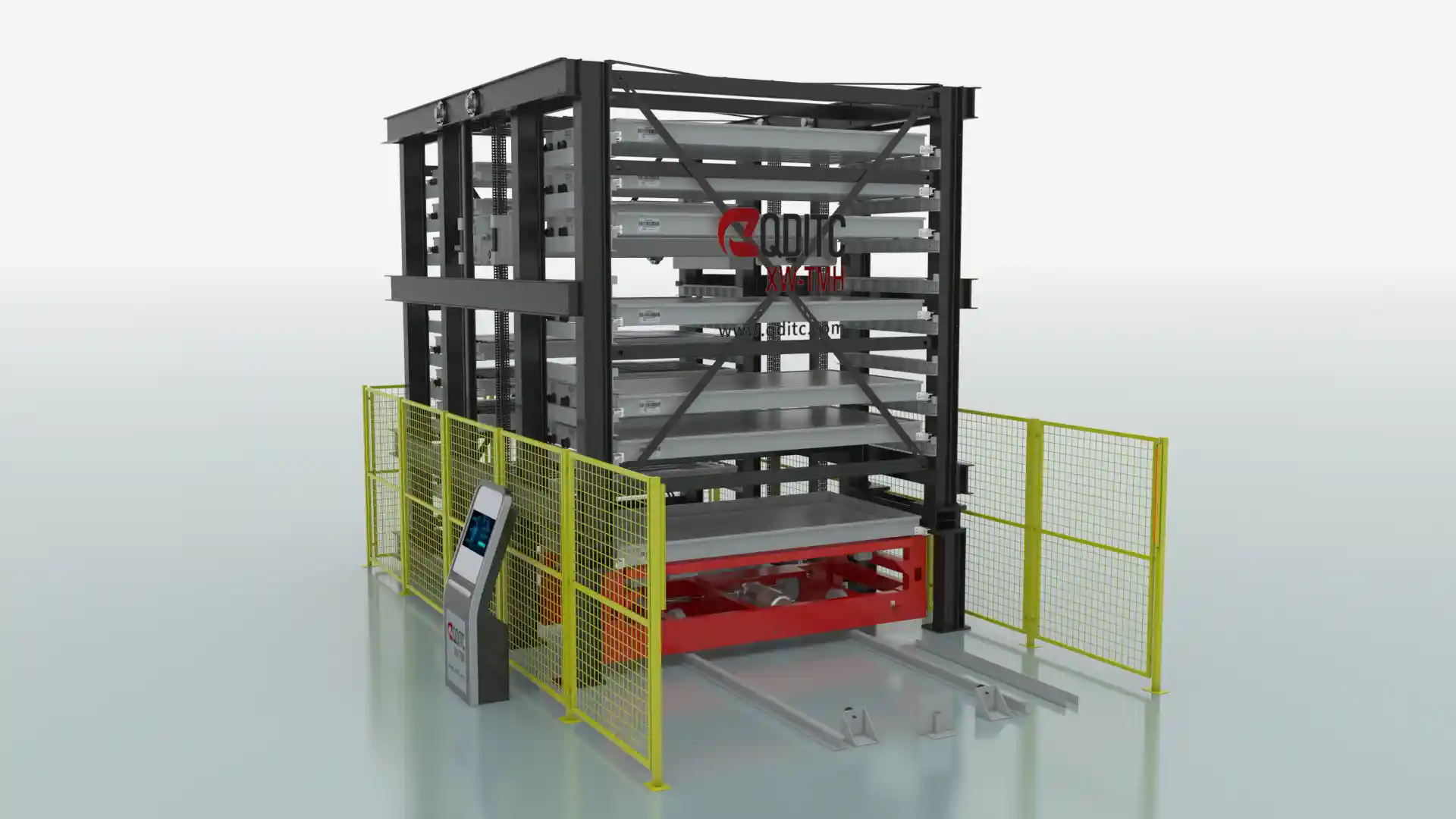
Vertical Sort Module vs VLM: Optimizing Warehouse Picking

Modern warehouse operations demand precision and speed, especially in order picking. Choosing between a Vertical Sort Module and a Vertical Lift Module (VLM) represents a strategic decision for optimizing warehouse picking processes. Each system offers distinct advantages for different inventory profiles and operational requirements. Understanding their core functionalities and performance characteristics is key to enhancing efficiency and reducing operational costs in material handling.

How Vertical Sort Modules and VLMs Actually Work

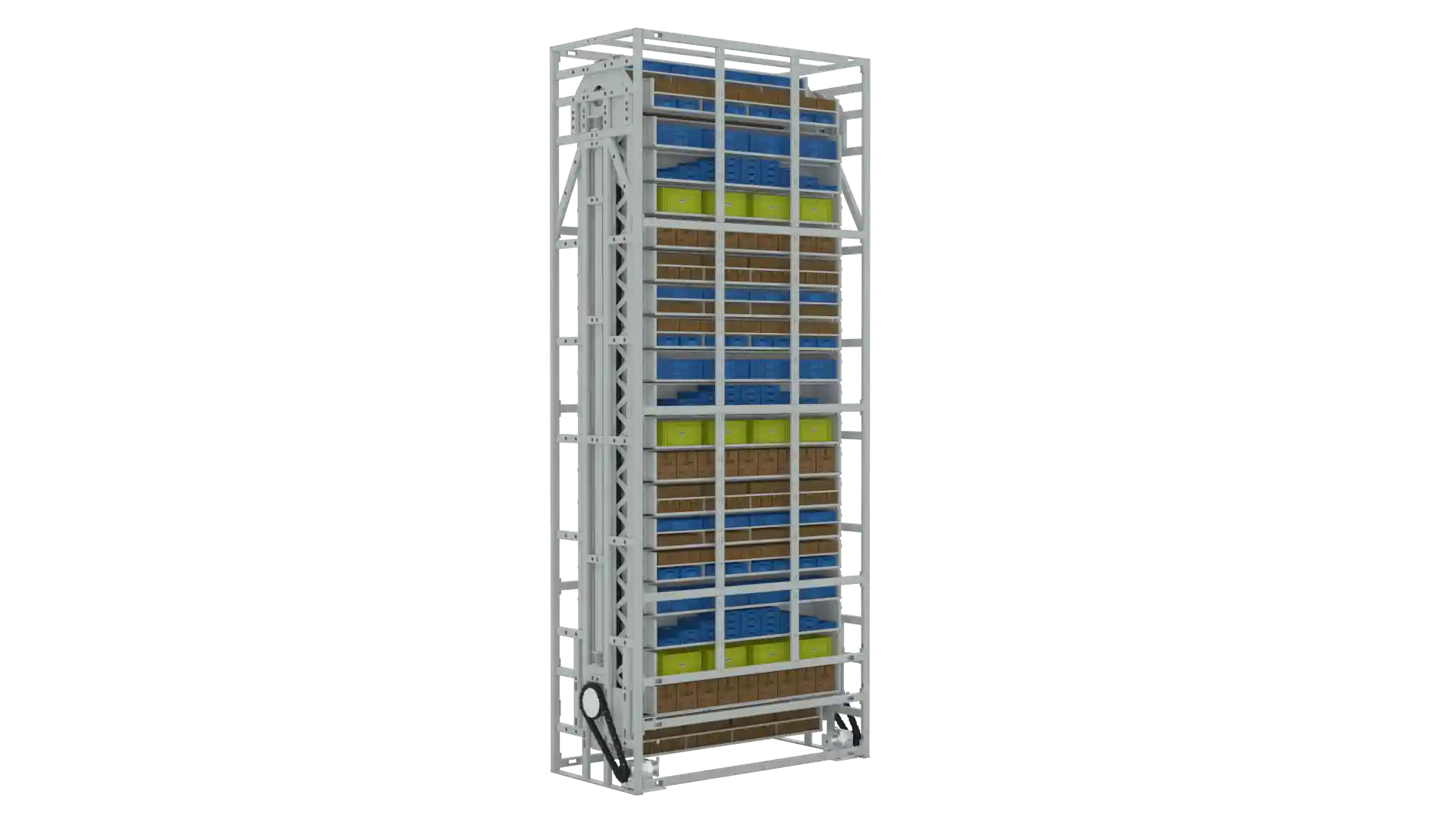
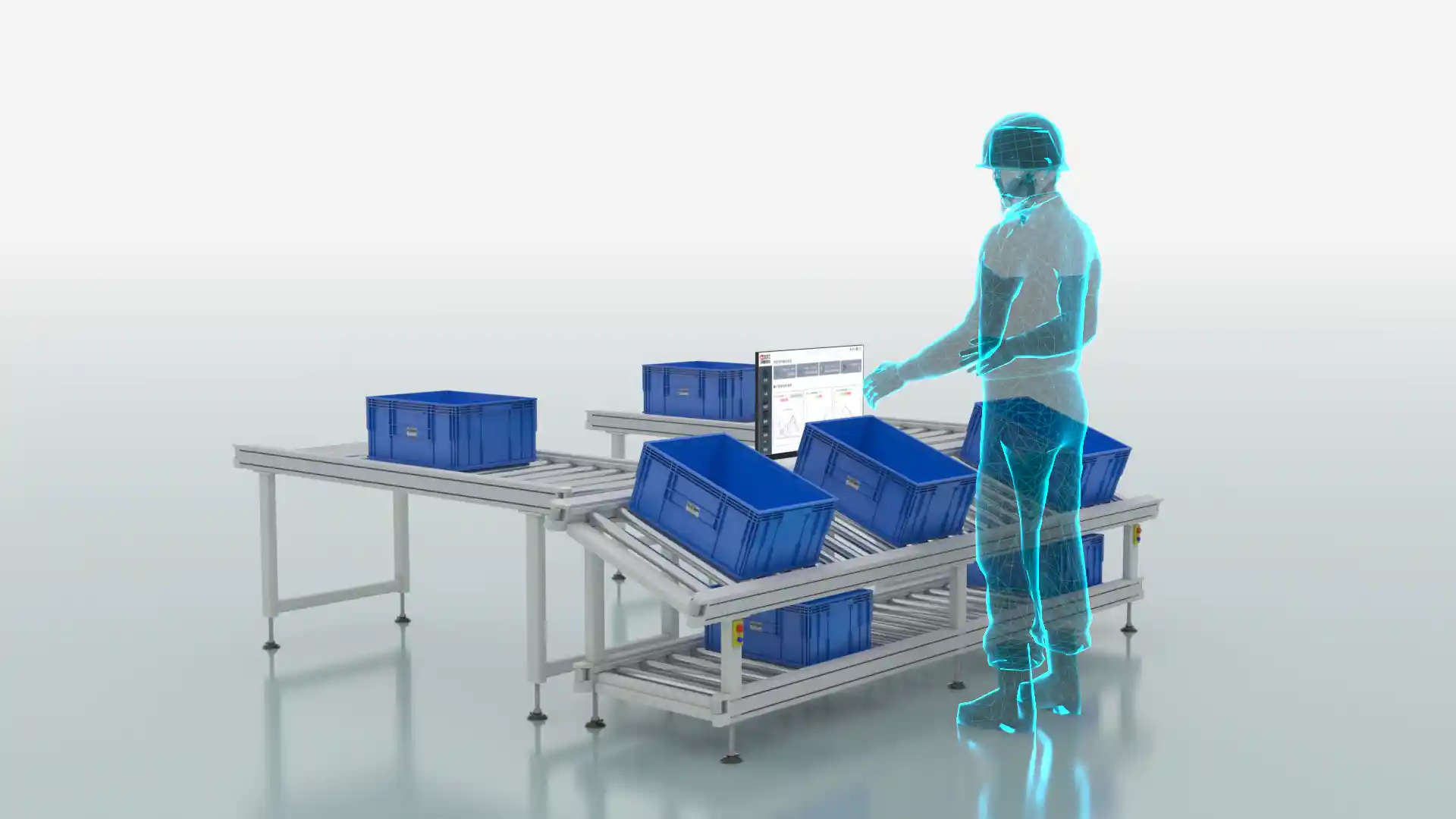
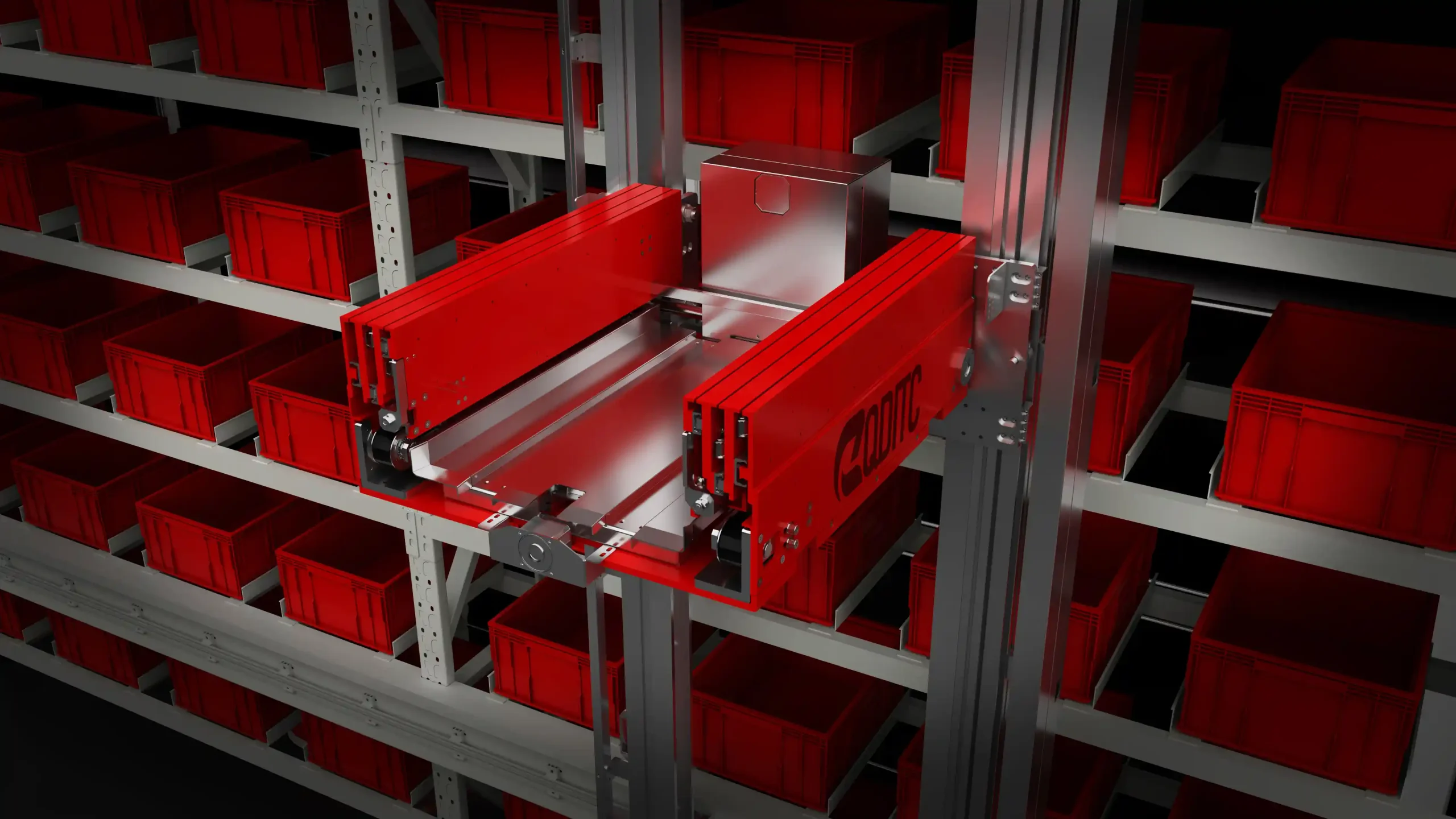
Vertical Sort Modules (VSMs) and Vertical Lift Modules (VLMs) are automated vertical storage systems designed to maximize floor space and streamline goods-to-person picking. A VSM operates by automatically storing and retrieving turnover boxes using telescopic forks, moving them vertically and horizontally within a compact structure. This system handles individual items or small batches within defined containers particularly well. A VLM consists of two columns of trays with an extractor/inserter in the center. This device automatically retrieves and stores trays, presenting them to an operator at an ergonomic pick window. VLMs accommodate a wide range of item sizes and weights, including heavy materials up to 1000kg per tray.

The primary distinction lies in their handling mechanism and item presentation. Vertical Sort Modules typically access individual boxes or containers, often integrating with other automated equipment like AGVs or conveyors for sequential sorting. VLMs present entire trays of items to the operator, allowing for multiple picks from a single access point. This fundamental difference influences their suitability for various picking strategies and inventory characteristics.

FeatureVertical Sort Module (SN-VSM)Vertical Lift Module (PG-VLM)
MechanismTelescopic forks for individual turnover boxesExtractor/inserter for full storage trays
Item AccessSingle item or box accessFull tray access at ergonomic pick window
IntegrationDesigned for integration with AGVs, conveyors, other automationOften standalone or integrated with WMS for tray management
Storage CapacityOptimized for high-density storage of small to medium itemsHigh capacity for varied items, including ultra-long/wide/heavy
Weight CapacitySuited for standard item weightsUp to 1000kg per tray

TOWERMAT1

What the Performance Numbers Actually Show

Evaluating the performance of automated vertical storage systems involves analyzing picking volume, speed, and overall throughput rates. Vertical Sort Modules excel in scenarios requiring rapid, sequential picking of individual items, often in a goods-to-person workflow where items are then routed for further processing or consolidation. Their design allows for precise, automated placement and retrieval, minimizing human intervention in the storage and retrieval process itself.

VLMs offer exceptional flexibility for diverse inventory and picking demands. While the retrieval of a full tray might take slightly longer than a single box from a VSM, the ability to pick multiple items from that tray at the ergonomic access point significantly boosts overall throughput for multi-item orders. In one manufacturing facility using VLMs for tool and heavy auxiliary material storage, operators previously spent 15 to 20 minutes locating and retrieving large molds. After VLM installation, retrieval time dropped to under 3 minutes per mold, improving overall production line efficiency by 25%. This demonstrates the VLM’s strength in handling varied, often heavier, items with high accuracy.

MetricVertical Sort Module (SN-VSM)Vertical Lift Module (PG-VLM)
Picking SpeedHigh for single-item, sequential picksHigh for multi-item picks from a single tray
ThroughputOptimized for high-volume, single-item order linesOptimized for varied order profiles, diverse SKUs
Cost per PickLower for highly standardized, repetitive picksCompetitive for varied, high-value, or heavy items
Picking AccuracyVery high due to automated retrievalVery high with guided picking technology

Where the Real Space Savings Come From

Both Vertical Sort Modules and VLMs fundamentally address the challenge of limited warehouse space by leveraging vertical height. This approach significantly increases storage density compared to traditional shelving, reducing the overall warehouse footprint required for a given inventory volume. By utilizing overhead space, companies can defer or avoid costly warehouse expansions.

VLMs are particularly adept at high-density storage for a wide array of small parts, tools, and components. The dynamic storage capability of a VLM automatically adjusts tray spacing based on item height, ensuring every cubic inch of space is utilized efficiently. This intelligent optimization means less wasted space and more items stored within the same vertical footprint. Modular wall panel designs can store ultra-long and ultra-wide materials, maximizing the utility of every tray.

Vertical Sort Modules also offer substantial space savings, especially when integrated into a larger automated system. They typically store items in standardized turnover boxes, which can be stacked densely within the module. Their ability to integrate with other automated equipment means a seamless flow of materials, which aids in inventory management by providing real-time tracking of individual containers. Both systems contribute to improved inventory management by reducing manual handling, minimizing errors, and providing precise inventory counts through integration with a Warehouse Management System (WMS).
VCM2

Which System Fits Which Picking Profile

Selecting the appropriate automated storage system depends heavily on your specific picking volume, inventory characteristics, and operational strategy. For operations with extremely high picking volumes of standardized, small items that require rapid sorting and dispatch, a Vertical Sort Module often presents a compelling solution. Its design supports continuous, automated flow, making it suitable for environments where items are quickly moved to subsequent processes or packing stations.

VLMs, with their ability to handle a broader range of item sizes and weights, offer greater versatility. They are particularly well-suited for operations with diverse inventory, fluctuating demand, and a need for high-density storage of valuable or heavy components. When an operation requires flexibility in picking multiple SKUs from a single access point, a VLM often provides better overall throughput and ergonomic benefits for operators.

If your operation involves high-SKU, low-volume picking, a Vertical Lift Module is generally the preferred choice. VLMs excel at storing a vast number of different items in a compact footprint. Their goods-to-person delivery brings the specific tray containing the required item directly to the operator, minimizing travel time and search errors. The flexibility of tray configurations also accommodates a wide variety of part sizes without requiring extensive re-slotting.
PICKUPSTATION2

What Implementation Actually Requires

Successful implementation of any automated storage solution, whether a Vertical Sort Module or a VLM, requires careful planning and consideration of several factors. A thorough analysis of your current inventory profile, picking patterns, and future growth projections is essential. This data will inform the optimal system design and capacity. System integration with existing Warehouse Management Systems (WMS) or Enterprise Resource Planning (ERP) is critical for seamless data flow and real-time inventory visibility. This ensures that the automated system operates as an extension of your overall logistics infrastructure.

Consider the ergonomics and safety benefits for your workforce. Both VLMs and VSMs reduce walking and bending, improving operator comfort and minimizing injury risks. Evaluate the return on investment by calculating labor savings, space optimization, and increased accuracy.

Calculating the ROI for a vertical storage system involves quantifying several key benefits. Start by estimating labor cost reductions from decreased travel time and improved picking efficiency. Factor in the value of reclaimed floor space, which can be used for additional production, storage, or rented out. Include reductions in inventory shrinkage and picking errors due to increased accuracy. Compare these savings against the initial investment cost, ongoing maintenance, and energy consumption of the automated system. A detailed financial model projecting these factors over a 3 to 5 year period typically provides a clear ROI picture.

If your facility is evaluating vertical storage options and you need help matching system specifications to your inventory profile, reach out to discuss the specifics before committing to a configuration.
gq-smartload3

Frequently Asked Questions

How long does it take to get a Vertical Sort Module or VLM operational?

Implementation timelines vary based on system complexity and warehouse readiness. A VLM can typically be operational within a few weeks to a couple of months. Larger, more integrated vertical sort modules might require a longer planning and installation phase, often involving system integration with existing infrastructure.

What types of inventory work best with these automated systems?

Vertical Sort Modules and VLMs are best suited for small to medium-sized items, especially those with high value or requiring secure storage. Bulky, very heavy, or irregularly shaped items may require alternative automated material handling solutions for optimal efficiency and safety.

What maintenance do these vertical storage systems need?

Both systems require regular preventive maintenance to ensure continuous operation and longevity. This includes routine inspections, lubrication, and occasional component replacement. Modern systems often feature diagnostic tools to predict and minimize downtime, ensuring consistent picking efficiency and system reliability.

Can these systems connect to my existing Warehouse Management System?

Seamless integration with existing WMS is a critical aspect of modern vertical storage solutions. Most providers offer robust APIs and connectors to ensure data flow, enabling real-time inventory management and order fulfillment. To discuss how a vertical storage system would integrate with your current setup, contact us at miaocp@qditc.com or +86 15262759399.

If you’re interested, you may want to read the following articles:

Vertical Lift Module Warehouse: Maximizing Space and Efficiency

Vertical Lift Module Manufacturers: A Complete Guide to Choosing the Right Partner

Vertical Lift Module Cost: A Comprehensive Guide for Warehouse Optimization

China Warehouse Control System: Conveyor, Sorter & Storage Integration
Vertical Sort Module: Intelligent Automation for Modern Warehouses
WCS Real-Time Control: Millisecond Response Prevents Bottlenecks
How QDITC Designs End-to-End ASRS Solutions for Warehouses
Cloud vs. On-Premise WMS: Security, Cost, Flexibility Decoded
Automated Storage: VLM vs. Traditional Parts Cabinets

Industrial storage optimization remains one of the more persistent headaches in manufacturing and logistics. Traditional parts cabinets have been around for decades, and they still work—up to a point. But the demands on modern facilities have shifted. Efficiency targets are tighter, inventory accuracy expectations are higher, and floor space costs more than it used to. This article looks at where conventional storage falls short and examines Vertical Lift Modules as an alternative, covering their operational characteristics and what they mean for facilities weighing an upgrade.

Where Traditional Parts Cabinets Start to Show Their Age

Traditional parts cabinets are familiar equipment in most facilities, but familiarity does not eliminate their operational costs. These static units consume floor space at a rate that becomes problematic as facilities grow or diversify their operations. A cabinet that seemed adequate five years ago now competes for square footage with new assembly lines or staging areas.

Manual retrieval from these cabinets introduces error at predictable rates. Operators searching through rows of bins mispick items, and those mispicks cascade into inventory discrepancies that surface during audits or, worse, during production runs. The search time itself adds up. An operator walking between cabinet rows, scanning labels, and pulling parts spends minutes per retrieval that accumulate into hours across a shift.

The physical demands deserve mention as well. Reaching for parts stored at awkward heights or depths creates ergonomic strain that shows up in injury reports and workers’ compensation claims. Facilities that track these metrics often find their cabinet areas generating disproportionate incident rates.

Inventory tracking in traditional setups typically relies on periodic manual counts. These counts consume labor hours and still produce inaccurate results because the snapshot they capture is already outdated by the time the count finishes. The gap between actual inventory and recorded inventory widens between counts, creating ordering problems and production delays.

How VLMs Reconfigure the Storage Equation

Vertical Lift Modules address these limitations through a fundamentally different approach to material access. A VLM consists of two columns of trays with an automated extractor positioned between them. When an operator requests an item, the extractor retrieves the appropriate tray and delivers it to an access opening at working height. The operator picks without walking, climbing, or searching.

VCM1

This “goods-to-person” delivery model changes the math on floor space. Facilities implementing VLMs typically recover up to 85% of the floor area that traditional shelving would occupy, converting vertical space that was previously dead air into active storage. The system’s software maintains real-time location data for every item, which eliminates the inventory drift that plagues manual tracking.

The PG-VLM configuration handles applications that traditional cabinets cannot accommodate at all. Designed for ultra-long and ultra-wide materials, molds, tools, and heavy auxiliary components, the PG-VLM supports tray loads up to 1000kg. Items that would otherwise sprawl across floor-level racks or require dedicated forklift access fit into a vertical footprint.

I worked with an automotive parts manufacturer last year on a PG-VLM installation for their engine component inventory. Their baseline measurements showed operators spending significant time per retrieval walking to storage locations, locating the correct bin, and transporting parts back to assembly stations. Six months after implementation, their picking time for engine components had dropped by 40%, and they had recovered 3,000 square feet of floor space that they reallocated to a new quality inspection station.

What VLMs Change Beyond the Storage Footprint

The operational effects of automated storage extend past the storage area itself. Labor allocation shifts when retrieval no longer requires dedicated walking time. Staff who previously spent shifts pulling parts can move to assembly, inspection, or other tasks where their attention adds more value. The labor cost reduction is real, though facilities should plan for the transition period where operators learn the new system.

Safety metrics improve in measurable ways. VLMs eliminate the need for ladders to reach high shelves and reduce forklift traffic in storage areas. Both changes remove common injury mechanisms from the daily workflow. Facilities tracking OSHA recordables often see their storage-related incidents drop after VLM implementation.

TOWERMAT1

The fit with lean manufacturing principles is worth noting. Lean frameworks target waste in all forms, and traditional cabinet storage generates waste through motion, waiting, and defects from mispicks. VLMs compress retrieval time, reduce walking, and improve pick accuracy, addressing three waste categories simultaneously.

What to Evaluate Before Committing to Automated Storage

The decision to implement VLMs requires analysis beyond the equipment specifications. ROI projections should account for current labor costs in material handling, the value of floor space that would be recovered, and the cost of inventory discrepancies in the existing system. Facilities with high retrieval volumes and expensive floor space see faster payback; those with lower activity levels may find the investment harder to justify.

Scalability matters for facilities expecting growth or product mix changes. A VLM installation should accommodate future inventory expansion without requiring a complete system replacement. The modular nature of most VLM designs supports this, but the initial configuration needs to account for realistic growth scenarios.

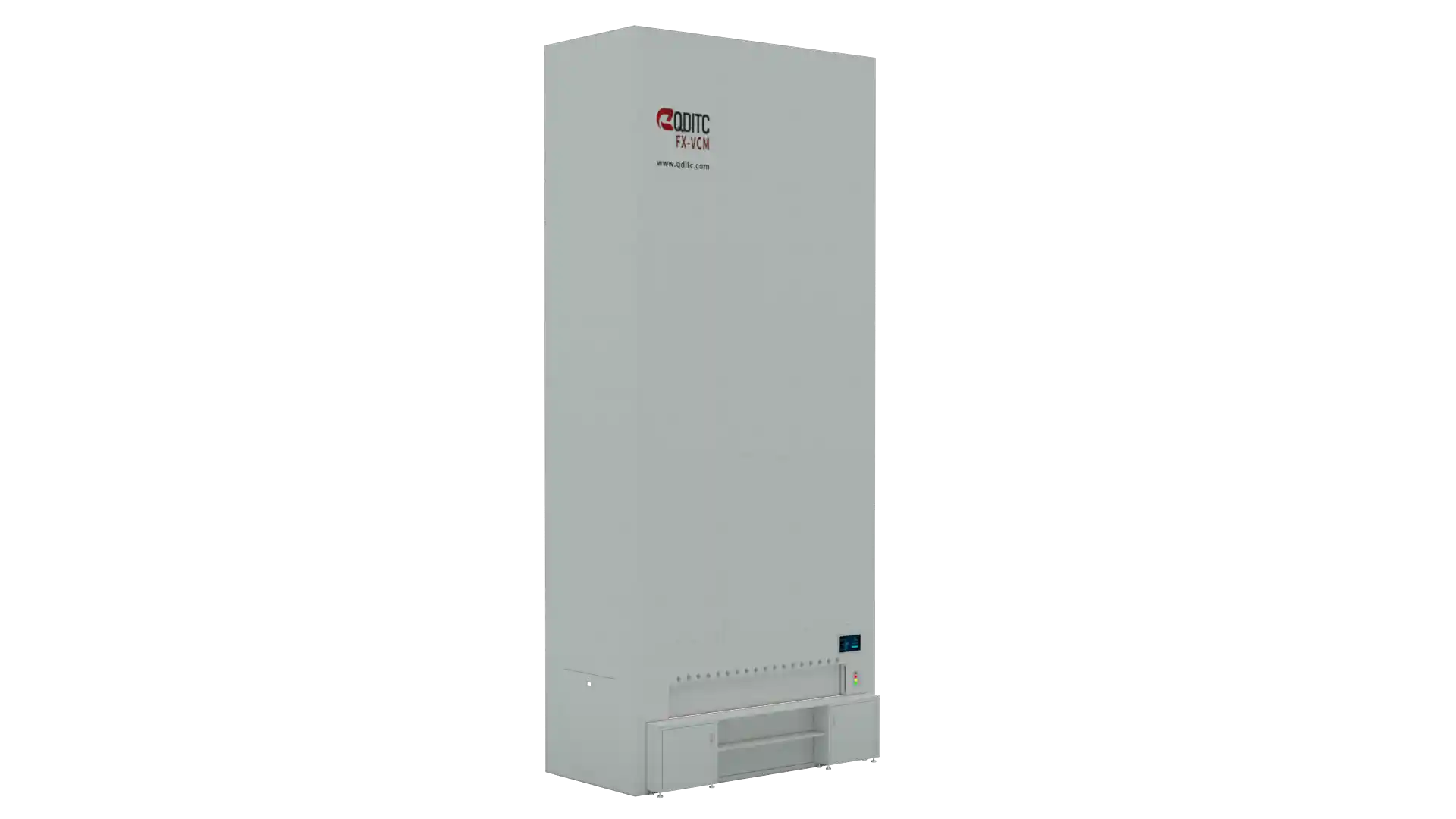
The characteristics of stored items drive equipment selection. Weight, dimensions, and retrieval frequency all influence which system configuration makes sense. The FX-VCM Vertical Carousel Module, for instance, handles diverse material types and works well for mold inspection tools, archives, and electrical components. It offers a range of specifications that fit different application scenarios at a different price point than the heavy-duty PG-VLM.

FeaturePG-VLMFX-VCMFXH-HCMSN-VSM
Storage TypeVertical Lift ModuleVertical Carousel ModuleHorizontal Carousel ModuleVertical Sort Module
Ideal forUltra-long, heavy materialsVarious materials, molds, archivesLimited height, dense storageTurnover boxes, automated pick
Max Tray LoadUp to 1000kgStandardStandardStandard
Space UseMaximizes vertical spaceMaximizes vertical spaceHorizontal dense storageVertical lift, horizontal translate
Key AdvantageHigh-speed, heavy-dutyCost-effective, versatileOptimized for low heightSingle item access, AGV integration

If your facility handles a mix of heavy tooling and lighter components, it may be worth discussing whether a combined approach using different VLM configurations makes sense for your specific inventory profile.

Where Automated Storage Fits in the Broader Warehouse Evolution

The shift toward automated storage and retrieval systems reflects a larger change in how facilities think about material flow. Static storage is giving way to systems that integrate with enterprise resource planning and warehouse management software. Real-time inventory visibility becomes standard rather than aspirational.

RACKBOT

VLM technology sits at a useful point in this evolution. It offers substantial automation benefits without requiring the infrastructure investment of full AS/RS installations with cranes and conveyors. For facilities that need to improve storage performance but cannot justify a complete warehouse redesign, VLMs provide a path forward.

The trajectory points toward wider adoption as modular designs and competitive pricing make these systems accessible to mid-sized operations that would not have considered automation a decade ago. Facilities that implement now position themselves ahead of competitors still relying on manual processes.

To discuss specific requirements for your facility’s storage optimization, contact us at miaocp@qditc.com or +86 15262759399.

Frequently Asked Questions

What are the main advantages of a VLM over traditional parts cabinets?

VLMs recover floor space by storing vertically, reduce picking errors through software-controlled retrieval, and improve operator safety by delivering items to working height rather than requiring climbing or reaching. The goods-to-person model eliminates most of the walking and searching time that makes traditional cabinet retrieval slow.

How does a Vertical Lift Module improve inventory accuracy and picking speed?

The system tracks every item’s location in real time and guides operators to the correct pick position when a tray arrives at the access opening. This eliminates the search time and location guesswork that cause errors in manual systems. Retrieval speed improves because the extractor works while the operator processes the previous pick, keeping wait time minimal.

What is the typical ROI for implementing an automated storage solution like a VLM?

Most facilities see payback within one to three years, depending on their baseline labor costs, floor space value, and inventory accuracy problems. The calculation should include labor reallocation, space recovery, reduced mispick costs, and safety improvements. For facilities considering this investment, we can help model the numbers based on your current operations.


If you are interested, you may want to read the following articles:

How QDITC Designs End-to-End ASRS Solutions for Warehouses
Intelligent Storage Systems: VLM, VSM, VCM, VBM, ASRS Comparison
Standalone WMS vs. Integrated WCS: Which Fits Your Automation?

Parts Bin Organizers vs Automated Storage: When to Upgrade Your Workshop

Workshop storage decisions rarely come down to a simple “old versus new” comparison. The choice between keeping manual parts bin organizers and moving to automated storage systems depends on where your operation actually sits—how much volume you handle, how often retrieval delays cost you production time, and whether your current floor space can absorb growth without choking workflow.

This article works through that decision from a practical standpoint, drawing on patterns we see across facilities that have made the switch and those that found their existing setup still made sense.

Why Manual Parts Bin Organizers Still Work for Some Operations

Traditional parts bins and static shelving remain common in workshops for reasons that go beyond budget constraints. For operations running low part counts or handling retrieval only a few times per shift, the simplicity of walking to a bin and grabbing a component introduces no meaningful delay. Setup is immediate—no integration work, no software configuration, no training beyond basic labeling conventions.

Small-scale facilities or those in early growth phases often find that the capital required for automation cannot be justified against current throughput. A parts bin system that costs a fraction of an automated module and requires no maintenance contracts makes financial sense when retrieval volume stays under a few hundred picks per day.

There is also a visibility factor. Operators can see inventory levels at a glance, spot shortages without consulting a screen, and reorganize bins on the fly when part mixes change. For workshops where flexibility matters more than speed, that direct physical access has real value.

Where Manual Storage Starts Costing You

The limitations surface as operations scale. Retrieval time is the first pressure point—when an operator spends several minutes per pick searching through bins, those minutes accumulate into hours of lost production across a shift. In facilities running multiple assembly lines or fulfilling orders against tight delivery windows, that search time directly affects output.

Labor costs compound the problem. Manual systems require more personnel to maintain the same throughput that a smaller team could achieve with automated retrieval. Picking errors also increase with volume; a misread label or a part placed in the wrong bin creates downstream quality issues or rework.

Space utilization is often the constraint that forces the conversation. Manual shelving and bin racks consume floor area at a ratio that automated systems can dramatically improve. A vertical lift module storing the same part count might occupy one-third the footprint, freeing floor space for production equipment or additional workstations.

FactorManual Parts BinsAutomated Storage Systems
Initial investmentLowHigh
Floor space requiredLarge footprintCompact, vertical storage
Retrieval speedOperator-dependent, slower at scaleConsistent, typically under 30 seconds
Inventory accuracyManual counts, error-proneSoftware-tracked, high precision
Labor requirementHigher headcount for same throughputReduced picking staff
ScalabilityLimited by physical spaceModular expansion possible

How Automated Storage and Retrieval Systems Actually Work

Automated storage and retrieval systems—commonly called AS/RS—use computer-controlled mechanisms to place and retrieve items from defined storage locations without manual intervention. The operator requests a part through a terminal or integrated software, and the system delivers it to a pickup station.

Two configurations handle most industrial applications. Vertical lift modules consist of two columns of trays with an inserter mechanism in the center. When a part is requested, the system locates the correct tray, extracts it, and presents it at an ergonomic height for picking. These units excel at storing small to medium parts, tooling, and components that would otherwise occupy dozens of shelving bays.

Horizontal carousels rotate shelves along a track to bring stored items to a fixed operator position. They work well in facilities with height restrictions where vertical expansion is not an option, and they handle high-frequency picks efficiently by minimizing travel time between retrievals.

Both system types integrate with warehouse management software to track every item’s location, movement history, and current quantity. That integration is what drives the accuracy improvements—the system knows exactly where each part sits and updates inventory counts automatically with every transaction.

What Changes When You Automate Retrieval

The operational shift goes beyond faster picking. Inventory accuracy typically moves from the 85-95% range common in manual environments to above 99% in well-implemented automated systems. That accuracy eliminates the production delays caused by phantom inventory—situations where the system shows stock available but the physical part cannot be located.

Picking errors drop for the same reason. The system presents the correct tray or bin; the operator picks from a designated location rather than searching through similar-looking parts. In facilities handling thousands of SKUs, that precision prevents the quality escapes that occur when a wrong component reaches assembly.

Workflow changes as well. Instead of operators walking to storage locations, the storage comes to them. A single operator at a pickup station can achieve throughput that previously required multiple workers covering different areas of a manual storage zone. That consolidation reduces labor costs and simplifies scheduling.

Safety improvements follow from reduced manual handling. Operators no longer climb ladders to reach high shelves or strain to move heavy bins. The ergonomic presentation height of most automated systems keeps retrieval within a comfortable reach zone, reducing injury risk over time.

Recognizing When Your Operation Has Outgrown Manual Storage

Several indicators suggest that manual parts bin organizers have become a constraint rather than a solution. None of these signals alone forces an upgrade, but their combination typically points toward automation making financial sense.

Rising labor costs for inventory-related tasks often appear first. If your facility has added headcount specifically to handle picking, restocking, or cycle counting, those positions represent ongoing expense that automation can reduce or eliminate.

Space constraints that limit growth are another trigger. When production expansion requires floor area currently occupied by storage, the cost of that space—whether measured in delayed capacity or the expense of facility expansion—becomes part of the automation calculation.

Inventory accuracy problems that affect production scheduling indicate that manual tracking has reached its limits. If planners cannot trust inventory counts, they compensate by carrying excess safety stock, tying up capital in parts that may not be needed.

Customer delivery requirements sometimes force the issue. When order fulfillment windows tighten and manual retrieval cannot keep pace, the choice becomes automation or lost business.

Growth projections matter as well. A facility expecting to double throughput over three years needs storage infrastructure that can scale. Adding more manual shelving often is not feasible; automated systems can expand modularly as volume increases.

Calculating Whether Automation Pays Back

Return on investment for automated storage involves comparing ongoing costs under the current system against the capital expense and reduced operating costs of automation.

Labor savings typically form the largest component. Calculate current hours spent on picking, restocking, and inventory management, then estimate the reduction an automated system would provide. Facilities commonly see 40-60% reductions in labor hours for these tasks, though the actual figure depends on current efficiency and system configuration.

Space recovery has quantifiable value. If freed floor area can be used for production equipment that generates revenue, that revenue contribution enters the ROI calculation. Even if the space simply avoids a planned facility expansion, the avoided construction or lease cost is real savings.

Inventory accuracy improvements reduce carrying costs. When counts are reliable, safety stock levels can drop without increasing stockout risk. The capital freed from excess inventory has an opportunity cost that factors into payback calculations.

Picking error reductions prevent rework and quality escapes. If your facility tracks the cost of wrong-part incidents—whether measured in rework labor, scrap, or customer returns—those costs decrease with automated retrieval.

Implementation cycles and system costs vary by configuration. Some modular systems can be operational within weeks; more complex installations involving building modifications or extensive software integration may take several months. The total investment includes equipment, installation, software licensing, and training.

For facilities where the numbers work, payback periods often fall in the two-to-four-year range, with ongoing savings continuing well beyond that window.

Planning an Automation Implementation

Moving from manual to automated storage requires preparation that goes beyond selecting equipment. Site assessment comes first—understanding ceiling heights, floor load capacity, electrical availability, and how the new system will connect to existing material flow.

Integration with current software systems determines how smoothly the transition proceeds. If your facility runs an ERP or warehouse management system, the automated storage needs to communicate with that platform. Data flows both directions: the WMS tells the storage system what to retrieve, and the storage system updates the WMS with inventory changes. Facilities without existing inventory software may implement a standalone system or use the automation project as the trigger for broader software upgrades.

Training requirements extend beyond operators. Maintenance staff need to understand the mechanical and control systems well enough to handle routine service and troubleshoot common issues. Supervisors need visibility into system performance metrics to identify problems before they affect production.

Contingency planning matters because automated systems, like any equipment, occasionally require service. Understanding how your facility will handle retrieval during maintenance windows—whether through redundant systems, manual backup procedures, or scheduled downtime—prevents surprises.

Matching System Type to Storage Requirements

Different automated configurations suit different material profiles. Vertical lift modules handle the broadest range of part sizes and weights, making them a common choice for facilities with diverse inventory. They work particularly well for tooling, maintenance parts, and components that require secure, organized storage with fast retrieval.

Horizontal carousels fit facilities with height limitations where vertical expansion is not possible. They handle high-frequency picks efficiently and can be configured in banks to increase throughput for operations with sustained retrieval demand.

For facilities storing long materials, oversized items, or heavy components, specialized configurations exist. Some vertical systems accommodate trays designed for extended lengths; others use reinforced structures for heavy loads that would exceed standard capacity.

The selection process involves matching your inventory profile—part sizes, weights, retrieval frequency, and total SKU count—against system capabilities. A configuration that works well for small electronics components may not suit a facility storing automotive tooling or heavy industrial parts.

If your current storage challenges involve specific material types or unusual space constraints, discussing requirements with a system provider clarifies which configurations apply. We work through these assessments regularly and can outline options based on your specific situation—reach out at miaocp@qditc.com or +86 15262759399 to start that conversation.

Where Automated Storage Technology Is Heading

Current systems already deliver substantial efficiency gains, but the technology continues developing. Integration with broader facility systems is expanding—automated storage increasingly connects not just to inventory software but to production scheduling, quality systems, and enterprise planning platforms.

Sensor technology and data collection are enabling predictive approaches to inventory management. Systems can track retrieval patterns, identify slow-moving stock, and flag potential stockouts before they affect production. That visibility supports leaner inventory strategies without increasing risk.

Retrieval speed and system density continue improving as mechanical designs and control algorithms advance. Facilities implementing systems today can expect those systems to remain competitive for extended service lives, with software updates adding capabilities over time.

The direction favors facilities that invest in automation now. The operational advantages compound as systems mature, and the experience gained from running automated storage positions teams to adopt future enhancements effectively.

Frequently Asked Questions

What operational improvements should we expect from automated storage?

Inventory accuracy typically exceeds 99% with properly implemented systems, compared to 85-95% common in manual environments. Retrieval times drop to consistent sub-30-second ranges regardless of where items are stored. Labor requirements for picking and restocking decrease substantially, often by 40-60%, and picking errors become rare rather than routine. Space utilization improves dramatically—the same inventory that filled a large manual storage area often fits in a fraction of the footprint.

How do these systems maintain such high inventory accuracy?

Every storage location is mapped in software, and every transaction—whether storing or retrieving—updates the database automatically. The system knows exactly which tray or bin holds each part and in what quantity. Human error in counting or location tracking is eliminated because operators interact only with items the system presents, not with the broader storage array. Cycle counting becomes a verification exercise rather than a correction process.

Which materials work well in vertical lift modules?

Vertical lift modules accommodate a wide range: small components, hand tools, inspection equipment, spare parts, and maintenance supplies are common applications. Configurations exist for heavier items including tooling, dies, and fixtures, as well as for longer materials that would not fit standard shelving. The key constraints are tray dimensions and weight capacity, both of which vary by system specification. If your inventory includes unusual sizes or weights, those parameters guide system selection.

Can automated storage connect to our existing inventory software?

Modern systems are designed for integration with ERP and warehouse management platforms. Standard interfaces allow the storage system to receive retrieval requests from your existing software and return updated inventory data after each transaction. The integration scope depends on your current software capabilities and what data flows you need. Facilities without existing inventory software can run standalone systems or use the automation project as an opportunity to implement broader inventory management tools.

What factors determine whether automation makes financial sense for our facility?

The calculation balances capital investment against ongoing savings. Key inputs include current labor costs for inventory tasks, the value of floor space that could be recovered, carrying costs for excess safety stock driven by inaccurate counts, and the cost of picking errors and inventory discrepancies. Facilities with high retrieval volumes, expensive floor space, or persistent accuracy problems typically see faster payback. Growth projections matter as well—if your operation will outgrow manual storage within a few years, the automation investment addresses both current inefficiency and future capacity. For a clearer picture of how the numbers work for your specific situation, contact us at miaocp@qditc.com or +86 15262759399.


If you’re interested, you may want to read the following articles:

ASRS for Pharma Cleanroom Storage: GMP & FDA Compliance
ASRS Maintenance Schedule: Peak Performance & System Longevity
WMS Barcode vs. RFID: Choosing Your Warehouse Tracking System
ASRS Manufacturer China: OEM Solutions for Integrators

Optimizing Industrial Small Parts Storage: Bins to Automated Drawers

Effective industrial small parts storage directly determines how much time your team spends searching versus producing. The difference between a well-organized system and a chaotic one shows up in labor hours, picking errors, and floor space that could serve production instead of inventory sprawl. This article walks through the practical options—from basic bins and shelving to automated vertical lift modules—and explains where each approach makes financial sense. The goal is straightforward: match your storage method to your actual retrieval patterns, space constraints, and growth trajectory so the investment pays back in measurable productivity gains.

What Actually Works for Foundational Small Parts Storage

Traditional storage methods—industrial shelving, storage bins, and drawer cabinets—remain the right choice for many operations because they work without complexity. The mistake most facilities make is treating bin selection as an afterthought rather than a specification exercise.

Bin selection starts with the parts themselves. Measure the largest and smallest components you need to store, then work backward to container dimensions. Weight capacity matters more than most buyers realize: a bin rated for 15 kg that regularly holds 20 kg will crack at the corners within eighteen months. For electronics or static-sensitive components, ESD-safe bins are non-negotiable—standard plastic generates enough charge during handling to damage sensitive ICs.

Material choice follows application. Injection-molded polypropylene handles most general storage needs and survives the occasional forklift bump. Steel bins make sense for heavy fasteners, machined parts, or environments where chemical exposure would degrade plastic. The durability difference justifies the cost premium when you factor in replacement cycles.

Industrial shelving and drawer cabinets multiply your usable cubic footage when planned correctly. Vertical expansion through multi-tier shelving recovers floor space that would otherwise sit empty above head height. Drawer cabinets work particularly well for small, high-value components that need protection from dust and casual access—tooling inserts, precision gauges, and electronic modules benefit from the enclosed environment.

Layout planning deserves more attention than it typically receives. Clear aisles wide enough for your actual material handling equipment, logical grouping of parts by retrieval frequency, and consistent labeling systems reduce the time between receiving a pick request and completing it. The facilities that struggle with retrieval times usually have adequate storage capacity but poor organization logic.

When Automated Small Parts Storage Makes Financial Sense

Automated storage and retrieval systems represent a different category of investment. Vertical Lift Modules and horizontal carousels cost significantly more than static shelving, so the decision hinges on whether your operation generates enough retrieval volume to justify the capital.

The break-even calculation centers on labor hours. If your pickers spend substantial time walking between locations, searching for items, and returning to packing stations, automation addresses that directly. Automated drawer systems present items to the operator at an ergonomic height, eliminating travel time and reducing search time to near zero. Picking accuracy improves because the system confirms the correct location before presenting the tray.

Vertical Carousel Modules use a simple rotation mechanism to bring trays to a fixed access point. They handle a wide range of materials—mold inspection tools, electrical components, maintenance supplies—and fit into facilities where ceiling height allows vertical expansion but floor space is constrained. The technology is mature and reliable, with few moving parts to maintain.

Vertical Lift Modules offer higher density and heavier load capacity. Systems rated for 1000 kg per tray accommodate materials that would overwhelm carousel mechanisms—heavy auxiliary materials, ultra-long stock, or dense component inventories. The trade-off is higher initial cost and more complex installation requirements.

Horizontal Carousel Modules suit operations where ceiling height is limited but throughput demands are high. These systems use optimized pathing algorithms to minimize rotation distance, and they integrate readily with warehouse management systems for order batching. Multi-unit configurations allow simultaneous picking across several carousels, multiplying throughput without proportional labor increases.

Integration with existing systems determines whether automation delivers its full potential. A Vertical Lift Module that operates as an isolated island provides some benefit, but connecting it to your WMS, order management system, and material handling equipment—AGVs, conveyors, robotic arms—creates compound efficiency gains. The system knows what’s needed before the operator does and can pre-position trays during idle moments.

How to Evaluate Storage Solutions Against Your Actual Requirements

Selecting the right approach requires honest assessment of your current state and realistic projection of future needs. The comparison below summarizes the practical trade-offs:

Storage Solution TypeKey BenefitSpace UtilizationPicking SpeedTypical Application
Standard ShelvingCost-effectiveModerateManualBulk, less frequent
Drawer CabinetsOrganizationGoodManualTools, small parts
Vertical CarouselSpace savingHighSemi-automatedHigh-volume smalls
Vertical Lift ModuleDensity, SecurityVery HighAutomatedHigh-value, heavy
Horizontal CarouselThroughputGoodAutomatedOrder fulfillment

Cost-effectiveness depends on context. Standard shelving wins when retrieval frequency is low and labor costs are modest. Automated systems win when retrieval volume is high, labor is expensive, and floor space carries significant opportunity cost.

Scalability deserves explicit consideration. A shelving system can expand incrementally by adding bays. Automated systems typically require planning for future capacity at installation—adding a second VLM later costs more than specifying adequate capacity initially.

Safety requirements influence the decision as well. Automated systems reduce ergonomic strain from bending, reaching, and carrying. They also limit access to authorized personnel, which matters for high-value or controlled inventory. Enclosed storage protects components from contamination in dusty or humid environments.

If your facility handles a mix of fast-moving and slow-moving inventory, hybrid approaches often make sense. Automated systems handle the high-velocity items where labor savings accumulate quickly; static storage handles the long-tail items that don’t justify automation investment. The key is matching the storage method to the retrieval pattern rather than forcing everything into a single system.

What the Numbers Actually Show for Storage Investment Returns

Quantifying benefits requires tracking the right metrics before and after implementation. Labor hours per pick, picks per hour, error rates, inventory accuracy, and space utilization all contribute to the ROI calculation.

Automated retrieval systems typically reduce labor cost per pick by 40-60% compared to manual methods in high-volume operations. The savings come from eliminated travel time, reduced search time, and fewer errors requiring correction. Error rates below 0.1% are achievable with automated systems that confirm location and quantity at each pick.

Inventory accuracy improvements cascade through the operation. Accurate counts mean fewer emergency orders, reduced safety stock requirements, and better production scheduling. The carrying cost reduction from lower safety stock often exceeds the direct labor savings in facilities with expensive inventory.

Space recovery provides a different category of return. Vertical Lift Modules typically recover 60-85% of the floor space that equivalent static storage would require. In facilities where floor space is constrained or expensive, that recovery translates directly to avoided expansion costs or freed capacity for production equipment.

Implementation speed affects payback timing. Some automated systems require extensive site preparation and integration work, extending the period before benefits begin accruing. Systems designed for rapid deployment—with standardized interfaces and minimal structural requirements—start generating returns sooner. The difference between a six-month implementation and a two-month implementation can shift the first-year ROI calculation substantially.

Where Industrial Small Parts Storage Is Heading

The trajectory of warehouse technology points toward greater integration and intelligence. AI-driven inventory placement optimizes storage locations based on retrieval patterns, co-occurrence in orders, and seasonal demand shifts. The system learns which items are frequently picked together and positions them for efficient batch retrieval.

Autonomous mobile robots are changing the material handling equation. Rather than operators traveling to storage locations, robots bring containers to stationary pick stations. This inverts the traditional warehouse flow and enables continuous picking without operator fatigue from walking.

Robotic picking arms are reaching the precision and speed required for small parts handling. Current systems handle standardized containers reliably; the next generation will manage the variability of mixed-SKU bins. The combination of automated storage, autonomous transport, and robotic picking points toward lights-out warehouse operations for suitable applications.

Sustainability considerations are influencing equipment design. Energy-efficient motors, regenerative braking on vertical systems, and recyclable materials reduce the environmental footprint of automated storage. Facilities pursuing sustainability certifications increasingly factor these characteristics into procurement decisions.

The common thread across these developments is data. Connected systems generate continuous streams of operational data that enable optimization, predictive maintenance, and capacity planning. Facilities that invest in data infrastructure alongside physical storage equipment position themselves to capture these benefits as the technology matures.

Frequently Asked Questions About Small Parts Storage

What factors determine the right small parts storage approach for a manufacturing plant?

The decision starts with retrieval frequency and volume. High-frequency items justify automation investment; low-frequency items rarely do. Part characteristics—size, weight, fragility, static sensitivity—determine container and protection requirements. Available space, both floor area and ceiling height, constrains the options. Integration requirements with existing WMS and material handling equipment affect implementation complexity. Finally, growth projections influence whether to specify capacity for current needs or future expansion. The facilities that get this right typically conduct detailed SKU analysis before selecting equipment.

How do automated systems compare to traditional bins for retrieval performance?

Automated systems outperform traditional bins on speed, accuracy, and space efficiency in high-volume applications. A Vertical Lift Module eliminates walking time entirely—the operator stays at a fixed station while the system presents items. Search time drops to seconds because the system knows exact locations. Picking accuracy improves because the system confirms the correct tray before allowing access. Space utilization increases dramatically because vertical systems use height that static shelving cannot reach. The trade-off is capital cost and complexity; for low-volume applications, the investment doesn’t pay back.

What drives the ROI calculation for advanced storage systems?

Labor cost reduction provides the largest component of ROI in most facilities. Reduced travel time, eliminated search time, and fewer error corrections translate directly to labor hours saved. Inventory accuracy improvements reduce safety stock requirements and emergency ordering costs. Space recovery avoids expansion costs or frees floor area for production equipment. Implementation speed affects payback timing—faster deployment means earlier benefit capture. The facilities that see the strongest returns typically have high retrieval volumes, expensive labor, constrained floor space, and inventory carrying costs that penalize inaccuracy. To discuss whether your operation fits this profile, contact the team at miaocp@qitc.com or +86 15262759399.


If you’re interested, you may want to read the following articles:

ASRS Manufacturer China: OEM Solutions for Integrators
Vertical Sort Modules: Cutting Pick Errors in Retail Distribution

Indoor Asset Tracking & ASRS: Maximizing Warehouse ROI

Real-time inventory visibility and automated storage systems are reshaping how warehouses operate. Indoor asset tracking combined with Automated Storage and Retrieval Systems delivers measurable improvements in retrieval speed, space utilization, and order accuracy. These technologies address persistent operational challenges—misplaced inventory, excessive search times, and labor-intensive picking processes—that directly erode margins. The integration of precise location data with automated material handling creates compounding efficiency gains that manual processes cannot match.

Why Real-Time Inventory Visibility Has Become Non-Negotiable

Warehouses operating without real-time location data face predictable problems. Items get misplaced between receiving and storage. Stock counts drift from actual quantities. Workers spend significant portions of their shifts searching rather than picking. These inefficiencies compound across thousands of daily transactions, creating inventory shrinkage that often goes undetected until cycle counts reveal the gap.

The operational cost extends beyond lost product. When a picker cannot locate an item, the order stalls. Expedited shipping becomes necessary to meet customer commitments. Safety stock levels increase to buffer against uncertainty, tying up working capital in inventory that may not move for months.

Warehouse management systems can only optimize what they can see. When location data lags reality by hours or days, the system’s recommendations become unreliable. Slotting optimization fails because the system believes items are in locations they vacated yesterday. Replenishment triggers fire too late because consumption data arrives after stockouts occur.

Real-time visibility shifts warehouse management from reactive to predictive. When you know exactly where every item sits and how quickly each location depletes, you can reposition inventory before problems emerge. This capability becomes increasingly valuable as order volumes grow and fulfillment windows shrink.

How Indoor Asset Tracking Technologies Capture Location Data

Indoor asset tracking systems use radio frequency signals to determine where items, equipment, and personnel are located within a facility. The technology choice depends on the precision required, the environment’s characteristics, and the budget available for deployment.

Radio Frequency Identification uses tags attached to items or containers and readers positioned throughout the facility. Passive RFID tags have no battery and activate only when passing near a reader, making them inexpensive enough for item-level tagging in high-volume operations. Active RFID tags broadcast continuously, enabling real-time tracking but at higher cost per tag. RFID excels at confirming that items passed specific checkpoints—dock doors, zone boundaries, storage locations—rather than providing continuous position updates.

Bluetooth Low Energy beacons offer a middle ground between cost and precision. BLE tags broadcast signals that multiple receivers triangulate to estimate position. The technology works well for tracking mobile equipment, carts, and personnel across large facilities. Accuracy typically falls in the 1-3 meter range, sufficient for zone-level tracking but not precise bin location.

Ultra-Wideband provides centimeter-level accuracy by measuring the time signals take to travel between tags and anchors. This precision comes at higher infrastructure cost, as UWB requires more anchors per square meter than BLE. The technology suits applications where exact position matters—guiding automated vehicles, tracking high-value items, or enabling precise pick verification.

Comparison Table: RFID vs. BLE vs. UWB for Asset Tracking

TechnologyRangeAccuracyCostPower Consumption
RFIDMediumModerateLowVery Low
BLEShortModerateLowLow
UWBShortHighHighModerate

RACKBOT

What Happens When Indoor Tracking Integrates with ASRS

Connecting indoor asset tracking to Automated Storage and Retrieval Systems creates feedback loops that improve both technologies. The tracking system confirms that items reached their assigned storage locations. The ASRS uses location data to optimize retrieval sequences, reducing travel time between picks.

When an ASRS unit retrieves an item, the tracking system verifies the correct product left storage. This verification catches picking errors before orders ship, eliminating the cost of returns and customer dissatisfaction. The combined data stream also reveals patterns—which items frequently get misplaced, which storage zones experience congestion, where bottlenecks form during peak periods.

Goods-to-person workflows benefit particularly from this integration. The system knows exactly which items are in transit, which have arrived at workstations, and which await return to storage. This visibility enables better work balancing across picking stations and more accurate completion time estimates for orders in progress.

What ASRS Configurations Fit Different Warehouse Operations

Automated Storage and Retrieval Systems come in configurations suited to different product characteristics, throughput requirements, and facility constraints. Selecting the right type requires matching system capabilities to operational realities.

Vertical Lift Modules store items in trays arranged vertically within an enclosed unit. When an operator requests an item, the system retrieves the appropriate tray and presents it at an ergonomic picking height. VLMs recover significant floor space by using vertical height that conventional shelving cannot access. The PG-VLM configuration works well for facilities with high ceilings and diverse SKU counts, where maximizing cubic storage density matters more than peak throughput.

Horizontal Carousel Modules rotate shelving units horizontally to bring items to a fixed picking station. The design suits operations with high pick frequency but limited ceiling height. The FXH-HCM configuration delivers rapid access to fast-moving items while keeping operators stationary, reducing fatigue and increasing picks per hour.

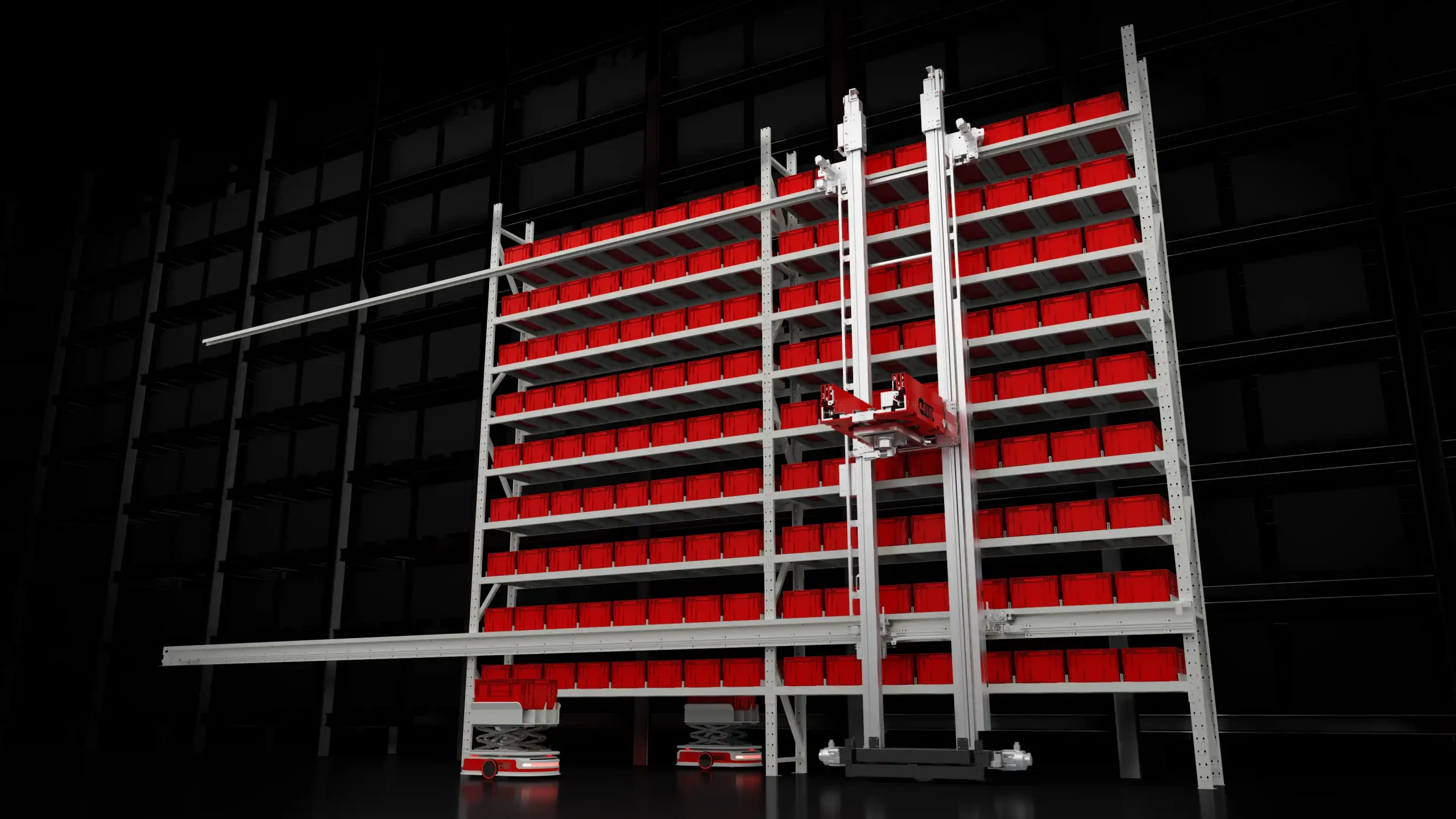
Shuttle systems use autonomous vehicles moving along rails to retrieve totes or cartons from dense storage arrays. These systems scale throughput by adding shuttles and achieve very high storage density. The SmartLoad-RackBot reduces implementation cycles by over 70% and cuts costs by over 20% compared to traditional miniLoad systems, while delivering more than double the speed. This performance advantage makes shuttle systems attractive for operations where throughput constraints limit growth.

PICKUPSTATION1

Where the ROI Actually Comes From

The financial case for integrated tracking and ASRS rests on measurable operational changes rather than theoretical efficiency gains. Understanding where savings materialize helps justify investment and set realistic expectations.

Labor cost reduction comes from multiple sources. Automated retrieval eliminates walking time between picks. Precise location data eliminates search time. Goods-to-person configurations keep workers at productive stations rather than traveling through aisles. These changes typically reduce labor hours per order by 40-60% compared to manual picking operations.

Inventory accuracy improvements reduce carrying costs. When you know exactly what you have and where it sits, safety stock requirements drop. Obsolescence decreases because items do not get lost and forgotten. Shrinkage falls because discrepancies become visible immediately rather than accumulating until the next physical count.

Space utilization gains often surprise operators accustomed to conventional storage. ASRS configurations routinely achieve 2-3 times the storage density of selective racking in the same footprint. For operations in expensive real estate markets or facilities approaching capacity, this density improvement can defer or eliminate expansion costs.

The FX-VCM Vertical Carousel Module demonstrates how these benefits combine in practice. The system stores diverse materials in a compact footprint while providing rapid access to any item. When combined with real-time tracking, operators know exactly which items are available and where they are positioned in the retrieval queue, reducing production delays caused by material unavailability.

How Real-Time Visibility Affects Operating Costs

Real-time inventory visibility reduces operating costs through mechanisms that traditional periodic counting cannot address. Manual cycle counts consume labor hours and still produce data that ages immediately after collection. Real-time systems provide continuous accuracy without dedicated counting staff.

The cost of misplaced inventory extends beyond the item’s value. When a picker cannot find an expected item, the order enters exception handling. Someone investigates. The customer may receive a partial shipment or experience delay. Expedited shipping may become necessary. Each exception costs far more than the item’s carrying cost.

Visibility also improves safety outcomes. When you know where personnel and equipment are located, you can prevent collisions and ensure workers stay clear of automated systems. Reduced incidents lower insurance costs and avoid the productivity loss that accompanies workplace injuries.

VCM2

What Implementation Actually Requires

Deploying integrated tracking and ASRS systems involves more complexity than installing equipment. Success depends on thorough preparation and realistic expectations about the transition period.

Start with detailed analysis of current operations. Document material flows, pick frequencies, storage requirements, and throughput targets. This baseline reveals which system configurations fit your operation and establishes metrics for measuring improvement. Skipping this step leads to systems optimized for theoretical operations rather than actual ones.

Technology selection must account for your specific materials and environment. Metal products interfere with certain RFID frequencies. High-density storage areas may create signal shadows for BLE tracking. Temperature extremes affect battery life in active tracking tags. If you are evaluating systems for facilities with unusual environmental conditions, discussing these constraints early prevents costly retrofits.

Integration with existing systems determines whether new technology enhances or complicates operations. Warehouse management systems need real-time feeds from tracking infrastructure. ERP systems need accurate inventory data to manage procurement and financial reporting. These connections require careful specification and testing before go-live.

Phased deployment reduces risk and allows learning. Starting with a single zone or product category lets operators develop proficiency before expanding. It also reveals integration issues at manageable scale rather than facility-wide disruption.

With 15 years of experience in industrial warehousing equipment, we have learned that implementation success depends as much on planning and support as on equipment selection. Different storage spaces and materials require different solutions, and getting that match right from the start prevents expensive corrections later.

HCM-2

How These Systems Position Warehouses for Future Demands

Automation and visibility investments create capabilities that extend beyond immediate efficiency gains. These systems establish infrastructure for responding to changes that manual operations cannot accommodate.

E-commerce growth continues driving smaller order sizes and faster fulfillment expectations. Manual picking operations struggle to scale throughput without proportional labor increases. Automated systems scale by adding capacity modules rather than hiring and training additional staff.

Supply chain disruptions have become more frequent and severe. Operations with real-time visibility can identify affected inventory immediately and adjust fulfillment priorities. Those relying on periodic counts may not discover problems until customer complaints arrive.

Labor market constraints show no signs of easing. Warehouse positions remain difficult to fill, and turnover rates stay high. Automation reduces dependence on labor availability while improving working conditions for remaining staff through ergonomic workstation design and elimination of repetitive walking.

These systems also generate data that enables continuous improvement. Every retrieval, every pick, every inventory movement creates records that reveal optimization opportunities. Operations using this data systematically outperform those relying on periodic observation and intuition.

Start the Conversation About Your Facility

Anhui Qiande Intelligent Technology Co., Ltd. brings 15 years of expertise in industrial warehousing equipment to every project. We provide solutions matched to your specific storage spaces and materials, ensuring systems perform as expected from day one.

Email: miaocp@qditc.com
Tel: +86 15262759399

Common Questions About Indoor Asset Tracking and ASRS

What ROI timeline should a mid-sized warehouse expect from ASRS and indoor tracking?

Return on investment typically materializes within 1-3 years, though the specific timeline depends on current operational inefficiencies, labor costs in your market, and throughput requirements. Facilities with high labor costs or significant inventory accuracy problems often see faster payback. A detailed assessment of your current operations provides the baseline needed for realistic projections rather than generic estimates.

How do these systems connect with warehouse software already in place?

Integration flexibility is essential because most facilities have existing WMS and ERP platforms they cannot replace. Our systems are designed for connection with standard warehouse software through documented interfaces. The integration process includes mapping data flows, testing connections, and validating that information moves correctly between systems before go-live. This approach minimizes disruption to operations that depend on existing software.

What problems typically emerge during indoor tracking deployment?

Signal interference from metal structures, integration complexity with legacy systems, and infrastructure cost concerns are the challenges we encounter most frequently. Site surveys before deployment identify interference issues so system design can compensate. Phased implementation reduces integration risk by limiting scope during initial deployment. Experienced support during deployment catches problems early when corrections are straightforward rather than after systems are fully operational.

Why does accurate asset tracking matter more now than five years ago?

Customer expectations for delivery speed have compressed fulfillment windows. Order sizes have shrunk while SKU counts have grown. Labor availability has tightened. These pressures make the inefficiencies that manual tracking tolerates increasingly costly. Operations that could absorb occasional misplaced inventory or extended search times when orders shipped in days cannot sustain those inefficiencies when fulfillment windows measure in hours. Reach out to discuss how tracking accuracy affects your specific operation.

If you’re interested, you may want to read the following articles:

WMS Barcode vs. RFID: Choosing Your Warehouse Tracking System
ASRS Price Guide 2025: Investment & ROI for Intelligent Warehouses
Vertical vs Horizontal Carousels: Optimizing Warehouse Automation

Automated Material Handling: Optimizing High-Mix Low-Volume Production

High-mix low-volume production floors run on a different logic than mass manufacturing. Changeovers happen daily, sometimes hourly. SKU counts climb into the hundreds. Demand shifts without warning. In this environment, material flow becomes the constraint that determines whether a facility meets delivery windows or falls behind. Traditional handling methods—manual carts, fixed conveyors, paper-based tracking—struggle to keep pace. Automated material handling systems offer a way forward, but only when the automation matches the variability these operations actually face.

Why Material Flow Breaks Down in High-Mix Low-Volume Operations

The core problem is not volume. It is variety. A facility producing 200 different part numbers in batches of 50 to 500 units cannot optimize around a single product path. Every changeover resets the material routing question: which components need to reach which workstation, in what sequence, and how quickly.

Manual handling absorbs this complexity through labor. Operators learn the floor, remember where things go, and adapt on the fly. But this approach scales poorly. As SKU counts grow and changeover frequency increases, error rates climb. A picker pulls the wrong component. A cart sits idle because no one noticed it was ready. A rush order waits while materials for a standard job occupy the staging area.

These are not dramatic failures. They are small delays that compound across shifts. A 2019 study by the Material Handling Institute found that facilities with more than 150 active SKUs and batch sizes under 1,000 units experienced 23% higher labor costs per unit moved compared to facilities with narrower product ranges. The difference came almost entirely from non-value-added handling time—searching, sorting, waiting, and correcting mistakes.

Lean manufacturing principles assume stable takt times and predictable material consumption. High-mix low-volume production violates both assumptions. The result is either excessive work-in-process inventory to buffer against uncertainty, or frequent stockouts that halt production. Neither outcome supports competitive delivery performance.

Where Flexible Automation Actually Fits

Flexible automation is a category, not a solution. The term covers everything from reconfigurable conveyors to fully autonomous mobile robots. What matters is whether a given technology matches the specific variability profile of the operation.

Automated Guided Vehicles follow fixed paths—magnetic tape, embedded wires, or painted lines. They excel at repetitive point-to-point transport where routes rarely change. In a high-mix environment, AGVs work best for trunk-line movement between major zones: receiving to storage, storage to production staging, finished goods to shipping. Their limitation is path rigidity. Changing a route means changing the physical infrastructure.

Autonomous Mobile Robots navigate dynamically using onboard sensors and mapping software. They handle the last-meter problem—delivering specific components to specific workstations as production schedules shift. AMRs adapt to layout changes without infrastructure modification, which matters when production cells reconfigure monthly or weekly.

The practical question is not which technology is better. It is which combination addresses the actual bottlenecks. A facility with stable zone-to-zone flows but chaotic workstation delivery might deploy AGVs for trunk lines and AMRs for final distribution. A facility with constantly shifting production cells might rely entirely on AMRs. The wrong choice creates expensive equipment that sits underutilized while the real constraint remains unaddressed.

Labor cost reduction is often cited as the primary benefit. Industry data suggests 25% to 35% reductions in material handling labor hours are achievable, depending on baseline automation levels and facility layout. But the more significant gain in high-mix environments is throughput flexibility—the ability to handle demand spikes without proportional labor increases and without the training lag that comes with scaling a manual workforce.

CharacteristicAGVsAMRs
Navigation methodFixed infrastructure (tape, wire, paint)Dynamic mapping with obstacle avoidance
Route flexibilityLow—changes require physical modificationHigh—software updates only
Initial costLower for simple, stable routesHigher due to sensor and software complexity
Best fit in HMLVTrunk-line transport between major zonesWorkstation delivery with variable routing
Scalability approachAdd units on existing pathsAdd units anywhere; system rebalances

RACKBOT

How Automated Storage Systems Support SKU Proliferation

The warehouse side of high-mix low-volume operations faces its own version of the variety problem. Hundreds of SKUs mean hundreds of storage locations. Manual picking across that range generates walking time that dominates labor hours.

Automated storage and retrieval systems compress the footprint and bring items to the picker rather than sending the picker to the items. Vertical carousel modules rotate shelves to present the needed bin at an ergonomic height. Vertical lift modules use an extractor to retrieve trays from a column of storage locations. Horizontal carousels spin bins past a fixed pick station.

The space savings are substantial—often 60% to 85% reduction in floor area compared to static shelving for the same SKU count. But the operational gain is pick rate improvement. A manual picker in a conventional warehouse might achieve 60 to 80 lines per hour. The same picker at an automated storage station can reach 200 to 400 lines per hour, depending on system configuration and order profile.

Integration with warehouse management systems and manufacturing execution systems determines whether these gains translate to production floor performance. The storage system needs to know what production needs, when it needs it, and in what sequence. Without that data link, the automation becomes a fast but disconnected island.

Real-time inventory visibility is the practical outcome of this integration. When the MES releases a work order, the WMS can stage materials in advance. When a component runs low at a workstation, the system can trigger replenishment before the operator notices the shortage. This kind of anticipatory material flow is difficult to achieve with manual processes and paper-based tracking.

Calculating Return on Investment for HMLV Automation

ROI calculations for automation projects often focus on direct labor replacement. A system that eliminates three full-time equivalent positions at $45,000 annual loaded cost each saves $135,000 per year. If the system costs $400,000, simple payback is just under three years.

This calculation is not wrong, but it is incomplete. High-mix low-volume operations generate additional value from automation that does not appear in headcount reduction.

Throughput flexibility means the facility can accept orders it would otherwise decline or delay. If automation enables an additional $500,000 in annual revenue at 30% contribution margin, that adds $150,000 to the annual benefit—more than the direct labor savings.

Error reduction affects both internal costs and customer relationships. A 2021 survey by Warehousing Education and Research Council found that facilities with automated picking reported 0.1% to 0.3% error rates compared to 1% to 3% for manual operations. Each error generates rework, expedited shipping, or customer credits. At scale, the cost difference is material.

Space utilization improvements may defer or eliminate capital expansion. If automated storage avoids a $2 million warehouse addition, the present value of that deferral belongs in the ROI calculation.

Energy consumption varies significantly by system type. Some automated storage systems consume less than 35% of the energy per pick compared to conventional forklift-served racking, primarily because they eliminate the need to heat, cool, and light aisles that humans would otherwise occupy.

Facilities that account for these secondary benefits typically see payback periods of 18 to 30 months rather than the 36 to 48 months suggested by labor-only calculations.

VCM2

What a Phased Implementation Looks Like

Automation projects fail most often at the integration boundary—the point where new systems must communicate with existing infrastructure, processes, and people. A phased approach reduces this risk by limiting the scope of each integration challenge.

The first phase is typically assessment and baseline measurement. What are the actual material flows today? Where do delays occur? Which SKUs move most frequently, and which sit idle? This data shapes system selection and sizing. Assumptions based on ERP data alone often miss the informal workarounds that operators have developed to cope with system limitations.

The second phase addresses the highest-impact constraint with the lowest integration complexity. For many facilities, this means automated storage for high-velocity components—the 20% of SKUs that account for 80% of picks. The integration requirement is a data feed from the WMS or MES, which most modern systems support through standard protocols.

The third phase extends automation to material transport. AGVs or AMRs connect the automated storage to production staging areas. This phase requires more careful integration because transport systems must respond to real-time production signals, not just scheduled replenishment cycles.

Subsequent phases might include automated kitting, robotic palletizing, or integration with quality inspection systems. Each phase builds on the data infrastructure and operational learning from previous phases.

Workforce training runs parallel to technical implementation. Operators who understand how the automation works—not just which buttons to press, but why the system makes the decisions it makes—contribute to continuous improvement. They notice when the system’s behavior does not match floor reality and can articulate what needs to change.

HCM-1

Where the Technology Is Heading

The current generation of material handling automation relies heavily on predefined rules. The WMS tells the storage system which bin to retrieve. The fleet management software assigns transport tasks to specific vehicles based on location and availability. Human planners set the parameters that govern these decisions.

The next generation will shift more decision-making to the systems themselves. Machine learning algorithms will analyze historical patterns to predict which materials will be needed before work orders are released. Transport systems will optimize routes across the entire fleet rather than assigning tasks one at a time. Storage systems will reorganize themselves overnight, moving high-velocity items to faster-access locations based on recent demand patterns.

This shift does not eliminate human judgment. It changes where that judgment applies. Planners will spend less time on routine scheduling and more time on exception handling and strategic decisions. The systems will handle the predictable; humans will handle the novel.

Collaborative robotics will extend automation into tasks that currently require human dexterity. Picking irregularly shaped items, assembling kits with variable contents, and loading mixed pallets are all targets for the next wave of development. These applications matter particularly in high-mix environments where the variety of tasks has historically limited automation feasibility.

The facilities that benefit most from these advances will be those with clean data, well-documented processes, and workforces comfortable with technology. The automation is only as good as the information it receives and the people who maintain it.

Discussing Your Specific Material Flow Challenges

If your operation faces the combination of high SKU counts, frequent changeovers, and unpredictable demand that defines high-mix low-volume manufacturing, the material handling constraints described here are probably familiar. Anhui Qiande Intelligent Technology has spent 15 years developing storage and retrieval systems specifically for these conditions. To explore whether our approach fits your situation, contact us at miaocp@qditc.com or +86 15262759399.

Frequently Asked Questions

What specific improvements can automated material handling deliver in a high-mix low-volume facility?

The measurable improvements cluster around four areas. Labor hours per unit moved typically drop 25% to 35% as automation handles repetitive transport and retrieval tasks. Inventory accuracy improves from the 95% to 97% range common in manual operations to 99% or higher with automated tracking. Pick error rates fall by an order of magnitude—from 1% to 3% down to 0.1% to 0.3%. Throughput flexibility increases because the facility can handle demand spikes without proportional labor scaling. The relative importance of each benefit depends on the specific operation. A facility with high labor costs and stable demand might prioritize the labor reduction. A facility serving customers with strict quality requirements might value the error reduction most.

How do AGVs and AMRs handle the constant layout changes in high-mix production?

AGVs handle layout changes poorly. Their fixed-path navigation means any route modification requires physical infrastructure work—moving tape, rewiring sensors, or repainting lines. This limits their usefulness to stable trunk-line routes that rarely change. AMRs handle layout changes through software. When production cells move, the AMR fleet updates its map and continues operating. Some systems require a manual mapping run after major changes; others update continuously using SLAM (simultaneous localization and mapping) algorithms. The practical difference is downtime. An AGV path change might take a maintenance crew several hours. An AMR map update might take minutes. For facilities that reconfigure production cells monthly or more frequently, this difference determines whether mobile automation is viable at all.

Can we add automation to our existing facility without shutting down production?

Phased implementation specifically addresses this concern. Most automated storage systems install in sections, with each section becoming operational before the next begins. Transport automation typically starts with a pilot zone before expanding facility-wide. The integration work—connecting new systems to existing WMS, MES, and ERP platforms—happens in parallel with physical installation and can be tested in staging environments before going live. The realistic expectation is not zero disruption but managed disruption. Individual zones or shifts may experience temporary constraints during cutover periods. Planning these cutovers around lower-demand periods and building buffer inventory for critical items reduces the operational impact. Facilities that attempt to automate everything at once face higher risk of extended disruption than those that proceed in phases. If you are evaluating a phased approach for your facility, we can walk through the sequencing options based on your specific layout and constraints.

If you found this discussion useful, you may want to read the following articles:

WMS Pricing 2025: Drivers, Budgeting, and ROI Strategies
ASRS Software Architecture: Integrating WCS, WMS, and ERP
WCS Real-Time Control: Millisecond Response Prevents Bottlenecks
ASRS Solutions for China Manufacturing: Factory Pricing & Integration Guide

Smart Warehouse Technology 2025: Optimizing WMS, WCS, and Automated Storage

Smart warehouse technology in 2025 has moved past the pilot phase. What we see now across manufacturing and distribution clients is a clear split: operations that integrated WMS, WCS, and automated storage early are pulling ahead on fulfillment speed and labor efficiency, while those still running manual processes face compounding pressure from e-commerce volume growth and tighter delivery windows. The systems themselves have matured. Cloud-based WMS platforms handle demand spikes without infrastructure overhauls. Shuttle systems and vertical lift modules recover floor space that manual racking wastes. The question for most operations is no longer whether to automate, but which components deliver returns fastest given their specific material types, order profiles, and labor constraints.

Why Smart Warehouse Technology Became Non-Negotiable After 2024

The shift happened faster than most forecasts predicted. E-commerce order volumes grew at rates that manual picking simply cannot match without proportional headcount increases, and labor availability has not kept pace. Global supply chain disruptions exposed how little buffer traditional warehouses carry. When a single delayed shipment cascades through weeks of backorders, the cost of reactive operations becomes visible on the balance sheet.

Smart warehouse technology addresses this by building response capability into the system architecture itself. Real-time inventory tracking means knowing exactly what is on hand, where it sits, and how fast it moves. Predictive analytics flag reorder points before stockouts occur rather than after. Automated material handling removes the bottleneck of human picking speed for high-volume SKUs. These are not theoretical benefits. Operations running integrated systems report measurable improvements in order accuracy, fulfillment cycle time, and labor cost per unit shipped.

The strategic value extends beyond daily operations. Data-driven decision making becomes possible when every movement generates a record. Seasonal demand patterns emerge from historical data. Slow-moving inventory gets identified before it consumes premium storage space. Capacity planning shifts from guesswork to simulation. For operations competing on delivery speed and reliability, this visibility is the foundation everything else builds on.

What Modern WMS Platforms Actually Do Beyond Inventory Counts

Warehouse Management Systems have evolved considerably from their origins as digital ledgers tracking what came in and what went out. A WMS today functions as the operational brain of the facility, coordinating inventory placement, pick path optimization, labor allocation, and order prioritization in real time.

The AI integration that has become standard in leading platforms delivers measurable efficiency gains. Predictive algorithms analyze order patterns and adjust inventory slotting so high-velocity items stay in accessible locations. Pick route optimization reduces travel time per order, with implementations reporting improvements up to 20% in picker productivity. These calculations happen continuously, adapting to changing order profiles rather than relying on static rules set during initial configuration.

Cloud-based deployment has removed a significant barrier to adoption. Operations no longer need dedicated server infrastructure or IT staff to maintain on-premise systems. Scalability follows demand: seasonal peaks that would overwhelm fixed-capacity systems simply draw additional cloud resources. Updates and security patches deploy automatically. For mid-sized operations that previously could not justify enterprise WMS investments, cloud platforms have made sophisticated inventory management accessible.

The practical impact shows in order fulfillment metrics. Accurate inventory data eliminates the phantom stock problem where systems show availability but physical shelves are empty. Wave planning optimizes batch picking for efficiency while meeting shipping cutoff windows. Labor management modules track productivity by task type, identifying training needs and process bottlenecks. When integrated with upstream ERP systems and downstream shipping platforms, the WMS becomes the coordination layer that keeps goods flowing through the facility without manual intervention at every handoff.

How WCS Coordinates Automated Equipment Without Human Intervention

Warehouse Control Systems occupy a different layer in the technology stack than WMS platforms. Where WMS handles strategic decisions about what should happen, WCS handles the real-time execution of how automated equipment makes it happen. The distinction matters because automated facilities depend on precise coordination between machines that operate at speeds no human supervisor could match.

A WCS directs conveyors, sortation systems, robotic arms, and automated storage equipment through continuous command streams. When an order releases from the WMS, the WCS translates that instruction into specific equipment actions: which conveyor lane to route the tote, which robot to dispatch for picking, which storage location to retrieve from. This translation happens in milliseconds, with the WCS monitoring equipment status and adjusting task assignments when machines slow down or require maintenance.

System interoperability is where WCS delivers its core value. Modern warehouses rarely run single-vendor automation. Conveyors from one manufacturer, robots from another, storage systems from a third. The WCS provides the integration layer that allows these disparate systems to operate as a unified whole. Without it, each automation island would require manual coordination at the boundaries, defeating much of the efficiency gain.

The real-time control capability also enables dynamic response to exceptions. A jammed conveyor section triggers automatic rerouting through alternate paths. A robot battery running low prompts task reassignment to a fully charged unit. Equipment failures get isolated before they cascade into system-wide stoppages. This responsiveness is what separates automated facilities that achieve high uptime from those that spend hours daily troubleshooting coordination failures.

FeatureWMS (Warehouse Management System)WCS (Warehouse Control System)WES (Warehouse Execution System)
Primary RoleStrategic planning, inventory, labor managementReal-time equipment control, task executionIntegrated orchestration, real-time decision
ScopeEntire warehouse operationsSpecific automated equipmentBlends WMS and WCS functions
Key FunctionsOrder processing, inventory allocationConveyor control, robot dispatchingDynamic task assignment, workflow optimization
Data FocusBusiness rules, historical dataEquipment status, immediate commandsReal-time operational data, predictive
IntegrationERP, CRMPLC, SCADAWMS, WCS, ERP, IoT

Which AS/RS Configuration Fits Your Material Profile

Automated Storage and Retrieval Systems represent the physical infrastructure that makes high-density, high-speed warehousing possible. The technology has diversified significantly, with different AS/RS types optimized for different material characteristics, throughput requirements, and facility constraints.

The performance benchmarks are substantial. Well-implemented AS/RS installations achieve storage density improvements of 85% compared to conventional racking, recovering floor space that can be repurposed or eliminating the need for facility expansion. Picking accuracy reaches 99.9% when human selection errors are removed from the process. These numbers translate directly to operational savings: fewer mis-ships, reduced returns processing, and lower inventory carrying costs from tighter stock control.

Vertical Lift Modules work particularly well for operations handling oversized or heavy items that do not fit standard tote dimensions. The PG-VLM configuration handles ultra-long and ultra-wide materials, molds, and heavy auxiliary components with tray capacities reaching 1000kg. The vertical footprint recovers floor space while the enclosed design protects stored materials from dust and damage.

Shuttle systems address different requirements, optimizing for high-throughput case and tote handling where speed matters more than individual item weight. The shuttle carriers move horizontally within rack structures, delivering goods to pick stations at rates that manual retrieval cannot approach.

AGVs and AMRs handle the horizontal transport layer, moving goods between storage zones, work stations, and shipping areas. The SmartLoad-RackBot reduces implementation timelines by over 70% compared to traditional miniload systems while cutting costs by over 20%. The multi-directional picking capability handles varied SKU profiles without the rigid lane assignments that limit conventional systems. RACKBOT

The selection decision depends on your specific operation: material dimensions and weights, order velocity, available ceiling height, and integration requirements with existing equipment. A facility handling heavy tooling has different optimal configurations than one fulfilling small-parcel e-commerce orders.

Where Smart Warehouse Technology Delivers Measurable Supply Chain Gains

The efficiency improvements from smart warehouse technology compound across the supply chain rather than staying isolated within facility walls. End-to-end visibility and predictive analytics from integrated systems reduce lead times by 15-20% while improving forecast accuracy. These are not abstract metrics. Shorter lead times mean faster customer delivery. Better forecasts mean lower safety stock requirements and reduced working capital tied up in inventory.

Real-time data flow enables response speeds that batch-processed systems cannot match. When a supplier shipment arrives early or late, inventory positions update immediately. When a large order drops, allocation happens before the goods physically move. When a carrier misses a pickup window, affected orders get flagged for customer communication. This continuous information flow replaces the daily or weekly reconciliation cycles that leave traditional operations flying partially blind.

Demand forecasting accuracy improves because the data feeding the models is clean and current. Historical patterns emerge from transaction records rather than spreadsheet estimates. Seasonal variations get quantified precisely. The result is inventory positioning that matches actual demand patterns rather than conservative overstock buffers.

Cost reduction comes from multiple sources. Labor allocation optimizes around actual workload rather than fixed schedules. Material waste decreases when inventory accuracy prevents over-ordering. Energy consumption drops when automated systems operate only when needed rather than running continuously. Space utilization improves when storage density increases. Each efficiency gain may seem incremental in isolation, but the cumulative effect reshapes the cost structure of the operation.

What Warehouse Technology Investments Will Still Matter in 2028

The technology trajectory points toward deeper integration and more autonomous decision-making. Digital twin implementations are moving from experimental to operational, creating virtual replicas of physical facilities that enable simulation before committing to changes. Testing a new layout, evaluating equipment additions, or modeling demand scenarios becomes possible without disrupting live operations.

Sustainable warehousing practices are gaining traction as energy costs rise and customers increasingly factor environmental impact into supplier selection. Automated systems that optimize energy consumption, LED lighting with occupancy sensors, and electric material handling equipment all contribute to reduced operational footprint.

AI and machine learning applications continue expanding beyond current implementations. The next generation of systems will handle more complex optimization problems: dynamic slotting that adjusts continuously rather than periodically, predictive maintenance that schedules repairs before failures occur, and autonomous exception handling that resolves routine problems without human intervention.

Cybersecurity requirements are intensifying as warehouse systems become more connected. The same integration that enables efficiency also creates attack surfaces. Operations investing in smart warehouse technology need corresponding investment in security architecture, access controls, and monitoring capabilities.

Modular system designs are becoming standard for operations that need flexibility. The FX-VCM Vertical Carousel Module exemplifies this approach, with specifications that adapt to diverse application scenarios and maximize storage within constrained spaces. Modular architecture allows capacity expansion without wholesale system replacement. VCM1

If your operation is evaluating smart warehouse technology investments, the configuration details matter significantly for achieving projected returns. Discussing your specific material profiles, throughput requirements, and facility constraints with experienced solution providers helps identify which components deliver value fastest for your situation.

Frequently Asked Questions About Smart Warehouse Technology

How does smart warehouse technology actually improve supply chain efficiency in practice?

The improvements show up in specific operational metrics rather than general capability claims. Real-time inventory visibility eliminates the lag between physical movements and system records, so allocation decisions work from accurate data. Automated picking and packing removes the speed ceiling that manual processes impose. Labor costs per unit shipped decrease as automation handles repetitive tasks. Forecasting accuracy improves because the underlying data is cleaner and more granular. The cumulative effect is faster fulfillment, fewer errors, and better resource utilization, all of which flow through to customer experience and operating margins.

Which system do I actually need: WMS, WCS, or WES?

The answer depends on your current automation level and where you are headed. WMS is foundational for any operation beyond basic manual tracking, handling inventory management, order processing, and labor coordination. WCS becomes necessary when you add automated equipment that requires real-time control and coordination. WES makes sense for highly automated facilities where the boundary between strategic planning and execution control needs to blur for optimal performance. Many operations start with WMS, add WCS as automation expands, and eventually consider WES when integration complexity justifies a unified platform. The right starting point is whatever matches your current state while leaving room for the automation investments you are planning.

What kind of payback period should I expect from AS/RS implementation?

ROI timelines typically fall between 18 months and 3 years, though the range reflects significant variation in starting conditions and implementation scope. Operations with high labor costs, expensive real estate, or accuracy problems that generate returns and rework see faster payback. The calculation needs to account for labor savings, space recovery value, inventory carrying cost reduction, accuracy improvements, and throughput gains. A detailed analysis using your actual cost structure and operational data produces more useful projections than industry averages. To discuss how these factors apply to your specific situation, contact Anhui Qiande Intelligent Technology at +86 15262759399 or miaocp@qitc.com.

If you’re interested, you may want to read the following articles:

Smart Warehouse Digital Services: Predictive Maintenance & Data Analytics
Vertical Sort Modules: Cutting Pick Errors in Retail Distribution
ASRS Software Architecture: Integrating WCS, WMS, and ERP

Warehouse Storage Systems: Manual Racking vs. Automated ASRS

Understanding Manual Racking Systems: Foundations of Warehouse Storage

Manual racking systems remain the baseline approach to warehouse storage, relying on human operators and mechanical equipment like forklifts for material handling. These systems are characterized by straightforward design and direct accessibility, making them suitable for a wide array of industrial applications. Common configurations include pallet racking, designed for bulk storage of palletized goods; shelf racking, ideal for smaller, individually stored items; drive-in racking, which maximizes space utilization by allowing forklifts to drive directly into storage lanes; and selective racking, offering immediate access to every pallet.

Racking TypeBest Use CasesKey Characteristics
SelectiveHigh SKU variety, direct access neededVersatile, common, good accessibility
Drive-InHigh-volume, low-SKU items, last-in/first-outMaximizes space, dense storage
Push-BackMedium-volume, multiple SKUs per lane, last-in/first-outIncreased density over selective, good access
Pallet FlowHigh-volume, first-in/first-outGravity-fed, ideal for perishable goods
CantileverLong, bulky items like timber or pipesOpen front, easily adjustable

HCM-1

Where Manual Racking Makes Financial Sense

Manual racking systems offer distinct advantages, primarily their low capital expenditure compared to automated alternatives. This makes them an attractive option for businesses operating with budget constraints or those requiring immediate, cost-effective storage deployment. Their inherent flexible storage capacity allows for easy reconfiguration and adaptation to changing inventory profiles and warehouse layouts. Operations are generally simple, requiring less specialized training for personnel, and maintenance procedures are typically straightforward, contributing to lower ongoing costs. A distribution center handling seasonal inventory spikes, for instance, can add or remove racking bays without major capital outlays or system downtime.

What Slows Down Manual Systems Over Time

Despite their advantages, manual systems present certain operational constraints. They are inherently labor-intensive, leading to higher labor costs over time due to wages, benefits, and training. The reliance on human operators also increases the potential for picking errors, impacting inventory accuracy and order fulfillment rates. Achieving optimal operational efficiency can be challenging, particularly in high-throughput environments, as human speed and endurance are finite. Ensuring consistent adherence to safety standards requires continuous training and supervision, and scalability challenges can arise when operations grow rapidly, making expansion complex and disruptive.

How Automated ASRS Solutions Change the Storage Equation

Automated ASRS solutions, or Automated Storage and Retrieval Systems, represent a significant advancement in industrial warehousing. These systems are designed to automatically place and retrieve items from designated storage locations with precision and speed, fundamentally transforming storage and retrieval processes. Common configurations include FX-VCM Vertical Carousel Modules, PG-VLM Vertical Lift Modules, FXH-HCM Horizontal Carousel Modules, SN-VSM Vertical Sort Modules, and the SmartLoad-RackBot. These systems integrate robotics in warehousing with sophisticated inventory management software to achieve superior supply chain optimization.

RACKBOT

What Throughput Gains Can You Expect from ASRS

Automated ASRS solutions deliver substantial benefits for modern industrial operations. They provide increased throughput by automating repetitive tasks, significantly accelerating picking and putaway processes. This automation also leads to superior picking accuracy, drastically reducing errors and improving order fulfillment reliability. ASRS systems excel in space optimization, often utilizing vertical space more effectively than manual systems, allowing for high-density storage. They reduce reliance on manual labor, leading to reduced labor costs and mitigating labor shortages. Enhanced safety is another critical advantage, as automated systems minimize human interaction with heavy machinery. These systems also offer real-time inventory tracking, providing precise data for better management decisions.

What Makes ASRS Implementation Complex

Implementing ASRS technology involves specific considerations and potential challenges. The most prominent is the high capital investment required for system acquisition and installation. Successful deployment demands complex system integration with existing warehouse management systems and other material handling equipment. Ongoing maintenance requirements for sophisticated machinery necessitate specialized technical expertise. Companies must also account for the need for skilled personnel to operate and maintain these advanced systems. A thorough ROI calculation is essential to justify the initial investment, considering both direct and indirect benefits. Careful scalability planning is crucial to ensure the system can adapt to future growth and evolving business needs.

How to Match Your Warehouse Storage System to Actual Operations

Selecting the appropriate warehouse storage system requires a strategic framework that considers various operational parameters. A detailed cost-benefit analysis should evaluate the financial implications of both manual and automated systems, looking beyond initial setup costs to long-term operational expenses. Assess your required operational efficiency and throughput targets; high-volume, rapid-turnover operations often benefit more from automation. Analyze your current and projected storage capacity needs, considering factors like available footprint and vertical space. The product characteristics, including size, weight, fragility, and storage conditions, heavily influence system suitability. Plan for future expansion and how each system type can accommodate growth without major disruptions. The decision should align with your overarching logistics strategy and expected return on investment.

FeatureManual Racking SystemsAutomated ASRS Solutions
Initial CostLowHigh
SpeedModerate, labor-dependentHigh, machine-driven
Space UseGood, but often limited by aisle widthExcellent, high-density vertical storage
FlexibilityHigh, easy to reconfigureModerate, system-dependent
Labor NeedsHighLow
AccuracyVariable, human error potentialHigh, system-controlled

PICKUPSTATION1

When Hybrid Warehouse Solutions Outperform Either System Alone

Optimizing warehouse operations frequently involves more than selecting a single storage system; it often requires integrating diverse solutions for maximum efficiency. Hybrid warehouse solutions strategically combine manual and automated systems, allowing businesses to capitalize on the strengths of each system while mitigating their respective weaknesses. High-volume, fast-moving items might be managed by an automated system like the FXH-HCM Horizontal Carousel Modules, which achieve horizontal rotation of storage shelves through a slewing system, while slower-moving or oversized items could reside in manual racking. Effective system integration is paramount, connecting various material handling equipment with robust inventory management systems and warehouse layout optimization. If your operation handles both high-velocity SKUs and irregular bulk items, it may be worth discussing how a hybrid configuration could address both needs before committing to a single system type.

VCM2

Why Manual Racking Still Works for Certain Operations

Despite advancements in automation, manual racking relevance persists in modern warehousing due to several compelling factors. For small warehouse solutions or operations with limited capital, manual systems offer a highly budget-friendly warehousing option without compromising functionality. Businesses characterized by low throughput operations or those handling a diverse range of specialized storage needs that do not lend themselves to automation find manual racking systems to be more practical and cost-effective. These systems provide flexible storage solutions that can be easily adapted to accommodate irregular item sizes, fluctuating inventory levels, or unique handling requirements. The simplicity of operation and maintenance also makes manual racking ideal for environments where technical expertise for complex automated systems is not readily available.

What This Means for Your Storage Strategy

The strategic decision between manual racking and automated ASRS solutions is fundamental to optimizing warehouse operations and ensuring a resilient storage system strategy. Each approach offers distinct advantages and considerations, making a one-size-fits-all solution impractical. A well-conceived strategy, potentially incorporating hybrid models, is essential for future-proof warehousing and achieving superior industrial logistics. To discuss your specific storage requirements and explore which configuration fits your operation, contact Anhui Qiande at miaocp@qditc.com or call +86 15262759399.

VCM2

Frequently Asked Questions About Warehouse Storage Systems

What is the typical ROI for implementing an ASRS system?

ASRS systems typically offer an ROI within 2 to 5 years through significant reductions in labor costs, increased throughput, and optimized space utilization. The actual timeline varies based on system complexity and operational scale. Factors like energy consumption and maintenance should also be factored into the calculation.

How does manual racking compare in terms of initial investment vs. long-term operational costs?

Manual racking systems have a significantly lower initial investment compared to automated ASRS solutions. Their long-term operational costs are generally higher due to reliance on manual labor, which incurs ongoing wages, benefits, and potential for human error affecting efficiency and safety.

Which warehouse storage system is best for small to medium-sized warehouses?

For small to medium-sized warehouses, the best system depends on specific needs. Manual racking offers cost-effectiveness and flexibility for lower volumes and diverse product types. Hybrid solutions or smaller-scale automated systems like vertical lift modules can provide significant efficiency gains even in limited spaces if growth and throughput are priorities. If you are evaluating options for a specific facility size, reach out to discuss which configuration matches your throughput targets and budget.

If you’re interested, you may want to read the following articles:

Finding a Reliable Vertical Carousel Storage System Manufacturer
Vertical Sort Module: Intelligent Automation for Modern Warehouses
Intelligent Storage Systems: VLM, VSM, VCM, VBM, ASRS Comparison

China’s Top Warehouse Automation Firms: Sourcing Insights

The Chinese warehouse automation market is expanding at a pace that catches even experienced logistics professionals off guard. Economic growth, e-commerce fulfillment pressure, and rising labor costs are pushing companies toward automation faster than most five-year plans anticipated. What makes this market distinct is not just its scale but the speed at which new technologies move from prototype to production floor. Firms that hesitated two years ago now find themselves competing against rivals who automated early and captured efficiency gains that compound quarter over quarter.

What is actually driving the shift toward warehouse automation in China right now

Labor cost increases tell only part of the story. The real pressure comes from delivery time expectations that have compressed from days to hours in major urban centers. E-commerce platforms set the benchmark, and industrial distributors now face the same customer expectations whether they ship consumer goods or precision components. This compression forces warehouses to rethink throughput at every stage, from receiving to dispatch.

Digital upgrading has become a board-level priority across manufacturing and distribution sectors. Companies are not simply adding automation equipment to existing workflows. They are redesigning workflows around what automation makes possible. Modular system designs allow phased implementation, which reduces upfront capital exposure while still capturing incremental efficiency gains. The firms gaining ground are those treating automation as an operational architecture decision rather than an equipment purchase.

China’s position as a manufacturing hub for automation equipment creates a sourcing advantage that buyers elsewhere cannot easily replicate. Proximity to component suppliers, integration specialists, and system engineers shortens implementation timelines and reduces coordination friction. This ecosystem density explains why automation solutions developed for Chinese warehouses often reach cost-effectiveness thresholds that would take years longer in markets with less concentrated supply chains.

Where AS/RS systems deliver the clearest efficiency gains

Automated Storage and Retrieval Systems form the structural backbone of high-throughput warehouses. These systems replace manual forklift operations with mechanized placement and retrieval, which eliminates the variability that comes with human operators navigating dense storage environments. The efficiency gain is not marginal. Facilities running AS/RS consistently report retrieval times measured in seconds rather than minutes.

Mini-load AS/RS configurations handle smaller items and cartons, making them well-suited for distribution centers managing diverse SKU counts. Unit-load systems address pallet-scale operations where vertical storage density matters most. Shuttle-based designs introduce flexibility by allowing robotic shuttles to move horizontally within rack structures, which enables reconfiguration as product mix changes. Vertical lift modules present items at ergonomic heights, reducing operator fatigue and picking errors in facilities that still require human involvement at the retrieval point.

TOWERMAT

The choice between these configurations depends on product characteristics, order profiles, and facility constraints. A warehouse handling high-velocity small parts will benefit from mini-load density, while a facility managing heavy raw materials needs unit-load capacity. The decision framework should start with throughput requirements and work backward to system selection rather than starting with equipment specifications.

How robotics and AGVs are reshaping material flow inside warehouses

Automated Guided Vehicles follow fixed paths using floor markers, wires, or laser guidance. They excel in environments with predictable routing and consistent load types. Autonomous Mobile Robots navigate dynamically, adjusting paths in real time based on obstacles and traffic. This distinction matters operationally because AGVs require infrastructure investment in guidance systems while AMRs can deploy into existing facilities with minimal modification.

Collaborative robots work alongside human operators rather than replacing them entirely. In picking and packing operations, cobots handle repetitive lifting and placement tasks while humans manage exception handling and quality checks. This division of labor captures automation benefits without requiring full process redesign.

TechnologyPrimary FunctionKey BenefitTypical Application
FX-VCMVertical Carousel StorageSpace OptimizationMold inspection tools, archives, electrical components
PG-VLMVertical Lift StorageHeavy Material HandlingUltra-long/wide materials, raw materials, valuable finished goods
FXH-HCMHorizontal Carousel StorageDense Automated StorageLimited height scenarios, high-density item storage
SN-VSMVertical Sort ModuleAutomated Sorting & RetrievalTurnover boxes, integration with AGVs/conveyors
SmartLoad-RackBotHigh-Speed Item HandlingReduced Implementation CycleMulti-directional picking, integration with automation devices

The SmartLoad-RackBot reduces implementation cycles by over 70% and cuts costs by over 20% compared to traditional miniLoad systems. These figures matter because implementation timeline often determines whether an automation project delivers ROI within the planning horizon or becomes a sunk cost that takes years to recover.

What to verify when evaluating Chinese warehouse automation suppliers

Supplier evaluation in this market requires looking beyond equipment specifications. Track record matters, but the relevant track record is not just years in business. It is successful deployments in facilities with similar throughput requirements, product characteristics, and integration complexity. A supplier with extensive experience in consumer goods fulfillment may not translate that expertise effectively to industrial component distribution.

Technology stack compatibility deserves careful attention. Automation equipment does not operate in isolation. It connects to warehouse management systems, enterprise resource planning platforms, and often to customer-facing order systems. Integration capability determines whether new automation equipment enhances existing operations or creates data silos that require manual bridging.

Customization capacity separates suppliers who can adapt standard products to specific operational requirements from those who offer only catalog configurations. Warehouses rarely present textbook conditions. Ceiling heights, floor load capacities, existing equipment, and workflow constraints all influence what configurations will actually work. Suppliers who can modify designs to accommodate real-world constraints deliver better outcomes than those who require facilities to adapt to equipment limitations.

RACKBOT

Financial stability of the supplier affects long-term support availability. Automation equipment has operational lifespans measured in decades. Spare parts, software updates, and technical support need to remain available throughout that lifespan. Suppliers with strong research and development investment tend to maintain support infrastructure longer because they continue generating revenue from the installed base.

If your facility has specific integration requirements or unusual product handling characteristics, discussing those constraints early in the evaluation process saves time for both parties.

How to verify quality and reliability before committing to a Chinese automation supplier

Quality verification starts with establishing clear specifications before engaging suppliers. Vague requirements produce vague proposals, which makes meaningful comparison difficult. Detailed specifications covering throughput rates, error tolerances, uptime requirements, and integration protocols give suppliers concrete targets and give buyers clear evaluation criteria.

Factory audits reveal more than marketing materials. Observing manufacturing processes, quality control checkpoints, and testing procedures provides direct evidence of how a supplier actually operates. Audits also create opportunities to assess workforce capability, equipment condition, and organizational discipline. These observations inform judgments about whether a supplier can consistently deliver what they promise.

International certifications, particularly ISO standards, provide baseline assurance about quality management systems. Certifications do not guarantee product quality, but they indicate that a supplier has invested in systematic quality processes. The absence of relevant certifications in a market where competitors hold them raises questions worth investigating.

Third-party inspection services offer impartial verification at critical stages. Pre-shipment inspection catches defects before they become installation problems. Installation verification confirms that equipment performs to specification in the actual operating environment. These services add cost but reduce risk, particularly for buyers without local presence to conduct their own inspections.

What determines ROI timelines for warehouse automation investments

ROI calculation requires honest accounting of both costs and benefits. Equipment purchase price is the most visible cost, but installation, integration, training, and operational adjustment costs often exceed equipment costs for complex implementations. Benefits include labor cost reduction, throughput improvement, inventory accuracy gains, and error rate reduction. Each benefit category requires measurement against a realistic baseline, not an idealized comparison.

Labor cost reduction is typically the largest benefit category, but the calculation is more nuanced than headcount reduction multiplied by average wage. Automation often shifts labor requirements rather than eliminating them entirely. Operators become system monitors, maintenance technicians become more specialized, and new roles emerge for data analysis and exception handling. The net labor impact depends on how effectively the organization manages this transition.

Throughput improvement compounds over time as operators and systems optimize together. Initial performance rarely matches steady-state performance. Planning should account for a ramp-up period during which throughput gradually increases toward design capacity. Facilities that plan for this ramp-up avoid disappointment during the early months of operation.

gq-smartload3

Scalability planning affects long-term ROI. Systems designed with expansion capacity cost more initially but avoid the disruption and expense of major retrofits when volume growth requires additional capacity. The trade-off between initial cost and future flexibility depends on growth projections and the confidence level around those projections. Facilities with high growth certainty should invest in scalability. Facilities with uncertain growth trajectories may prefer lower initial investment with acceptance of future retrofit costs.

Predictive maintenance capabilities, enabled by data analytics, extend equipment lifespan and reduce unplanned downtime. These benefits are harder to quantify in advance but often prove significant over multi-year operating periods. Systems that generate operational data and provide analytical tools for interpreting that data deliver ongoing optimization opportunities beyond initial implementation.

What Anhui Qiande Intelligent Technology brings to warehouse automation projects

Anhui Qiande Intelligent Technology brings 15 years of experience in industrial warehousing equipment, addressing storage space challenges and material handling requirements across diverse facility types. The company specializes in intelligent logistics systems with customization capabilities that adapt standard products to specific operational conditions.

The product range includes Vertical Carousel Modules for materials ranging from mold inspection tools to electrical components, Vertical Lift Modules for ultra-long and heavy items, and Horizontal Carousel Modules for dense storage in facilities with height constraints. Vertical Sort Modules handle automated sorting and retrieval of turnover boxes with integration capability for AGVs and conveyor systems.

Modular design philosophy runs through the product line, enabling phased implementation that matches capital availability and operational readiness. Integration capabilities allow these systems to connect with existing warehouse management platforms and material handling equipment, reducing the isolation that sometimes occurs when new automation equipment operates separately from established workflows.

Where warehouse automation technology in China is heading next

Artificial intelligence is moving from research demonstrations to production applications in logistics. AI algorithms now drive inventory positioning decisions, route optimization within facilities, and predictive maintenance scheduling. These applications deliver measurable efficiency gains, but they also require data infrastructure that many facilities have not yet built. The gap between AI capability and AI readiness creates implementation challenges that suppliers and buyers need to address together.

Robotic systems are becoming more capable and more affordable simultaneously. Advances in sensing, processing, and actuation enable robots to handle tasks that required human judgment just a few years ago. Cost reductions from manufacturing scale and component standardization make robotic solutions viable for facilities that previously could not justify the investment. This combination of capability increase and cost decrease is expanding the addressable market for robotic automation.

Sustainability considerations are influencing system design and facility planning. Energy-efficient equipment, optimized routing that reduces travel distance, and facility designs that minimize heating and cooling loads all contribute to lower operating costs while meeting environmental objectives. Buyers increasingly include sustainability criteria in supplier evaluation, which pushes suppliers to invest in energy efficiency and environmental performance.

Digital twin technology enables virtual testing of operational changes before physical implementation. Creating a digital replica of a warehouse allows simulation of layout changes, process modifications, and equipment additions without disrupting actual operations. This capability reduces implementation risk and accelerates optimization cycles. Facilities with digital twin capability can test more alternatives and make better decisions than those limited to physical experimentation.

Cybersecurity has become a critical consideration as automation systems connect to enterprise networks and external platforms. Connected systems create attack surfaces that did not exist in isolated equipment. Suppliers and buyers both need to address security requirements in system design, implementation, and ongoing operation. Security lapses in automation systems can disrupt operations, compromise data, and create liability exposure.

To discuss specific requirements for your storage and material handling challenges, contact Anhui Qiande Intelligent Technology Co., Ltd. at +86 15262759399 or miaocp@qditc.com.

FAQ

What mistakes do buyers commonly make when sourcing warehouse automation from China?

Inadequate supplier due diligence tops the list. Buyers sometimes accept marketing claims without verifying track record through reference checks and site visits. Neglecting after-sales support agreements creates problems when equipment needs maintenance or repair years after installation. Communication barriers cause misunderstandings about specifications and expectations that surface during implementation rather than during planning. Intellectual property concerns require contractual protection and sometimes technical measures to address. Thorough contract review, on-site audits, and explicit documentation of requirements reduce these risks significantly.

How do Chinese warehouse automation suppliers compare on innovation and cost-effectiveness?

Chinese suppliers have reached the innovation frontier in robotics and AI-driven logistics, often matching or exceeding capabilities available elsewhere. Cost-effectiveness benefits from manufacturing scale, supply chain proximity, and competitive pressure among numerous suppliers. The cost advantage is real but should not override reliability and support considerations. Suppliers vary widely in their ability to deliver consistent quality and maintain long-term support relationships. Evaluation should balance cost against proven performance, scalability, and service commitment. Modular designs from firms like Anhui Qiande Intelligent Technology deliver both innovation and efficiency by enabling phased implementation that matches operational readiness.

What ROI timelines are realistic for warehouse automation investments in China?

Timelines vary based on implementation scale, technology selection, and baseline efficiency. Most facilities see returns within one to three years when labor cost reduction, throughput improvement, and accuracy gains are properly measured. Complex implementations with extensive integration requirements may take longer to reach full ROI. A detailed feasibility study that accounts for realistic ramp-up periods and includes all implementation costs produces more accurate projections than simplified calculations based on equipment cost alone. If your situation involves unusual product characteristics or integration complexity, discussing those factors with potential suppliers early helps establish realistic expectations.

If you’re interested, you may want to read the following articles:

Finding a Reliable Vertical Carousel Storage System Manufacturer
ASRS vs. Automated Guided Vehicles: Choosing Your Solution
WCS vs WMS: Essential Differences for Warehouse Managers
ASRS Throughput Calculation: Specifying Systems for Peak Demand
ASRS Solutions for China Manufacturing: Factory Pricing & Integration Guide

Warehouse Automation: Robots vs. Vertical Storage Systems

Warehouse robots or vertical storage systems, which one actually fits your operation? The answer depends less on which technology sounds more advanced and more on what your facility actually needs to accomplish. Both solve real problems, but they solve different problems. Getting this wrong means paying for capabilities you cannot use while the bottleneck you needed to fix stays exactly where it was.

This comparison breaks down how each system works, where each performs best, and what the cost and scalability picture looks like for different warehouse configurations. The goal is to give you enough technical grounding to ask the right questions before committing to either path.

How Warehouse Robots Handle Material Movement

Warehouse robots cover a range of mobile automation technologies, from basic automated guided vehicles following fixed paths to autonomous mobile robots making real-time navigation decisions. The common thread is flexibility. These systems move goods through a facility without requiring fixed infrastructure at every point along the route.

AGVs work well for repetitive, predictable transport tasks. They follow magnetic tape, painted lines, or embedded wires, executing the same movements reliably shift after shift. The limitation is obvious: change the layout and you change the infrastructure.

AMRs represent a different approach. Onboard sensors and mapping software let them navigate dynamically, routing around obstacles and adapting to layout changes without physical modifications to the facility. This makes them particularly effective in operations where order profiles shift frequently or where the warehouse configuration evolves over time.

The SmartLoad-RackBot illustrates what this flexibility can deliver in practice. Implementation cycles drop by over 70% compared to traditional miniLoad systems, and operating speeds exceed twice what conventional approaches achieve. For facilities handling variable order volumes or running multiple product categories through the same space, this kind of adaptability matters.

Where robots struggle is density. They need floor space to move, and that floor space cannot store anything. In facilities where every square meter of floor carries a cost premium, this trade-off becomes significant.

RACKBOT

What Vertical Automated Storage Actually Delivers

Vertical automated storage systems solve a fundamentally different problem. Instead of moving goods horizontally across a facility, they stack inventory vertically and bring items to the operator. The floor footprint stays compact while storage capacity scales upward.

Vertical Lift Modules consist of two columns of trays with an extractor mechanism between them. Request an item and the system retrieves the correct tray, presenting it at an ergonomic access opening. No walking, no climbing, no searching through shelves.

For facilities handling heavy or awkward materials, the PG-VLM offers substantial capacity. Individual trays support loads up to 1000kg, making it viable for applications that would overwhelm lighter-duty systems. The FX-VCM and FXH-HCM variants use carousel mechanisms, rotating shelves vertically or horizontally to bring items to the operator.

The density advantage is substantial. A vertical system occupying 10 square meters of floor space can replace hundreds of square meters of conventional shelving while improving pick accuracy and reducing retrieval time. For small parts storage, this consolidation transforms inventory management from a space problem into a software problem.

The constraint is structural. These systems need ceiling height and floor load capacity. Installing one in a facility that cannot support the weight or height requirements means either expensive modifications or selecting a different solution entirely.

Performance, Cost, and Scalability Compared

Choosing between warehouse robots and vertical storage requires looking at several dimensions simultaneously. Neither technology wins across every metric.

FeatureWarehouse Robots (e.g., SmartLoad-RackBot)Vertical Automated Storage (e.g., PG-VLM)
Primary BenefitFlexible automation, mobile goods transportSpace optimization, high-density storage
Space UseFloor-intensive, path-dependentCubic-intensive, vertical footprint
ScalabilityModular additions, flexible reallocationIncremental units, height-dependent
ThroughputHigh speed, dynamic pickingFast retrieval to access point
Item TypeDiverse, often smaller itemsVaried, including heavy/awkward items
Cost DriverNumber of robots, software, infrastructureSystem height, number of trays/shelves

Performance measurement depends on what you are optimizing for. Robots excel at throughput in dynamic environments where goods need to move between multiple points. Vertical storage excels at retrieval speed and accuracy when items need to reach a fixed workstation.

Integration complexity differs as well. Robots require coordination with warehouse management systems and may need infrastructure modifications for navigation. Vertical systems demand structural evaluation but typically integrate more simply with existing WMS platforms.

TOWERMAT

What Does Implementation Actually Cost?

Robot deployments carry costs across several categories: the units themselves, navigation infrastructure, software licensing, and integration work. Ongoing expenses include maintenance, software updates, and eventual unit replacement. The number of robots scales with throughput requirements, so high-volume operations face proportionally higher costs.

Vertical storage systems concentrate costs differently. The unit itself represents the major capital expenditure, with installation and specialized carriers adding to the total. Height and tray count drive pricing, so the same floor footprint can carry very different price tags depending on configuration.

Both technologies deliver operational savings through labor reduction and efficiency gains. Projecting accurate ROI requires modeling your specific operation rather than relying on generic industry figures. If your current labor costs or space constraints are severe enough, payback periods can be surprisingly short. If they are not, the investment case weakens accordingly.

Matching Technology to Facility Requirements

The right choice depends on what your facility actually looks like and what problems you need to solve.

Operations with high order variability, frequent layout changes, or goods-to-person picking requirements lean toward mobile robotics. E-commerce fulfillment with unpredictable demand spikes fits this profile. So do facilities handling diverse product categories where storage locations shift based on velocity.

Operations constrained by floor space, handling high volumes of small parts, or requiring secure and organized storage lean toward vertical systems. Cold storage applications often favor vertical approaches because the compact footprint reduces the volume that needs climate control. Facilities with valuable or sensitive inventory benefit from the access control that enclosed vertical systems provide.

PICKUPSTATION2

If your situation involves both constraints, discussing hybrid approaches with a systems integrator before committing to a single technology is worth the time.

How Do These Systems Affect Workforce Requirements?

Both technologies change what workers do rather than simply eliminating positions. Robots reduce travel time, which means operators spend more time on value-adding tasks and less time walking. Vertical systems eliminate bending, reaching, and climbing, presenting items at comfortable working height.

Safety improvements follow from both approaches. Fewer interactions with forklifts and heavy equipment mean fewer accident opportunities. Ergonomic improvements reduce repetitive strain injuries. The workforce reallocation question is real, though. Existing staff need training on new systems, and the skill profile for warehouse work shifts toward system monitoring and exception handling.

Which Approach Scales Better for Growing Operations?

Robots scale by adding units. Need more throughput? Deploy more robots. Need to reconfigure the operation? Reprogram the fleet. This flexibility suits businesses with unpredictable growth trajectories or operations that may need to pivot.

Vertical systems scale by adding units or increasing height on existing installations. The scaling is more incremental and works well for businesses with predictable inventory growth. If you know you will need 40% more storage capacity in three years, planning for that expansion during initial installation often costs less than retrofitting later.

Neither approach is inherently more scalable. The question is whether your growth pattern matches the scaling model.

What Makes Implementation Succeed or Fail

The technology selection matters less than the implementation quality. Systems that look excellent in demonstrations can underperform badly if integration work is rushed or if the facility was not properly evaluated beforehand.

Modular design approaches reduce risk. Phased rollouts let you validate performance before committing fully. Starting with a pilot zone and expanding based on measured results beats deploying facility-wide and discovering problems at scale.

Vendor selection criteria should extend beyond equipment specifications. Post-implementation support, system reliability track records, and the vendor’s experience with facilities similar to yours all affect outcomes. Anhui Qiande Intelligent Technology brings 15 years of experience designing storage solutions for different space configurations and material types, which matters when the standard product does not quite fit your requirements.

Why does space utilization keep coming up in these discussions? Because warehouse space carries real costs, whether you own the building or lease it. Every square meter devoted to aisles or inefficient storage is a square meter not generating value. Intelligent storage solutions address this directly, but only if the solution matches the actual space and material handling requirements.

HCM-2

Working with Anhui Qiande Intelligent Technology

Fifteen years of industrial warehousing experience means we have seen most of the configurations and constraints that facilities encounter. The value is in matching the right solution to your specific situation rather than selling whatever happens to be in the catalog.

To discuss your facility’s requirements and explore which approach fits your operation, contact us directly.

Email: miaocp@qditc.com
Tel: +86 15262759399

What Makes Vertical Automated Storage Valuable for Space-Constrained Facilities?

Vertical automated storage systems maximize floor space utilization by stacking inventory upward and retrieving items automatically. A VLM occupying a small footprint can replace extensive conventional shelving while improving pick accuracy and reducing retrieval time. For facilities where floor space carries premium costs, this density translates directly into operational savings.

Do Warehouse Robots Work with Existing Warehouse Management Systems?

Modern warehouse robots are designed for integration with existing WMS and ERP platforms. The integration enables synchronized operations where robotic movements coordinate with inventory data and order management. Implementation complexity varies by system, but the technical capability for integration is standard across most current robot platforms.

How Does Automation Improve Picking Accuracy and Speed?

Automation reduces picking errors by eliminating manual search and retrieval steps. Robots bring items directly to operators or guide them to correct locations. Vertical systems present the exact tray containing the requested item. Both approaches remove the variability that comes from workers navigating large facilities under time pressure. The speed improvement comes from eliminating travel time and optimizing retrieval sequences, which compounds across thousands of picks per shift.

If you’re interested, you may want to read the following articles:

China Warehouse Control System: Conveyor, Sorter & Storage Integration
WCS Real-Time Control: Millisecond Response Prevents Bottlenecks
ASRS vs. Automated Guided Vehicles: Choosing Your Solution
QDITC WMS+WCS Implementation: Timeline, Training, Go-Live