Vertical Lift Module: How Automated Storage Transforms Warehouses

How Vertical Lift Modules Actually Work

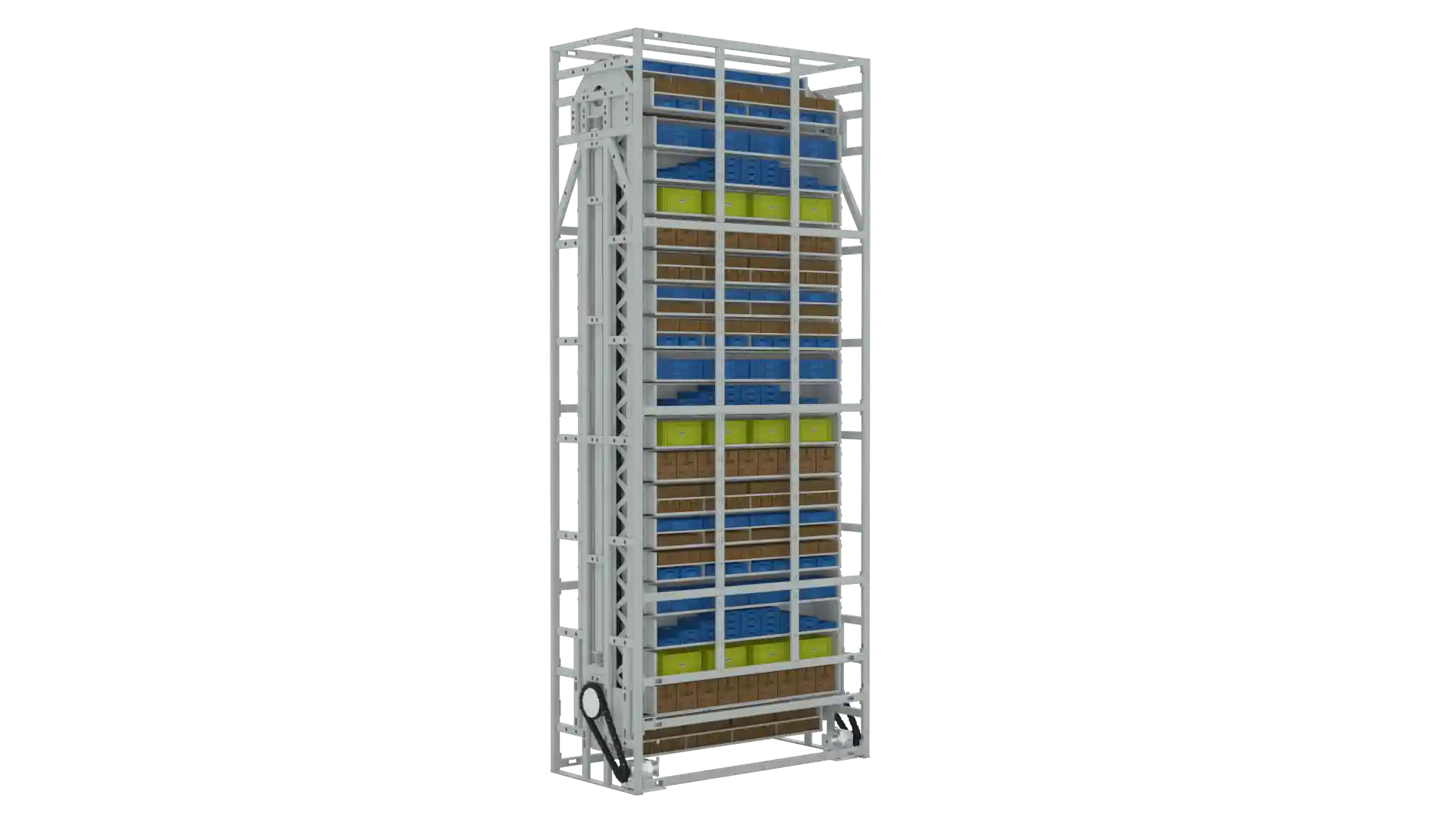
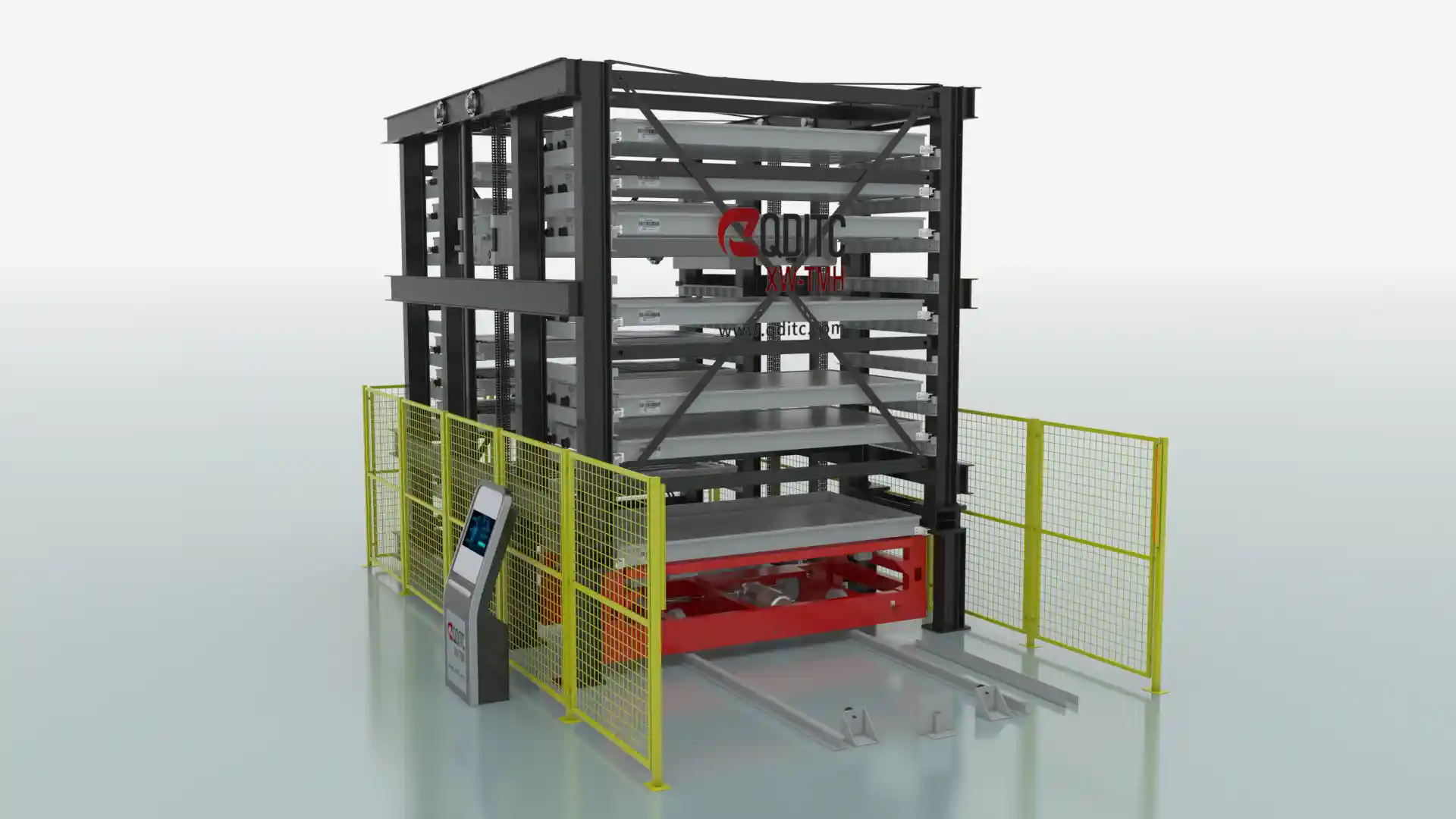
A Vertical Lift Module is an enclosed automated storage system built around two columns of trays, a central inserter/extractor mechanism, and an operator access opening. The system stores items by automatically placing trays into available slots, then retrieves them on demand by moving the central elevator between the two tray columns. When an operator requests an item through the control interface, the VLM identifies the tray location, extracts it, and delivers it to the access opening at an ergonomic working height.

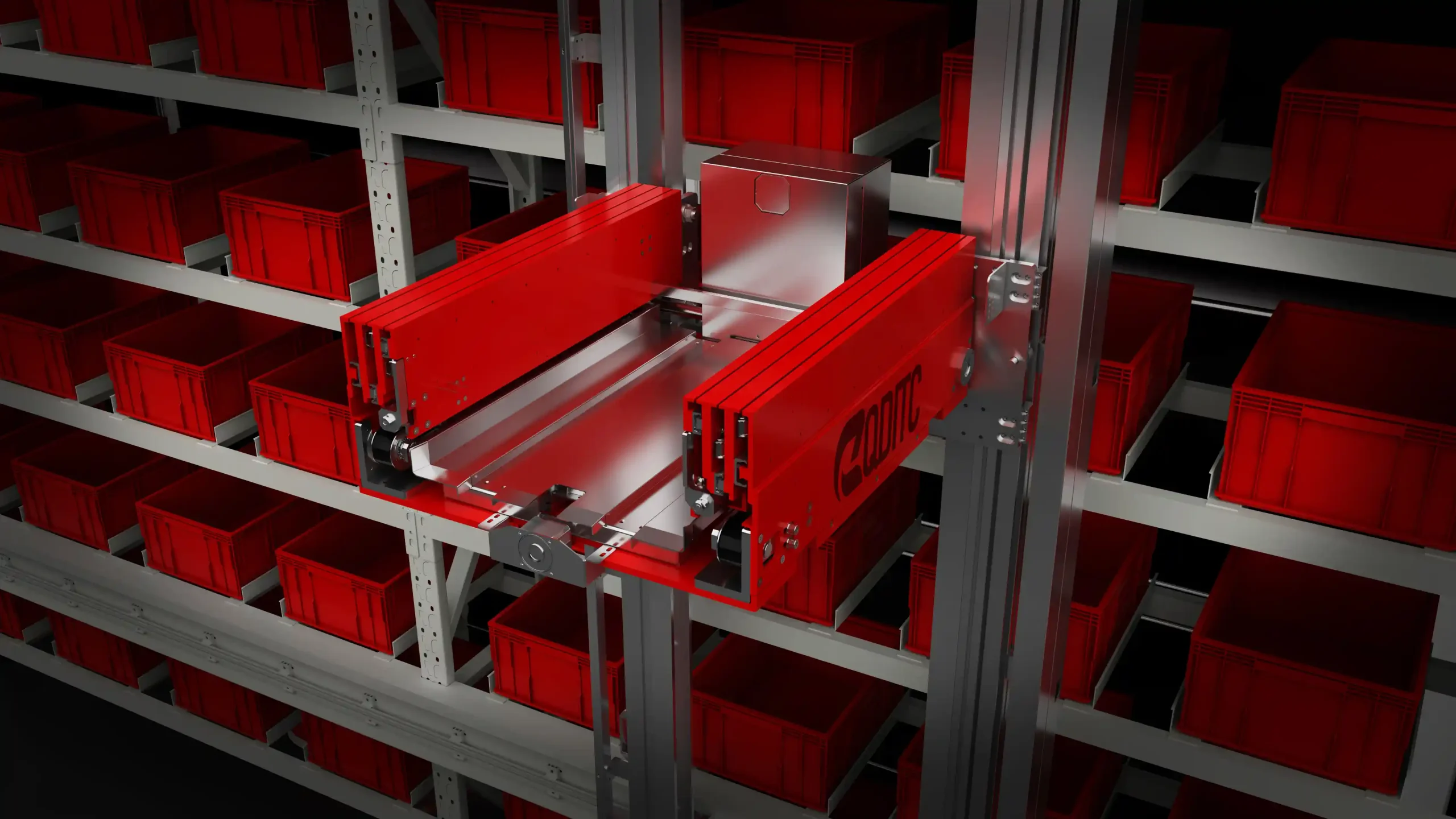
The operational sequence starts with storage. Operators place items onto trays, and the system calculates the most space-efficient slot based on item height and tray availability. For retrieval, the operator enters a request—often through a warehouse management system integration—and the VLM fetches the correct tray within seconds. After picking, the tray returns to storage automatically. This goods-to-person approach eliminates the walking, searching, and climbing that consume time in conventional warehousing.
TOWERMAT1

The core components include the vertical elevator responsible for tray transport, the storage trays themselves, and the control system managing inventory data and movement sequencing. Anhui Qiande’s systems use a modular wall panel structure that keeps the footprint compact while enabling high-speed operation. The design accommodates a broad range of materials—ultra-long items, molds, tools, raw materials, and heavy auxiliary components up to 1000kg per tray.

Why Floor Space Reduction Reaches 80% in Practice

Space optimization drives most VLM purchasing decisions because traditional shelving wastes vertical height. Conventional racking rarely exceeds 3 meters in accessible storage, leaving everything above that line empty or requiring forklifts. VLMs convert that unused ceiling height into active storage, which is why floor space reductions of 80% compared to static shelving are achievable in facilities with adequate vertical clearance.

The space gain compounds through dynamic tray spacing. The system measures item height on each tray and stores it with minimal clearance above, eliminating the fixed-shelf gaps that waste cubic footage in conventional setups. A tray holding 50mm-tall components sits closer to adjacent trays than one holding 300mm parts. This automatic adjustment means storage density responds to actual inventory rather than worst-case assumptions.

FeatureVLM Storage SystemsTraditional Racking
Space UtilizationHigh (up to 80% savings)Low (significant vertical waste)
Storage DensityDynamic, item-height optimizedFixed, often inefficient
FootprintReducedExpanded
AccessibilityAutomated, ergonomicManual, often requiring lifts
Inventory ControlReal-time, preciseManual, prone to errors

For facilities in urban industrial zones where land costs run high, the footprint reduction translates directly into real estate savings. Consolidating inventory into a smaller area also shortens internal travel distances, even when picking is already automated, and simplifies environmental control for temperature-sensitive materials.

Where the Labor and Throughput Gains Come From

The productivity improvements in VLM installations stem from eliminating unproductive motion. In a traditional warehouse, an operator might walk 8 to 12 kilometers per shift searching for items, climbing ladders, and returning to packing stations. The goods-to-person principle reverses this: items travel to the operator, who remains at a fixed workstation.

Picking speed increases because the system presents the exact tray containing the requested item, often with pick-to-light indicators showing the precise bin location. This guidance reduces both search time and picking errors. Facilities that previously experienced 2-3% pick error rates typically see that figure drop below 0.5% after VLM implementation, based on operational data from manufacturing and distribution environments.

Worker safety improves as a secondary benefit. Eliminating ladder use and forklift interaction for routine picking removes two common injury sources. The ergonomic access height—typically between waist and chest level—reduces bending and reaching strain that accumulates over full shifts.

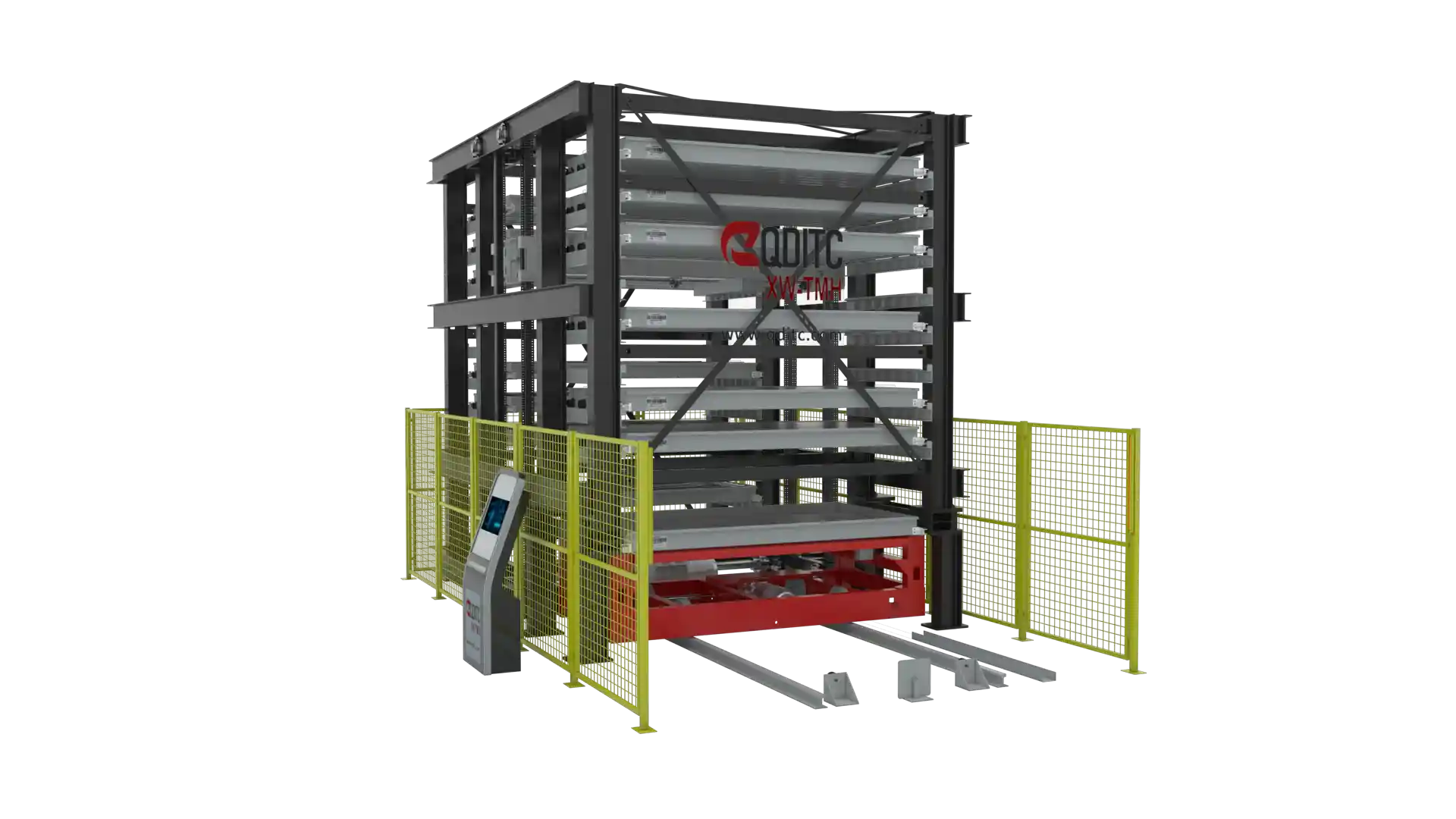
Anhui Qiande’s PG-VLM system handles trays up to 1000kg, which means heavy molds and tooling that previously required overhead cranes or specialized handling equipment can move through the same automated workflow as lighter components. This capability consolidates what might otherwise require separate storage systems and handling procedures. If your operation involves mixed-weight inventory, it is worth discussing tray capacity requirements before committing to a specific configuration.

What Determines the Right VLM Configuration

Selecting a VLM system requires matching equipment specifications to actual operational parameters rather than theoretical maximums. The assessment process starts with item characteristics: dimensions, weight distribution, fragility, and whether items need environmental controls. A facility storing precision measuring instruments has different requirements than one handling stamping dies.
TOWERMAT

Throughput requirements shape the decision between single and dual access openings. A single opening handles sequential picks efficiently, but high-volume operations benefit from dual openings that allow one operator to pick while the system retrieves the next tray. The difference in picks per hour can reach 40% in sustained operation.

Ceiling height determines maximum storage capacity, but the calculation is not simply height divided by tray spacing. The inserter/extractor mechanism requires clearance at the top of the unit, and building obstructions like sprinkler systems or HVAC ducts may reduce usable height. A site survey identifies these constraints before equipment selection.

Software integration complexity varies by existing infrastructure. Facilities with established WMS platforms need VLM systems that communicate through standard protocols. Anhui Qiande systems support multi-machine linkage and integration with WMS and order management platforms, but the integration scope should be defined early to avoid implementation delays.

Key configuration decisions include:

  1. Tray capacity and dimensions based on the largest and heaviest items in regular inventory
  2. Number of access openings matched to throughput targets and staffing patterns
  3. Control system features including inventory tracking depth and reporting capabilities
  4. Environmental specifications if storing temperature-sensitive or humidity-controlled materials
  5. Expansion provisions for facilities anticipating inventory growth

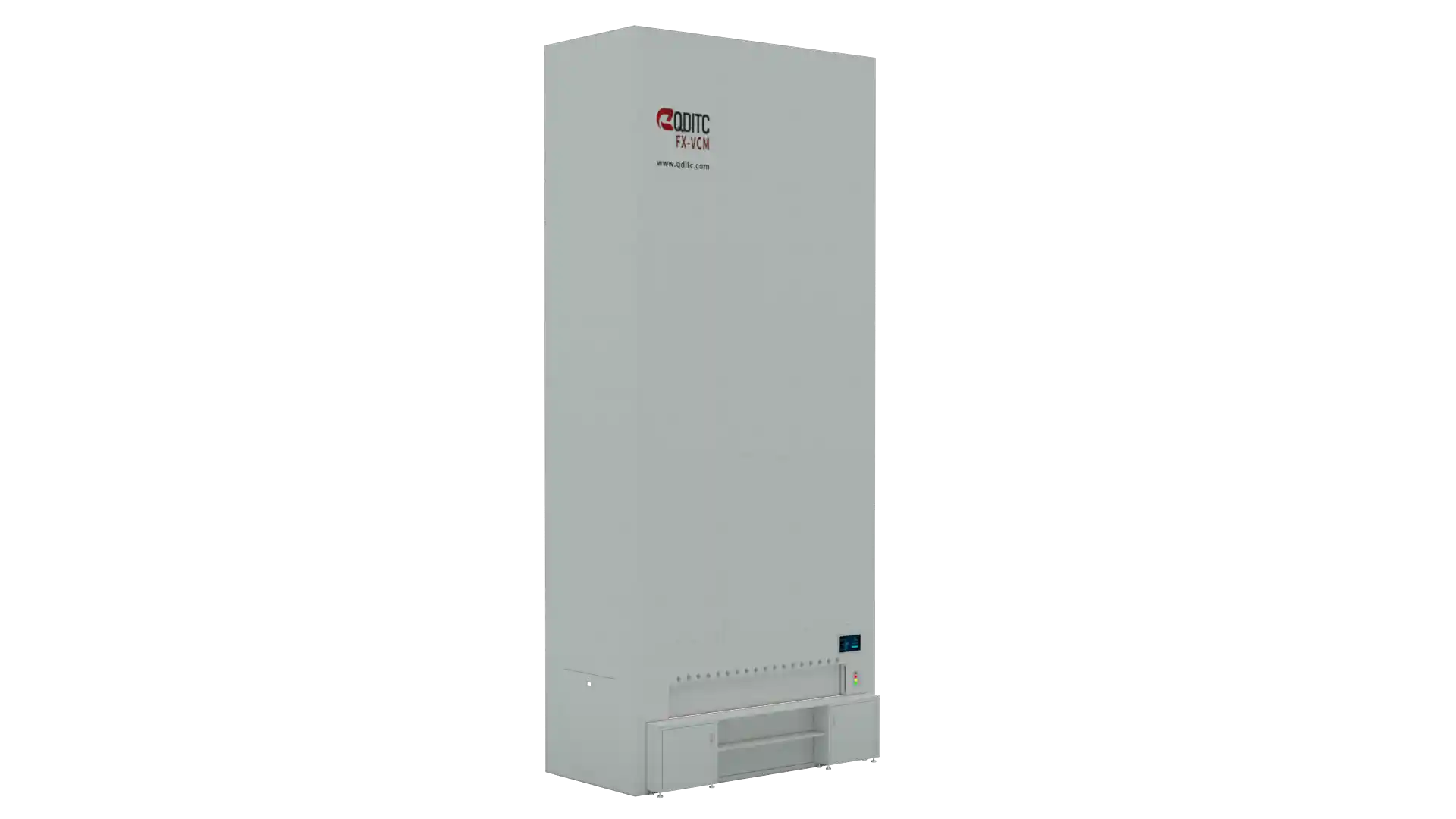
Anhui Qiande’s product range addresses different application profiles. The PG-VLM handles heavy industrial materials, while the FX-VCM suits lighter items like inspection tools, documents, and electronic components. The modular design allows configurations tailored to specific storage challenges rather than forcing operations to adapt to fixed equipment limitations.

How VLM Systems Fit Into Broader Automation Strategies

VLM technology has evolved beyond standalone storage into a component of integrated warehouse automation. Current systems generate operational data—inventory levels, pick rates, system utilization, maintenance indicators—that feeds into facility-wide management platforms. This data enables decisions about stock positioning, reorder timing, and capacity planning that were previously based on periodic physical counts and estimates.
PICKUPSTATION2

Predictive maintenance capabilities in modern VLMs use sensor data to identify wear patterns before failures occur. A system tracking elevator motor current draw, for example, can flag bearing degradation weeks before it would cause a breakdown. This shifts maintenance from reactive repair to scheduled intervention during planned downtime.

The modular architecture of VLM systems supports incremental expansion. A facility can install initial capacity matched to current needs, then add modules as inventory grows without replacing existing equipment. This scalability protects the initial investment against changing business conditions.

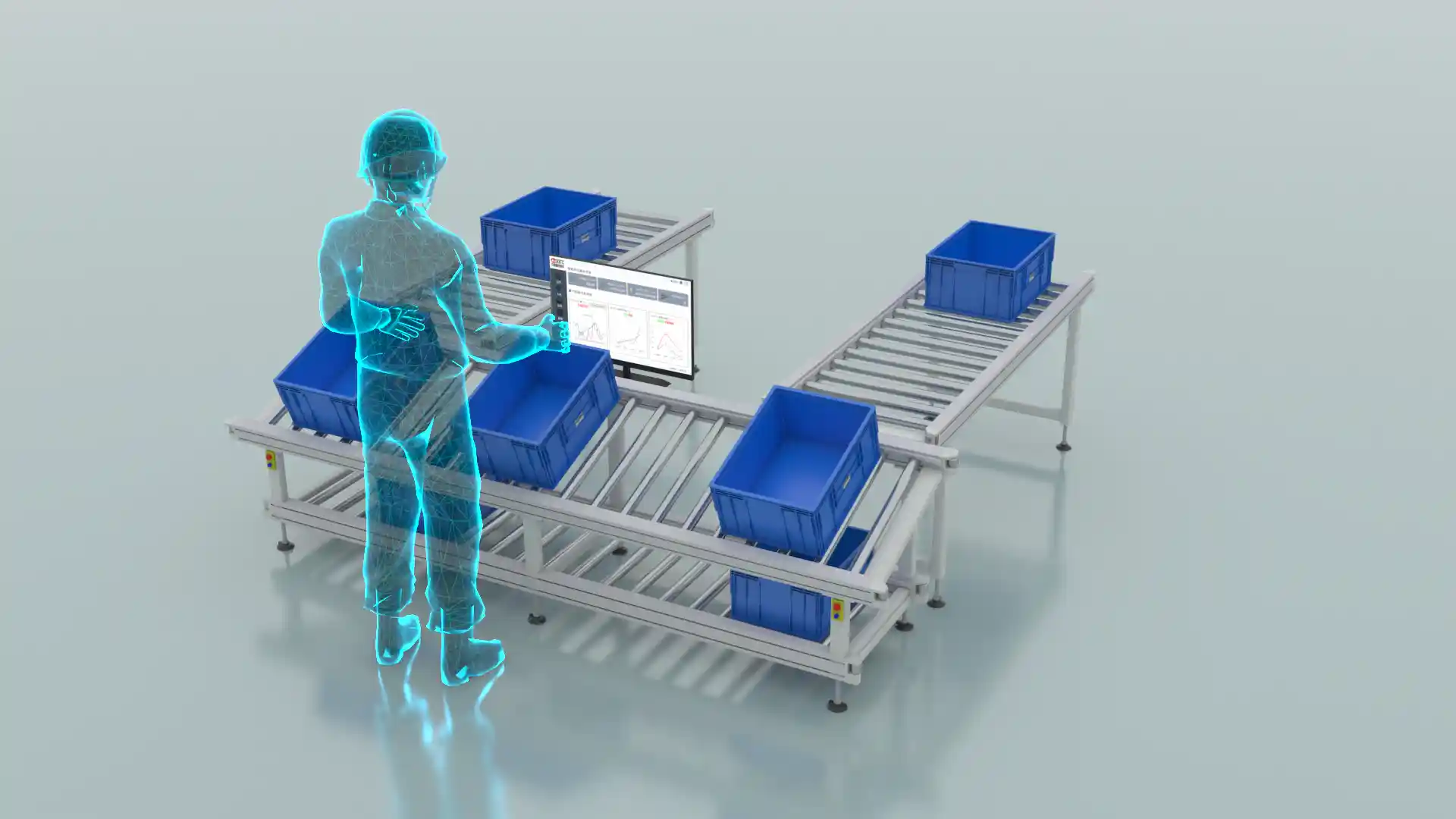
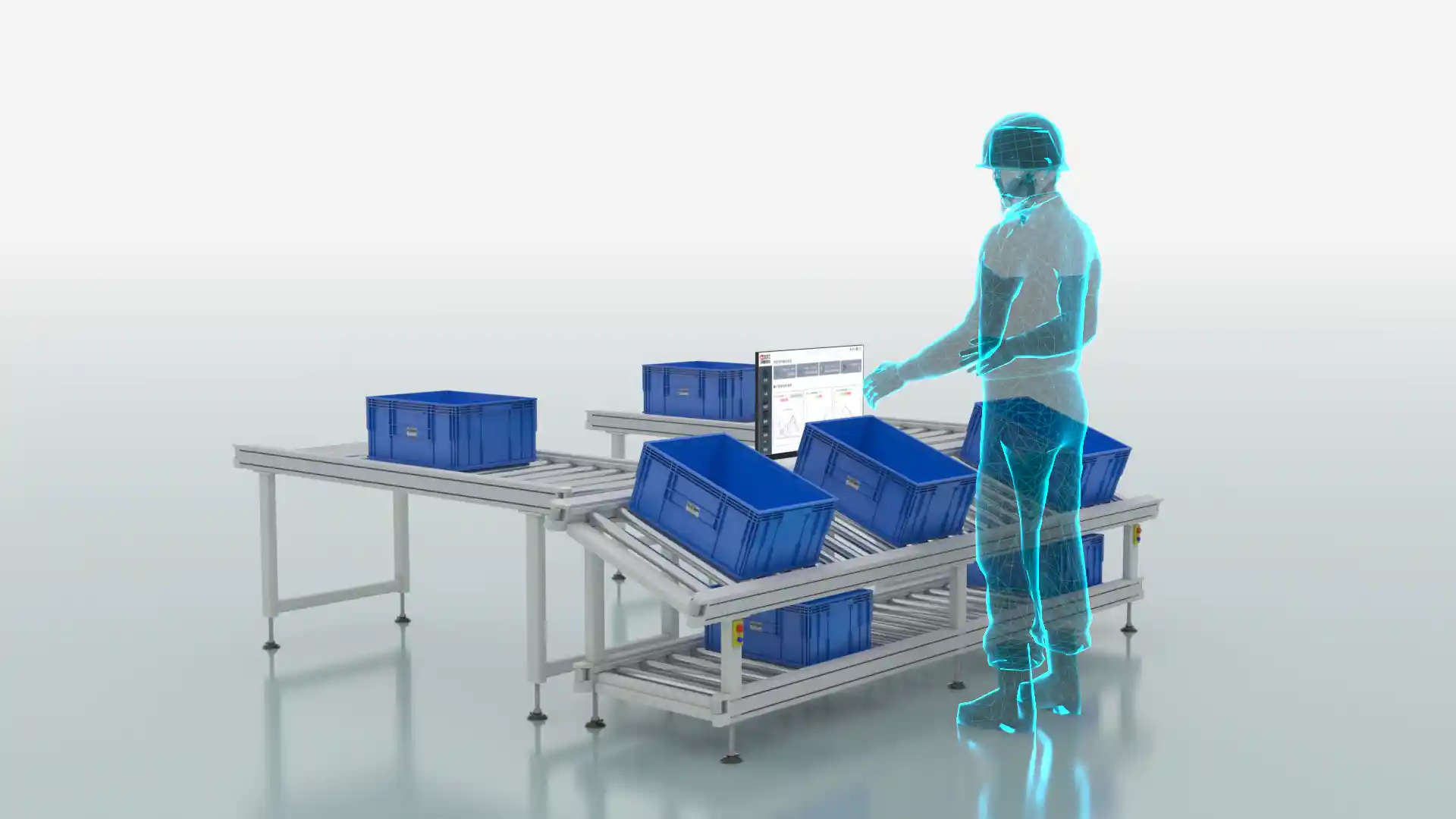
Integration with automated guided vehicles and conveyor systems extends the goods-to-person concept beyond the VLM access opening. Items retrieved from storage can route automatically to packing stations, quality inspection areas, or production lines without manual transport. These connections multiply the labor efficiency gains from the VLM itself.

Frequently Asked Questions About Vertical Lift Modules

What are the main advantages of using a Vertical Lift Module in a warehouse?

VLMs deliver measurable improvements across several operational dimensions. Space savings reach 80% compared to conventional shelving by converting vertical height into active storage. Labor costs drop because operators no longer walk to items—items come to operators. Picking errors decrease through system-guided retrieval that eliminates search time and misidentification. Worker safety improves by removing ladder use and reducing forklift interaction for routine picking tasks.

How does a Vertical Lift Module improve inventory accuracy and control?

The enclosed storage environment limits access to authorized retrieval requests, eliminating the casual browsing and informal borrowing that create inventory discrepancies in open shelving. The control system logs every storage and retrieval transaction with timestamps, creating an audit trail that supports cycle counting and variance investigation. Real-time inventory visibility through WMS integration means stock levels update immediately rather than waiting for periodic physical counts.

What factors should be considered when selecting a VLM storage system?

The selection process should address item characteristics (weight, dimensions, fragility), throughput requirements (picks per hour, shift patterns), physical constraints (ceiling height, floor loading capacity, access for installation), and integration requirements (WMS compatibility, data exchange protocols). Budget considerations include not just equipment cost but installation, training, and ongoing maintenance. Consulting with providers who have experience across different applications helps match equipment capabilities to actual operational needs. To discuss your specific requirements, contact Anhui Qiande at miaocp@qditc.com or +86 15262759399.

If you’re interested, you may want to read the following articles:

Vertical Sort Module: Intelligent Automation for Modern Warehouses
Intelligent ASRS Solution for SME Factories: Affordable Entry Options
Robotic ASRS: When to Upgrade for Superior Warehouse Automation

Modern warehouses operate under relentless pressure from rising order volumes, tighter delivery windows, and labor markets that no longer behave predictably. At some point, the question shifts from whether to automate to when the existing conveyor infrastructure becomes the constraint rather than the enabler. The transition from traditional conveyor systems to robotic ASRS is not a technology upgrade in isolation—it is a reconfiguration of how storage, retrieval, and fulfillment interact with labor, space, and capital. The timing of that transition determines whether the investment accelerates growth or merely replaces one set of limitations with another.

Where Traditional Conveyor Systems Start to Break Down

Conveyor-based material handling works well within a defined operating envelope: predictable SKU counts, stable order profiles, and labor availability that matches throughput requirements. The problems emerge when any of those assumptions no longer hold.

Labor dependency is the most visible pressure point. Conveyor systems require manual loading, unloading, sorting, and exception handling at multiple stations. When labor costs rise or availability drops, the entire throughput equation changes. A system designed around a certain headcount becomes either understaffed or economically unviable at higher wage rates.

Flexibility is the second constraint. Fixed conveyor paths cannot easily accommodate new product dimensions, changed pick sequences, or shifted storage locations. Reconfiguring a conveyor network to handle a new product line often requires weeks of downtime and capital expenditure that rivals the original installation cost.

Space utilization is the third limitation that compounds over time. Conveyor systems occupy floor area but do not exploit vertical height. In facilities where real estate costs are significant, leaving 10 to 15 meters of vertical space unused represents a recurring opportunity cost that grows with every lease renewal.

Maintenance profiles also shift as conveyor infrastructure ages. Bearings, belts, motors, and sensors degrade at different rates, creating a maintenance schedule that becomes increasingly unpredictable after the first five to seven years of operation. The total cost of keeping an aging conveyor network operational often exceeds the annual depreciation that accounting models assume.

HCM-1

FeatureTraditional ConveyorsRobotic ASRS
Space UtilizationLowHigh (vertical)
Labor DependencyHighLow
FlexibilityLowHigh
ThroughputModerateHigh
AccuracyModerateHigh
Maintenance ProfileRoutine mechanicalSpecialized technical

What Robotic ASRS Actually Changes in Daily Operations

Robotic automated storage and retrieval systems address the conveyor limitations directly, but the operational impact extends beyond simple substitution. The shift is structural.

Storage density increases because robotic ASRS exploits vertical space that conveyors cannot reach. Vertical lift modules like the PG-VLM store materials up to 1000kg per tray and stack trays to ceiling height, converting unused air into productive storage. Vertical carousel modules like the FX-VCM achieve similar density gains for smaller items and mixed SKU environments. The floor area required for equivalent storage capacity drops substantially, which either reduces facility costs or frees space for other operations.

Labor requirements change in character rather than simply declining in quantity. Goods-to-person workflows eliminate the walking, searching, and reaching that dominate manual pick operations. Operators remain stationary while the system delivers items to ergonomic work zones. The labor that remains is focused on value-adding tasks—quality checks, kitting, packing—rather than material transport.

Accuracy improves because robotic systems eliminate the judgment calls that create variance in manual operations. Each storage location is tracked precisely, each retrieval follows a programmed path, and each transaction is logged automatically. Error rates that hover around 1 to 3 percent in manual environments drop to fractions of a percent in well-implemented ASRS installations.

Throughput scales differently as well. Adding capacity to a conveyor system typically requires extending the physical network, which involves construction, downtime, and revalidation. Adding capacity to a robotic ASRS often means deploying additional shuttles or robots within the existing racking structure, a process that can be completed in days rather than months.

Anhui Qiande’s 15 years of experience in industrial warehousing equipment informs the system design process. Different materials, different storage densities, and different retrieval frequencies call for different configurations. A solution optimized for heavy tooling looks nothing like one designed for pharmaceutical inventory, even if both use the same underlying technology platform.

When the Numbers Start Pointing Toward Robotic ASRS

The decision to upgrade is rarely driven by a single factor. It emerges from the convergence of several indicators, each of which may be tolerable in isolation but becomes unsustainable in combination.

Operational costs that rise faster than revenue growth signal a structural problem. If labor costs increase 5 percent annually while throughput remains flat, the margin compression compounds year over year. Conveyor systems offer limited levers to offset that trend; robotic ASRS offers a different cost structure entirely.

Missed fulfillment targets indicate capacity constraints that cannot be solved by working harder. When peak season consistently produces backorders, late shipments, or overtime costs that exceed the margin on the orders being fulfilled, the system has reached its ceiling. Robotic ASRS raises that ceiling without proportional increases in labor or floor space.

Error rates that persist despite training and process improvements suggest that the problem is systemic rather than behavioral. Manual pick operations have an error floor determined by human attention limits. Robotic systems operate below that floor consistently.

Expansion plans that would require facility relocation or major construction create a natural decision point. The capital required to expand a conveyor-based operation often approaches or exceeds the capital required to implement robotic ASRS in the existing footprint. The comparison becomes straightforward when both options are on the table simultaneously.

Return on investment for robotic ASRS typically falls in the 18 to 36 month range, depending on labor costs, throughput improvements, and space savings. That timeline makes the investment viable for businesses with planning horizons beyond the next fiscal year.

RACKBOT 1

How robotic ASRS outperforms traditional conveyors in measurable terms

Robotic ASRS delivers improvements that show up in operational metrics within the first year of deployment. Pick rates increase because goods-to-person workflows eliminate travel time. Error rates drop because automated tracking removes the ambiguity that causes mispicks. Space utilization improves because vertical storage replaces horizontal sprawl.

The SmartLoad-RackBot illustrates the magnitude of these improvements. Implementation cycles shrink by over 70 percent compared to traditional miniLoad systems. Operating speed more than doubles. These are not marginal gains; they represent a different operating model.

Anhui Qiande’s approach to system design contributes to these outcomes. The configuration is tailored to the specific material characteristics, retrieval frequencies, and integration requirements of each installation. A system designed for the actual operating environment outperforms a generic solution sized from catalog specifications.

Comparing Upfront Investment Against Ongoing Cost Reduction

The financial case for robotic ASRS requires looking beyond the purchase price to the total cost of ownership over the system’s operational life. The initial investment is higher than extending or replacing conveyor infrastructure, but the cost trajectories diverge over time.

Labor savings accumulate continuously. Each year that the system operates, the gap between robotic ASRS labor costs and conveyor system labor costs widens. In high-wage environments or tight labor markets, this gap can represent the largest single component of the financial return.

Space savings translate into either reduced facility costs or increased revenue from the same footprint. If the alternative to robotic ASRS is leasing additional warehouse space, the comparison includes the avoided lease payments, utilities, insurance, and management overhead of the expansion.

Error reduction has both direct and indirect financial impacts. Direct costs include the labor and shipping expense of processing returns and reshipments. Indirect costs include customer churn, reputation damage, and the operational disruption of exception handling.

Maintenance costs for robotic ASRS are different in character but not necessarily higher in total. Conveyor systems require continuous attention to mechanical components spread across a large physical area. Robotic systems concentrate maintenance requirements in fewer, more standardized components. The PG-VLM’s modular wall panel design, for example, simplifies both initial installation and ongoing service access, contributing to a lower total cost of ownership.

RACKBOT

Cost CategoryInitial Investment (ASRS)Annual Savings (ASRS)
EquipmentHighN/A
InstallationModerateN/A
LaborLowHigh
SpaceLow (optimized)Moderate
MaintenanceModerateModerate
Error ReductionN/AHigh

How the payback period actually works in practice

The initial investment in robotic ASRS is front-loaded, but the savings begin immediately upon commissioning. Payback periods typically fall between two and three years, after which the system generates continuous net savings against the baseline of conveyor operations.

The SmartLoad-RackBot demonstrates the cost structure difference. Total costs run more than 20 percent below traditional miniLoad systems, and energy consumption drops to less than 35 percent of comparable conventional equipment. These are operating cost reductions that compound over the system’s useful life.

If your operation is evaluating the financial case for robotic ASRS, it is worth modeling the specific labor, space, and throughput parameters of your current environment before committing to a system configuration.

Matching the Right Robotic ASRS Configuration to Your Operation

Robotic ASRS is not a single product category but a family of technologies with different strengths. The selection process starts with understanding the operational requirements and works backward to the appropriate system architecture.

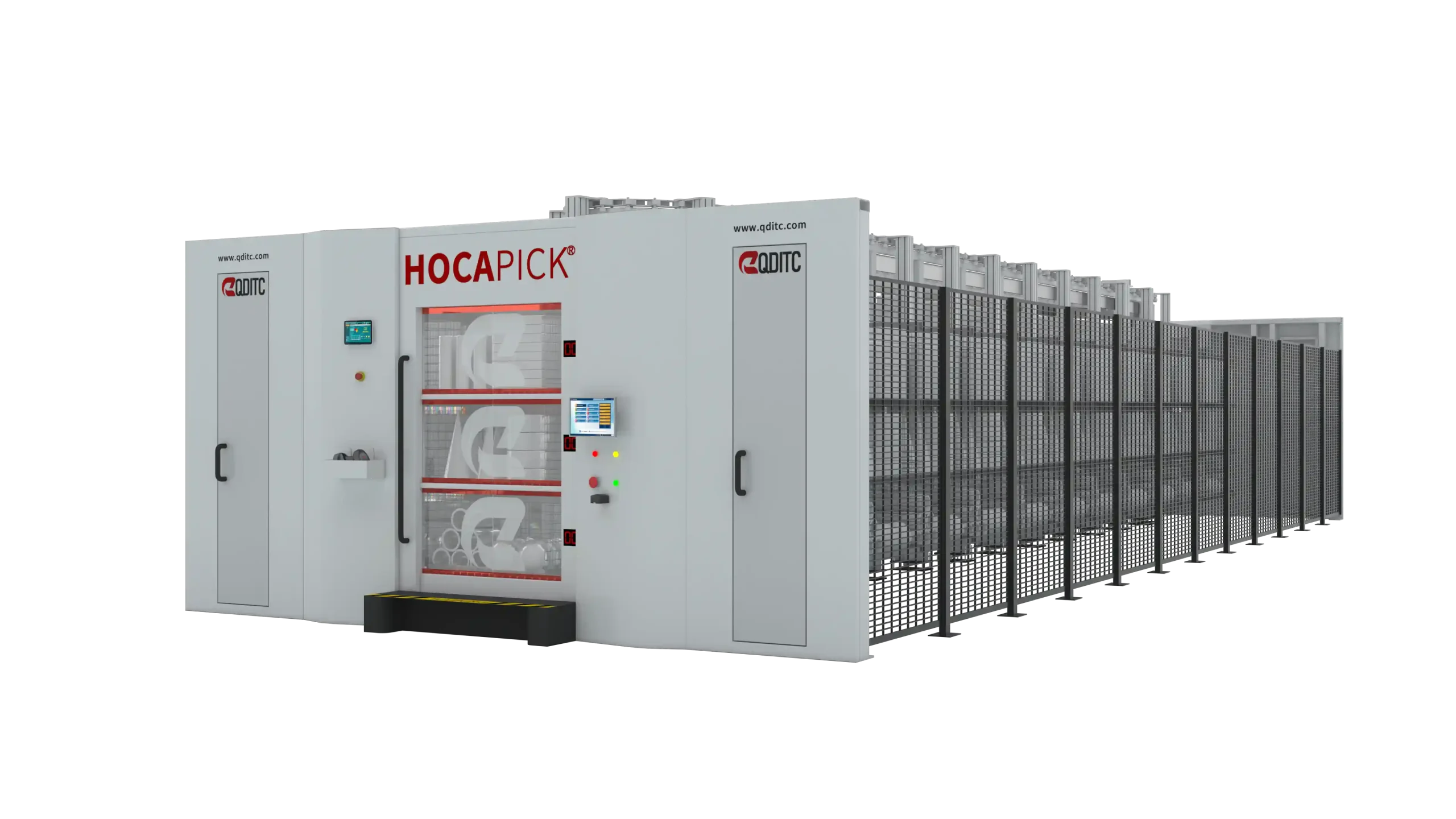
Vertical carousel modules like the FX-VCM excel in high-density storage of mixed SKUs where rapid access to individual items is required. Applications range from mold inspection tools in manufacturing environments to medication dispensing in hospital pharmacies. The compact footprint and high retrieval speed make these systems suitable for operations where floor space is constrained but throughput requirements are demanding.

Vertical lift modules like the PG-VLM handle heavier loads and larger items. The 1000kg per tray capacity accommodates materials that would overwhelm carousel systems. These modules are well-suited for storing ultra-long or ultra-wide materials that do not fit conventional racking.

Horizontal carousel modules like the FXH-HCM serve applications where ceiling height is limited but dense automated storage is still required. The horizontal configuration trades vertical reach for a lower profile while maintaining the automated retrieval benefits.

Vertical sort modules like the SN-VSM provide single-item access functionality that integrates with AGVs and conveyor systems for handling turnover boxes. This configuration bridges the gap between bulk storage and piece-level fulfillment.

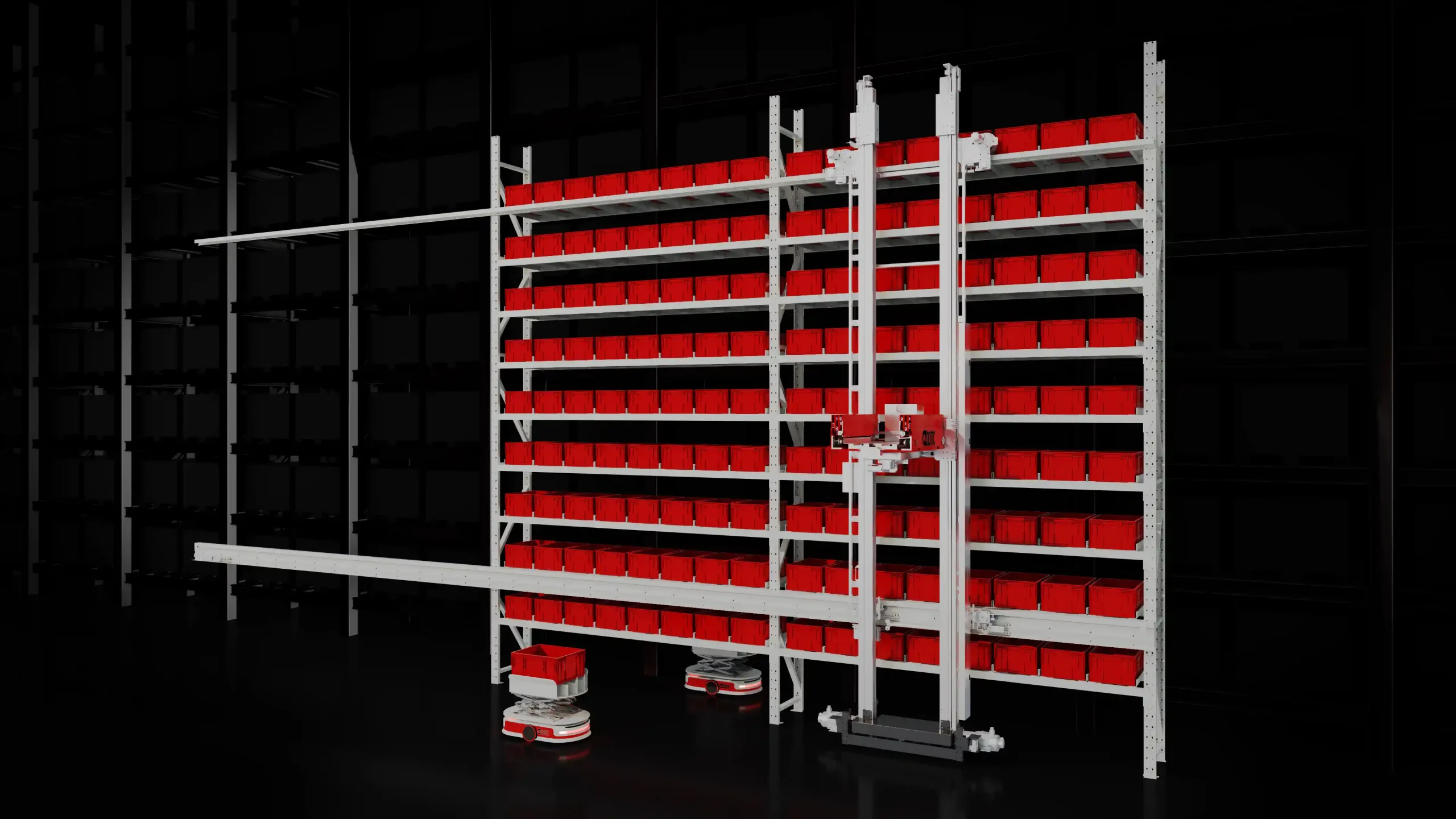
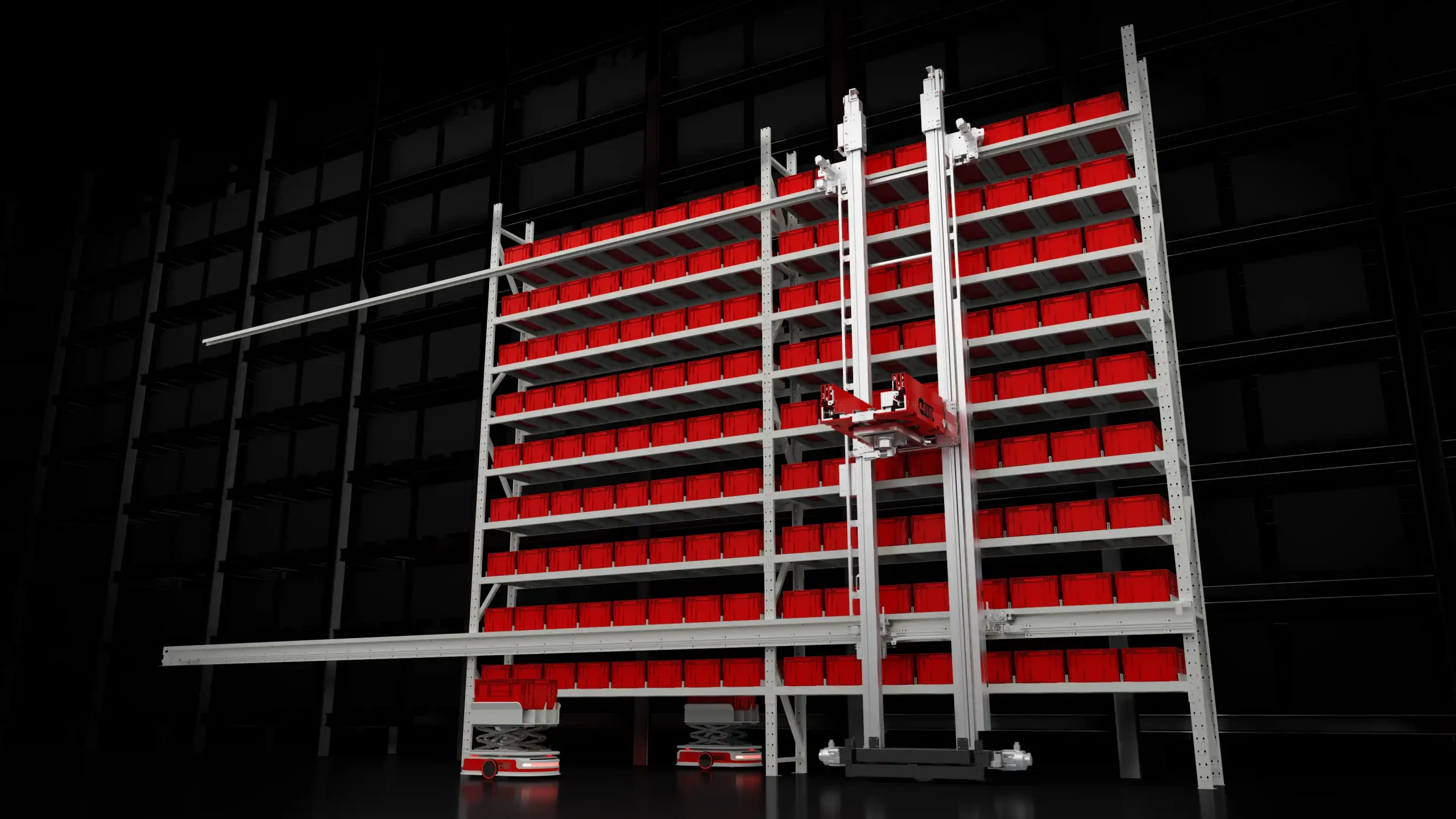
Robotic shuttles like the SmartLoad-RackBot offer the highest flexibility for dynamic storage environments. The shuttle moves independently within the racking structure, accessing any location without the constraints of fixed paths.

Integration with existing warehouse management software is a critical success factor regardless of which system type is selected. The physical automation delivers its full value only when the software layer coordinates storage assignments, retrieval sequences, and inventory tracking seamlessly.

TOWERMAT

Where robotic ASRS delivers the strongest returns

Robotic ASRS is particularly effective in high-density storage applications where vertical space is available but underutilized. E-commerce fulfillment centers with high SKU counts and variable order profiles benefit from the flexibility and speed of goods-to-person workflows. Operations handling high-value inventory gain from the accuracy and security of automated storage.

The FX-VCM’s versatility across material types—from precision tooling to pharmaceutical inventory—illustrates the range of applications where robotic ASRS outperforms manual alternatives. The SN-VSM’s integration capability with AGVs and conveyors enables hybrid configurations that combine the strengths of multiple automation approaches.

What the Upgrade Means for Long-Term Warehouse Strategy

The decision to implement robotic ASRS is not primarily about replacing equipment. It is about repositioning the warehouse as a strategic asset rather than a cost center. The capabilities that robotic ASRS enables—higher throughput, greater accuracy, better space utilization, reduced labor dependency—translate into competitive advantages that compound over time.

Scalability changes fundamentally. Growth no longer requires proportional increases in floor space or headcount. The same facility can handle significantly higher volumes with incremental additions to the robotic fleet rather than major construction projects.

Responsiveness improves because the system can adapt to changing demand patterns, new product introductions, and seasonal fluctuations without the reconfiguration delays that constrain conveyor-based operations.

Workforce requirements shift toward higher-skill, higher-value roles. The repetitive physical tasks that dominate manual operations are absorbed by the automation, freeing human capacity for problem-solving, quality assurance, and customer-facing activities.

Frequently Asked Questions About Robotic ASRS Upgrades

How long does implementation take from contract to full operation?

Implementation timelines depend on system complexity, facility conditions, and integration requirements. Modular systems with standardized configurations can be operational within a few months. Comprehensive installations with custom racking, extensive WMS integration, and multi-zone configurations typically require 6 to 18 months for design, installation, commissioning, and validation. The SmartLoad-RackBot’s standardized product design reduces implementation cycles by over 70 percent compared to traditional approaches, which can compress timelines significantly for suitable applications.

What does maintenance look like compared to conveyor systems?

Robotic ASRS requires less routine mechanical maintenance than extensive conveyor networks because there are fewer moving parts distributed across the facility. The maintenance that is required demands specialized technical expertise for software updates, sensor calibration, and robotic component servicing. Predictive maintenance strategies based on system telemetry help identify issues before they cause downtime. All Anhui Qiande products incorporate safety designs that ensure stable, reliable operation and reduce unplanned maintenance interventions.

Can the system scale if demand grows beyond current projections?

Modern robotic ASRS systems are designed with scalability as a core requirement. Storage capacity can be expanded by adding racking within the existing footprint or extending the racking structure. Throughput can be increased by deploying additional shuttles or robots without reconfiguring the storage layout. Multi-machine linkage and WMS integration provide the coordination layer that allows expanded systems to operate as a unified whole. This modularity makes robotic ASRS suitable for businesses with growth trajectories that are difficult to predict precisely. To discuss how a robotic ASRS configuration might align with your facility’s specific requirements, contact Anhui Qiande at miaocp@qditc.com or +86 15262759399.


If you’re interested, you may want to read the following articles:

ASRS in Automotive Manufacturing: Cut Picking Time by 50%
Intelligent Storage Systems: VLM, VSM, VCM, VBM, ASRS Comparison

ASRS Shuttle Systems: Automating Bin Retrieval for Scale

Modern warehousing demands sophisticated solutions to manage increasing volumes and accelerate order fulfillment. ASRS shuttle systems represent a critical advancement in warehouse automation, providing scalable storage solutions and significantly enhancing logistics efficiency. This technology addresses the complexities of e-commerce growth and labor shortages, optimizing material handling and supply chain operations through intelligent design.

What Makes ASRS Shuttle Systems Work

Automated Storage and Retrieval Systems with shuttle technology form the backbone of high-density storage environments. These systems integrate specialized storage racks, shuttle robots, and control software to achieve automated bin retrieval.

Storage racks are engineered for both vertical and horizontal density, maximizing cubic space utilization. Shuttle robots are autonomous vehicles traveling within these racks, carrying bins or trays to and from designated pick-up and deposit stations. Control software, typically a Warehouse Control System or Warehouse Management System, orchestrates shuttle movement, manages inventory, and interfaces with other material flow equipment such as conveyor systems. This integrated architecture enables goods-to-person operations with minimal human intervention.

RACKBOT

How do ASRS shuttle systems improve warehouse efficiency and space utilization?

ASRS shuttle systems improve warehouse efficiency and space utilization by enabling high-density storage configurations. The SmartLoad-RackBot reduces the space required in the front, back, and above and below the tunnel by more than 35% compared to traditional miniLoad systems. This optimized footprint allows for increased inventory capacity within the same physical space. Automated bin retrieval boosts picking accuracy and throughput capacity, leading to faster order fulfillment speeds and reduced operational errors. The system’s ability to operate continuously contributes to consistent performance and maximized labor productivity.

How Automated Bin Retrieval Actually Works

The mechanics of automated bin retrieval are driven by advanced robotics and sensor technology. Shuttle robots equipped with load handling devices navigate storage racks with exact positioning. These devices securely grip and transport bins, maintaining product integrity throughout movement.

Integrated sensor technology allows real-time tracking of bin locations and obstacle detection, facilitating safe movement within narrow aisles. Rapid retrieval comes from optimized travel paths and intelligent sequencing algorithms that prioritize tasks and minimize travel times. Buffering stations at aisle ends or workstations hold retrieved items temporarily, ensuring continuous material flow to operators. This interplay of hardware and software delivers reliable high-performance operations.

RACKBOT 1

What are the key components and operational principles of automated bin retrieval?

Automated bin retrieval relies on shuttle robots, bin conveyors, and control algorithms working together. Shuttle robots move horizontally and vertically within the storage structure to access specific bins. Bin conveyors transport retrieved bins to and from workstations, creating continuous flow. Robotics and control algorithms manage inventory tracking, optimize retrieval sequences, and process real-time data to ensure accurate material delivery. This coordination minimizes manual handling and maximizes throughput.

Where ASRS Shuttle Systems Deliver the Most Value

ASRS shuttle systems offer scalable warehouse solutions for businesses experiencing growth or fluctuating demand. Their modular design allows expansion as operational needs evolve.

These systems prove particularly beneficial in e-commerce fulfillment, where rapid processing of diverse orders is paramount. In manufacturing logistics, they support just-in-time inventory management and efficient component delivery to assembly lines. Specialized applications include cold storage ASRS designed to operate reliably in extreme temperatures, and systems for handling ultra-long and ultra-wide materials. The PG-VLM, for instance, offers storage capacity of up to 1000kg per single tray. This adaptability translates into labor cost reduction and improved inventory management automation.

FeatureASRS Shuttle SystemsTraditional Warehousing
Space UtilizationHigh-density vertical storageLower density, horizontal spread
ThroughputHigh, automated, consistentVariable, labor-dependent
Picking AccuracyHigh, software-controlledProne to human error
Labor RequirementReduced, focused on supervisionHigh, manual picking
ScalabilityModular, expandableLimited by physical space

gq-smartload3

What to Consider Before Implementing ASRS Shuttle Systems

Implementing ASRS shuttle systems requires careful planning to ensure successful integration. The process begins with comprehensive warehouse design, considering specific layout, storage requirements, and material flow.

System integration with existing infrastructure, particularly WMS integration, is necessary for synchronized data flow and operational continuity. Different storage spaces and materials require different solutions. Maintenance strategies must be established, including routine preventive checks and software updates, to ensure optimal performance and longevity. Safety protocols safeguard personnel and equipment during operation. Selecting a supplier with experience in customized solutions matters for a tailored implementation.

If your facility handles mixed SKU profiles or operates under space constraints, it is worth discussing storage density requirements and throughput targets before committing to a specific configuration.

HCM-1

What are the typical ROI and implementation considerations for ASRS shuttle systems?

Calculating ROI for ASRS shuttle systems involves assessing labor savings, increased throughput, reduced errors, and optimized space utilization. The SmartLoad-RackBot reduces implementation cycles by over 70% and costs by over 20% compared to traditional miniLoad systems, directly impacting ROI. Implementation challenges often include initial capital investment, system integration complexity, and staff training requirements. Successful implementation requires detailed cost-benefit analysis, realistic project timelines, and system customization aligned with specific operational needs. Long-term support and maintenance agreements are critical for sustained performance.

ASRS shuttle systems are changing modern warehousing and logistics by delivering automation and scalability. These solutions optimize bin retrieval, enhance space utilization, and improve operational efficiency. By adopting these material handling technologies, businesses can achieve throughput increases, reduce labor costs, and gain competitive advantage in a demanding market.

To discuss your specific industrial warehousing equipment requirements and explore tailored solutions, contact Miao at miaocp@qditc.com or +86 15262759399.

Frequently Asked Questions About ASRS Shuttle Systems

How do ASRS shuttle systems handle varying product sizes and types?

ASRS shuttle systems use adjustable bin configurations and intelligent software to accommodate a wide range of product dimensions and characteristics. The FX-VCM, for example, is designed according to the most suitable dimensions for specific items. This flexibility ensures efficient storage for diverse inventory without requiring separate systems for different product categories.

What maintenance is required for automated bin retrieval systems?

Automated bin retrieval systems require routine preventive maintenance including software updates, mechanical checks, and sensor calibration to ensure optimal performance and longevity. Many providers offer comprehensive service plans that minimize downtime. The frequency of maintenance depends on operating hours and environmental conditions, with cold storage applications typically requiring more frequent attention to mechanical components.

Can ASRS shuttle systems integrate with existing warehouse management software?

Yes, modern ASRS shuttle systems are designed for integration with existing Warehouse Management Systems and Warehouse Control Systems to ensure synchronized data flow and operational efficiency across the logistics chain. This integration capability allows businesses to maintain their current software investments while adding automated storage and retrieval functionality.

If you’re interested, you may want to read the following articles:

What is a Warehouse Management System: A Factory Owner’s Guide
WMS Pricing 2025: Drivers, Budgeting, and ROI Strategies

Top ASRS Manufacturers: Evaluating Automated Storage Suppliers

Selecting the right automated storage and retrieval systems manufacturer is a critical decision for modern warehousing, directly impacting logistics optimization and overall supply chain efficiency. The global adoption of ASRS is accelerating, with projections indicating significant growth as businesses seek to enhance operational efficiency and reduce manual labor dependency. This digital upgrading of material handling solutions requires a strategic approach to supplier evaluation, ensuring the chosen partner aligns with long-term objectives for intelligent management and cost-effective solutions.

What Types of ASRS Technologies Fit Different Warehouse Operations?

Automated storage and retrieval systems encompass various technologies designed to automate the storage and retrieval of items in warehouses and distribution centers. These systems significantly improve inventory management and space utilization by minimizing human intervention.

Vertical Lift Modules (VLMs), such as the PG-VLM, are enclosed systems with trays that automatically deliver items to an operator. They work well for ultra-long and ultra-wide materials or heavy auxiliary materials, with a storage capacity up to 1000kg per tray. Vertical Carousel Modules (VCMs), like the FX-VCM, utilize a series of carriers that rotate vertically around a track, suitable for diverse item types in industries ranging from manufacturing to healthcare.

Horizontal Carousel Modules (HCMs), like the FXH-HCM, employ horizontally rotating shelves to bring items to an operator. These excel in scenarios with limited ceiling height and requiring dense automated storage. Shuttle systems, exemplified by the SmartLoad-RackBot, use robotic shuttles to move items within a racking structure, offering high-speed operation and reduced implementation cycles by over 70% compared to traditional miniLoad systems.

Vertical Sort Modules (VSMs), such as the SN-VSM, use telescopic forks for automatic storage and retrieval of turnover boxes, integrating seamlessly with AGVs and conveyors. These goods-to-person technologies represent a significant advancement in robotics in warehousing.

ASRS TypePrimary ApplicationKey FeatureSpace UtilizationSpeed
PG-VLMUltra-long/heavy materials1000kg tray capacityHighFast
FX-VCMDiverse small itemsVertical rotationHighModerate
FXH-HCMLimited height, dense storageHorizontal rotation, shortest pathVery HighFast
SN-VSMTurnover boxes, single item accessTelescopic forks, AGV integrationHighFast
SmartLoad-RackBotHigh-speed, high-density>70% cycle reductionVery High>2x traditional miniLoad

gq-smartload3

What Quantifiable Benefits Should You Expect from ASRS?

ASRS offers measurable benefits for warehouse efficiency and logistics optimization. These systems reduce labor costs by automating repetitive tasks, allowing personnel to focus on higher-value activities. They increase throughput and improve order fulfillment accuracy by minimizing manual errors and accelerating retrieval times. ASRS also optimizes space utilization, allowing businesses to store more inventory in a smaller footprint, which matters when maximizing existing facilities.

What Criteria Actually Matter When Evaluating ASRS Suppliers?

Evaluating automated storage and retrieval systems suppliers requires a structured approach that extends beyond initial product specifications. Several critical vendor selection criteria determine a successful, long-term partnership.

First, assess the supplier’s experience in delivering customized ASRS solutions for different storage spaces and material handling challenges. A proven track record, such as 15 years in industrial warehousing equipment production, demonstrates problem-solving capabilities that newer entrants simply cannot match.

Second, examine their system integration capabilities, particularly how their software control systems interface with existing Warehouse Management Systems (WMS) and Enterprise Resource Planning (ERP) platforms. Seamless data synchronization is paramount for operational continuity. A supplier who cannot demonstrate successful integrations with your specific WMS platform should raise concerns.

Third, evaluate the proposed implementation timeline and the supplier’s project management methodology. A clear, phased plan minimizes disruption. Ask for references from similar-scale projects and verify whether timelines were met.

Finally, verify adherence to international safety standards and the availability of comprehensive maintenance and support programs. These factors collectively determine the overall value proposition and long-term reliability of the ASRS investment.

How Do You Calculate Real ROI on Automated Storage and Retrieval Systems?

Calculating the return on investment for automated storage and retrieval systems is a fundamental step in justifying capital expenditure for warehouse automation. The calculation should consider both direct cost savings and indirect operational improvements.

Direct savings stem from reduced labor costs, optimized space utilization, and decreased inventory damage. Indirect benefits include improved order fulfillment accuracy, faster throughput, and enhanced workplace safety. Understanding the total cost of ownership (TCO) is equally important, encompassing initial purchase, installation, software licensing, training, energy consumption, and ongoing maintenance.

The SmartLoad-RackBot, for instance, reduces cost by over 20% and energy consumption by less than 35% compared to traditional miniLoad systems, offering a clear financial advantage. Future-proofing warehouse operations through scalable ASRS designs and advanced data analytics for ASRS performance monitoring ensures long-term value.

Typical ROI timelines for ASRS investments vary, generally ranging from 18 months to 5 years, depending on the system’s complexity and the specific operational improvements achieved. Factors influencing this timeline include the initial capital outlay, the scale of labor cost reduction, and the efficiency gains in inventory management. A high-speed system like the SmartLoad-RackBot, with its significantly reduced implementation cycle and operational costs, can accelerate financial justification.

RACKBOT

Why Does Supplier Experience Matter More Than You Think?

The success of an automated storage and retrieval systems deployment often hinges on the supplier’s experience and their ability to provide customized ASRS solutions. Generic systems rarely address the unique storage spaces and material handling challenges inherent in every operation.

Consider a facility handling both small components and heavy molds. This requires a system that integrates diverse technologies, such as the FX-VCM for small parts and PG-VLM for heavier items, ensuring optimal density and accessibility. This level of problem-solving capability comes from extensive experience across various industries. Suppliers with 15 years or more of expertise in industrial warehousing equipment production have encountered and solved problems that newer manufacturers have not yet faced.

A supplier’s ability to adapt their core technology to specific client requirements, rather than offering a one-size-fits-all product, ultimately drives greater efficiency and profitability. During evaluation, ask potential suppliers to describe three projects where they had to deviate significantly from their standard offering. Their answers reveal whether they truly customize or simply configure.

HCM-1

How Can You Verify an ASRS System Will Scale With Your Business?

Strategic planning for warehouse growth necessitates automated storage and retrieval systems that offer system scalability and future adaptability. Businesses must evaluate a manufacturer’s capacity to provide modular ASRS design and expandable solutions.

The focus should be on creating systems that can grow with operational demands, preventing the need for complete overhauls as your business evolves. This includes designing components that allow for easy expansion of storage capacity or integration of additional automation devices. Long-term planning involves assessing a supplier’s commitment to continuous innovation and their ability to support future upgrades.

ASRS manufacturers ensure system scalability through modular design, allowing for the addition of storage units or retrieval mechanisms as needed. Software flexibility is also critical, enabling easy reconfiguration and integration with new technologies or expanded operations. Leading manufacturers provide clear upgrade paths for hardware and software, ensuring that the system can adapt to future warehouse growth and technological advancements. This forward-thinking design minimizes obsolescence and protects initial investments.

If your operation anticipates significant volume changes over the next five years, it is worth discussing scalability requirements and upgrade paths before committing to any system.

What Post-Installation Support Should You Demand From ASRS Manufacturers?

The long-term operational success of automated storage and retrieval systems depends significantly on the post-installation support and maintenance provided by the supplier. Evaluating a manufacturer’s service level agreements (SLAs) is critical. These agreements should detail response times for technical support, availability of spare parts management, and scheduled preventative maintenance protocols.

Continuous, efficient operation is paramount. Effective technical support, including remote diagnostics capabilities, ensures minimal downtime and rapid issue resolution. You should expect comprehensive post-installation support including operator training, preventative maintenance schedules, and readily available technical assistance.

Training ensures your team can operate the ASRS efficiently and safely. Preventative maintenance, often outlined in service level agreements, helps to avoid unexpected breakdowns. Emergency support, including remote diagnostics and on-site technicians, is vital for addressing critical issues promptly and minimizing operational disruptions.

To discuss specific requirements for your intelligent storage solutions, contact us at +86 15262759399 or email miaocp@qditc.com for a consultation.

Frequently Asked Questions About ASRS Supplier Selection

How long does it typically take to implement a new ASRS system?

Implementation timelines for ASRS systems vary significantly based on complexity, warehouse size, and customization. Simple, off-the-shelf solutions might take a few months, while highly integrated, large-scale systems can require 12-18 months or more from design to full operation. Factors like site preparation, software integration, and staff training all influence the overall schedule.

What are the most common challenges in ASRS integration, and how can manufacturers help overcome them?

Common challenges in ASRS integration include data synchronization with existing WMS/ERP systems, physical space constraints, and ensuring smooth workflow transitions. Leading ASRS manufacturers address these by offering robust integration services, comprehensive project management, and customizable software interfaces. They also provide extensive training and ongoing support to mitigate operational disruptions.

How do ASRS solutions contribute to improved workplace safety?

ASRS solutions significantly enhance workplace safety by reducing manual handling, minimizing forklift traffic, and automating repetitive tasks that often lead to human error and injury. Features like controlled access, automated material flow, and adherence to international safety standards create a safer environment for warehouse personnel, directly impacting operational risk reduction. If your current operation has experienced safety incidents related to manual material handling, discussing automation options with a qualified ASRS supplier could be a worthwhile next step.

If you’re interested, you may want to read the following articles:

Intelligent ASRS Solution for SME Factories: Affordable Entry Options
Finding a Reliable Vertical Carousel Storage System Manufacturer

ASRS for High-Mix Parts: Computer-Controlled Retrieval in Precision Industries

Managing high-mix inventory in precision manufacturing is one of those problems that looks straightforward on paper but compounds quickly in practice. When you’re dealing with hundreds or thousands of distinct part numbers—each with its own dimensional profile, handling requirements, and demand pattern—manual storage and retrieval methods start breaking down in predictable ways. Mispicks accumulate. Search times stretch. Production lines wait on components that are somewhere in the storeroom but not where anyone can find them quickly. These aren’t edge cases; they’re the daily reality for operations that haven’t systematically addressed how parts move from storage to point of use.

Automated Storage and Retrieval Systems offer a structural solution to this problem. Rather than relying on operators to navigate static shelving and remember locations, ASRS shifts the burden to computer-controlled mechanisms that store, track, and deliver components with consistent accuracy. The practical result is faster material flow, fewer errors, and real-time visibility into what’s actually in stock and where it sits. For precision industries where traceability matters and production schedules are tight, that visibility alone often justifies the investment.

gq-smartload3

What Changes When Retrieval Becomes Computer-Controlled

The shift from manual to automated retrieval affects operations at multiple levels simultaneously. At the most basic level, speed increases because the system eliminates search time—every item has a known location, and the retrieval mechanism goes directly to it. But the secondary effects matter just as much. Inventory accuracy improves because every storage and retrieval event is logged automatically. Labor requirements shift from physical retrieval tasks toward system oversight and exception handling. And because goods-to-person systems bring items to operators rather than sending operators into the racks, picking errors drop substantially.

Integration with warehouse management software is where these benefits compound. When the ASRS and WMS share data in real time, inventory levels update instantly, reorder points trigger automatically, and production planning can work from accurate stock information rather than periodic counts. The SmartLoad-RackBot robotic shuttle system, for instance, reduces implementation cycles by over 70% compared to traditional miniLoad systems while operating at more than twice the speed. Those numbers translate directly into throughput capacity and response time for production requests.

How does ASRS handle diverse part sizes and types in a single system?

The engineering challenge of accommodating varied part dimensions within a unified system has driven several distinct ASRS architectures. Vertical Lift Modules like the PG-VLM use trays that adjust dynamically to item height, which means the system automatically optimizes vertical space utilization as inventory mix changes. Horizontal carousels such as the FXH-HCM rotate shelves that can be segmented for different item profiles. Robotic shuttle systems deploy autonomous units that navigate rack structures to retrieve specific bins or trays, offering flexibility for operations where part mix changes frequently. Each approach handles dimensional variety differently, and the right choice depends on your specific inventory profile and throughput requirements.

Why Precision Industries Get More from ASRS Than Basic Storage Gains

The strategic value of ASRS in precision manufacturing extends well beyond consolidating floor space. Lean manufacturing depends on minimizing waste across all forms—including the waste of searching for parts, the waste of excess inventory held as buffer against uncertainty, and the waste of errors that require rework or scrap. ASRS addresses all three by providing precise tracking, accurate counts, and reliable retrieval.

Manufacturing traceability is where this becomes particularly valuable for aerospace, medical device, and similar regulated industries. When every component movement is logged with timestamps and location data, compliance documentation becomes a byproduct of normal operations rather than a separate administrative burden. Automated kitting—where the system picks and consolidates multiple components for a specific assembly—reduces both assembly time and the risk of missing or incorrect parts reaching the production floor.

The PG-VLM handles ultra-long and ultra-wide materials, molds, and heavy auxiliary materials with storage capacity up to 1000kg per tray. That capability matters in precision environments where tooling and fixtures often have unusual dimensions and significant weight. Being able to store and retrieve these items with the same automated precision as smaller components eliminates a common bottleneck in operations that otherwise handle large items manually.

RACKBOT

What are the typical ROI timelines for implementing ASRS in precision industries?

Most precision industry implementations achieve ROI within 18 to 36 months, though the specific timeline depends on system complexity, operational scale, and baseline efficiency. The financial case typically builds from labor reduction, error elimination, and space optimization. Increased throughput and improved inventory accuracy contribute additional gains that are harder to quantify upfront but show up clearly in operational metrics once the system is running. If your current operation has measurable costs from mispicks, search time, or inventory discrepancies, those figures provide a reasonable starting point for projecting returns.

Making ASRS Work with Your Existing Systems

Integration capability determines whether an ASRS installation becomes a productivity multiplier or an isolated island of automation. Modern systems are designed with open API architectures specifically to enable communication with ERP and WMS platforms. When integration works properly, inventory data, order information, and production schedules stay synchronized across systems without manual reconciliation.

The practical benefit is that decisions can be made from accurate, current information. Production planning sees real inventory levels. Purchasing knows actual consumption rates. Quality can trace components back through their storage history. The FXH-HCM supports multi-machine linkage and WMS/order system integration, which means the carousel system can operate as part of a larger automated workflow rather than requiring separate management.

PICKUPSTATION1

Can ASRS integrate with existing ERP or WMS systems for seamless operation?

Integration is a standard design consideration for current ASRS systems, not an afterthought. The connection typically happens through API interfaces and standardized data exchange protocols that allow real-time synchronization of inventory levels, order data, and material flow. The specific integration work depends on your existing software architecture, but the ASRS side is generally built to accommodate customization for particular business logic and data requirements. If you’re evaluating systems, ask potential providers about their integration experience with your specific ERP or WMS platform.

Building in Room to Grow

The modularity of ASRS design addresses one of the common concerns about capital equipment investments: what happens when requirements change? Because these systems are built from standardized components—storage units, retrieval mechanisms, control software—they can be expanded or reconfigured without starting over. Additional capacity can be added in phases as demand grows, and the underlying architecture accommodates upgrades as technology advances.

This matters for long-term planning because precision manufacturing environments rarely stay static. Product mix shifts, volumes change, and new requirements emerge. A system that can adapt to these changes protects the initial investment and avoids the disruption of wholesale replacement. Maintenance is also streamlined through diagnostic tools and predictive analytics that identify potential issues before they cause downtime.

TOWERMAT

What to Look for in an ASRS Implementation Partner

The technology matters, but so does the expertise behind it. An implementation partner with experience in high-mix precision environments understands the specific challenges—the dimensional variety, the traceability requirements, the integration complexity—that generic warehouse automation providers may not anticipate. Customization capability is essential because standard configurations rarely match the exact requirements of specialized operations.

Support continuity matters as well. Installation is just the beginning; training, ongoing maintenance, and system optimization over time determine whether the investment delivers its full potential. Anhui Qiande Intelligent Technology Co., Ltd. brings 15 years of experience in industrial warehousing equipment production, with a focus on providing solutions matched to specific storage spaces and material characteristics. That depth of experience translates into systems that work as intended from day one and continue performing as operations evolve.

VCM1

Moving Forward with Your Storeroom Operations

If your operation is dealing with the inefficiencies that come with high-mix inventory—the search time, the mispicks, the uncertainty about what’s actually in stock—it’s worth discussing how ASRS might address those specific pain points. The technology has matured to the point where implementation risk is manageable and ROI timelines are predictable for most precision manufacturing environments.

To discuss your requirements and explore what a tailored solution might look like, contact Anhui Qiande Intelligent Technology Co., Ltd.

Email: miaocp@qditc.com
Tel: +86 15262759399

Frequently Asked Questions About ASRS for Precision Industries

Which ASRS types work best for high-mix parts in precision manufacturing?

Vertical Lift Modules, horizontal carousels, and robotic shuttle systems each handle high-mix inventory effectively, though they suit different operational profiles. VLMs maximize vertical space utilization and work well when floor space is constrained. Horizontal carousels provide rapid access for high-frequency items. Robotic shuttles offer the highest flexibility for operations where SKU mix changes frequently and throughput requirements are demanding. The right choice depends on your specific part dimensions, access frequency patterns, and available space.

How does ASRS improve safety in industrial storerooms?

Automation reduces the physical demands and hazards associated with manual material handling. Operators no longer need to climb ladders, reach into elevated storage, or navigate narrow aisles with heavy items. The goods-to-person model keeps workers at ergonomic workstations while the system handles retrieval. For operations with heavy components or awkward dimensions, this shift eliminates a significant category of injury risk.

Can ASRS systems be customized to fit specific production line requirements?

Modern ASRS solutions are designed with modularity specifically to enable customization. Systems can be configured to integrate directly with production lines, providing automated kitting, sequencing, and just-in-time delivery matched to your specific workflow. The customization extends to software as well, allowing business logic and data requirements to be built into the system operation. If you have particular constraints or requirements, those should be part of the initial conversation with any potential provider.

If you’re interested, you may want to read the following articles:

WMS Pricing 2025: Drivers, Budgeting, and ROI Strategies
How QDITC Designs End-to-End ASRS Solutions for Warehouses
ASRS Maintenance Schedule: Peak Performance & System Longevity
WMS Reduces Inventory Errors by 90%: Factory Case Studies
WMS Software for China Manufacturing: Pricing & Implementation

Mini-Load vs Unit-Load ASRS: Optimizing Warehouse Efficiency

Modern warehouses face increasing demand for automation to overcome inventory management challenges and enhance operational efficiency. Choosing between Mini-Load and Unit-Load automated storage retrieval systems (ASRS) is a critical decision for optimizing warehouse efficiency, directly impacting material handling solutions and overall supply chain performance. We analyze these systems to guide strategic investment.

What separates Mini-Load from Unit-Load ASRS at the operational level?

Automated storage and retrieval systems are robotic material handling systems designed for automatically placing and retrieving loads from storage locations. The fundamental distinction between Mini-Load and Unit-Load ASRS comes down to the size and weight of the items they handle, which then cascades into throughput characteristics, footprint requirements, and integration complexity.

Mini-Load ASRS systems are engineered for smaller items, cases, totes, or trays, providing high-density storage solutions and rapid retrieval rates for individual units. Unit-Load ASRS manages larger, palletized goods, focusing on bulk material handling and robust storage capacity per system. This technical and operational distinction drives their application in diverse industrial settings, and getting the match wrong creates bottlenecks that no software optimization can fully resolve.

Mini-Load ASRS: Precision for Smaller Items

Mini-Load ASRS systems excel in environments requiring precision for smaller items, offering high-density storage solutions. These systems typically store and retrieve cases, totes, and trays, making them ideal for e-commerce fulfillment and goods-to-person picking operations. The SmartLoad-RackBot, for instance, significantly reduces implementation cycles by over 70% and decreases costs by over 20% compared to traditional Mini-Load systems. Its energy consumption is less than 35% of traditional Mini-Load systems, while its speed is more than double.

Unit-Load ASRS: Power for Palletized Goods

Unit-Load ASRS systems provide the power for palletized goods, designed to handle larger, heavier inventory units. These systems are characterized by their robust construction, supporting significant warehouse throughput for bulk material handling. Applications extend to cold storage ASRS, where the system’s resilience to extreme temperatures is vital. We design these systems for maximum stability and safety, ensuring reliable operation with heavy loads.

How do these two ASRS types actually affect throughput numbers?

The impact of Mini-Load and Unit-Load ASRS on warehouse efficiency and throughput is substantial, directly influencing order fulfillment speed and inventory accuracy improvements. Both systems significantly enhance warehouse space utilization by enabling higher stacking densities and narrower aisles. They reduce labor costs by automating repetitive tasks, allowing personnel to focus on higher-value activities.

Operational efficiency metrics consistently show gains in facilities adopting these automated retrieval technology solutions. The modular design of many ASRS components also contributes to system scalability, allowing businesses to adapt to changing demands. Our SmartLoad-RackBot not only offers reduced costs and increased speed but also requires less than 35% of the space of traditional Mini-Load systems, showcasing significant operational gains. That space reduction alone can shift the economics of a facility expansion decision.

RACKBOT

FeatureMini-Load ASRSUnit-Load ASRS
Item SizeSmall items, cases, totes, traysPallets, large containers
Capacity FocusHigh-density storage, individual unitsBulk storage, heavy loads
Retrieval SpeedHigh, for individual itemsModerate, for full pallets
Typical WeightUp to 50 kg per containerUp to 2000 kg per pallet
ApplicationsE-commerce, parts storageManufacturing, distribution centers

Which operations actually benefit from Mini-Load versus Unit-Load ASRS?

Selecting the appropriate ASRS system depends heavily on the specific inventory characteristics and operational requirements. Mini-Load ASRS systems are particularly well-suited for e-commerce fulfillment centers, where rapid access to a vast array of small SKUs is paramount. They also excel in manufacturing buffer storage for components and in pharmaceutical warehousing for precise inventory control.

Our FX-VCM Vertical Carousel Module, for example, is designed for the storage and picking of various types of materials in industries like mold inspection tools and electrical components, optimizing space and efficiency. The FXH-HCM Horizontal Carousel Module is ideal for scenarios with limited height requiring dense automated storage, supporting multi-machine linkage and WMS integration.

Unit-Load ASRS systems are the ideal choice for bulk material handling in distribution centers, automotive parts storage, and food and beverage distribution. They are designed to manage large volumes of palletized goods efficiently. The PG-VLM Vertical Lift Module, suitable for ultra-long and ultra-wide materials, offers a storage capacity of up to 1000kg per piece, making it perfect for raw materials and valuable finished products. These systems are also critical for retail back-stock automation where large quantities of goods need organized, high-density storage before replenishment.

VCM1

What makes the ASRS decision so consequential for long-term ROI?

Selecting the right ASRS is crucial for long-term operational success because it directly influences a warehouse’s return on investment and overall operational costs. An improperly chosen system can lead to inefficiencies, increased maintenance requirements, and limitations in future-proofing warehouse operations.

We emphasize the importance of thorough analysis, including inventory characteristics, throughput requirements, and available warehouse layout optimization. Integration with a Warehouse Management System is also a key factor, ensuring seamless data flow and intelligent management of inventory. The right ASRS enhances safety in automated warehouses, reducing manual handling and associated risks.

If your operation involves mixed SKU profiles or seasonal throughput swings, it is worth discussing system modularity and expansion paths before committing to a configuration. Our 15 years of experience in industrial warehousing equipment production reinforce that a strategic partnership approach, considering all these factors, yields the most sustainable and cost-effective solutions.

PICKUPSTATION1

What should you evaluate before signing off on an ASRS investment?

A successful ASRS investment requires careful evaluation of several critical factors. First, conduct a detailed inventory characteristics analysis, understanding item dimensions, weight, and storage requirements. Second, assess your throughput requirements to ensure the chosen system can meet peak operational demands. Third, consider warehouse layout optimization, as system footprint and ceiling height significantly impact design.

Fourth, evaluate both the capital expenditure and the operational expenditure, including energy consumption and maintenance. Our SmartLoad-RackBot offers an implementation cycle reduced by over 70% and energy consumption less than 35% of traditional Mini-Load systems, demonstrating clear financial advantages. Finally, vendor selection criteria should prioritize experience and proven solutions for diverse storage spaces and materials. A vendor who has only deployed one system type may not flag when the other would serve you better.

TOWERMAT

The decision between Mini-Load and Unit-Load ASRS is a strategic one, profoundly impacting warehouse efficiency and overall supply chain performance. Each system offers distinct advantages tailored to specific inventory types and operational demands. Mini-Load systems excel in high-speed handling of smaller items, while Unit-Load systems provide robust solutions for palletized goods. Informed decision-making, grounded in a comprehensive understanding of your operational needs and the capabilities of automated storage retrieval systems, is paramount for achieving strategic warehouse automation and optimizing supply chain efficiency. This deliberate approach ensures long-term competitive advantage and positions your logistics for the future of material handling.

Partnering for Intelligent Logistics Solutions

With 15 years of experience in industrial warehousing equipment production, Anhui Qiande Intelligent Technology Co., Ltd. specializes in providing correct solutions for diverse storage spaces and materials. To discuss your specific requirements and explore how our intelligent solutions can support your logistics goals, contact our team at +86 15262759399 or miaocp@qditc.com.

Frequently Asked Questions About ASRS Systems

What types of items are best suited for a Mini-Load ASRS?

Mini-Load ASRS systems are ideal for handling small parts, components, cases, totes, and trays. These systems are particularly efficient for e-commerce SKU handling, electronics, pharmaceuticals, and any operation requiring high-density storage and rapid retrieval of individual items or small batches.

Can Unit-Load ASRS systems handle varying pallet sizes?

Yes, Unit-Load ASRS systems can often handle varying pallet sizes, though their design typically optimizes for a specific range. Many systems offer flexible ASRS design with adjustable rack configurations or specialized carriers to accommodate custom pallet handling, ensuring adaptability to diverse inventory dimensions.

What is the typical implementation timeline for an ASRS system?

The typical implementation timeline for an ASRS system varies significantly based on complexity and scale, generally ranging from 6 to 18 months. Factors like warehouse automation timeline, integration with existing systems, and the extent of customization all influence the project duration. If you are working with a compressed timeline, reach out to discuss which system configurations can accelerate deployment without sacrificing reliability.

If you’re interested, you may want to read the following articles:

ASRS vs. Automated Guided Vehicles: Choosing Your Solution
Intelligent ASRS Solution for SME Factories: Affordable Entry Options
Cloud vs. On-Premise WMS: Security, Cost, Flexibility Decoded
WMS Reduces Inventory Errors by 90%: Factory Case Studies

ASRS Explained: Automated Storage and Retrieval System Efficiency

Automated storage and retrieval systems have reshaped how warehouses move goods. These systems handle storage and picking without constant human intervention, which translates directly into faster throughput and tighter inventory control. After working with dozens of facilities across manufacturing, electronics, and cold chain sectors, the pattern is consistent: ASRS installations recover floor space, cut labor dependency, and push accuracy rates toward levels that manual operations simply cannot match. The technology has matured enough that the question for most operations is no longer whether to automate, but which configuration fits their material profile and growth trajectory.

What measurable gains does ASRS deliver in warehouse operations?

The operational improvements from automated storage and retrieval systems show up across several metrics that matter to warehouse managers. Space recovery is often the most visible change. ASRS configurations operate in vertical footprints that traditional racking cannot approach, with many installations recovering 80 to 85 percent of floor space that would otherwise sit underutilized. That density comes from the system’s ability to work at heights and in aisle widths that forklifts and manual pickers cannot safely navigate.

Labor allocation shifts significantly. The system handles repetitive storage and retrieval cycles, which means fewer workers assigned to walking aisles and pulling items. Those personnel move to tasks that require judgment—quality checks, exception handling, customer-facing roles. The reduction in manual handling also drops workplace injury rates, particularly for operations dealing with heavy components or hazardous materials.

Inventory accuracy climbs toward 99.9 percent in well-maintained installations. Every transaction is logged automatically, eliminating the counting errors and misplacements that accumulate in manual systems. That accuracy feeds directly into order fulfillment speed—when the system knows exactly where every item sits, pick times compress and backorders decline.

MetricASRS ConfigurationConventional Racking
Floor space utilizationHigh-density vertical storageHorizontal spread, wide aisles
Staffing modelSupervisory and exception-basedManual picking and transport
Inventory accuracyApproaching 100%Subject to counting and placement errors
Throughput consistencySustained, predictableVaries with shift staffing and fatigue
Handling safetyAutomated movement, reduced contactManual lifting and transport risks
Long-term operating costLower after payback periodOngoing labor and error costs

The FX-VCM Vertical Carousel Module demonstrates these gains in a compact footprint, with a design that prioritizes energy efficiency alongside retrieval speed.

Which ASRS configuration matches your material and throughput profile?

Selecting the right automated storage and retrieval system starts with understanding what you are storing and how fast you need to move it. The technology comes in several distinct forms, each optimized for different material characteristics and operational tempos.

Vertical lift modules work well for facilities handling oversized or heavy items. The PG-VLM, for instance, accommodates trays up to 1000 kilograms, making it suitable for tooling, dies, and bulky auxiliary materials that would strain other configurations. The extractor mechanism pulls trays from vertical columns and presents them at an ergonomic height, which keeps operators productive without requiring them to climb or reach.

Vertical carousel modules rotate shelving in a continuous loop, bringing stored items to a fixed picking station. This configuration suits operations with diverse SKU counts—inspection tools, electronic components, small parts inventory—where the goal is fast access to many different items rather than bulk movement of a single product type.

Horizontal carousels, like the FXH-HCM, address facilities with ceiling height constraints. The system rotates shelving horizontally, using optimized pathing algorithms to minimize retrieval time. When vertical expansion is not an option, this configuration delivers density gains within existing building envelopes.

Shuttle-based systems deploy autonomous vehicles that travel independently across racking structures. These configurations excel at high-throughput carton and tote handling, where the operation needs to move large volumes continuously rather than retrieve individual items on demand.

Mini-load systems handle smaller items at high speeds, while unit-load configurations manage pallets and larger containers. Automated guided vehicles integrate with fixed ASRS to transport materials across the facility, and robotic picking arms add item-level automation to the retrieval process. Cold storage variants address the specific challenges of temperature-controlled environments, where human exposure time needs to be minimized.

HCM-1

How does ASRS build resilience into supply chain operations?

The value of automated storage and retrieval systems extends beyond daily efficiency metrics. These installations create operational resilience that becomes visible during disruptions—labor shortages, demand spikes, supply chain volatility.

When staffing becomes unpredictable, ASRS maintains throughput. The system does not call in sick, does not require training ramp-up for new hires, and does not slow down during peak seasons when temporary workers are learning the facility layout. That consistency matters when customer expectations for delivery speed keep tightening.

Scalability is built into modern ASRS architectures. Adding storage capacity or retrieval stations does not require tearing out existing infrastructure. Modular designs allow facilities to expand incrementally as product lines grow or seasonal patterns shift, without the construction disruption that traditional warehouse expansion demands.

The data these systems generate feeds directly into broader supply chain intelligence. Every storage and retrieval event creates a record that can be analyzed for patterns—which items move together, where bottlenecks form, when maintenance should be scheduled before failures occur. That information supports the kind of continuous improvement that keeps operations competitive as market conditions evolve.

If your operation faces seasonal demand swings or labor market uncertainty, it is worth evaluating how ASRS configurations could stabilize throughput before committing to traditional expansion approaches.

What determines successful ASRS implementation?

Deploying automated storage and retrieval systems requires planning that goes beyond equipment selection. The integration work often determines whether the installation delivers its projected returns or becomes an expensive underperformer.

Warehouse layout analysis comes first. The ASRS needs to fit within existing building constraints—ceiling heights, floor load capacities, utility access points—while leaving room for material flow around the installation. Retrofitting an ASRS into a facility designed for conventional racking creates different challenges than building around the system from the start.

Software integration is where many implementations encounter friction. The ASRS must communicate with existing warehouse management systems to maintain inventory visibility and coordinate order processing. Systems designed with open API architectures, like the SmartLoad-RackBot, reduce integration complexity and avoid the vendor lock-in that can complicate future upgrades.

Maintenance planning needs to start before commissioning. ASRS equipment requires scheduled attention to keep performance at specified levels, and unplanned downtime in an automated system affects throughput more severely than a single forklift breakdown would in a manual operation. Access to trained technicians and spare parts inventory should be part of the vendor evaluation, not an afterthought.

Return on investment calculations should include both direct savings—labor reduction, space recovery, error elimination—and indirect benefits like improved order accuracy rates that affect customer retention. The payback period varies with system complexity and operational scale, but the calculation methodology should capture the full picture.

RACKBOT

What evaluation criteria matter most when selecting an ASRS vendor?

The selection process should weight several factors beyond equipment specifications. Throughput requirements and material characteristics define which system types are candidates, but vendor experience with similar installations often predicts implementation success more reliably than feature comparisons.

Budget evaluation needs to extend past purchase price to include installation, software licensing, training, and ongoing maintenance contracts. A lower initial quote that leads to integration problems or inadequate support creates costs that exceed the apparent savings.

Vendor support capabilities matter for the long term. How quickly can they respond to equipment issues? Do they maintain regional service teams or rely on travel from distant locations? What is their track record on spare parts availability? These questions become urgent when the system is down and orders are backing up.

We work with clients to match system configurations to their specific storage profiles and growth trajectories, ensuring the solution addresses current needs while accommodating future expansion.

Where does ASRS create the largest operational impact?

The most significant gains from automated storage and retrieval systems appear in picking accuracy and material flow consistency. Manual picking operations accumulate errors—wrong items, incorrect quantities, misplaced inventory—that compound into customer complaints, returns processing, and expedited shipments to correct mistakes. ASRS eliminates most of those error sources by removing human judgment from routine storage and retrieval decisions.

Cycle time compression follows from the same precision. When the system knows exactly where every item sits and can retrieve it without searching, the time between order receipt and shipment drops. That speed advantage becomes more pronounced as SKU counts grow and warehouse complexity increases.

The SmartLoad-RackBot illustrates the performance gains available from current-generation systems. Implementation cycles run more than 70 percent shorter than traditional mini-load installations, with cost reductions exceeding 20 percent. Retrieval speeds more than double what conventional systems achieve, which translates directly into throughput capacity.

Real-time inventory data supports proactive management rather than reactive counting. Stock levels are always current, reorder points can be set with

ASRS for E-Commerce: Boosting High-Volume Order Picking Efficiency
What is a Warehouse Management System: A Factory Owner’s Guide
Cloud vs. On-Premise WMS: Security, Cost, Flexibility Decoded
ASRS Solutions for China Manufacturing: Factory Pricing & Integration Guide
Finding a Reliable Vertical Carousel Storage System Manufacturer

ASRS System Costs 2025: Budgeting for Automated Warehouse Efficiency

What Actually Goes Into an ASRS Budget Beyond the Sticker Price

The purchase order for an Automated Storage and Retrieval System captures maybe 60% of what you will actually spend. The rest accumulates in places most project teams discover too late: site preparation that requires structural reinforcement, electrical upgrades to handle peak draw, network infrastructure capable of supporting real-time inventory synchronization, and the weeks of integration testing that stretch past the original timeline. A realistic budget planning automated warehouse project treats these as line items from day one, not contingencies.

Hardware costs—cranes, shuttles, racking, conveyors—typically consume 40–60% of the total. Software sits at 15–25%, covering warehouse management systems, warehouse control systems, and the integration modules that connect them to existing ERP platforms. Installation runs 10–20% depending on how much the building needs to change before equipment arrives. Training and project management together add another 8–17%. These ratios shift based on system complexity, but the structure holds across most implementations.

ComponentWhat It CoversTypical Share of Total Cost
HardwareCranes, shuttles, robots, racking, conveyors40–60%
SoftwareWMS, WCS, control systems, integration modules15–25%
InstallationSite preparation, assembly, electrical, network cabling10–20%
TrainingOperator certification, maintenance staff instruction3–7%
Project ManagementPlanning, coordination, testing, commissioning5–10%

Hidden costs automated storage solutions carry often surface during commissioning. Specialized electrical work for high-amperage equipment, fire suppression modifications required by local code, and floor flatness corrections for crane rails all fall into this category. Initial investment ASRS planning that ignores these items produces budget overruns that erode the financial case for automation before the system processes its first pallet.

Financing options for ASRS deserve attention early. Capital purchase, operating lease, and equipment-as-a-service models each carry different implications for cash flow, tax treatment, and balance sheet presentation. The right structure depends on how the organization values ownership versus flexibility, and whether the CFO prioritizes depreciation benefits or predictable monthly expenses.

Why ASRS Costs Vary So Much Between Projects

Two warehouses with identical square footage can face ASRS quotes that differ by a factor of three. The gap comes from decisions about technology type, automation level, throughput requirements, and integration complexity—each of which compounds the others.

Technology selection establishes the baseline. Vertical lift modules pricing runs lower than shuttle systems investment because the mechanical complexity differs fundamentally. A vertical lift module retrieves items from a single column of trays; a shuttle system coordinates multiple vehicles across horizontal lanes, requiring more sophisticated traffic management and redundancy. Horizontal carousels cost less than either when ceiling height restricts options, but they sacrifice density. Robotic picking system price components add another layer when goods-to-person workflows require item-level handling rather than tote or pallet retrieval.

RACKBOT

Automation level cost scales with how much human intervention the design eliminates. A semi-automated system that presents goods to an operator for picking costs less than a fully autonomous cell where robots handle everything from retrieval to packing. The labor savings differ accordingly, so the comparison is not simply about capital outlay but about the operating cost trajectory over 15–20 years.

Throughput requirements ASRS designs must meet determine motor sizing, crane speeds, and buffer capacity. A distribution center processing 500 orders per hour needs different equipment than one processing 5,000. Higher throughput means faster drives, more robust structural components, and additional redundancy to maintain uptime during peak demand. The cost curve is not linear; doubling throughput often more than doubles equipment expense because the engineering challenges multiply.

Integration complexity pricing reflects how much work the software layer requires. Connecting a new ASRS to a legacy ERP that lacks modern APIs costs more than integrating with a cloud-native WMS designed for automation. Material handling equipment costs upstream and downstream—conveyors, sortation systems, dock equipment—also affect the total because the ASRS must communicate with everything it touches.

Warehouse size impact on ASRS cost is straightforward in one sense: larger facilities need more equipment. But scale also introduces coordination challenges. A system spanning 200,000 square feet requires network architecture, power distribution, and maintenance logistics that a 30,000-square-foot installation does not. Customization options ASRS projects demand—non-standard tray sizes, specialized grippers, temperature-controlled zones—add cost but may be unavoidable when the goods dictate the design. System scalability expenses should be factored in from the start; designing for future expansion costs less than retrofitting later.

How to Build a Credible ROI Case for ASRS

Calculating ASRS ROI requires separating the measurable from the speculative, then being honest about which category each benefit falls into. Labor reduction benefits are the most straightforward: count the positions eliminated or redeployed, multiply by fully loaded labor cost, and project forward. Space utilization gains are nearly as concrete—measure the footprint freed by vertical storage and assign a value based on lease cost or the avoided expense of building additional capacity.

Inventory management efficiency improvements show up in reduced carrying costs, fewer stockouts, and lower shrinkage. These are real but harder to quantify precisely because they depend on how well the organization uses the data the ASRS generates. A system that tracks every movement in real time only delivers value if someone acts on that information.

Operational savings ASRS systems generate extend to energy consumption, error rates, and damage reduction. Automated equipment operates consistently; humans do not. The difference compounds over millions of picks. Warehouse efficiency metrics like pick rate, order accuracy, and cycle time all improve, but the financial translation requires assumptions about how those improvements convert to revenue or cost avoidance.

Supply chain resilience ROI is the hardest to quantify and the easiest to overstate. An ASRS that maintains throughput during labor shortages or demand spikes has value, but assigning a dollar figure to that optionality involves forecasting scenarios that may never occur. Include it in the analysis, but flag it as a judgment call rather than a calculation.

A cost-benefit analysis ASRS investment should project savings over the system’s expected lifespan—typically 15–25 years—and discount future cash flows to present value. The payback period automated systems offer varies widely, from under two years for high-labor-cost operations to seven or more for facilities where manual processes are already efficient. If the payback period exceeds five years, scrutinize the assumptions; either the system is oversized for the application or the benefits are being overstated.

HCM-1

Where to Find Cost Efficiency Without Sacrificing Capability

ASRS cost reduction strategies start with honest needs assessment. Over-specification is the most common source of budget bloat. A system designed for 99.99% uptime costs dramatically more than one designed for 99.5%, and most operations cannot tell the difference in practice. Similarly, throughput capacity sized for peak demand that occurs three days per year wastes capital the other 362 days.

Vendor selection ASRS projects require should prioritize transparency and track record over lowest bid. A supplier who provides detailed cost breakdowns and references from comparable installations is worth more than one who quotes a single number and promises to figure out the details later. Modular designs from established manufacturers typically offer better long-term value than custom-engineered systems, even when the custom approach appears cheaper initially.

Customization vs standard ASRS solutions is a decision that deserves explicit analysis. Standard components benefit from economies of scale, faster delivery, and broader spare parts availability. Customization makes sense when the goods or processes genuinely require it—unusual dimensions, extreme weights, hazardous materials—but not when it reflects internal preferences that could be adjusted instead.

Preventive maintenance ASRS costs should be budgeted as a percentage of initial investment, typically 2–4% annually for well-designed systems. Service contracts that include predictive maintenance using sensor data and AI can reduce unplanned downtime, but they add cost. The tradeoff depends on how much a production stoppage costs the operation.

Energy consumption ASRS systems use varies significantly by technology. Regenerative drives that capture braking energy, LED lighting with motion sensors, and efficient motor designs all reduce operating costs. These features add to purchase price but pay back over the system’s life. System upgrades budgeting ensures the ASRS can incorporate new capabilities—software updates, additional modules, interface changes—without requiring wholesale replacement.

If your operation handles high-volume picking with limited floor space, it is worth discussing throughput requirements and energy targets with a supplier before committing to a specific technology.

Some technologies inherently offer better long-term cost efficiency. Modular ASRS benefits include simplified installation, easier scalability, and reduced maintenance expenses. Vertical lift modules and horizontal carousels are designed for high-density storage in constrained spaces, directly reducing real estate costs. Scalable automation solutions allow incremental capacity additions that align investment with actual growth rather than projected growth that may not materialize. The SmartLoad-RackBot, for example, reduces implementation cycles by over 70% and energy consumption by more than 35% compared to traditional miniLoad systems—numbers that compound over a 20-year operating horizon.

VCM1

What 15 Years of ASRS Implementation Teaches About Budget Planning

Anhui Qiande Intelligent Technology Co., Ltd. has spent 15 years engineering automated storage and retrieval systems for industrial applications. That experience surfaces patterns in what drives costs up and what keeps them manageable.

The product range reflects different operational needs. The FX-VCM Vertical Carousel Module handles versatile item storage where access speed matters more than maximum density. The PG-VLM Vertical Lift Module stores ultra-long and heavy materials—up to 1,000 kg per piece—in a compact footprint. The FXH-HCM Horizontal Carousel Module delivers dense automated storage in facilities where ceiling height limits vertical options. The SN-VSM Vertical Sort Module manages turnover box workflows for operations with high SKU counts and frequent picks.

gq-smartload3

Each system follows design principles that prioritize reasonable cost, operational efficiency, and environmental performance. The engineering approach starts with understanding the specific operational challenge rather than fitting the application to a predetermined solution. That process takes longer than quoting from a catalog, but it produces systems that match actual needs rather than theoretical ones.

How 2025 Technology Trends Affect ASRS Investment Decisions

The future of warehouse automation is shifting toward intelligence rather than just speed. Artificial intelligence in ASRS systems now handles predictive maintenance—analyzing sensor data to anticipate component failures before they cause downtime—and optimizes picking routes based on real-time order patterns rather than static algorithms.

Robotics in warehousing continues to evolve toward greater flexibility. Collaborative robots that work alongside human operators, autonomous mobile robots that navigate without fixed infrastructure, and picking arms with improved dexterity all expand what automation can handle. These technologies add capability but also add cost and complexity; the decision to incorporate them should be driven by specific operational requirements rather than enthusiasm for new technology.

Sustainable ASRS solutions are gaining traction as energy costs rise and environmental regulations tighten. Energy-efficient drives, recyclable materials, and designs that minimize power consumption during idle periods all contribute to lower operating costs and reduced carbon footprint. Predictive maintenance ASRS systems that prevent equipment failures also reduce waste by extending component life and avoiding the environmental cost of premature replacement.

These trends suggest that ASRS investments made in 2025 should include provisions for software updates, sensor integration, and potential robotic additions. A system designed as a closed platform will become obsolete faster than one built with open interfaces and modular architecture.

Frequently Asked Questions About ASRS System Costs

How long does an ASRS system typically last, and what does that mean for budgeting?

ASRS systems typically operate for 15–25 years, though major components like drives and control systems may require replacement at the 10–15 year mark. This extended lifespan spreads the initial investment across many years of operation, which is why ROI calculations should use discounted cash flow rather than simple payback. The long horizon also means that decisions about system architecture and vendor relationships have consequences that outlast most other capital investments.

What share of the budget should go to maintenance and operations?

Maintenance and operational costs typically run 10–15% of the initial investment annually. This includes preventive maintenance, spare parts inventory, energy consumption, and software licensing. Organizations that underfund maintenance see higher failure rates and shorter system life, which destroys the ROI case. Proactive budgeting for these expenses—and treating them as non-negotiable rather than discretionary—protects the investment.

Can smaller companies justify ASRS investment, or is this technology only for large operations?

ASRS systems are increasingly accessible to small and medium-sized businesses through modular designs and scalable configurations. Compact technologies like vertical lift modules and horizontal carousels deliver significant space savings and efficiency improvements at investment levels that smaller operations can manage. The key is matching system capability to actual throughput requirements rather than buying capacity that will never be used. For operations considering their first ASRS investment, a conversation about current volumes and realistic growth projections helps identify whether automation makes financial sense.

To discuss specific requirements and explore how automated storage and retrieval systems might fit your operation, contact Anhui Qiande at miaocp@qditc.com or +86 15262759399.


If you’re interested, you may want to read the following articles:

Mini-Load vs. Unit-Load ASRS: Choosing Your Business Scale
Vertical Sort Modules: Cutting Pick Errors in Retail Distribution
ASRS for Pharma Cleanroom Storage: GMP & FDA Compliance
Vertical vs Horizontal Carousels: Optimizing Warehouse Automation

Vertical Sort Module ROI: Smart Investment for Warehouse Automation

The payback window for a vertical sort module typically lands between 18 and 36 months, though the actual number depends on labor costs in your region, throughput volume, and how cleanly the module integrates with existing warehouse management systems. That range is wide enough to make finance teams nervous, which is why a credible ROI projection needs to break down both the upfront capital and the ongoing operational costs before anyone signs a purchase order.

What Goes Into the Upfront Cost of a Vertical Sort Module

The equipment itself accounts for the largest share of capital expenditure. A vertical sort module combines mechanical lift systems, programmable controls, and structural framing into a single unit, and the price reflects that complexity. Installation adds another layer: site preparation, assembly, electrical work, and the integration labor required to connect the module to your warehouse management system. That WMS integration piece is easy to underestimate. If your existing software cannot communicate with the module’s control logic, you are looking at middleware development or a partial WMS upgrade, either of which can add weeks to the timeline and five figures to the budget.

Beyond the purchase price, operational costs accumulate over the equipment’s lifespan. Maintenance is the most predictable: routine servicing, replacement of wear components, and occasional repairs when a sensor fails or a drive belt stretches. Energy consumption is lower than many buyers expect, since modern vertical sort modules use regenerative braking and efficient motors, but it still shows up on the monthly utility bill. Depreciation matters for accounting purposes and affects how you model long-term returns. Training costs are often overlooked. Operators need to understand the control interface, maintenance technicians need to diagnose faults, and supervisors need to interpret throughput data. Budget for that learning curve or accept slower ramp-up.

Cost CategoryDescriptionTypical Share of Total Cost
Equipment PurchaseVertical sort module hardwareHigh
Installation and SetupSite preparation, assembly, commissioningMedium
Software and IntegrationWMS connectivity, control softwareMedium
Maintenance and SparesRoutine servicing, parts replacementMedium
Energy ConsumptionPower for operationLow to Medium
Training and LaborStaff upskilling, specialized personnelLow

PICKUPSTATION1

How to Calculate Payback Period and Net Present Value

Payback period is the simplest metric: divide the total initial investment by the annual savings the module generates, and you get the number of years until the investment pays for itself. If a module costs $180,000 and saves $72,000 per year in labor and error costs, payback lands at 2.5 years. That calculation ignores the time value of money, which is where net present value becomes useful. NPV discounts future cash flows back to today’s dollars, so a dollar saved three years from now is worth less than a dollar saved next quarter. A positive NPV means the investment returns more than your cost of capital; a negative NPV means you would be better off putting the money elsewhere.

The savings side of the equation comes from several sources. Labor cost reduction is usually the largest: automated sorting handles tasks that previously required manual picking and routing, freeing workers for higher-value activities or reducing headcount. Throughput gains matter too. A vertical sort module like the SN-VSM can process items faster than manual methods, which means more orders shipped per shift without adding overtime. Error reduction contributes savings that are harder to measure but real: fewer mispicks mean fewer returns, fewer customer complaints, and less time spent on rework. Space utilization improvements can defer or eliminate the need for warehouse expansion, which carries its own capital cost.

Strategic Benefits That Do Not Show Up on a Spreadsheet

Some advantages of vertical sort module investment resist quantification but still influence competitive positioning. Order accuracy and faster fulfillment times translate into customer satisfaction, which shows up indirectly in retention rates and repeat orders. Safety improvements matter in facilities where manual handling creates injury risk; automation removes workers from repetitive lifting and sorting tasks, reducing workers’ compensation claims and lost-time incidents.

Scalability is worth considering before you need it. A well-designed vertical sort module can be expanded or reconfigured as order volumes grow, which means the infrastructure you install today can handle demand three years from now without a full replacement. Inventory accuracy improves when the module integrates with your WMS, providing real-time data on stock levels and locations. That visibility reduces stockouts, cuts overstock carrying costs, and makes demand planning more reliable.

RACKBOT

Assessing Whether Your Warehouse Actually Needs Automated Sorting

Not every facility benefits equally from a vertical sort module. The strongest business case exists where manual sorting creates a bottleneck, error rates are high, labor costs are rising, or space constraints limit expansion. Start by mapping your current material flow and identifying where items queue up or where workers spend time on repetitive, low-skill tasks. If picking and packing operations slow down during peak periods, automated sorting can absorb that surge without overtime.

Integration complexity deserves attention early in the assessment. A vertical sort module needs to exchange data with your WMS, and possibly with AGVs, conveyors, or other automated equipment. If your current systems use proprietary protocols or outdated software, integration costs can escalate. Clarify the technical requirements before requesting quotes, and ask vendors specifically how their modules communicate with your existing infrastructure. If you are evaluating multiple suppliers, compare their integration track records and ask for references from facilities with similar WMS platforms.

Selecting a Vertical Sort Module Supplier

Vendor selection criteria should go beyond equipment price. Experience in your industry or with similar storage configurations matters because it reduces the risk of design errors that only surface after installation. Customization capability is important if your facility handles non-standard item sizes or requires specific throughput rates. The SN-VSM, for example, allows adjustment of turnover box dimensions and storage unit sizing, which means the module can be tailored to your SKU mix rather than forcing your operations to adapt to a fixed design.

After-sales support determines how quickly you recover from equipment faults. Ask about response times for technical issues, availability of spare parts, and whether the supplier offers preventative maintenance contracts. A module that runs reliably for five years delivers better ROI than a cheaper unit that suffers frequent downtime. If your project involves connecting the sort module to AGVs or conveyors, confirm that the supplier has integration experience with those specific systems. Seamless connectivity is a promise many vendors make; fewer can deliver it without extended commissioning periods.

CriteriaWhat to Look ForWhy It Matters
ExperienceYears in industrial warehousing equipment, reference installationsReduces implementation risk
CustomizationAdjustable dimensions, modular designMatches your specific throughput and SKU profile
After-Sales SupportMaintenance contracts, spare parts availability, response timesMinimizes downtime, extends equipment life
Integration CapabilityProven WMS and AGV compatibilityEnsures cohesive automated ecosystem
Safety FeaturesGuarding, sensors, emergency stopsProtects workers and meets regulatory requirements

VCM2

How Long Does It Take to See a Return on a Vertical Sort Module

The typical payback period falls between 18 months and 3 years, depending on initial capital expenditure, operational savings, and how quickly the system reaches full throughput. Facilities with high labor costs or significant error rates tend to recover their investment faster. Modular design and efficient installation processes can shorten the timeline by reducing commissioning delays. If your project involves complex WMS integration, factor in additional time for software testing and operator training before the module reaches steady-state performance.

What Operational Challenges Come With Automated Sorting Implementation

System integration is the most common source of delays. If the vertical sort module cannot exchange data reliably with your WMS, you end up with manual workarounds that erode the efficiency gains you expected. Transition downtime is another concern: installing and commissioning the module may require shutting down part of the facility, which affects order fulfillment during the changeover. Employee training takes longer than most project plans assume, especially if operators are unfamiliar with automated equipment. Phased implementation, where the module handles a subset of SKUs before expanding to full operation, can reduce risk and allow the team to learn the system incrementally.

Can Vertical Sort Modules Connect to Existing Warehouse Management Systems

Yes, and that connection is essential for realizing the full value of automation. A vertical sort module that operates in isolation requires manual data entry and cannot respond dynamically to order priorities or inventory changes. Integration with your WMS enables real-time data exchange: the module receives picking instructions automatically, updates inventory records as items move, and reports throughput metrics to your analytics dashboard. When evaluating suppliers, ask specifically about their integration protocols and whether they have experience with your WMS platform. If your facility also uses AGVs or conveyors, confirm that the sort module can coordinate with those systems to maintain smooth material flow. To discuss specific requirements for your vertical sort module implementation, contact us at miaocp@qditc.com or +86 15262759399.


If you’re interested, you may want to read the following articles:

QDITC WMS: Optimizing Industrial Warehousing with Smart Integration
ASRS Price Guide 2025: Investment & ROI for Intelligent Warehouses
How QDITC Designs End-to-End ASRS Solutions for Warehouses
ASRS Solutions for China Manufacturing: Factory Pricing & Integration Guide
WMS Pricing 2025: Drivers, Budgeting, and ROI Strategies

Vertical Sort Modules: Cutting Pick Errors in Retail Distribution

Picking errors cost more than most warehouse managers want to admit. Every mispicked item sets off a chain reaction—returns, reshipments, customer complaints, inventory counts that no longer match reality. In high-SKU retail environments, where thousands of products move through the same facility daily, these errors compound fast. Vertical sort modules offer a way to break that cycle. By automating the retrieval and sorting process, they remove the manual handling steps where most mistakes happen. The technology isn’t new, but its application in retail distribution has matured significantly, and the accuracy gains are hard to ignore.

What Pick Errors Actually Cost in Retail Logistics

The financial impact of picking errors extends far beyond the obvious. Each mispicked item triggers a cascade of expenses that most operations underestimate until they track them closely. Industry data consistently places the average cost per picking error between $20 and $100, depending on the product category and fulfillment model.

That range accounts for returns processing, where staff must receive, inspect, and restock items. It includes reshipment costs—packaging, labor, and carrier fees for sending the correct item. And it covers the administrative overhead of updating records, issuing credits, and managing customer communications.

Cost FactorDescriptionEstimated Impact (per error)
Returns ProcessingLabor, inspection, restocking$15 – $40
ReshipmentShipping fees, packaging, handling$10 – $30
Labor for CorrectionRework, administrative overhead$5 – $20
Lost SalesCustomer dissatisfaction, abandoned cartsVariable
Inventory DiscrepanciesStockouts, overstocks, write-offsVariable

High-SKU environments amplify these problems. When pickers navigate thousands of similar-looking products under time pressure, error rates climb. A 5% error rate might sound acceptable until you calculate what it means across 10,000 daily picks. The math gets uncomfortable quickly.

Inventory accuracy suffers too. Repeated small errors distort stock levels, creating phantom inventory that shows in the system but doesn’t exist on shelves. That leads to stockouts, overselling, and the kind of customer experience that drives people to competitors.

How Vertical Sort Modules Change the Picking Process

Vertical sort modules, including systems like the SN-VSM, fundamentally restructure how items move through a warehouse. Rather than sending workers to products, these systems bring products to workers—the goods-to-person principle that eliminates most walking time and reduces the opportunities for human error.

The mechanical design uses supports on both sides to secure material boxes, with telescopic forks handling automatic storage and retrieval. This arrangement allows high-speed operation, moving turnover boxes quickly to the entrance and exit points of the system.

RACKBOT

What makes these systems effective for error reduction is the controlled, repeatable nature of each movement. The software directs the forks to retrieve a specific box from a specific location. There’s no interpretation required, no chance of grabbing the wrong item from an adjacent slot. The precision is mechanical, not dependent on a picker’s attention span or fatigue level.

These modules work as standalone units or integrate with other automated equipment—AGVs, conveyors, and robotic arms. That flexibility matters for facilities that need to phase in automation gradually rather than overhauling everything at once.

Accuracy Gains from Automated Sorting

The accuracy improvements from vertical sort modules stem from removing human touchpoints at the most error-prone stages. Manual picking typically achieves 90-95% accuracy under good conditions. That sounds high until you consider that a 95% accuracy rate means 5 errors per 100 picks—50 errors per 1,000 picks, 500 per 10,000.

Automated systems routinely achieve 99.9% accuracy or better. The difference isn’t marginal; it’s transformational for operations dealing with high volumes. Fewer errors mean fewer returns, fewer reshipments, and inventory counts that actually reflect what’s on hand.

The quality control benefits extend beyond individual picks. When the system tracks every movement, you have complete visibility into what went where and when. Discrepancies become easier to trace and resolve. The data itself becomes a tool for continuous improvement.

Managing High-SKU Complexity with Vertical Sort Modules

Retail distribution centers handling thousands of SKUs face a specific challenge: how to maintain speed and accuracy across a product range that may include items of vastly different sizes, values, and turnover rates. Vertical sort modules address this through dense storage and rapid access to any location within the system.

The modular design maximizes vertical space, storing more SKUs in a smaller footprint than traditional shelving. For facilities where floor space is expensive or constrained, this density translates directly to cost savings. More importantly, it keeps high-velocity items and slow movers accessible within the same system, eliminating the need for separate storage strategies.

E-commerce fulfillment operations benefit particularly from this capability. Order profiles in e-commerce tend toward small quantities across many SKUs—the opposite of pallet-out wholesale distribution. Vertical sort modules handle this pattern efficiently because retrieval time doesn’t scale with the number of SKUs in the system. Accessing item 5,000 takes the same time as accessing item 50.

Why High-SKU Operations Need This Level of Automation

The relationship between SKU count and error rate isn’t linear. As product variety increases, so does the cognitive load on pickers. Similar packaging, adjacent storage locations, and time pressure create conditions where mistakes become statistically inevitable.

Automation breaks that relationship. The system doesn’t get confused by similar-looking products or distracted by workplace noise. It retrieves what the software tells it to retrieve, every time. This consistency is what makes vertical sort modules essential for operations where accuracy directly affects profitability.

The scalability matters too. Adding SKUs to an automated system requires updating the software and allocating storage locations. Adding SKUs to a manual operation requires training, updated pick paths, and often additional labor. The automated approach scales more gracefully as product assortments expand.

Financial Returns from Vertical Sort Module Implementation

The ROI case for vertical sort modules rests on three pillars: labor savings, error reduction, and throughput gains. Each contributes to the financial justification, though the relative importance varies by operation.

Labor savings come from the goods-to-person model. When products come to workers rather than workers walking to products, the same staff can handle significantly more picks per hour. Some operations redeploy workers to value-added tasks; others reduce headcount. Either approach improves the labor cost per unit picked.

Error reduction eliminates the costs detailed earlier—returns processing, reshipments, inventory write-offs. For high-volume operations, these savings alone can justify the investment.

Throughput gains matter for operations constrained by fulfillment capacity. If you’re turning away orders or paying expedited shipping to meet commitments, increasing picks per hour has immediate revenue implications.

FeatureManual PickingVSM Picking
Picking Accuracy90-95%99.9%
Throughput (Picks/Hr)50-100300-500
Labor CostHighSignificantly Lower
Error Correction CostHighMinimal
Space UtilizationModerateHigh

Payback Period Expectations

The typical payback period for vertical sort module implementations in high-SKU warehouses ranges from 18 to 36 months. That timeline depends on several factors: the initial capital investment, local labor costs, current error rates, and the volume of operations.

Operations with high labor costs or severe error problems see faster payback. Facilities already running efficiently may take longer to recoup the investment but still benefit from the capacity and accuracy improvements.

The long-term value extends beyond the payback period. Once the system is operational, the ongoing cost per pick remains low while accuracy stays high. Customer satisfaction improvements and reduced churn contribute to profitability in ways that don’t always show up in the ROI calculation but matter for business sustainability.

Connecting Vertical Sort Modules to Existing Systems

Integration with existing warehouse infrastructure determines whether a vertical sort module becomes a productivity multiplier or an isolated island of automation. The good news is that modern VSMs are designed with connectivity in mind.

PICKUPSTATION1

The physical integration involves connecting the module to material handling equipment—conveyors, AGVs, or manual handoff stations. The choice depends on the existing facility layout and the desired workflow. Some operations feed the VSM directly from receiving; others position it as a final sorting step before shipping.

Software integration is equally important. The VSM needs to communicate with the warehouse management system to receive pick orders and report completions. This happens through API interfaces and standard data exchange protocols.

WMS Integration Mechanics

The communication between vertical sort modules and warehouse management systems follows a straightforward pattern. The WMS sends pick orders to the VSM controller, specifying which items need retrieval. The VSM executes the physical movements and reports back when items are ready for the next step.

Real-time inventory updates flow in both directions. When the VSM retrieves an item, the WMS knows immediately. When stock is replenished into the VSM, the system reflects the new availability. This synchronization maintains accurate inventory management across the operation.

The integration also supports performance monitoring. Data on cycle times, throughput, and error rates feeds back to management dashboards, enabling continuous optimization. Operations that leverage this data find ongoing efficiency gains beyond the initial implementation.

Working with Anhui Qiande Intelligent Technology

Anhui Qiande Intelligent Technology Co., Ltd. brings 15 years of experience in industrial warehousing equipment to vertical sort module implementations. That experience translates to solutions tailored for specific storage spaces and material handling requirements.

If reducing pick errors and optimizing high-SKU retail distribution matters to your operation, a conversation about your specific situation is the logical next step. Contact the team at +86 15262759399 or miaocp@qditc.com to discuss how vertical sort module technology might fit your facility and goals.

Frequently Asked Questions About Vertical Sort Modules

What problems do vertical sort modules solve in high-SKU retail distribution?

Vertical sort modules address the interconnected challenges of picking accuracy, fulfillment speed, labor costs, and scalability. In high-SKU environments, manual picking error rates climb as product variety increases. VSMs break that pattern by automating retrieval and sorting, achieving accuracy rates above 99.9% while increasing throughput three to five times over manual methods. The systems also scale efficiently as SKU counts grow, avoiding the proportional labor increases that manual operations require.

How do vertical sort modules compare to other automated picking solutions?

Vertical sort modules occupy a specific niche in the automation landscape. Compared to horizontal carousels, they offer better vertical space utilization. Compared to AS/RS systems, they typically provide faster access times for high-velocity items. The dense storage and rapid sortation capabilities make VSMs particularly effective for operations handling many SKUs with variable demand patterns. The right choice depends on your specific product characteristics, volume, and facility constraints. Consider a vertical sort module storage system evaluation to determine fit for your operation.

What should you evaluate when selecting a vertical sort module provider?

Look for demonstrated experience in your industry and with similar product profiles. The provider should offer customization for your specific storage space and material handling requirements. Integration capabilities matter—ask about WMS compatibility and experience with your specific software. Request references and ROI data from comparable implementations. Anhui Qiande Intelligent Technology Co., Ltd. offers 15 years of expertise in industrial warehousing equipment, with a track record of delivering solutions that match operational requirements to technology capabilities.