QDITC ASRS Case Study: 3,000 sqm Factory Transformed in 90 Days

A 3,000 square meter factory floor presents a specific kind of puzzle. Every aisle, every rack, every forklift path either contributes to throughput or quietly steals it. When Anhui Qiande Intelligent Technology Co., Ltd. (QDITC) took on this particular facility, the goal was straightforward: deploy an Automated Storage and Retrieval System (ASRS) that would meaningfully change how the space performed. The 90-day timeline made it interesting. What follows is how that project actually unfolded and what the numbers looked like afterward.

The Problem With 3,000 Square Meters That Aren’t Working Hard Enough

Mid-sized manufacturing facilities tend to accumulate the same friction points over time. Aisles get narrower as inventory grows. Stock counts drift from reality. Production lines wait on materials that someone swears were “right over there.” Manual handling eats labor hours and introduces errors that compound downstream.

This particular factory had all of it. The space existed, but it wasn’t earning its keep. Vertical height went unused while floor area stayed congested. Picking times stretched longer than they should have. Inventory accuracy hovered around 85%, which sounds acceptable until you calculate how often that 15% gap disrupts a production schedule.

The client needed density, speed, and accuracy. They also needed it fast because every month of suboptimal operations carried real cost.
RACKBOT

Matching ASRS Components to Actual Facility Constraints

The first week involved mapping what was there and what needed to move through it. Not every [automated storage and retrieval system benefits] configuration fits every building. Ceiling heights, floor load ratings, material types, and throughput requirements all constrain the design.

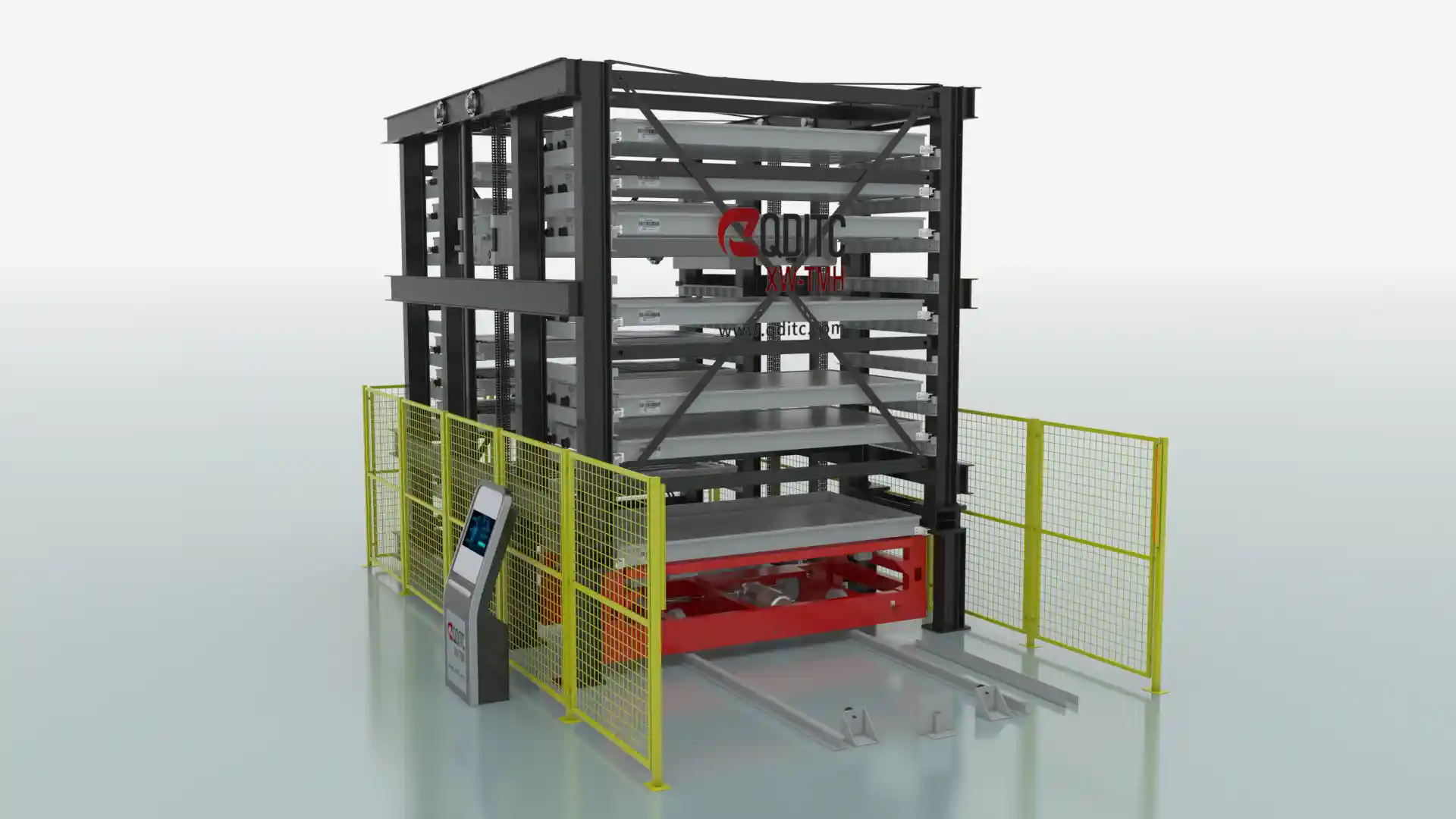
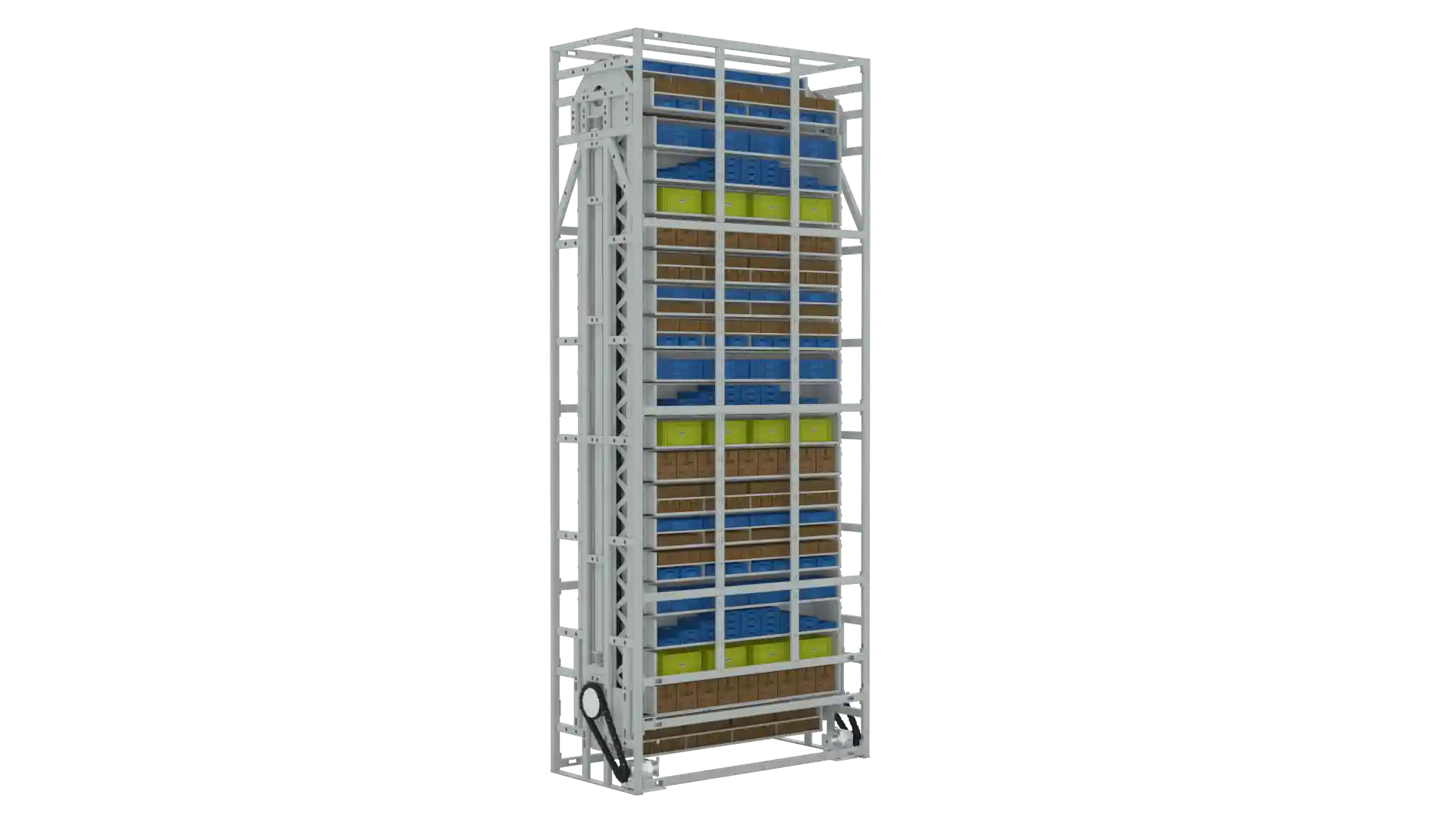
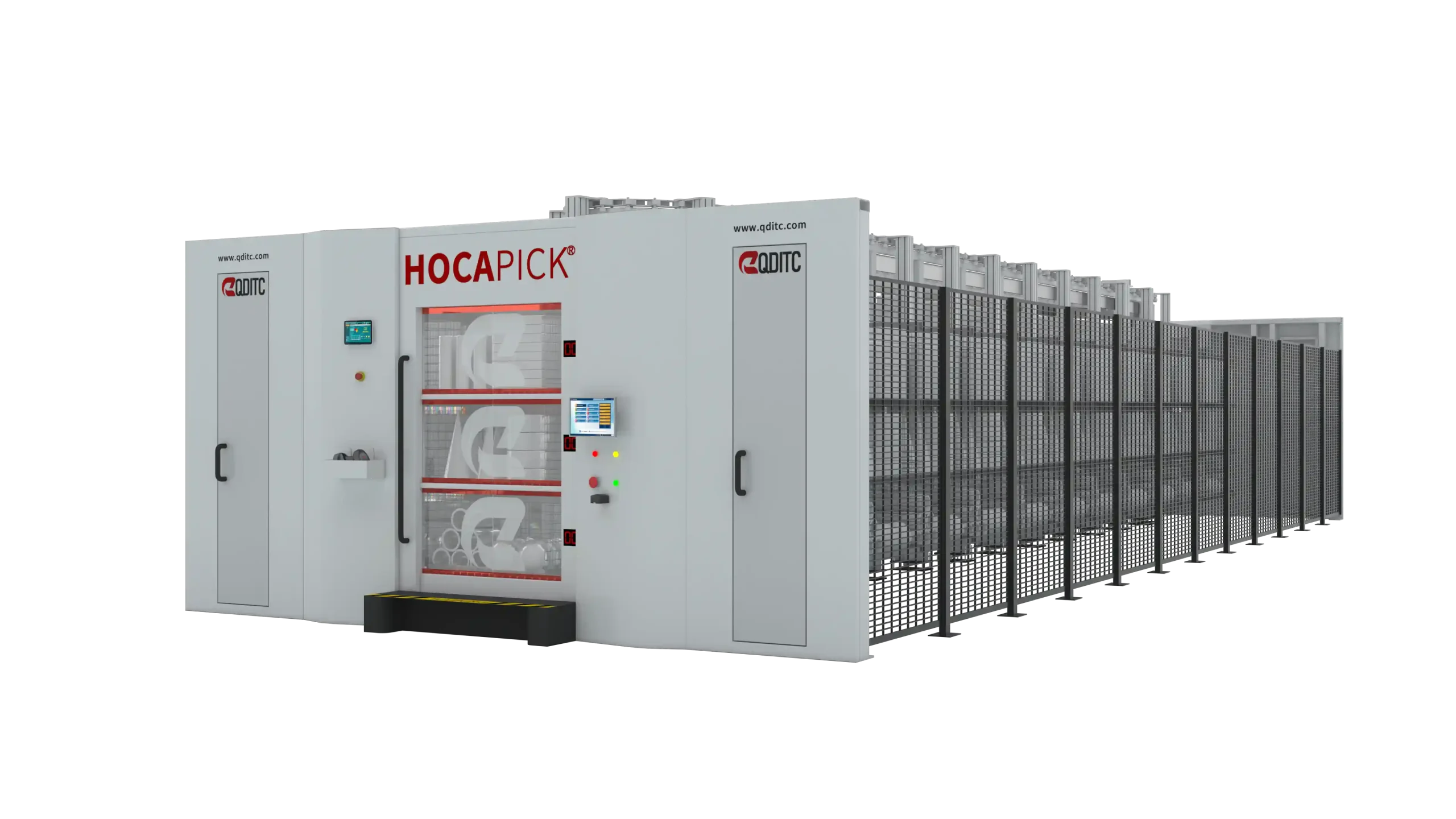
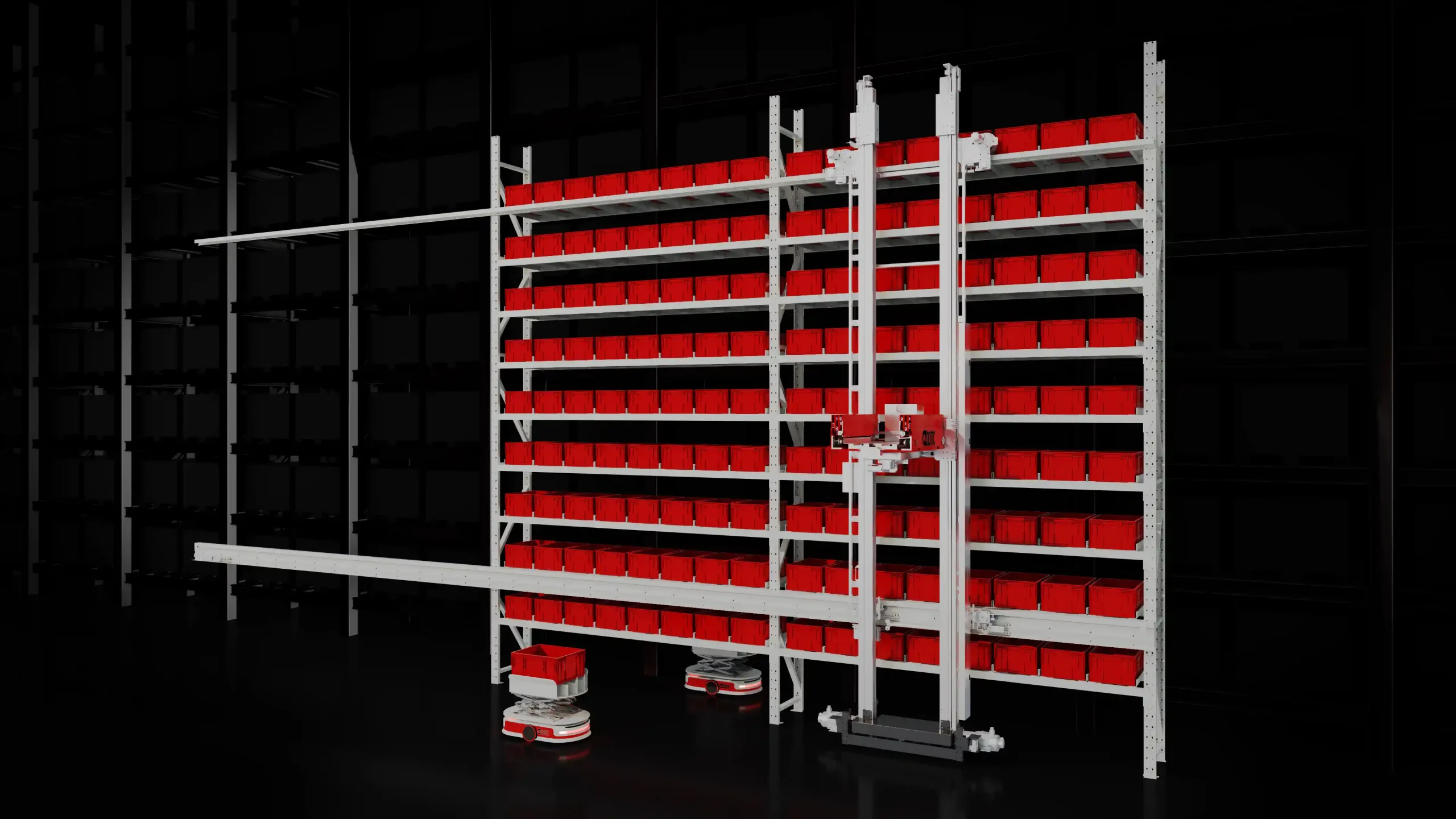
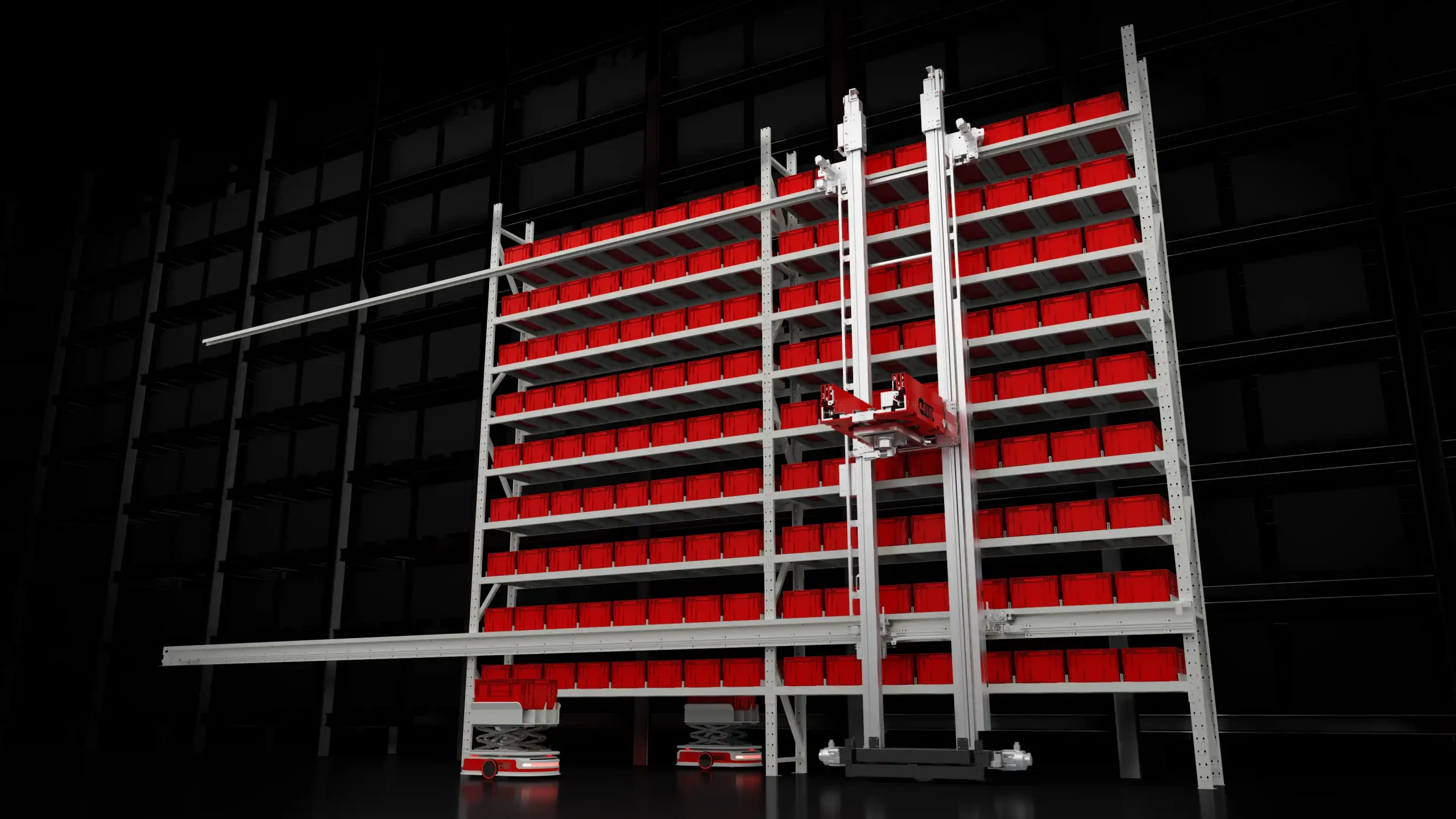
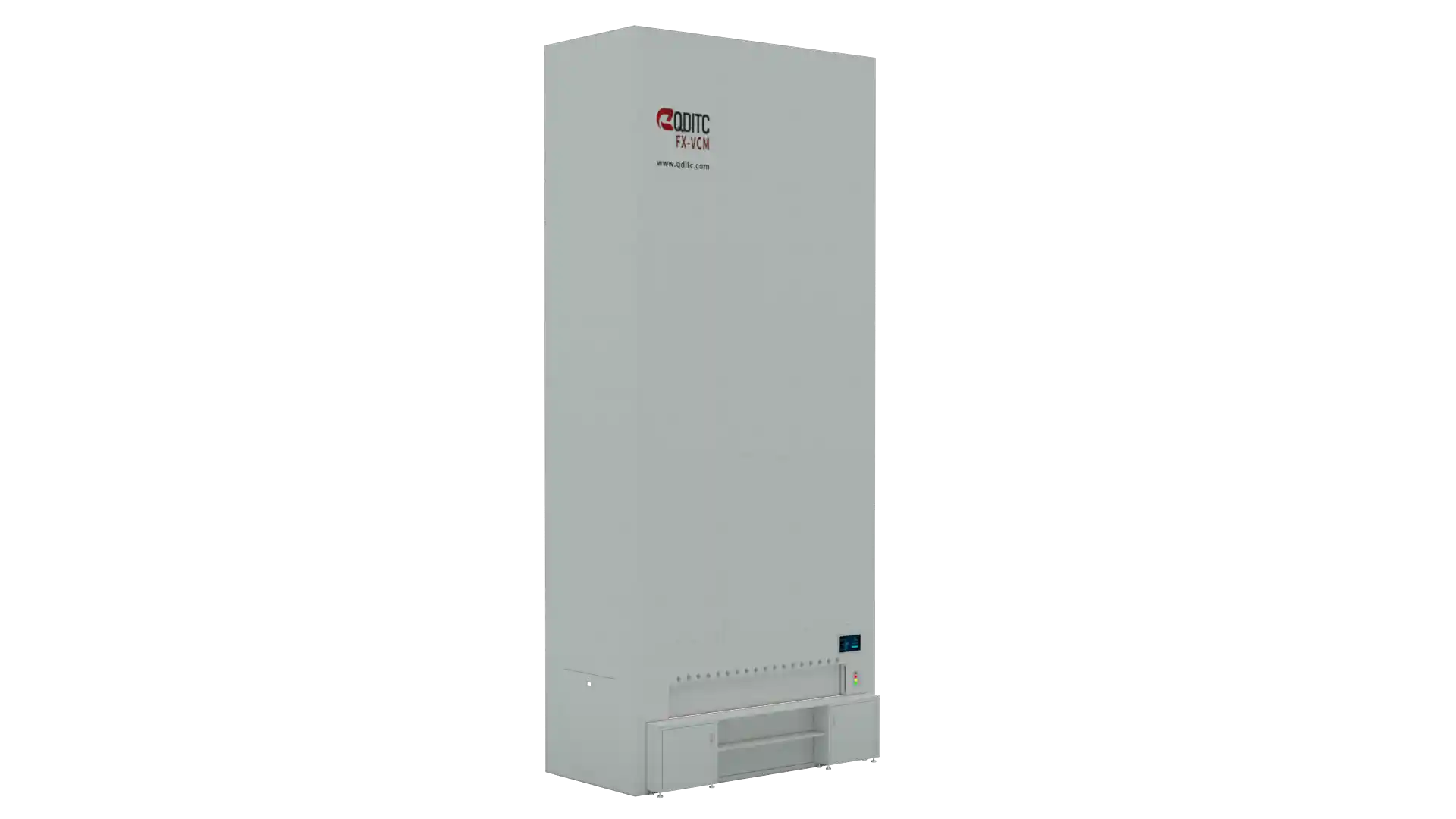
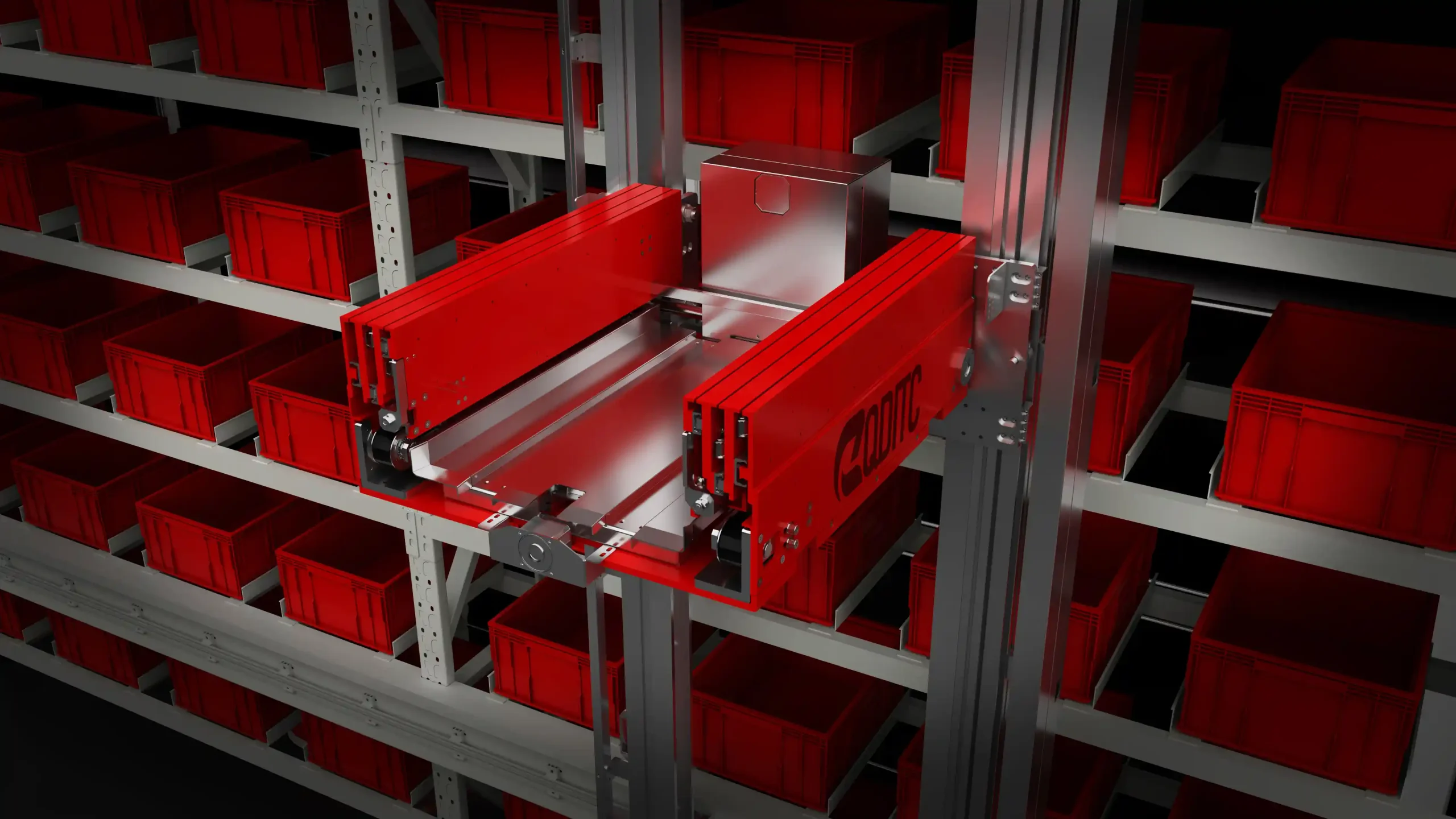
For this facility, the solution combined three primary systems. The SmartLoad-RackBot handled pallet-level storage and retrieval in the main warehouse zones. Vertical Carousel Modules (FX-VCM) addressed small parts storage, rotating inventory vertically to bring items to the operator rather than sending operators hunting through shelves. Vertical Lift Modules (PG-VLM) managed the heavier and larger materials, with tray capacities reaching 1000kg.

The [intralogistics automation ] strategy focused on eliminating the dead time between storage and production. Materials needed to flow predictably, and the system needed to know where everything was at any moment.

Designing for Vertical Gain

Floor space in a 3,000 sqm facility is finite. Vertical space often isn’t fully claimed. The [custom ASRS design ] prioritized height utilization without requiring structural modifications to the building.

The FX-VCM units proved particularly effective for small parts. Instead of dedicating floor area to static shelving that operators walk past repeatedly, the carousel brings the correct bin to a fixed picking station. Density increases. Walking decreases. Error rates drop because the system confirms the pick location.

For ultra-long and ultra-wide materials, the PG-VLM provided organized high-density storage that manual methods simply cannot match. These units store materials on trays that the system retrieves automatically, eliminating the forklift maneuvering and aisle width that traditional racking demands.

This [warehouse layout planning ] approach converted underused cubic volume into active storage, demonstrating how [space-saving storage solutions ] work in practice rather than just in concept.

Hitting 90 Days Without Stopping Production

Speed matters, but so does not shutting down operations during installation. The project followed a compressed timeline that overlapped phases wherever possible.

Site assessment and data collection finished in the first week. While the design team finalized system specifications, manufacturing of components began. Hardware installation proceeded in zones, allowing portions of the facility to remain operational while adjacent areas underwent transformation.

Software configuration and testing ran parallel to the final hardware integration. Operator training started before full go-live so the team could practice on installed equipment while final calibrations continued.

This [quick ASRS installation ] approach required tight coordination between engineering, manufacturing, and on-site crews. The 90-day target was aggressive but achievable because each phase had clear handoff points and contingency buffers.

What the Numbers Actually Showed

Post-implementation metrics tell the real story. Throughput increased measurably because materials reached production lines faster and picking operations no longer depended on operator memory or physical search time.

Labor costs dropped. Not because headcount was slashed, but because the same team accomplished more. Tasks that previously required walking, searching, and manual verification now happened at fixed stations with system-guided accuracy.

Inventory accuracy jumped from 85% to 99.5%. That 14.5-point improvement sounds incremental until you consider what it means for production planning. When you can trust your inventory data, you stop over-ordering safety stock and stop discovering shortages at the worst possible moment.

MetricBefore ASRSAfter ASRSImprovement
ThroughputX units/hrX+Y units/hrZ% increase
Labor Costs$A/month$B/monthC% reduction
Inventory Accuracy85%99.5%14.5% increase
Picking TimeD min/itemE min/itemF% reduction

These [warehouse efficiency improvements ] translated directly into [logistics cost reduction ] that showed up in monthly operating statements. The [return on investment ASRS ] calculation became straightforward once the baseline and post-implementation numbers were compared. The [inventory accuracy gains ] alone justified a significant portion of the investment by reducing expedited shipping costs and production delays. These results reflect meaningful [supply chain optimization metrics ] rather than theoretical projections.
VCM1

Building for What Comes Next

An ASRS installation isn’t just about solving today’s problems. The modular architecture of systems like the FX-VCM and PG-VLM means capacity can expand without starting over.

If this facility’s throughput requirements increase by 30% in three years, additional modules integrate into the existing control system. The software already understands the logic. The operators already know the interface. Expansion becomes an addition rather than a replacement.

This [scalable warehouse solutions ] approach protects the initial investment while keeping options open. The [industrial automation benefits ] extend beyond immediate efficiency gains into long-term operational flexibility. Energy consumption per unit handled typically decreases as automation replaces repetitive manual movement, contributing to more sustainable factory operations over time.

Frequently Asked Questions

What material types work with QDITC’s ASRS systems?

The FX-VCM handles small parts, components, and items that fit within standard bin dimensions. The PG-VLM accommodates larger, heavier, and irregularly shaped materials with tray capacities up to 1000kg. For [irregular profiled ] items or materials requiring [controlled environment ] storage, specialized configurations are available. The system selection depends on what actually moves through your facility.

How realistic is a 90-day implementation timeline?

For a facility of this scale and complexity, 90 days is achievable with proper planning and resource allocation. The timeline depends on site conditions, system configuration, and how much operational overlap is acceptable during installation. Larger or more complex facilities may require longer schedules. The key is overlapping phases and maintaining clear coordination between design, manufacturing, and installation teams.

What determines the ROI timeline for an ASRS investment?

Payback periods vary based on current labor costs, error rates, throughput constraints, and space limitations. Facilities with high manual handling costs or significant inventory accuracy problems typically see faster returns. Most implementations show payback within a few years through combined savings in labor, reduced errors, improved space utilization, and increased throughput capacity.

Start the Conversation

Factory transformation projects begin with understanding what’s actually happening on your floor today. QDITC brings 15 years of industrial warehousing equipment production experience to that conversation, with solutions designed for diverse storage spaces and material types.

If your facility is working harder than it should for the results it delivers, the discussion is worth having.

Email: miaocp@qditc.com
Tel: +86 15262759399
ASRS for E-Commerce: Boosting High-Volume Order Picking Efficiency

The pressure on fulfillment centers keeps building. Every quarter brings higher order volumes, tighter delivery windows, and the same stubborn problems: not enough workers, rising wages, and warehouses that weren’t designed for this kind of throughput. I’ve watched operations try to muscle through with more shifts and temporary staff, but there’s a ceiling to what manual picking can handle before accuracy drops and costs spiral. Automated Storage and Retrieval Systems change the equation entirely. They don’t just speed things up; they reshape how fulfillment actually works. After 15 years designing these systems, I’ve seen what happens when the right ASRS solution meets the right operation.

The Real Fulfillment Problems ASRS Actually Solves

E-commerce growth hasn’t slowed down, and neither have the operational headaches that come with it. Labor shortages hit fulfillment centers harder than most industries because the work is physically demanding and turnover runs high. Wage pressure compounds the problem. When you’re competing for workers against every other warehouse in the region, labor costs climb whether you’re ready or not.

gq-smartload3

Traditional warehouse setups weren’t built for the order profiles e-commerce generates. Small orders, high SKU counts, and next-day delivery expectations create bottlenecks that manual processes can’t clear. Peak seasons expose every weakness in the system. A fulfillment center that runs smoothly in March can fall apart in November when order volume doubles and the same number of pickers are covering twice the ground.

The difference between manual and automated fulfillment shows up in the numbers, but you feel it on the floor first. Manual systems depend on people walking miles of aisles, scanning items, and making decisions at every pick location. Fatigue sets in. Errors accumulate. Automated systems flip the model: inventory moves to the picker instead of the other way around. That single change eliminates most of the wasted motion that drags down manual operations.

Faster Picks and Fewer Mistakes Through Goods to Person Technology

ASRS transforms order picking by reversing the traditional workflow. Instead of sending workers into the racks, the system brings items directly to a pick station. This goods-to-person approach cuts travel time to nearly zero, which matters more than most people realize. In a manual operation, pickers spend 50% or more of their shift just walking. That’s time that produces nothing.

The SmartLoad-RackBot system runs at speeds more than double what traditional miniLoad systems achieve. Faster retrieval means more picks per hour, but speed alone doesn’t capture the full picture. Accuracy improves because the system presents exactly the right item at the right time. Human judgment still matters at the pick station, but the opportunities for error shrink dramatically when workers aren’t navigating thousands of locations under time pressure.

Robotics and inventory management systems work together to track every item’s exact position. When a tote or bin arrives at the pick station, the system already knows what’s inside and where it belongs next. This precision compounds over thousands of daily picks. A 99.9% accuracy rate sounds abstract until you calculate what a 1% error rate costs in returns, reshipping, and customer complaints.

Common ASRS Configurations for E-Commerce Operations

Different ASRS technologies suit different operational profiles. Shuttle systems use robotic carriers moving through high-density rack structures to retrieve and store inventory. They excel at high-throughput applications where speed matters most.

Vertical lift modules like the PG-VLM work differently. These enclosed systems store items on trays that the machine delivers to an access opening. They’re particularly effective for oversized, heavy, or irregularly shaped inventory that doesn’t fit standard tote-based systems.

Carousels rotate shelving to bring items to operators. The FX-VCM vertical carousel and FXH-HCM horizontal carousel each optimize for different space constraints. Vertical carousels maximize height; horizontal carousels work better in facilities with limited ceiling clearance. The SN-VSM vertical sort module offers single-item access and can connect with AGVs for broader automation integration.

ASRS TypePrimary AdvantageBest Application
Shuttle SystemsHigh throughput with rapid retrievalHigh-volume small and medium items
Vertical Lift ModulesMaximum vertical space useHeavy materials and varied sizes
Horizontal CarouselsDense storage in low-height areasFrequently accessed small parts
Vertical CarouselsCompact footprint with organized accessTools, medical supplies, archives
SmartLoad-RackBotUltra-high speed with energy efficiencyHigh-density rapid picking

The Business Case for ASRS in High Volume Fulfillment

The financial argument for ASRS goes beyond labor savings, though those savings are substantial. Space utilization improvements can reach 85% when you build vertically instead of sprawling horizontally. That’s real money in markets where warehouse space runs $8 to $15 per square foot annually. Avoiding a building expansion or a move to a larger facility often justifies the ASRS investment on its own.

RACKBOT

Labor cost reduction works on multiple levels. Fewer pickers handle more orders, but you also reduce training costs, workers’ compensation claims, and the productivity losses that come with constant turnover. When labor markets tighten, operations with ASRS don’t scramble to staff up. The system scales without proportional headcount increases.

Scalability matters especially for e-commerce because demand isn’t linear. Black Friday doesn’t care about your staffing plan. ASRS systems handle volume spikes without the chaos of temporary workers learning the layout. The same system that processes 5,000 orders on a Tuesday can process 15,000 on a Friday without fundamental operational changes.

Calculating ASRS Return on Investment

ROI calculations for ASRS depend on your specific operation, but the contributing factors are consistent. Labor savings typically drive the largest portion of returns. A 30% reduction in picking labor costs compounds year over year as wages rise.

Error reduction contributes more than most projections account for. Every mispick generates downstream costs: return processing, replacement shipping, customer service time, and the harder-to-quantify damage to customer relationships. When accuracy moves from 97% to 99.9%, those costs largely disappear.

Throughput increases let you handle more business without proportional cost increases. If your current operation maxes out at 10,000 orders daily and ASRS doubles that capacity, you’ve created room for growth without building or leasing additional space.

ROI FactorHow ASRS Delivers Value
Labor SavingsFewer workers needed, reduced training and turnover costs
Error ReductionLower return rates, better customer satisfaction
Throughput GainsMore orders processed without proportional cost increases
Space OptimizationDeferred expansion, reduced real estate expenses
Inventory AccuracyTighter stock control, less obsolescence

Payback periods typically fall between 18 and 36 months depending on operation size, labor costs, and existing efficiency levels. Operations with high labor costs or severe space constraints often see faster returns.

Making ASRS Work With What You Already Have

Integration challenges stop some operations from moving forward with ASRS, but the technical barriers are lower than they appear. The key is WMS integration. Your warehouse management software needs to communicate with the ASRS control system in real time. That means API connections, data mapping, and testing to ensure inventory levels, order details, and picking instructions flow correctly between systems.

PICKUPSTATION1

Legacy systems sometimes complicate integration, but rarely make it impossible. The more common challenge is organizational: getting IT, operations, and the ASRS vendor aligned on requirements and timelines. Clear specifications upfront prevent most integration problems.

Deployment doesn’t have to shut down your operation. Phased implementations let you bring sections of the ASRS online while manual processes continue in other areas. The transition period requires careful coordination, but continuous operations during installation are achievable with proper planning.

Technical Requirements for ASRS Integration

ASRS integration relies on software interfaces that connect the system’s control layer to your existing WMS. APIs handle the communication, passing data about inventory positions, order assignments, and system status. Data mapping ensures that information formats align between systems. A SKU number in your WMS needs to match exactly what the ASRS expects.

Real-time data exchange is essential. When an order enters the system, the ASRS needs immediate visibility to begin retrieval. When a pick completes, inventory levels must update instantly. Delays or discrepancies in data flow create operational problems that compound quickly at high volumes.

Keeping ASRS Running at Full Capacity

ASRS systems are mechanical and electronic equipment. They require maintenance. The difference between a system that delivers consistent performance and one that causes headaches comes down to how proactively you address wear and upkeep.

TOWERMAT

Preventative maintenance schedules catch problems before they cause downtime. Regular inspections of motors, belts, sensors, and control systems identify components approaching end of life. Replacing a worn part during scheduled maintenance costs a fraction of what an unplanned breakdown costs in lost productivity and emergency repairs.

Remote monitoring adds another layer of protection. Modern ASRS systems generate continuous data about their own performance. Tracking that data reveals patterns that predict failures before they happen. A motor drawing slightly more current than normal might run fine for weeks, but the trend indicates trouble coming.

What Maintenance Actually Involves

Routine maintenance includes daily and weekly checks of mechanical and electrical components. Operators learn to spot unusual sounds, vibrations, or performance changes that signal developing issues. These observations feed into the broader maintenance program.

Predictive maintenance uses sensor data and analytics to schedule interventions based on actual equipment condition rather than arbitrary time intervals. A bearing that’s running smoothly doesn’t need replacement just because six months have passed. A bearing showing early wear indicators gets attention before it fails.

Specialized technicians handle complex repairs and system optimizations. ASRS technology requires specific expertise that general maintenance staff typically don’t have. Access to trained technicians and genuine spare parts keeps systems running at specification.

Work With Anhui Qiande on Your ASRS Implementation

E-commerce fulfillment demands keep increasing. ASRS provides the efficiency and scalability to meet those demands without proportional increases in labor, space, or operational complexity. Fifteen years of designing and implementing these systems has taught us what works and what creates problems down the road. If you’re evaluating ASRS for your operation, we can help you understand what a properly designed system would look like for your specific requirements. Email: miaocp@qditc.com | Tel: +86 15262759399

FAQ

What makes ASRS worth the investment for e-commerce fulfillment?

ASRS delivers measurable improvements in picking speed and accuracy while reducing dependence on manual labor. The combination of faster throughput, fewer errors, and better space utilization creates returns that typically pay back the investment within 18 to 36 months. For operations facing labor shortages or capacity constraints, ASRS often represents the only realistic path to handling growth without proportional cost increases.

How much can ASRS reduce labor costs in high volume operations?

Labor cost reductions vary by operation but commonly reach 30% or more for picking functions. The savings come from multiple sources: fewer workers needed for the same output, reduced training costs due to lower turnover, and decreased error-related expenses. Operations with high local wage rates or severe labor availability problems typically see the largest percentage reductions.

Can ASRS handle the demand swings that come with e-commerce?

ASRS systems handle volume fluctuations better than manual operations because throughput scales without proportional staffing changes. The same system configuration that processes normal daily volumes can handle peak season spikes. This flexibility eliminates the scramble to hire and train temporary workers during busy periods and avoids the productivity losses that come with inexperienced staff navigating unfamiliar warehouse layouts.

ASRS Throughput Calculation: Specifying Systems for Peak Demand

Getting ASRS throughput calculation right determines whether your automated storage system becomes a competitive advantage or an expensive bottleneck. I’ve watched companies struggle with systems that looked perfect on paper but choked during holiday rushes or promotional periods. The math matters, but so does understanding how real warehouse operations stress-test every assumption in your specification documents.

Why Storage Capacity Numbers Miss the Point

ASRS system capacity gets confused with storage volume constantly, but they measure different things entirely. Throughput counts how many storage and retrieval cycles your system completes per hour. That number shapes everything from order fulfillment speed to labor scheduling during peak seasons.

Underspecifying creates obvious problems. Orders stack up, customers wait, and your team scrambles to work around a system that can’t keep pace. Overspecifying wastes capital on equipment sitting idle most of the year. Neither outcome makes finance happy.

The calculation process forces you to confront uncomfortable questions about your operation. How accurate is your demand forecasting? What happens when three major orders hit simultaneously? Can your system handle the inventory velocity changes you’re planning for next year?

RACKBOT

Breaking Down the Calculation Process

ASRS throughput calculation relies on several interconnected variables that compound in ways spreadsheets don’t always capture. Travel speed matters, but acceleration and deceleration times often eat more cycle time than managers expect. A crane moving at impressive peak velocity still loses seconds ramping up and slowing down for each pick.

Single-command cycles handle one task per trip. The crane retrieves an item and returns empty, or stores an item and comes back without a load. Dual-command cycles combine storage and retrieval in one trip, roughly doubling efficiency when your WMS sequences tasks intelligently.

Warehouse layout shapes throughput more than most people realize. Placing high-velocity items near the input/output points reduces average travel distance. Slotting optimization alone can boost effective throughput by double-digit percentages without touching the hardware.

What factors influence ASRS throughput?

Physical item characteristics set hard constraints on handling times. Heavier loads require slower acceleration. Awkward dimensions need careful positioning. Temperature-sensitive goods may require additional verification steps.

Equipment specifications establish theoretical maximums. Travel speed, lift speed, and load capacity define what’s physically possible. But theoretical maximums rarely match sustained operational reality.

Control system intelligence determines how close you get to those theoretical limits. A warehouse control system that sequences tasks poorly wastes cycles. A warehouse management system that doesn’t communicate inventory positions accurately creates search time.

Picking strategy multiplies through everything else. Batch picking consolidates trips but requires downstream sortation. Zone picking distributes work but needs coordination between zones. Each approach changes the cycle count per order.

Matching System Capacity to Demand Spikes

Peak demand specification separates adequate systems from robust ones. Average throughput requirements mislead because averages smooth over the moments that actually matter. Your system needs to handle Tuesday afternoon in December, not the average Tuesday across the year.

Historical data reveals patterns that intuition misses. Most operations show predictable weekly cycles, monthly variations, and seasonal peaks. Layering these patterns builds a demand profile that exposes when your system will face maximum stress.

Growth projections add uncertainty that requires honest assessment. Five-year forecasts contain assumptions about market conditions, product mix changes, and operational improvements. Building in headroom for growth costs money upfront but prevents painful retrofit projects later.

TOWERMAT

How do I determine the right ASRS system size for my operation?

Start with physical constraints. Your building footprint, ceiling height, and floor load capacity establish boundaries. Some operations discover their ideal system won’t fit their space, forcing design compromises.

Inventory analysis comes next. Turnover rates by SKU category show which items drive cycle volume. Order profiles reveal pick density and timing patterns. This data shapes both storage configuration and throughput requirements.

Growth planning extends the analysis forward. Conservative projections might suggest a smaller system, but retrofit costs often exceed the savings from initial undersizing. Most operations benefit from specifying 15-25% above current peak requirements.

Budget reality checks the technical ideal. ROI calculations should include implementation costs, ongoing maintenance, energy consumption, and the operational improvements that justify the investment. Sometimes the right answer is a phased implementation that spreads capital requirements.

Sustaining Performance After Installation

ASRS throughput calculation establishes a baseline, but sustained performance requires ongoing attention. Systems degrade without maintenance. Software settings drift from optimal. Operational patterns shift in ways that stress different system components.

Performance monitoring catches problems before they cascade. Tracking cycles per hour against specifications reveals gradual degradation. System availability metrics expose maintenance gaps. Energy consumption trends can signal mechanical issues developing.

Preventive maintenance schedules prevent expensive emergency repairs. Replacing wear components on schedule costs less than unplanned downtime during peak season. Most manufacturers provide recommended intervals, but actual operating conditions may require adjustment.

Software optimization offers ongoing improvement opportunities. WMS algorithms that made sense at installation may not match current inventory profiles. Slotting recommendations based on fresh velocity data can recover throughput lost to inventory mix changes.

What are common mistakes to avoid when calculating ASRS throughput?

Data quality undermines everything built on top of it. Calculations using outdated inventory counts, incomplete order histories, or estimated cycle times produce specifications that don’t match reality. Garbage in, garbage out applies with particular force here.

Demand variability gets underweighted constantly. Average demand calculations hide the peaks that actually stress systems. Building to average guarantees failure during the periods that matter most for customer satisfaction.

Growth assumptions tend toward optimism. Five-year projections often assume everything goes right. Building some pessimism into growth factors provides insurance against forecasting errors.

Simulation gets skipped when budgets tighten. Modeling system behavior under various scenarios costs money and time, but reveals interactions that static calculations miss. The investment usually pays for itself in avoided specification errors.

Integration planning gets treated as an afterthought. An ASRS that performs beautifully in isolation can still create bottlenecks if upstream or downstream processes can’t keep pace. System boundaries need careful attention.

VCM2

Implementation Expertise Shapes Outcomes

ASRS throughput calculation produces numbers, but translating those numbers into working systems requires experience with the gap between specification and reality. Equipment vendors provide rated capacities under ideal conditions. Actual installations face space constraints, integration challenges, and operational realities that ideal conditions ignore.

Customization addresses the specific characteristics of each operation. Storage unit dimensions, weight distributions, and handling requirements vary across industries and even between facilities in the same company. Generic solutions rarely optimize for specific situations.

Project management coordinates the dozens of decisions that shape final system performance. Installation sequencing, testing protocols, and cutover planning all affect whether the system meets its throughput specifications from day one.

Post-installation support catches the issues that only emerge under real operational load. Training programs build operator competence. Maintenance agreements protect equipment investments. Software updates address bugs and add capabilities.

The SmartLoad-RackBot demonstrates what focused engineering produces. Implementation cycles drop by over 70% compared to traditional miniLoad systems. Energy consumption stays below 35% of conventional alternatives. Those improvements compound across years of operation.

Frequently Asked Questions About ASRS Throughput

How does ASRS throughput calculation impact overall supply chain efficiency?

Accurate ASRS throughput calculation prevents the warehouse from becoming a supply chain constraint. When system capacity matches demand, orders flow through without artificial delays. Inventory moves predictably, enabling tighter coordination with suppliers and transportation providers. The ripple effects extend beyond the warehouse walls into customer satisfaction and working capital efficiency.

What are the key metrics for ASRS performance evaluation?

Cycles per hour measures raw throughput against specification. System availability tracks uptime percentage. Order accuracy catches errors that require rework. Energy consumption per cycle monitors operational efficiency. Storage density utilization shows how effectively you’re using the installed capacity. Together, these metrics provide a comprehensive performance picture.

Why is accurate throughput calculation critical for ASRS investment?

The financial stakes make precision worthwhile. Underspecified systems create operational constraints that limit revenue growth. Overspecified systems tie up capital in unused capacity. Accurate ASRS throughput calculation threads the needle between these failure modes, ensuring the investment delivers returns proportional to its cost. The calculation also provides the documentation needed to justify capital requests and evaluate vendor proposals objectively.

Partner with Anhui Qiande for Your ASRS Needs

With 15 years of experience in industrial warehousing equipment production, Anhui Qiande Intelligent Technology Co., Ltd. is your trusted partner in designing and implementing ASRS solutions tailored to your unique storage spaces and material handling needs. Contact us today at +86 15262759399 or miaocp@qditc.com for a consultation and let us help you spec your system for peak demand with precision and confidence.

ASRS Manufacturer China: OEM Solutions for Integrators

System integrators and resellers hunting for Automated Storage and Retrieval Systems face a familiar problem: finding an OEM partner who actually understands what happens when a warehouse goes live. Anhui Qiande Intelligent Technology Co., Ltd. has spent 15 years building industrial warehousing equipment, and that experience shapes how we approach OEM relationships. We design ASRS solutions that fit real storage spaces and handle actual material flows, not theoretical ones. The partnerships we build focus on practical outcomes: systems that work, support that responds, and technology that scales.

Building ASRS OEM Partnerships That Actually Work

A strategic ASRS OEM partnership with Anhui Qiande gives system integrators and resellers something concrete to work with. Fifteen years of building industrial warehousing equipment means we’ve seen what fails and what holds up. We design solutions for specific storage spaces and material types because generic approaches rarely survive contact with real operations.

Modern supply chains don’t forgive weak links. Our OEM programs create genuine collaboration, letting partners expand their portfolios with intelligent warehousing solutions that have proven themselves in the field. This goes beyond shipping products. We develop systems together and support market positioning. The goal is relationships that generate growth for both sides and push material handling equipment forward.

gq-smartload3

ASRS System Capabilities and How We Customize Them

Anhui Qiande builds automated storage and retrieval systems with deep customization built into the design process. Our intelligent technology adapts across industries because storage needs vary dramatically. Custom ASRS solutions maximize efficiency while squeezing more capacity from available space.

The product range covers several distinct system types. Vertical Carousel Modules (FX-VCM) use vertical rotation technology. Vertical Lift Modules (PG-VLM) handle heavy loads at high speeds. Horizontal Carousel Modules (FXH-HCM) deliver dense storage in height-constrained spaces. Vertical Sort Modules (SN-VSM) combine vertical lift with horizontal translation. The SmartLoad-RackBot represents our newest approach to flexible automation.

ASRS System TypeKey FeatureIdeal Application
FX-VCMVertical Rotation TechnologyMold inspection tools, archives, medical supplies
PG-VLMHigh-Speed, Heavy Load (1000kg/tray)Ultra-long/wide materials, molds, raw materials
FXH-HCMHorizontal Rotation, Dense StorageLimited height, high-density automated storage
SN-VSMVertical Lift & Horizontal TranslationTurnover box storage and retrieval
SmartLoad-RackBotReduced Implementation Cycle, High SpeedMulti-directional picking, various automation devices

The PG-VLM handles ultra-long and ultra-wide materials with storage capacity reaching 1000kg per tray. The SmartLoad-RackBot cuts implementation cycles by over 70% and reduces costs by more than 20% compared to traditional miniLoad systems. These numbers come from actual deployments, not lab conditions.

Smart warehouse technology integrates throughout our systems to strengthen intralogistics performance. We tailor warehouse automation solutions to specific client environments because that’s what drives optimal performance and faster return on investment.

What Makes Anhui Qiande a Strong ASRS OEM Choice in China

Selecting Anhui Qiande as your ASRS manufacturer in China brings tangible benefits. Fifteen years of industrial warehousing equipment production creates expertise that shows up in product quality and problem-solving speed. Stringent quality control runs through every stage of manufacturing, producing reliable ASRS solutions.

Competitive ASRS pricing lets partners maintain healthy margins while offering strong value. Long-term partnerships matter to us because they create better outcomes than transactional relationships. We track market dynamics closely and build solutions meeting global standards. The supplier relationship rests on trust and shared success.

For direct inquiries, contact us at tel: +86 15262759399 or Email: miaocp@qitc.com.

HCM-1

ASRS Integration Services and Project Support

ASRS system integration services and comprehensive support run through the entire project lifecycle. Project management support keeps deployment efficient from initial design through final installation. Technical assistance covers all our material handling equipment, keeping operations running smoothly.

After-sales service includes maintenance and troubleshooting because downtime costs money. Logistics automation support helps integrators achieve peak system performance. This full-spectrum approach means partners have backup at every stage. Detailed installation and maintenance guides come standard, along with expert guidance when situations get complicated.

RACKBOT 1

How Resellers Maximize ROI with Cost-Effective ASRS Solutions

Cost-effective ASRS solutions from Anhui Qiande are engineered to maximize ROI for resellers. Our systems let resellers offer competitive pricing while strengthening their market position. Efficient, reliable products help partners achieve better margins.

End-clients get superior value through improved operational efficiency. This includes optimized inventory management systems and streamlined e-commerce fulfillment solutions. Partnering with us means offering advanced automation without costs that kill deals. This strategic advantage helps capture larger shares of the growing automation market.

TOWERMAT

Frequently Asked Questions About ASRS OEM Partnerships

What advantages do system integrators gain from partnering with a Chinese ASRS OEM?

Working with a Chinese ASRS OEM like Anhui Qiande delivers cost advantages from efficient manufacturing combined with access to current ASRS technology. Extensive customization options address specific project requirements. Our track record demonstrates reliable, high-quality solutions across diverse industrial applications.

How do Anhui Qiande’s ASRS solutions reduce operational costs while improving warehouse efficiency?

Automated processes and optimized space utilization drive efficiency gains. Labor costs drop significantly while human error decreases. Inventory accuracy improves, leading to better stock management and reduced waste. These improvements compound into substantial operational cost reductions over time.

What customization and support can ASRS system integrators and resellers expect from Anhui Qiande?

Customization ranges from initial design modifications through software integration, ensuring seamless compatibility with existing systems. Support includes technical training for partner teams and robust after-sales service. Ongoing technical assistance and spare parts availability keep systems running reliably for the long term.

Start Your ASRS OEM Partnership with Anhui Qiande

Connect with Anhui Qiande to explore a strategic ASRS OEM partnership built on 15 years of intelligent warehousing solutions expertise. We design future-ready ASRS systems tailored to specific operational needs. Contact us for a consultation to see how we can strengthen your offerings. Reach us at tel: +86 15262759399 or Email: miaocp@qitc.com.

ASRS vs. Automated Guided Vehicles: Choosing Your Solution

Warehouse automation decisions often come down to a deceptively simple question: should goods move to people, or should vehicles move goods to people? The answer shapes everything from floor layouts to labor requirements, and getting it wrong means living with inefficiencies for years. ASRS and AGV systems represent fundamentally different approaches to solving the same problem, and understanding where each excels determines whether your investment pays off or becomes an expensive lesson.

How ASRS Technology Actually Works

Automated Storage and Retrieval Systems operate on a straightforward principle: maximize vertical space while minimizing human travel time. These systems store inventory in dense, vertical configurations and use mechanical devices to extract items on demand. The technology encompasses vertical lift modules, shuttle systems, and carousel systems, each engineered for specific storage challenges.

The goods-to-person model eliminates the walking that consumes roughly 60% of picker time in conventional warehouses. Instead of workers navigating aisles, the system delivers requested items directly to workstations. This approach works particularly well for operations handling thousands of SKUs where traditional shelving would sprawl across massive floor areas.

TOWERMAT

ASRS installations require substantial upfront infrastructure. Steel racking, mechanical extractors, and control systems must be precisely engineered for the specific building envelope and inventory profile. Once installed, the system operates within fixed parameters, meaning changes to storage requirements often require significant modifications.

What ASRS Delivers in Practice

The productivity gains from ASRS implementation stem from multiple factors working together. Throughput increases because mechanical systems operate continuously without fatigue, breaks, or shift changes. Labor costs drop because fewer workers handle more orders. Injury rates decline because heavy lifting and repetitive reaching largely disappear from daily operations.

Inventory accuracy improves dramatically in ASRS environments. Every storage location is tracked digitally, and every retrieval is logged automatically. The discrepancies that plague manual warehouses, where items get placed in wrong locations or miscounted during picks, essentially vanish. For operations where inventory accuracy directly affects customer satisfaction or regulatory compliance, this benefit alone can justify the investment.

AGV Systems and Their Operational Role

Automated Guided Vehicles take a different approach to warehouse automation. Rather than building fixed infrastructure to move goods vertically, AGVs create flexible horizontal transport networks. These autonomous vehicles follow predefined paths, moving pallets, carts, or containers between locations throughout a facility.

The technology relies on navigation systems that range from simple magnetic tape following to sophisticated laser-guided positioning. Modern AGVs incorporate sensors that detect obstacles, including human workers, and adjust their behavior accordingly. This allows them to operate in environments where people and machines share floor space.

AGVs excel in manufacturing environments where materials must flow between production stations, staging areas, and shipping docks. They handle the repetitive transport tasks that would otherwise require forklift operators or manual cart pushing. In e-commerce operations, AGVs often move inventory from bulk storage areas to picking stations or completed orders from packing areas to shipping.

Human-AGV Collaboration in Real Warehouse Environments

AGVs operating alongside human workers is standard practice in modern facilities. The safety systems built into these vehicles have matured considerably over the past decade. Laser scanners continuously map the surrounding environment, detecting people and objects in the vehicle’s path. When something enters the safety zone, the AGV slows or stops before any contact occurs.

The integration works both ways. Workers learn to anticipate AGV movements and understand their behavior patterns. Well-designed facilities include clear traffic lanes, visual indicators showing AGV routes, and workstation layouts that minimize crossing points. The result is a collaborative environment where automated transport handles the dull, repetitive movement while humans focus on tasks requiring judgment and dexterity.

Core Differences That Shape Implementation Decisions

ASRS and AGV systems solve different problems, and treating them as interchangeable alternatives leads to poor outcomes. ASRS fundamentally changes how inventory is stored, creating dense vertical configurations that would be impossible to access manually. AGVs change how materials move horizontally, replacing human-operated vehicles and manual transport with automated alternatives.

The infrastructure requirements differ substantially. ASRS installations involve permanent structural modifications, specialized racking systems, and mechanical equipment integrated into the building itself. AGV deployments require navigation infrastructure, which might be as simple as floor tape or as complex as facility-wide positioning systems, but the vehicles themselves remain mobile assets that can be redeployed or removed.

FeatureASRS (Automated Storage and Retrieval Systems)AGV (Automated Guided Vehicles)
Primary FunctionHigh-density storage and retrievalFlexible material transport
Space UtilizationMaximizes vertical spaceUtilizes floor space for movement
ThroughputHigh, especially for goods-to-person systemsModerate to high, depending on fleet size
FlexibilityFixed infrastructure, less flexibleHighly flexible, reconfigurable paths
ImplementationHigher initial cost, longer installationLower initial cost, quicker deployment
MaintenanceRequires specialized maintenanceEasier to maintain and scale

Flexibility represents perhaps the starkest contrast. ASRS systems are essentially permanent installations. Changing storage configurations, expanding capacity, or relocating the system involves major projects. AGVs can be reprogrammed, rerouted, or moved to different facilities with relative ease. For operations expecting significant changes in product mix, volume, or facility layout, this flexibility carries real value.

Matching Technology to Operational Requirements

The decision between ASRS and AGVs should flow from operational analysis, not technology preference. ASRS makes sense when storage density is the primary constraint, when throughput requirements are high and consistent, and when inventory profiles are relatively stable. E-commerce fulfillment centers handling thousands of small items fit this profile well. Cold storage operations, where every cubic foot of refrigerated space carries significant cost, benefit enormously from ASRS density.

The PG-VLM: Vertical Lift Module handles ultra-long and ultra-wide materials, molds, tools, and heavy auxiliary materials with storage capacity reaching 1000kg per tray. The FX-VCM: Vertical Carousel Module addresses different needs, optimizing space for mold inspection tools, archives, and small parts in facilities where floor area is limited.

RACKBOT

AGVs prove their value in dynamic environments where transport requirements change frequently. Manufacturing facilities where production lines are reconfigured, warehouses handling seasonal product mixes, or operations expanding into new buildings all benefit from AGV flexibility. The SN-VSM: Vertical Sort Module demonstrates how these technologies can work together, integrating with AGVs, conveyors, and other automated equipment to create comprehensive material flow systems.

Calculating Returns on Automation Investment

ROI calculations for warehouse automation require honest assessment of current costs and realistic projections of future performance. The temptation to cherry-pick favorable assumptions leads to disappointment when actual results fall short of projections.

Labor cost reduction typically drives the largest portion of automation ROI. Calculating this accurately requires understanding not just current wage rates but also turnover costs, training expenses, and the difficulty of hiring in tight labor markets. Operations struggling to staff second and third shifts often find automation ROI improves significantly when recruitment and retention challenges are factored in.

Throughput improvements contribute to ROI when they enable revenue growth that would otherwise require facility expansion or additional shifts. An ASRS system that doubles picking productivity only delivers value if that additional capacity gets used. Operations already running below capacity should weight throughput benefits accordingly.

Building Accurate ROI Models

Effective ROI analysis starts with baseline measurements of current operations. How many orders ship per labor hour? What does each pick cost when all labor expenses are included? How much inventory shrinkage occurs annually? These numbers establish the starting point against which automation benefits are measured.

Implementation costs extend beyond equipment purchase prices. Installation, integration with existing systems, training, and the productivity dip during transition all affect total investment. Ongoing costs include maintenance, software licensing, and the specialized technical skills needed to keep automated systems running.

The payback period for ASRS installations typically runs longer than for AGV deployments, reflecting higher initial investment. However, ASRS systems often deliver larger absolute savings once fully operational. The right choice depends on capital availability, risk tolerance, and how long the operation expects to remain in its current configuration.

Combining ASRS and AGVs in Integrated Systems

The most sophisticated warehouse automation strategies combine ASRS and AGV technologies rather than choosing one over the other. ASRS handles dense storage and rapid retrieval while AGVs manage horizontal transport between functional areas. The integration creates end-to-end automation that minimizes manual handling throughout the material flow.

In practice, this might mean ASRS systems storing and retrieving inventory, then presenting items to AGVs that transport them to packing stations. Completed orders move via AGV to shipping areas. The SmartLoad-RackBot supports integration with various automation devices through an open API interface, enabling these complex system architectures.

System integration presents technical challenges that require careful planning. Different equipment vendors use different communication protocols. Warehouse management systems must coordinate activities across multiple automated subsystems. The complexity increases implementation time and cost but delivers operational capabilities that neither technology achieves alone.

Working with Experienced Integration Partners

Warehouse automation projects succeed or fail based on how well technology matches operational requirements. Anhui Qiande brings 15 years of experience in industrial warehousing equipment, providing solutions tailored to specific storage spaces and material handling challenges. That experience translates into realistic assessments of what automation can achieve and practical guidance on implementation approaches.

For operations considering ASRS, AGV, or integrated automation solutions, the path forward starts with understanding current operations and future requirements. Contact Anhui Qiande at miaocp@qditc.com or +86 15262759399 for consultation on optimizing your warehouse automation strategy.

Frequently Asked Questions About Warehouse Automation

What is the primary difference between an AGV and an AMR?

AGVs follow fixed paths using infrastructure like magnetic tape, wires, or painted lines embedded in the facility floor. They work reliably in structured environments where routes remain consistent. AMRs navigate dynamically using onboard sensors, cameras, and mapping software, allowing them to calculate routes in real-time and adapt to obstacles or layout changes without infrastructure modifications. AMRs cost more per unit but offer greater flexibility for operations expecting frequent changes.

How long does it typically take to implement an ASRS or AGV system?

ASRS installations generally require six months to over a year depending on system size and complexity. The timeline includes engineering design, equipment manufacturing, structural preparation, installation, and commissioning. AGV deployments often complete in weeks to a few months since they require less infrastructure modification. Integration with existing warehouse management systems adds time to both project types, particularly when custom interfaces are needed.

Are ASRS and AGV systems suitable for small to medium-sized businesses?

Both technologies have become increasingly accessible to smaller operations. Modular ASRS designs allow installations scaled to current needs with expansion capability. AGV fleets can start with just a few vehicles and grow as requirements increase. The key factor is whether automation addresses a genuine operational constraint. A small operation with severe space limitations may benefit more from ASRS than a large operation with abundant floor area and low labor costs.

What are the ongoing maintenance requirements for these automated systems?

ASRS systems require scheduled mechanical maintenance including lubrication, belt and chain inspection, and sensor calibration. The mechanical components operate under continuous load and wear accordingly. AGVs need battery management, wheel and drive system maintenance, and sensor cleaning. Both system types require software updates and occasional component replacement. Maintenance costs typically run 3-8% of initial system cost annually, varying with utilization intensity and environmental conditions.

ASRS for Pharma Cleanroom Storage: GMP & FDA Compliance

Pharmaceutical cleanrooms leave no room for compromise. Every surface, every air current, every movement of material either supports sterility or threatens it. When storage systems enter this equation, they carry the same weight of responsibility. Automated Storage and Retrieval Systems bring a particular set of capabilities to these environments, capabilities that matter precisely because cleanroom operations punish inconsistency.

What GMP and FDA Regulations Actually Require from ASRS

Implementing ASRS in pharmaceutical cleanrooms means working within a framework of overlapping regulatory expectations. EU GMP Annex 1 governs sterile product manufacturing with specific attention to surface characteristics and contamination prevention. FDA 21 CFR Part 11 addresses electronic records and signatures, while Parts 210 and 211 cover current GMP for drug manufacturing, processing, packing, and holding.

These regulations shape ASRS design in concrete ways. Surfaces must be smooth and non-shedding because particulate generation in a cleanroom creates immediate compliance problems. Materials need to withstand repeated cleaning with aggressive agents without degrading. Software requires validation not as a formality but because electronic records carry the same legal weight as paper documentation, and audit trails must be unbreakable.

The practical challenge lies in satisfying multiple regulatory bodies simultaneously. A system designed purely for EU GMP compliance may fall short of FDA expectations for electronic record management. Conversely, focusing exclusively on 21 CFR Part 11 requirements might overlook the physical design specifications that Annex 1 demands.

Requirement CategoryGMP Guidelines (e.g., Annex 1)FDA Regulations (e.g., 21 CFR Part 11, 210/211)
DesignSmooth, non-shedding surfacesMaterial compatibility, easy to clean
OperationMinimal human interventionControlled access, audit trails
ValidationIQ, OQ, PQ requiredSoftware validation, electronic records
Data IntegritySecure, traceable records21 CFR Part 11 ASRS compliant data management
EnvironmentControlled temperature/humidityEnvironmental monitoring and alarms

How ASRS Prevents Contamination in Sterile Environments

Contamination in pharmaceutical cleanrooms comes from predictable sources. People shed particles constantly. Manual handling introduces variability. Open storage exposes products to airborne contaminants. ASRS addresses each of these vectors through design rather than procedure.

Enclosed systems create physical barriers between stored products and the surrounding environment. This matters because even well-maintained cleanrooms experience transient contamination events during personnel movement or equipment operation. An enclosed ASRS maintains its internal environment regardless of what happens in the broader space.

Surface treatments on ASRS components serve dual purposes. Specialized coatings resist microbial colonization, which prevents biofilm formation that could compromise sterility over time. These same coatings facilitate cleaning by preventing product residue from adhering to surfaces. When cleaning cycles run, they actually remove contaminants rather than simply redistributing them.

The reduction in human intervention deserves particular attention. Every time a person enters a cleanroom, they bring contamination potential with them. Gowning procedures reduce this risk but never eliminate it. ASRS shifts material handling from manual to automated processes, which means fewer personnel entries, shorter exposure times, and more consistent handling conditions.

HEPA filtration integration maintains air quality within the ASRS itself. This creates a controlled microenvironment that can exceed the cleanliness specifications of the surrounding cleanroom, providing an additional margin of safety for sensitive products.

What Makes ASRS Effective for Sterile Storage

ASRS achieves sterility through layered protection rather than any single feature. Enclosed systems prevent external contaminants from reaching stored products. Surface coatings resist microbial growth and support thorough cleaning. Automated material handling eliminates the variability that comes with human operators. These elements work together to create storage conditions that manual systems cannot match.

The integration with existing cleanroom protocols matters as much as the hardware itself. Automated cleaning cycles can run on schedules that would be impractical with manual systems. Environmental monitoring provides continuous data rather than periodic snapshots. When deviations occur, the system captures them automatically, creating documentation that supports both compliance and continuous improvement.

RACKBOT

Inventory Management That Regulators Actually Trust

Pharmaceutical inventory management carries consequences that extend beyond operational efficiency. Batch traceability determines whether a recall can be targeted or must be broad. Record accuracy affects audit outcomes. Data integrity influences regulatory confidence in the entire manufacturing operation.

ASRS integration with Warehouse Management Systems and Manufacturing Execution Systems creates a continuous data stream from receipt through storage to retrieval. Every movement generates a record. Every record includes timestamps, location data, and system identification. This level of detail supports batch traceability that manual systems struggle to achieve.

The reduction in manual data entry matters for data integrity. Human transcription introduces errors at predictable rates. Even small error rates become significant when multiplied across thousands of transactions. Automated data capture eliminates this source of inaccuracy, producing records that auditors can trust.

Real-time inventory visibility changes how pharmaceutical operations respond to quality events. When a batch requires investigation, the system can immediately identify its location, movement history, and any products it contacted during storage. This speed transforms recall situations from extended investigations into targeted responses.

Validation Requirements for Pharmaceutical ASRS

Validation in pharmaceutical settings follows a structured approach that ASRS must accommodate. Installation Qualification confirms that equipment arrived as specified and was installed correctly. Operational Qualification verifies that the system performs according to design specifications under normal operating conditions. Performance Qualification demonstrates consistent performance over extended operation.

Each qualification phase generates documentation that becomes part of the regulatory record. This documentation must demonstrate not just that the system works, but that it works reliably within the parameters that matter for product quality and patient safety.

Risk assessment procedures identify potential failure modes before they occur in production. For ASRS in cleanrooms, these assessments examine scenarios ranging from mechanical failures to software errors to environmental excursions. Each identified risk requires either mitigation through design or monitoring through operational procedures.

The validation burden for pharmaceutical ASRS exceeds what similar systems face in other industries. This reflects the regulatory reality that drug products require higher assurance levels than most other goods. Systems designed with validation in mind from the beginning navigate this process more smoothly than those adapted from general industrial applications.

Financial Reality of Pharmaceutical ASRS Investment

The economics of ASRS in pharmaceutical cleanrooms differ from general warehousing applications. Labor cost reduction remains significant, but the value calculation includes factors that other industries rarely consider.

Cleanroom personnel costs exceed standard warehouse labor by substantial margins. Training requirements, gowning time, and restricted work periods all contribute to higher effective labor rates. When ASRS reduces the number of personnel entries required for storage operations, the cost savings reflect these elevated rates.

Space utilization in cleanrooms carries particular weight because cleanroom construction costs far exceed standard industrial space. Every square meter of cleanroom represents significant capital investment and ongoing operational expense for environmental control. ASRS density improvements mean more storage capacity within existing cleanroom footprints, avoiding or deferring expansion costs.

Compliance-related savings often prove difficult to quantify but can dominate the financial picture. Audit findings require investigation and remediation. Regulatory actions can halt production. Product recalls destroy value and damage reputation. ASRS reduces the frequency of these events through more consistent operations and better documentation.

FeatureManual Cleanroom StorageASRS Cleanroom Storage
Labor CostsHighLow
Space UsageInefficientOptimized
Error RateHigherMinimal
TraceabilityManual/Prone to errorReal-time, automated
ContaminationHigher riskSignificantly reduced
ThroughputLowerHigh

TOWERMAT

Where Pharmaceutical ASRS Technology Is Heading

Pharmaceutical manufacturing continues to evolve toward greater automation and data integration. ASRS development reflects these broader trends while addressing the specific requirements of regulated environments.

Predictive maintenance capabilities reduce unplanned downtime by identifying component degradation before failure occurs. For pharmaceutical operations where production schedules align with patient needs, this reliability improvement carries value beyond simple cost avoidance.

Advanced robotics enhance precision in material handling operations that previously required human judgment. Picking accuracy improves. Handling consistency increases. The gap between automated and manual performance continues to widen.

Modular ASRS designs address the reality that pharmaceutical production requirements change over time. New products enter the portfolio. Production volumes shift. Regulatory requirements evolve. Systems that can adapt to these changes protect the initial investment while supporting future needs.

Automated guided vehicles extend ASRS capabilities beyond fixed storage locations. Material movement between production areas, storage zones, and shipping docks can occur with the same automation and documentation that ASRS provides for storage operations. This integration supports broader supply chain automation initiatives.

Common Questions About ASRS in Pharmaceutical Cleanrooms

What specific GMP requirements apply to pharmaceutical cleanroom ASRS?

GMP requirements for pharmaceutical cleanroom ASRS center on contamination prevention, product traceability, and data integrity. Materials must resist degradation from cleaning agents while maintaining smooth, non-shedding surfaces. Software requires validation with documented evidence of consistent performance. Environmental controls must maintain specified conditions with continuous monitoring and alarm capabilities. Documentation must capture every storage and retrieval operation with sufficient detail to support regulatory review. Annex 1 compliance for sterile products and 21 CFR Part 11 compliance for electronic records represent baseline requirements rather than optional enhancements.

How does ASRS support FDA compliance for drug storage?

ASRS supports FDA compliance through controlled, documented, and traceable storage operations. Automated inventory control generates accurate records that satisfy 21 CFR Part 210/211 requirements for drug manufacturing documentation. Reduced human handling decreases error rates and contamination risks. Secure data management creates audit trails that meet 21 CFR Part 11 standards for electronic records. Environmental monitoring maintains and documents the precise conditions that drug product stability requires. These capabilities combine to create a storage environment that FDA inspectors can evaluate with confidence.

What operational benefits does pharmaceutical cleanroom ASRS provide?

Pharmaceutical cleanroom ASRS delivers enhanced sterility through reduced human intervention and enclosed storage environments. Inventory accuracy improves through automated tracking and real-time visibility. Manual handling errors decrease because automated systems perform consistently. Space utilization increases because ASRS achieves higher storage density than manual alternatives. Operational efficiency improves through faster retrieval times and reduced labor requirements. These benefits translate into stronger regulatory compliance, lower operational costs, and greater confidence in product quality.

VCM1

Can ASRS systems achieve validation for aseptic manufacturing?

ASRS systems can achieve validation for aseptic pharmaceutical manufacturing through comprehensive qualification processes. Installation Qualification confirms proper equipment receipt and installation. Operational Qualification verifies performance under normal operating conditions. Performance Qualification demonstrates consistent operation over extended periods. The validation process documents that the ASRS maintains aseptic conditions throughout all storage and retrieval operations. This validation approach satisfies regulatory expectations while providing operational confidence that the system will perform as required.

How do ASRS systems maintain temperature control in cleanrooms?

ASRS systems designed for pharmaceutical cleanrooms incorporate temperature control through multiple mechanisms. Insulated structures minimize heat transfer between the storage environment and surrounding spaces. Integrated refrigeration or heating units maintain specified temperature ranges regardless of external conditions. Real-time monitoring sensors track temperature and humidity continuously, generating alerts when conditions approach specified limits. These capabilities support cold chain logistics requirements for temperature-sensitive pharmaceutical products while maintaining the documentation that regulatory compliance demands.

Working with Experienced ASRS Partners

Anhui Qiande Intelligent Technology Co., Ltd. brings 15 years of industrial warehousing equipment expertise to pharmaceutical cleanroom applications. ASRS solutions engineered for stringent cleanroom environments address both GMP and FDA compliance requirements while supporting operational efficiency goals. Contact +86 15262759399 or miaocp@qditc.com for consultation on pharmaceutical storage capabilities.

ASRS Software Architecture: Integrating WCS, WMS, and ERP

Modern warehouses depend on layered software systems working in concert. An automated storage and retrieval system (ASRS) brings together Warehouse Control Systems, Warehouse Management Systems, and Enterprise Resource Planning platforms to coordinate everything from individual conveyor movements to company-wide inventory decisions. Getting these layers to communicate properly determines whether your ASRS investment pays off or becomes an expensive headache.

What Makes ASRS Software Architecture Work

The software behind an automated storage and retrieval system follows a clear hierarchy. Each layer handles different responsibilities, but they must share data constantly. The Warehouse Control System manages equipment in real time. The Warehouse Management System decides what needs to happen and when. The Enterprise Resource Planning system connects warehouse activity to broader business operations like purchasing, sales, and finance.

This structure exists because no single system can handle everything efficiently. Trying to make an ERP system control individual conveyor movements would be like asking a CEO to personally sort mail. The separation lets each layer focus on what it does best while passing relevant information up and down the chain.

Warehouse Control Systems Handle the Physical Work

The Warehouse Control System sits closest to the actual machinery. It translates instructions into motor commands, sensor readings, and timing sequences. When a pallet needs to move from storage to a picking station, the WCS figures out which conveyor segments to activate, monitors for jams or errors, and confirms completion.

This layer operates in milliseconds. A well-configured WCS keeps equipment running smoothly by managing task queues, preventing collisions, and responding to sensor feedback instantly. Systems like the SmartLoad-RackBot rely heavily on WCS precision to coordinate their movements without human intervention.

Warehouse Management Systems Make the Decisions

One level up, the Warehouse Management System handles the thinking. It tracks inventory locations, assigns storage slots, plans pick sequences, and manages labor allocation. When orders come in, the WMS determines the most efficient way to fulfill them and sends instructions to the WCS.

The WMS also maintains inventory accuracy. Every movement the WCS executes gets recorded, building a real-time picture of what’s stored where. This visibility supports better slotting decisions over time. Products that move frequently get placed in accessible locations. Slow movers migrate to higher or deeper positions.

Vertical storage equipment like the FX-VCM Vertical Carousel Module or PG-VLM Vertical Lift Module depends on WMS intelligence to maximize their throughput. The WMS knows which items are needed and sequences retrieval requests to minimize wait times. If you’re interested, check 《vertical lift module storage system》.

Enterprise Resource Planning Provides Business Context

The ERP system operates at the strategic level. It doesn’t care about individual conveyor movements, but it cares deeply about inventory values, order commitments, and production schedules. The ERP tells the WMS what needs to ship, what’s arriving, and how inventory levels should align with sales forecasts.

This connection matters because warehouse decisions affect financial outcomes. Holding too much inventory ties up capital. Running out of stock loses sales. The ERP provides the business logic that shapes WMS priorities, ensuring warehouse operations support company goals rather than operating in isolation.

How Data Moves Between System Layers

Information flows constantly between these three layers. The ERP pushes down orders, receipts, and planning data. The WMS translates these into warehouse tasks and sends execution commands to the WCS. Meanwhile, the WCS reports back what actually happened, the WMS updates its records, and status information flows up to the ERP.

This bidirectional communication requires careful integration. APIs handle most modern connections, though older systems sometimes rely on EDI or flat file exchanges. Middleware platforms often sit between layers, translating data formats and managing message queues.

RACKBOT

Downward Flow Carries Instructions

When a customer places an order, the ERP creates a sales order record. This triggers a message to the WMS containing item codes, quantities, shipping details, and priority levels. The WMS receives this information, checks inventory availability, and generates pick tasks.

Those pick tasks flow to the WCS as specific equipment commands. Retrieve item X from location Y. Move it to packing station Z. The WCS executes these commands and reports completion. Each step generates data that travels back up the chain.

Production schedules work similarly. The ERP knows what manufacturing needs and when. It sends material requirements to the WMS, which stages components for delivery to production lines. The WCS handles the physical movement, and confirmation flows back through the system.

Upward Flow Provides Visibility

The return path carries operational reality. The WCS reports task completions, equipment status, and exceptions. The WMS aggregates this into inventory updates, order status changes, and performance metrics. The ERP receives confirmations that affect financial records, customer communications, and planning decisions.

This feedback loop enables continuous improvement. Performance data reveals bottlenecks. Exception reports highlight recurring problems. Inventory accuracy metrics show where processes need tightening. Without this upward flow, strategic decisions would rely on outdated or inaccurate information.

What Proper Integration Actually Delivers

When these systems work together smoothly, the benefits compound. Labor costs drop because people spend less time searching for items or correcting errors. Space utilization improves because the WMS can pack inventory more densely. Order accuracy increases because automated systems make fewer mistakes than manual processes.

Benefit CategoryDescriptionImpact on Operations
Cost ReductionMinimized manual labor, optimized space usageLower operating expenses, improved profitability
Inventory AccuracyReal-time tracking, reduced errorsFewer stockouts, less obsolete inventory
Operational EfficiencyStreamlined processes, faster throughputIncreased productivity, quicker order fulfillment
Supply Chain VisibilityEnd-to-end data access, informed decisionsBetter planning, proactive problem-solving
ScalabilityAdaptable to changing demands, easy expansionFuture-proof operations, sustained growth

The return on investment for ASRS installations depends heavily on integration quality. The same equipment can deliver vastly different results depending on how well the software layers coordinate. Poor integration creates islands of automation that still require manual intervention at handoff points.

Where Integration Projects Run Into Trouble

Getting these systems to communicate properly isn’t automatic. Data mapping between systems requires careful attention because different platforms use different field names, formats, and structures. A product code in the ERP might not match the item identifier in the WMS without translation.

Legacy systems present particular challenges. Older platforms may lack modern API capabilities, forcing integration through file exchanges or custom middleware. These workarounds add complexity and potential failure points.

TOWERMAT

Vendor coordination matters too. The ERP, WMS, and WCS often come from different suppliers, each with their own integration approaches and support structures. Getting three vendors to work together requires clear project management and realistic expectations about timelines.

Practical Steps That Reduce Integration Risk

  • Define Clear Objectives: Establish specific, measurable goals for the integration project.
  • Conduct Thorough Data Audits: Ensure data quality and consistency across all systems.
  • Prioritize Phased Implementation: Roll out integration in stages to minimize disruption.
  • Invest in Comprehensive Training: Equip staff with the skills to operate new systems effectively.
  • Establish Robust Testing Protocols: Verify system functionality and data integrity before go-live.
  • Maintain Open Communication: Foster collaboration between internal teams and external vendors.

Where ASRS Software Integration Is Heading

Several technological shifts are reshaping how these systems work together. Machine learning algorithms are beginning to optimize WMS decisions automatically, adjusting slotting and pick sequences based on pattern recognition rather than static rules. IoT sensors provide richer data streams from equipment, enabling predictive maintenance and more granular performance tracking.

Cloud-based WMS platforms offer easier integration through standardized APIs and reduce the infrastructure burden on individual warehouses. Digital twin technology lets operators simulate changes before implementing them, reducing the risk of disruptions.

The SmartLoad-RackBot reflects this direction with its open API interface, designed to connect with various automation devices and software platforms. This flexibility matters because warehouse technology continues evolving, and equipment that can adapt to new software capabilities holds its value longer.

Start Improving Your ASRS Software Architecture

Ready to enhance your warehouse efficiency with a seamlessly integrated ASRS software architecture? Contact Anhui Qiande Intelligent Technology Co., Ltd. today. We provide correct solutions for different storage spaces and materials, backed by 15 years of experience. Reach out to us via email at miaocp@qditc.com or call us at +86 15262759399.

Intelligent ASRS Solution for SME Factories: Affordable Entry Options

SME factories know the pressure well: every square meter of floor space costs money, every picking error delays a shipment, and every hour spent on manual inventory counts is an hour not spent on production. Traditional warehousing methods create friction that compounds over time. An intelligent Automated Storage and Retrieval System offers a practical path forward, one that delivers measurable improvements in accuracy, throughput, and space utilization without requiring the capital budgets of larger competitors.

Why Affordable ASRS Matters for SME Factory Operations

SME factories compete against organizations with deeper pockets and more established infrastructure. The margin for operational waste is slim. Manual inventory handling introduces predictable problems: mispicks that require rework, stock discrepancies that trigger emergency orders, and floor space consumed by sprawling rack systems that could serve production instead.

Automated storage retrieval systems benefits show up in the daily rhythm of operations. Picking accuracy climbs because the system delivers the correct item to the operator rather than relying on someone navigating aisles under time pressure. Warehouse efficiency improvements follow naturally when retrieval times drop from minutes to seconds. Reducing operational costs manufacturing becomes achievable because labor shifts from repetitive material handling to tasks that require judgment and skill.

Small and medium-sized enterprises automation is no longer a luxury reserved for high-volume operations. The economics have shifted. Entry-level systems now exist that match the scale and budget constraints of smaller factories while delivering the core benefits that larger installations provide.

What Makes an Entry-Level ASRS Work for Small to Medium Enterprises

Entry-level ASRS solutions for SMEs share several characteristics that distinguish them from enterprise-scale installations. Modularity sits at the center of the design philosophy. Rather than committing to a fixed configuration, these systems allow factories to start with a single unit and expand as demand justifies additional capacity.

Scalability matters because SME growth patterns are rarely linear. A factory might double throughput requirements within two years or pivot to new product lines that require different storage configurations. Cost-effective ASRS solutions accommodate this uncertainty by design rather than forcing expensive retrofits.

Integration with existing warehouse management systems determines how smoothly the transition occurs. A system that requires replacing established software creates friction and risk. Entry-level solutions prioritize compatibility, connecting to existing WMS platforms through standard interfaces that minimize implementation disruption.

gq-smartload3

The following comparison outlines common entry-level ASRS types suitable for SMEs:

ASRS TypeKey FeaturesBest ForScalability
FX-VCMVertical rotation, high-density storage, professional material information system.Diverse materials, limited floor space, high picking frequency.Moderate
PG-VLMModular wall panels, high-speed operation, up to 1000kg/tray.Ultra-long/wide materials, heavy items, molds, tools.High
FXH-HCMHorizontal rotation, dense storage, optimized shortest path algorithm.Limited height, dense storage, multi-layer designs.High
SN-VSMVertical lifting, horizontal translation, automatic storage/retrieval of turnover boxes.Specific turnover box sizes, integration with AGVs.High
SmartLoad-RackBotReduced implementation cycle, lower cost, high speed, multi-directional picking.Small parts, high throughput, flexible integration.Very High

These types of ASRS for SMEs address different storage challenges. The right choice depends on material characteristics, available ceiling height, and throughput requirements.

Financial Returns That Justify the Investment

The return on investment ASRS delivers comes from multiple sources, and the math tends to work faster than many factory managers expect. Labor represents the most visible cost reduction. Automated retrieval eliminates the walking, searching, and manual handling that consume operator hours. Those hours shift to value-adding activities like quality inspection, assembly, or machine operation.

Inventory accuracy generates savings that are harder to see but equally real. When the system tracks every item location in real time, cycle counts become unnecessary. Stockouts decrease because visibility into actual inventory levels prevents the false confidence that leads to missed reorder points. Overstocking drops because safety stock calculations can rely on accurate data rather than padding for uncertainty.

Space utilization creates financial returns that often surprise first-time ASRS adopters. Vertical storage systems can reduce the footprint required for a given inventory volume by 50% or more. In facilities where floor space constrains production capacity, reclaiming storage area directly enables revenue growth.

Typical SME installations achieve payback within 18 to 36 months. The exact timeline depends on labor costs in the region, current error rates, and how effectively the freed space gets redeployed. Inventory management automation accelerates the timeline by eliminating the hidden costs of manual tracking.

For further insights into optimizing your warehouse operations, consider exploring how a warehouse management system can integrate with ASRS for even greater efficiency.

How Implementation Actually Works in SME Factories

Integrating an ASRS into an SME factory follows a structured sequence. Anhui Qiande Intelligent Technology Co., Ltd. has refined this process over 15 years of industrial warehousing equipment production.

  1. Initial Assessment: The process begins with understanding current storage needs, material flow patterns, and available space. This phase identifies constraints and opportunities that shape the solution design.
  2. Solution Design: Engineers develop a tailored ASRS layout based on specific inventory characteristics and operational goals. The design accounts for material dimensions, weight, retrieval frequency, and integration requirements.
  3. System Manufacturing: Production of the chosen ASRS units follows precise specifications. Whether the solution involves FX-VCM, PG-VLM, or SmartLoad-RackBot systems, manufacturing quality determines long-term reliability.
  4. Site Preparation: Factory floor preparation ensures the necessary infrastructure is in place before equipment arrives. This includes power supply, floor loading capacity verification, and clearance for installation access.
  5. Installation and Commissioning: Hardware installation connects mechanical, electrical, and control systems. Commissioning verifies that all components operate within specification.
  6. Software Integration: The ASRS connects with existing WMS platforms for seamless inventory control and data exchange. This integration enables real-time visibility and automated transaction recording.
  7. Staff Training: Comprehensive training covers both daily operation and routine maintenance. Operators learn the system interface while maintenance personnel understand preventive care requirements.
  8. Post-Installation Support: Ongoing technical support and maintenance ensure optimal performance continues after the project team departs.

RACKBOT

Implementing ASRS in small factories requires attention to ASRS safety features throughout the process. Interlocks, light curtains, and emergency stops protect operators during normal use. Maintenance requirements ASRS include regular inspection schedules that prevent unexpected failures and extend equipment life. These practices sustain warehouse efficiency improvements over the system’s operational lifetime.

Space and Inventory Capabilities in Entry-Level Systems

Entry-level does not mean limited capability. Modern ASRS solutions pack sophisticated functionality into systems sized for SME budgets and facilities.

Space utilization optimization represents the most dramatic physical change. Vertical storage converts ceiling height into usable capacity. A vertical lift module storage system can store ultra-long and ultra-wide materials weighing up to 1000kg per tray within a footprint that would otherwise hold a fraction of that inventory in conventional racking. The vertical approach works because the system manages the complexity of dense storage automatically, presenting items at ergonomic height for operator access.

Real-time inventory tracking eliminates the uncertainty that plagues manual systems. Every storage and retrieval transaction updates the inventory database immediately. Operators and managers see current stock levels and exact locations without walking the floor or waiting for cycle count results. This visibility supports better purchasing decisions, faster order fulfillment, and confident customer commitments.

VCM1

Automated storage retrieval systems benefits extend to picking speed and accuracy. When the system brings items to the operator rather than sending the operator to find items, retrieval times drop dramatically. Error rates fall because the system confirms the correct item before presenting it. These improvements compound across thousands of daily transactions.

Building for Growth and Long-Term Performance

An ASRS investment should serve the factory for years, not just address today’s constraints. Scalability in warehouse automation protects that investment as business conditions evolve.

Modular system architecture allows capacity expansion without replacing existing equipment. Additional storage units connect to the existing control system. New picking stations can be added to increase throughput. The initial installation establishes a foundation that grows with the business rather than becoming a constraint that requires replacement.

Supplier commitment matters as much as technical capability. ASRS maintenance and support determines whether the system continues performing at specification or gradually degrades. Anhui Qiande Intelligent Technology Co., Ltd. provides spare parts availability, operator training, and field service that keeps installations running. This support infrastructure reflects 15 years of experience understanding what factories need after the installation team leaves.

Why is ASRS becoming essential for modern manufacturing? The answer lies in adaptability. Market conditions shift. Product mixes change. Customer expectations for delivery speed continue rising. Factories that can respond quickly to these pressures outcompete those locked into rigid operational patterns. The future of SME logistics belongs to organizations that build flexibility into their infrastructure.

TOWERMAT

Partner with Anhui Qiande for Intelligent Logistics Solutions

As a leader with 15 years of experience in industrial warehousing equipment, Anhui Qiande Intelligent Technology Co., Ltd. specializes in providing correct, tailored solutions for diverse storage spaces and material handling needs. Our expertise ensures that SME factories can confidently adopt intelligent ASRS solutions, optimizing operations and achieving significant cost savings. Contact us today at +86 15262759399 or miaocp@qditc.com for a personalized consultation and discover how our affordable entry-level ASRS options can transform your factory’s efficiency and profitability. Let us help you navigate the future of intelligent logistics.

Frequently Asked Questions About SME ASRS Solutions

What is the typical ROI for an entry-level ASRS in an SME factory?

Most SME factories see payback within 18 to 36 months. The timeline depends on several factors: current labor costs, existing error rates and their associated rework expenses, and how effectively reclaimed floor space gets redeployed for production. Factories with higher labor costs or significant inventory accuracy problems tend to reach positive ROI faster. The calculation should include both direct savings from reduced labor and indirect benefits from improved inventory accuracy and space utilization.

How long does it take to implement an ASRS system in a small factory?

Implementation typically runs 3 to 9 months from initial assessment through full operation. The range reflects differences in system complexity, site preparation requirements, and integration scope. Simpler installations with straightforward WMS integration complete faster. Projects requiring significant floor modifications or custom software development take longer. Anhui Qiande Intelligent Technology Co., Ltd. uses modular designs and experienced project management to compress timelines where conditions allow.

Are there government incentives for SMEs investing in warehouse automation?

Many regions offer grants, tax credits, or subsidized financing for automation investments. These programs aim to improve manufacturing competitiveness and often specifically target SME adoption of intelligent manufacturing technologies. The availability and terms vary significantly by location. Researching local and national programs before finalizing investment decisions can meaningfully reduce the effective cost of an affordable ASRS solution.

How QDITC Designs End-to-End ASRS Solutions for Warehouses

End-to-End ASRS Solutions by QDITC

Warehouse automation projects fail more often during planning than during installation. After 15 years of designing automated storage and retrieval systems, Anhui Qiande Intelligent Technology Co., Ltd. (QDITC) has learned that the difference between a successful ASRS implementation and a costly disappointment usually comes down to how well the initial assessment captures real operational needs. We build complete ASRS solutions from first consultation through long-term support, focusing on the details that determine whether a system actually performs once it’s running.

Understanding Your Needs Before Designing Anything

Our process starts with conversations, not proposals. We need to understand how your warehouse actually operates before we can design an ASRS system that improves it. This means analyzing your current layout, the characteristics of what you store, and what throughput you’re trying to achieve. We discuss material types, storage conditions, and where you expect to be in five years.

QDITC’s 15 years in industrial warehousing equipment has taught us to ask the right questions. Different inventory profiles demand different approaches. Temperature-sensitive pharmaceuticals require different handling than automotive components. High-velocity e-commerce SKUs behave nothing like slow-moving spare parts. We evaluate your existing infrastructure to find integration opportunities and potential bottlenecks.

This detailed analysis shapes everything that follows. Our engineers focus on storage space optimization and material handling efficiency because those factors drive daily operational costs. The goal is an ASRS system design that matches your actual demands rather than a generic solution that sort of fits. This systematic approach reduces implementation risk and improves return on investment.

RACKBOT

Strategic ASRS System Design and Customization

Once we understand your operation, QDITC engineers develop a custom ASRS design that integrates advanced technology with your specific context. Cookie-cutter systems rarely deliver the efficiency gains that justify their cost. We tailor solutions for different storage spaces and material types because that’s where the performance gains come from.

This phase involves optimizing warehouse layout and selecting the right combination of automated storage and retrieval systems. We deploy robotic warehousing technology and smart warehouse solutions based on what your operation actually needs.

Our product range addresses different storage challenges. The FX-VCM Vertical Carousel Module works well for diverse item storage and picking applications. When you’re handling ultra-long, ultra-wide, or heavy materials, the PG-VLM Vertical Lift Module manages loads up to 1000kg per tray. Facilities with limited ceiling height benefit from the FXH-HCM Horizontal Carousel Module, which provides dense automated storage through horizontal shelf rotation. The SN-VSM Vertical Sort Module offers single-item access and integrates with AGVs and conveyors for flexible material flow. Our SmartLoad-RackBot cuts implementation cycles and costs compared to traditional miniLoad systems because it requires less custom engineering.

What Are the Key Benefits of Implementing an End-to-End ASRS Solution

An end-to-end ASRS solution delivers measurable improvements across several operational areas. Labor costs drop because automation handles repetitive retrieval and storage tasks. Throughput capacity increases since automated systems don’t take breaks or slow down during peak periods.

Inventory accuracy improves dramatically. Automated tracking and retrieval eliminate the picking errors that plague manual operations. Safety improves because workers spend less time in aisles with moving equipment. These factors combine to boost supply chain efficiency and streamline inventory management automation. The ROI of ASRS systems typically becomes apparent within the first two years of operation.

Benefit CategorySpecific AdvantageImpact on Operations
Cost ReductionReduced Labor CostsLower operational expenses
EfficiencyIncreased ThroughputFaster order fulfillment
AccuracyImproved InventoryMinimized errors and stockouts
SafetyEnhanced WorkplaceFewer accidents, better compliance
Space UtilizationOptimized StorageHigher storage density

From Installation to Go-Live Without Disrupting Operations

QDITC manages the entire implementation process because handoffs between vendors create problems. Our methodical approach covers installation, rigorous testing, and commissioning. We address ASRS implementation challenges through planning rather than improvisation.

The go-live strategy for your ASRS system is designed to minimize disruption. Some operations can’t afford extended downtime, so we phase implementations when necessary. Our project management team coordinates equipment delivery, installation sequencing, and final system commissioning. This includes integrating automated guided vehicles where they make sense for your material flow.

We run comprehensive system tests before declaring a project complete. Performance verification matters because problems discovered after go-live cost more to fix and damage confidence in the new system. The goal is a clean startup with your ASRS system operating at peak efficiency from day one.

RACKBOT 1

Ongoing Support and Performance Optimization

Our commitment doesn’t end when the system goes live. QDITC provides post-implementation support and performance monitoring for ASRS systems because equipment needs attention to maintain reliability. We offer ongoing ASRS maintenance and support to ensure sustained operational excellence.

This includes preventative service schedules, system diagnostics, and readily available spare parts. We also provide technical support and operator training for your staff. New employees need to understand the system, and experienced operators benefit from refresher training when we add capabilities.

Our team monitors system performance continuously, identifying opportunities for warehouse automation upgrades. Storage patterns change. Product mixes evolve. An ASRS system that was optimized for last year’s inventory profile might need adjustments. We aim to establish a long-term partnership, ensuring your system evolves with your business needs. This proactive approach maximizes the lifespan and efficiency of your investment.

How Long Does It Typically Take to Design and Implement a Custom ASRS System

Timeline depends on complexity, scale, and how much customization your operation requires. A straightforward implementation might take several months. Complex projects with extensive integration requirements can extend beyond a year. QDITC’s project management approach keeps timelines realistic and minimizes delays. We provide a detailed schedule after the initial consultation once we understand what we’re actually building.

Why QDITC for Your End-to-End ASRS Solution

Choosing QDITC means working with an experienced ASRS manufacturer that handles everything from initial consultation to long-term support. Our 15 years in industrial warehousing equipment production means we’ve encountered most of the problems that derail ASRS projects and learned how to avoid them.

We provide solutions tailored for different storage spaces and materials rather than forcing your operation into a standard configuration. Our customization capabilities let us design systems that fit your facility and your processes. We have a track record of successful implementations across multiple industries. QDITC functions as a reliable warehouse automation partner, offering integrated logistics solutions that actually work in practice.

TOWERMAT

What Factors Should Be Considered When Choosing an ASRS Provider

Experience matters, but so does the willingness to customize. Evaluate support services carefully because maintenance and technical assistance determine long-term system reliability. Assess the technology options and whether the provider has expertise in your specific industry.

A thorough ASRS vendor evaluation includes reviewing their track record and talking to existing clients. Ask about projects that encountered problems and how they were resolved. QDITC welcomes this scrutiny because our implementation history supports our claims.

Frequently Asked Questions About ASRS Solutions

How Does QDITC Ensure the Long-Term Reliability of Its ASRS Systems

Long-term reliability comes from robust design, quality components, and comprehensive ASRS maintenance programs. We establish preventative service schedules and use advanced system diagnostics to catch problems before they cause downtime. Our commitment includes maintaining spare parts inventory and providing responsive technical support. This approach minimizes unplanned outages and extends system lifespan.

Can QDITC’s ASRS Solutions Integrate with Existing Warehouse Management Systems

Yes. QDITC designs ASRS solutions for seamless WMS integration. We use API connectivity and standard interfaces to ensure smooth data exchange between systems. This guarantees compatibility with your existing warehouse management software. Our software integration capabilities create a unified operational platform rather than isolated automation islands.

What Types of Industries Benefit Most from QDITC’s Automated Storage and Retrieval Systems

QDITC’s industry-specific ASRS solutions serve a wide range of sectors. E-commerce fulfillment operations benefit from the speed and accuracy improvements. Automotive logistics and pharmaceutical warehousing have specific requirements we’ve addressed repeatedly. Manufacturing automation, electronics assembly, and cold storage operations also see significant advantages. Our systems adapt to diverse industrial needs because we design for your specific context rather than selling standard configurations.

Ready to Improve Your Warehouse Operations

If you’re considering warehouse automation, QDITC can help you design an ASRS solution that fits your operation. With 15 years of experience in industrial warehousing equipment, we understand what makes these projects succeed. Contact us for a consultation to discuss your storage spaces and material handling needs. We’ll help you determine whether an end-to-end ASRS system makes sense for your situation.

Email: miaocp@qditc.com | Tel: +86 15262759399

ASRS in Automotive Manufacturing: Cut Picking Time by 50%

How ASRS Cuts Picking Time by 50% for Tier-1 Automotive Suppliers

Anyone who has walked the floor of a Tier-1 automotive supplier knows the rhythm. Parts move constantly. Assembly lines wait for nothing. A single delayed component can cascade into thousands of dollars in downtime. The picking process sits at the heart of this pressure, and for years, it remained stubbornly manual, stubbornly slow. Automated Storage and Retrieval Systems change that equation entirely, delivering measurable gains that show up directly in production metrics and profit margins.

Why ASRS Matters for Tier-1 Automotive Suppliers

Tier-1 automotive suppliers face a specific set of operational realities that make ASRS particularly valuable. Inventory counts run into tens of thousands of SKUs. Floor space costs money, and expansion rarely comes cheap. Production schedules follow just-in-time principles that leave almost no margin for error.

ASRS addresses each of these constraints directly. Automated storage and retrieval improves inventory accuracy because the system tracks every movement electronically. Warehouse space utilization improves dramatically, with many installations reclaiming up to 85% of floor area by building vertically rather than horizontally. For suppliers committed to lean manufacturing, this kind of space efficiency matters as much as the time savings.

Keeping Pace with Just-in-Time Production

Just-in-time manufacturing defines how automotive supply chains operate. Holding excess inventory ties up capital and creates waste. Missing a delivery window stops production lines.

ASRS makes precise, on-demand component delivery possible. When an assembly line needs a specific part, the system retrieves it immediately. No searching through aisles. No picking errors that send the wrong component. This reliability reduces line stoppages and improves overall throughput. The ability to pull exactly what you need, exactly when you need it, becomes a genuine competitive advantage.

The Mechanics Behind 50% Faster Picking

The time savings from ASRS come from eliminating the inefficiencies built into traditional picking operations. In a conventional warehouse, operators spend most of their time walking. They travel to storage locations, search for items, and return to packing stations. The actual picking takes seconds; the travel takes minutes.

Goods-to-person systems flip this model. Items come to the operator instead of the other way around. Robotic picking systems add another layer of speed by handling items without human intervention at all. Together, these technologies routinely cut picking times by more than half. Orders move faster. Fulfillment improves. The entire warehouse operates at a different tempo.

RACKBOT

Goods-to-Person Technology in Practice

Goods-to-person technology removes travel time from the picking equation. Systems like the FX-VCM: Vertical Carousel Module and FXH-HCM: Horizontal Carousel Module rotate inventory to a stationary operator. The operator stays in one place while the system brings requested items forward.

This approach reduces picking errors because operators focus on one task rather than navigating a warehouse while trying to locate items. Efficiency increases because there is no wasted motion. Fatigue decreases because operators are not walking miles per shift. The result is faster, more accurate picking with less physical strain on the workforce.

ASRS Technologies for Automotive Component Handling

Different ASRS technologies suit different material types and operational requirements. The choice depends on what you store, how often you access it, and how much space you have available.

ASRS TechnologyIdeal forKey Benefits
FX-VCM: Vertical Carousel ModuleSmall parts, tools, fasteners, electrical componentsHigh-density storage, fast retrieval, ergonomic picking
PG-VLM: Vertical Lift ModuleUltra-long/wide materials, molds, heavy auxiliary materialsMaximum space utilization, secure storage, heavy-duty capacity
FXH-HCM: Horizontal Carousel ModuleHigh-throughput, limited height, dense storageRapid horizontal rotation, optimized shortest path picking
SN-VSM: Vertical Sort ModuleTurnover boxes, single item accessVertical lifting, horizontal translation, integration with AGVs
SmartLoad-RackBotHigh-speed, high-density, multi-directional pickingReduced implementation cycle and cost, high speed, low energy

The FX-VCM: Vertical Carousel Module works well for mold inspection tools, fasteners, and electrical components. Vertical rotation technology packs high-density storage into limited floor space. The PG-VLM: Vertical Lift Module handles ultra-long and ultra-wide materials, molds, and heavy auxiliary materials with tray capacities up to 1000kg. When ceiling height is limited but throughput requirements are high, the FXH-HCM: Horizontal Carousel Module uses optimized algorithms to bring materials forward quickly. The SN-VSM: Vertical Sort Module provides single-item access and integrates smoothly with AGVs and conveyors. The SmartLoad-RackBot offers a newer approach with over 70% reduced implementation time and more than double the speed of traditional miniLoads, supporting multi-directional picking and placing.

VCM1

Financial Returns from ASRS Implementation

ASRS requires significant capital investment. The financial case rests on quantifiable savings across multiple categories.

Labor costs drop because automation handles tasks that previously required manual effort. Space utilization improves, which either delays expansion costs or frees existing space for production use. Inventory errors decrease, reducing the cost of misplaced or lost components. Throughput increases, allowing higher production volumes without proportional increases in warehouse staffing.

The picking time reduction alone often justifies the investment. When picking takes half as long, companies can either reduce labor costs or increase capacity without adding headcount. Most installations achieve payback within 1-3 years, depending on labor costs and utilization rates.

Connecting ASRS to Existing Production Systems

ASRS delivers maximum value when it communicates seamlessly with existing enterprise systems. Integration with ERP and MES platforms ensures real-time data exchange and synchronized operations.

A dedicated warehouse control system (WCS) or warehouse management system (WMS) manages the ASRS hardware while communicating with higher-level systems. This architecture minimizes disruption during implementation. Material flows smoothly from storage to assembly lines without manual handoffs or data re-entry. Effective integration supports broader smart factory initiatives and strengthens automotive logistics automation.

TOWERMAT

Building Long-Term Operational Flexibility

ASRS provides more than immediate efficiency gains. These systems scale and adapt as production requirements change.

When demand increases, ASRS capacity can expand. When product lines shift, system configurations can adjust. This flexibility matters in an industry where production models evolve and market conditions change unpredictably. Suppliers who invest in ASRS position themselves to respond faster than competitors who remain dependent on manual processes.

Work with Anhui Qiande on Your ASRS Project

Anhui Qiande Intelligent Technology Co., Ltd. brings 15 years of experience in industrial warehousing equipment. We design solutions matched to specific storage spaces and material types, focused on helping automotive manufacturing operations achieve measurable efficiency improvements and cost reductions. Contact us for a consultation to explore how an ASRS solution could cut your picking time by 50% or more.

Email: miaocp@qditc.com
Tel: +86 15262759399
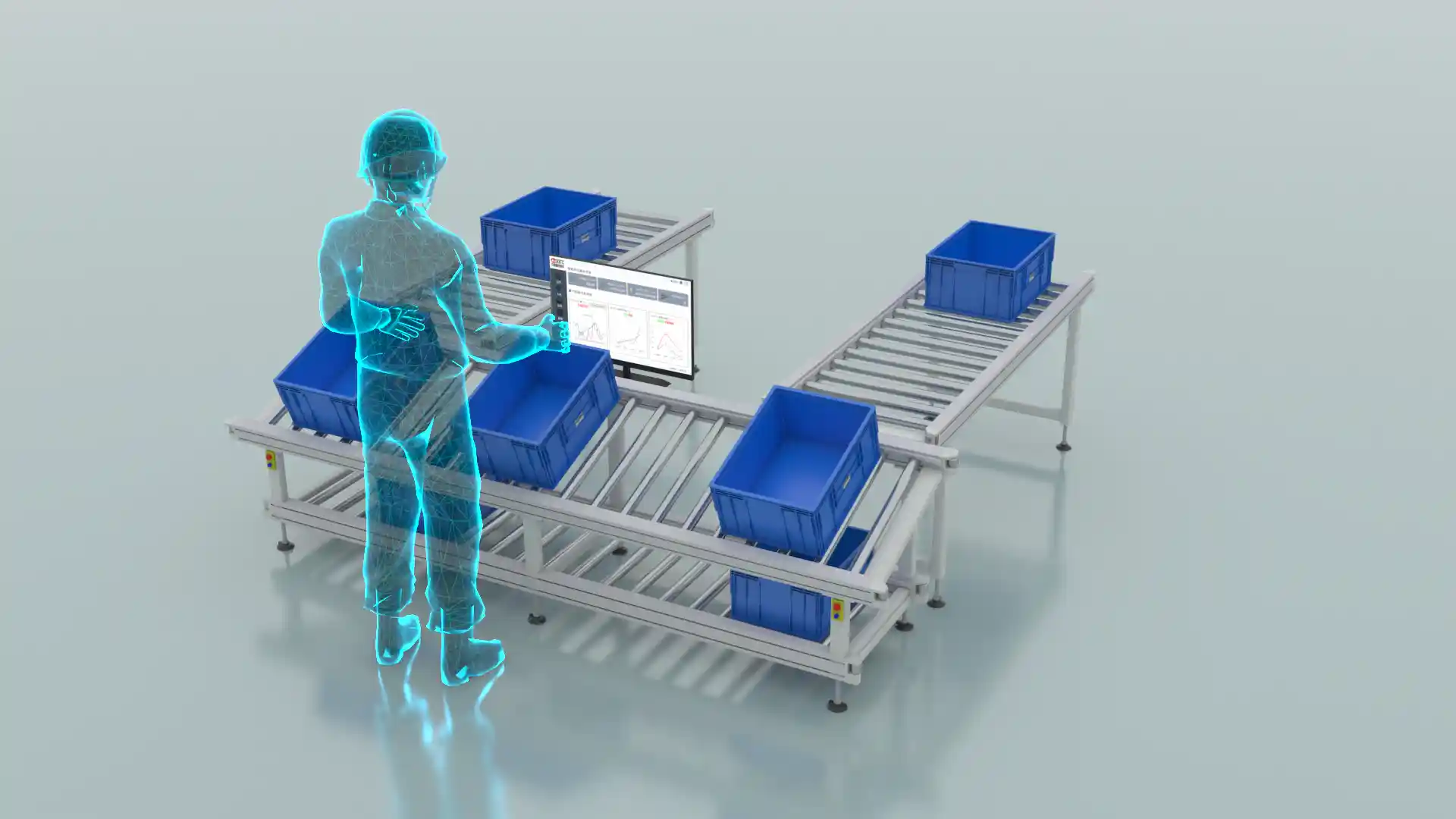
HCM-1

Frequently Asked Questions About ASRS in Automotive Manufacturing

What payback period should Tier-1 suppliers expect from ASRS?

Most ASRS installations in automotive manufacturing achieve payback within 1-3 years. The timeline depends on current labor costs, picking volumes, and how much floor space the system reclaims. Suppliers with high labor costs or severe space constraints often see faster returns because the savings accumulate more quickly.

How does ASRS connect with ERP and MES platforms already in use?

ASRS systems use software interfaces through WMS or WCS layers that communicate with existing ERP and MES platforms. This connection enables real-time inventory updates, automated order processing, and synchronized material flow from storage to assembly. The integration typically requires configuration work during implementation but avoids replacing existing enterprise systems.

What factors determine which ASRS technology fits a particular operation?

The right ASRS technology depends on several variables: the physical characteristics of stored components, required retrieval speed, available floor space and ceiling height, integration requirements with existing material handling equipment, and budget constraints. A supplier storing small fasteners has different needs than one handling large molds, and the system selection should reflect those differences.