WMS for Multi-Location Factories: Centralized Inventory Control

Managing inventory across factories scattered in different locations is one of those problems that sounds straightforward until you’re actually living it. Stock sitting idle at one plant while another scrambles to meet production deadlines. Transfer requests lost in email chains. Spreadsheets that contradict each other. After years of watching manufacturers wrestle with these issues, the pattern becomes clear: fragmented systems create fragmented operations. A warehouse management system designed for multi-location inventory management changes this dynamic fundamentally, pulling dispersed data into a single source of truth that every facility can act on.

Why Centralized Inventory Control Matters for Distributed Manufacturing

Global supply chains have grown more complex, and with that complexity comes a basic visibility problem. When production sites, assembly plants, and distribution centers operate with their own inventory records, no one has the full picture. One facility might be sitting on excess raw materials while another faces a production halt waiting for the same components.

This fragmentation shows up in the numbers. Carrying costs climb because safety stock gets duplicated across sites. Production schedules slip when planners lack accurate data about what’s actually available where. The distributed inventory challenges compound over time, creating inefficiencies that eat into margins.

Effective multi-location inventory management requires breaking down these information silos. Each facility needs precise knowledge of materials across the entire enterprise, not just what’s in their own warehouse. Without this foundation, supply chain synchronization remains theoretical. Real-time visibility isn’t a nice-to-have feature anymore. It’s the baseline requirement for manufacturing operations that need to respond quickly to shifting demand.

How a Warehouse Management System Connects Dispersed Factory Sites

A modern warehouse management system pulls data from all locations into a single platform. This consolidation enables real-time tracking and automates the coordination that previously required countless phone calls and manual reconciliation.

The practical impact is significant. When a production planner in one facility needs to know whether components are available somewhere in the network, they get an immediate answer. When demand spikes at one location, the system can identify surplus inventory at another and initiate transfers automatically.

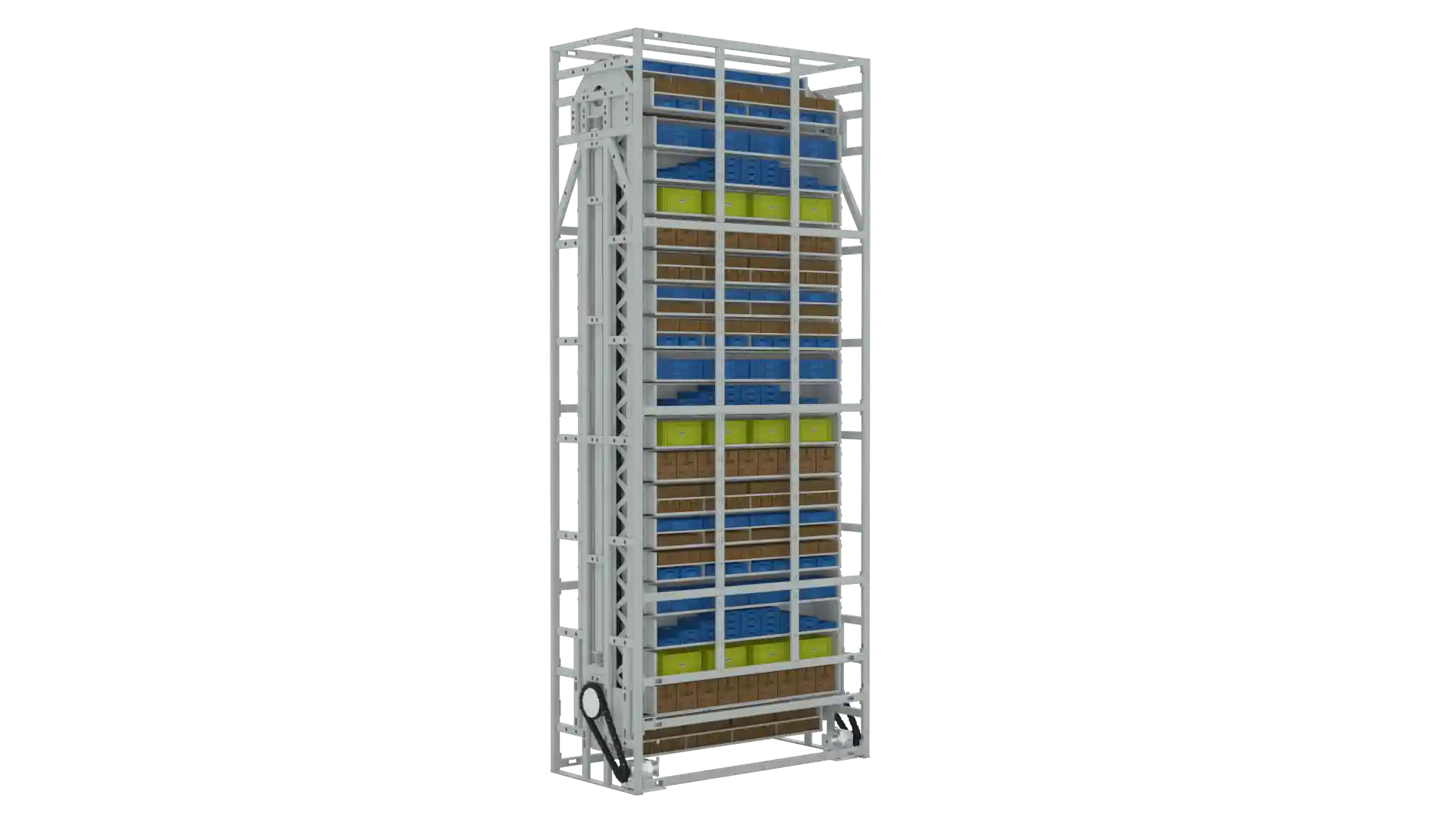
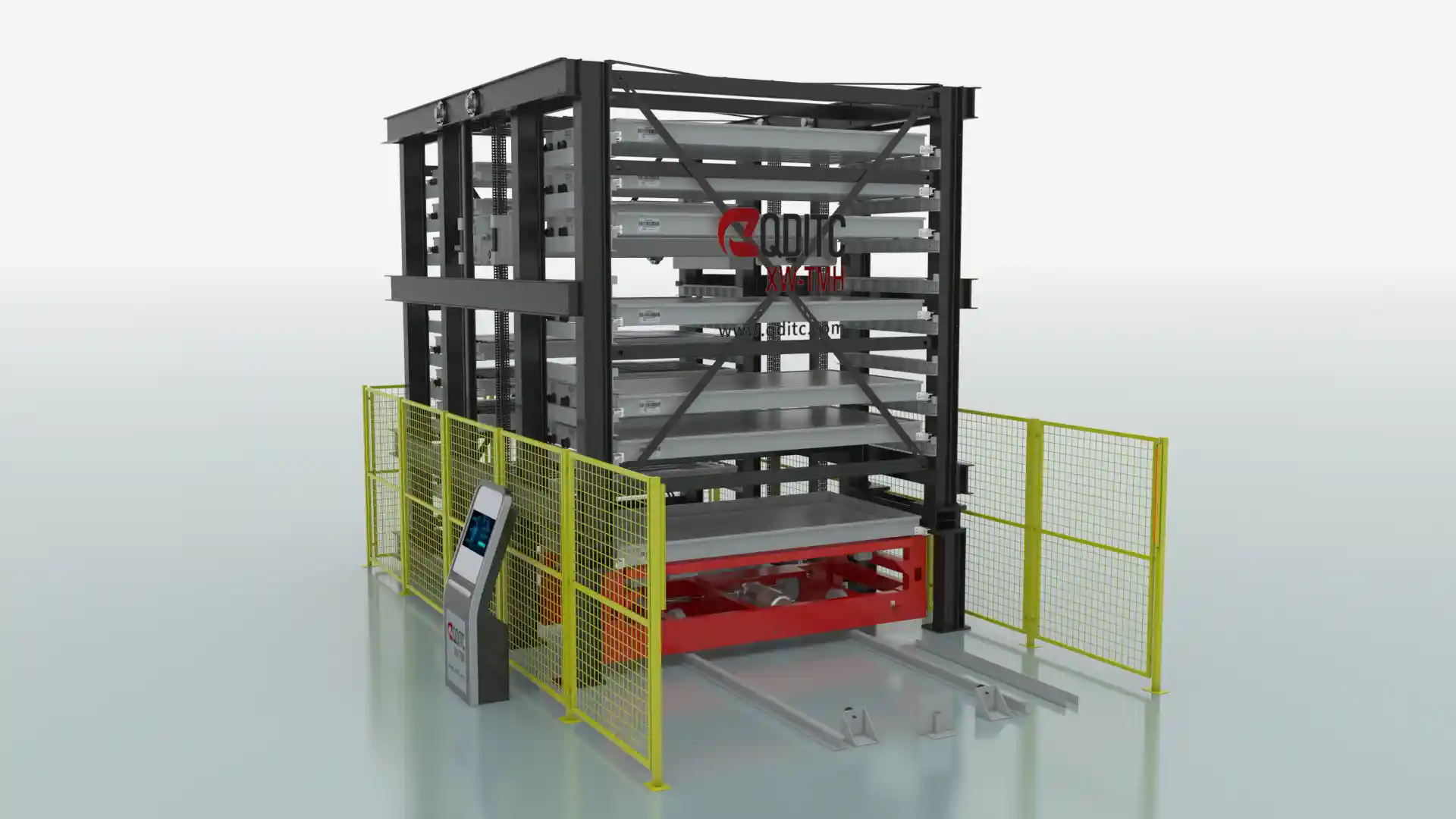
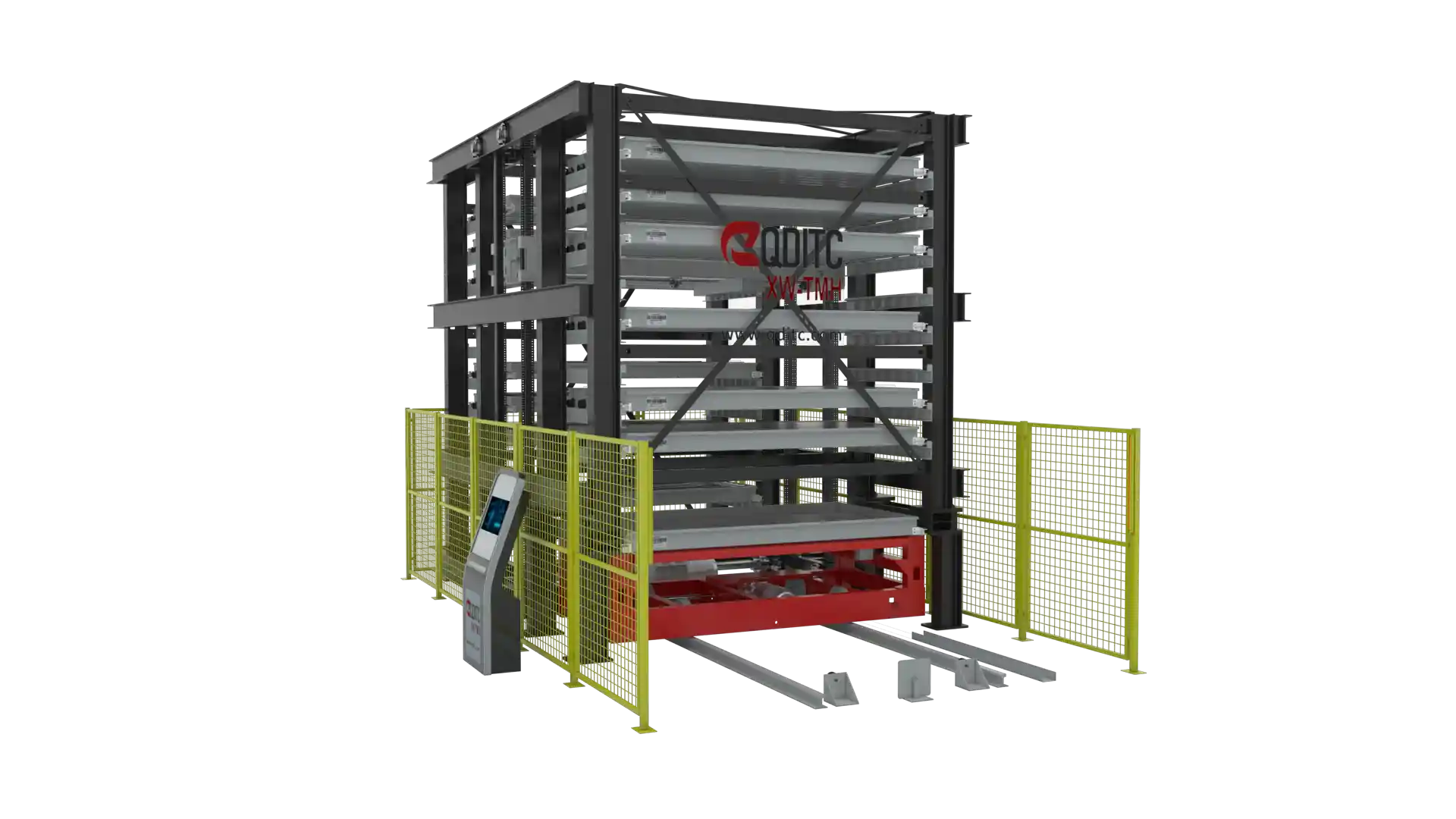
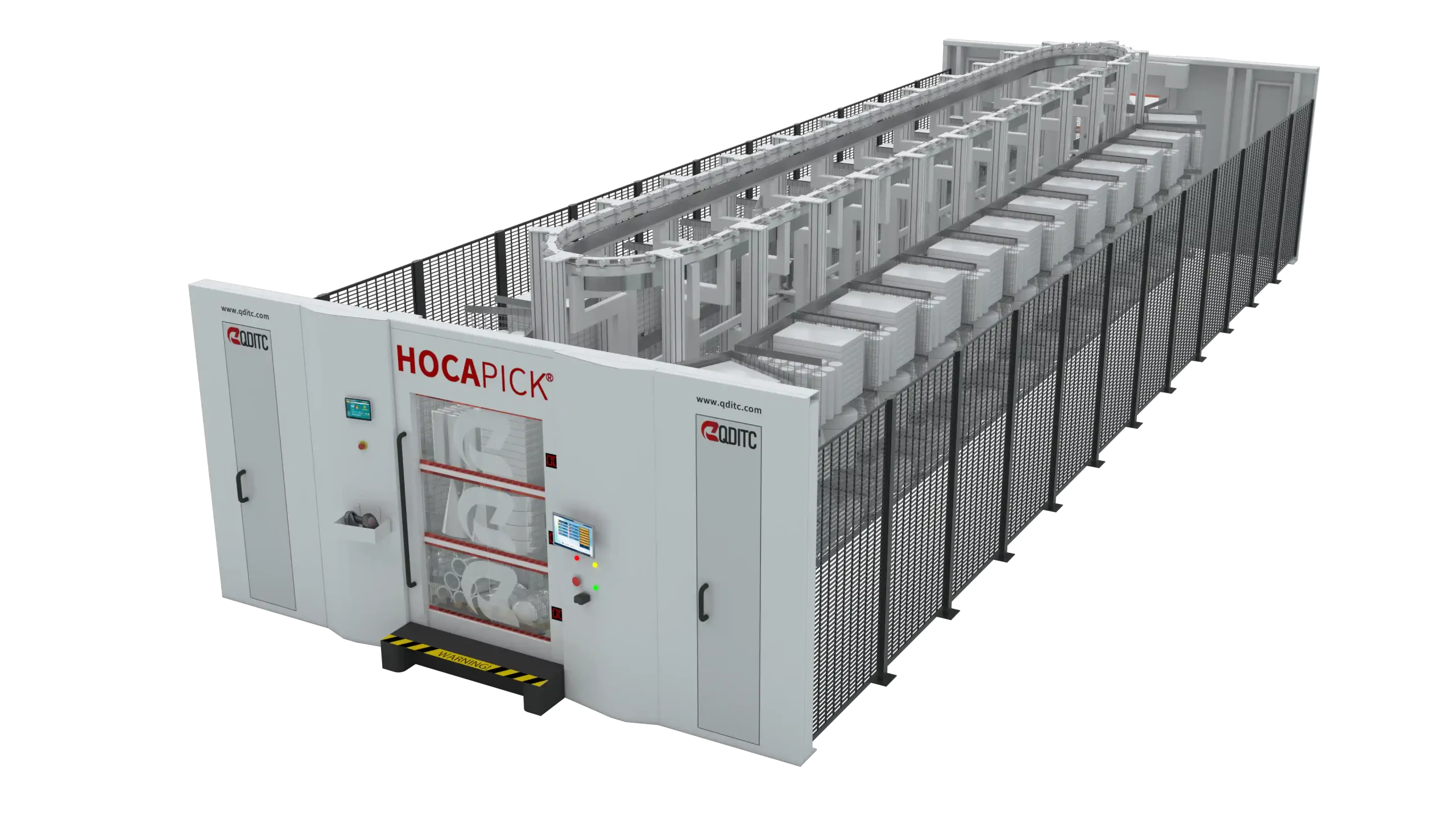
WMS platforms also integrate with warehouse automation integration systems. Automated storage and retrieval equipment like the FX-VCM: Vertical Carousel Module, PG-VLM: Vertical Lift Module, and FXH-HCM: Horizontal Carousel Module operate more effectively when connected to centralized inventory data. The system knows exactly what’s stored where and can direct picking and putaway operations with precision.

Cloud-based deployments have made this connectivity more accessible. Updates propagate across all facilities simultaneously, eliminating the synchronization delays that plagued earlier generations of inventory software.
HCM-2

Real-Time Visibility Into Stock Levels and Movements

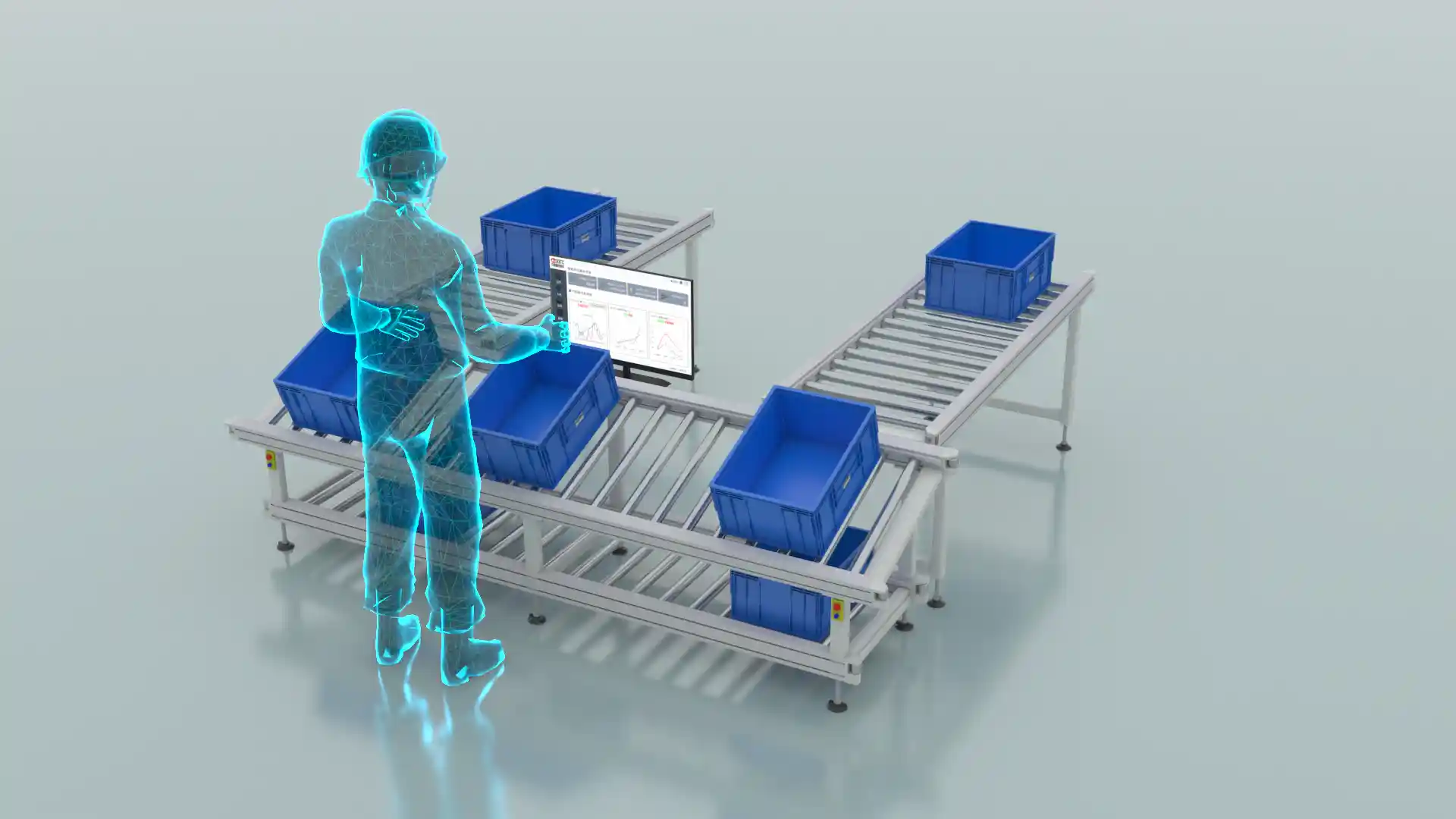
Granular, current data on inventory positions across all factories enables proactive decision-making rather than reactive firefighting. A WMS delivers this transparency through inventory tracking systems that leverage RFID and barcode scanning at every touchpoint.

Cross-site inventory data stays accurate because every receipt, pick, transfer, and adjustment gets recorded immediately. Managers can spot potential bottlenecks before they cause problems. If consumption at one facility is running ahead of forecast, the system flags it early enough to arrange replenishment.

This visibility also supports better inventory optimization. When you can see exactly what’s available across your network, you can reduce safety stock levels without increasing stockout risk. The buffer that each site maintains individually becomes unnecessary when the entire network functions as a shared resource pool.

Streamlining Material Transfers Between Facilities

Inter-site stock transfers often involve surprising amounts of friction. Someone identifies a need, requests materials from another location, waits for approval, arranges transportation, and hopes the receiving dock is ready when the shipment arrives. Each handoff introduces delay and potential for error.

A WMS automates much of this process. Transfer orders generate automatically based on predefined rules or demand signals. The system optimizes routing to minimize transportation costs and lead times. Receiving facilities get advance notice of incoming shipments.

This logistics network optimization reduces the time materials spend in transit or waiting for processing. Components move through the network more efficiently, supporting faster production cycles and better customer responsiveness.

Measurable Benefits of Multi-Site Warehouse Management

Organizations implementing multi-site WMS solutions typically see inventory holding costs drop by 15-25% and order fulfillment rates improve by 10-20%. These aren’t aspirational targets. They reflect the operational efficiency improvements that come from eliminating redundant stock and streamlining workflows.

The cost reduction strategies enabled by centralized inventory control are straightforward. Less excess stock means lower carrying costs. Better visibility means fewer expedited shipments to cover unexpected shortages. Optimized storage utilization means existing warehouse space goes further.

Demand forecasting accuracy also improves substantially when planners work with consolidated data. Patterns that were invisible when each site analyzed its own numbers become apparent at the network level. Better forecasts translate into better purchasing decisions and production planning.

Benefit AreaImpactTypical Improvement
Inventory Holding CostsReduced excess stock, optimized storage15-25% reduction
Order Fulfillment RatesFaster processing, fewer errors10-20% improvement
Inventory AccuracyReal-time data, reduced discrepanciesUp to 99% accuracy
Operational EfficiencyStreamlined workflows, reduced manual tasksSignificant gains
Demand ForecastingData-driven predictionsEnhanced accuracy

Navigating Implementation Challenges in Distributed Environments

Deploying a WMS across multiple factories isn’t a simple software installation. Success requires careful planning, realistic timelines, and attention to the organizational changes that accompany new systems.

Data migration presents an early hurdle. Each facility likely has its own historical records, item numbering conventions, and data quality issues. Reconciling these into a clean, consistent dataset takes effort but pays dividends throughout the system’s life.

Vendor selection criteria should emphasize experience with distributed manufacturing environments. A provider that has only worked with single-site warehouses may underestimate the complexity of multi-location deployments. Look for demonstrated capability in handling the specific challenges your network presents.

Data security in WMS implementations deserves serious attention. Inventory data reveals a great deal about operations, supplier relationships, and business performance. The chosen system needs robust access controls, encryption, and audit capabilities.

Training and change management often determine whether a technically sound implementation actually delivers results. Users across all sites need to understand not just how to operate the system, but why the new processes matter. Resistance to change can undermine even the best technology.
RACKBOT

Connecting WMS With ERP and Production Systems

Seamless integration prevents the data silos that a WMS is supposed to eliminate. If inventory data lives in the WMS but doesn’t flow to the ERP system, planners still lack complete visibility.

Effective WMS ERP integration automates the handoffs between systems. When a customer order enters the ERP, the WMS receives picking instructions. When inventory moves, the ERP’s financial records update automatically. When production consumes materials, both systems reflect the change.

Connecting with manufacturing execution systems takes this further. Production schedulers can see real-time material availability. If a component is running low, they know before the line stops. This tight coupling between inventory and production systems reduces the buffer stock that manufacturers traditionally maintain as insurance against information gaps.

Protecting Data Across All Locations

Multi-site operations expand the attack surface for security threats. Each facility represents a potential entry point, and data flowing between locations needs protection in transit.

Robust security protocols start with access controls that limit who can view and modify inventory data. Not everyone needs visibility into every facility’s operations. Role-based permissions ensure users see what they need without unnecessary exposure.

Encryption protects data both at rest and in motion. Regular security audits identify vulnerabilities before they’re exploited. Compliance with industry-specific regulations may add additional requirements depending on what materials you handle and where you operate.

Finding the Right WMS Partner for Complex Manufacturing Networks

The vendor relationship matters as much as the software itself. A partner with deep experience in industrial warehousing equipment understands the physical realities that shape inventory operations. They’ve seen how different storage configurations, material types, and handling requirements affect system design.

We bring 15 years of experience developing solutions that integrate with diverse warehouse environments. From vertical carousels to automated guided vehicles, we understand how the physical infrastructure and the software need to work together.

Custom WMS solutions address the specific challenges of your network rather than forcing your operations into a generic template. Our consulting approach starts with understanding your current state, your growth plans, and the constraints you’re working within. The goal is a system that fits your operations today while providing scalability for growing operations tomorrow.

Partner with Anhui Qiande for Advanced WMS Solutions

Anhui Qiande Intelligent Technology Co., Ltd. has built 15 years of expertise in industrial warehousing equipment production. We specialize in developing customized solutions for diverse storage spaces and material handling requirements.

If your multi-location factories need centralized inventory control, improved operational efficiency, and genuine supply chain synchronization, our team can help. Contact us at +86 15262759399 or miaocp@qitc.com for a consultation tailored to your specific challenges.

Frequently Asked Questions About Multi-Location WMS

How does a WMS improve inventory accuracy across multiple factory locations?

A warehouse management system centralizes inventory data from all facilities, providing real-time inventory visibility into stock levels, movements, and locations. Every transaction gets recorded immediately at the point of activity, eliminating the lag and errors that come with manual updates or batch synchronization. This accuracy supports better planning decisions and reduces the carrying costs associated with safety stock buffers. For organizations managing multi-location inventory management, the improvement in data quality often delivers returns within the first year.

What features matter most in a WMS for distributed manufacturing?

The core requirements include real-time inventory visibility across all sites, automated management of inter-site stock transfers, and robust integration capabilities with existing ERP and MES systems. Reporting and analytics tools should support network-level analysis, not just site-by-site views. Cloud-based deployment simplifies access and ensures all locations work with current data. Scalability matters too, since your network will likely change over time. These capabilities together enable the supply chain synchronization that distributed operations require.

What challenges should we expect when implementing a WMS across multiple sites?

Data migration typically presents the first significant challenge, especially when facilities have used different systems or naming conventions. Integration with existing software requires careful planning to avoid creating new data silos. Standardizing processes across sites takes time and organizational commitment. User adoption varies, and some facilities may resist changing established workflows. Data security in WMS implementations needs attention from the start. A phased approach that proves value at initial sites before expanding often works better than attempting a simultaneous rollout. Strong partnership with an experienced vendor helps navigate these issues and achieve the operational efficiency improvements that justify the investment.
WMS Barcode vs. RFID: Choosing Your Warehouse Tracking System

Choosing between barcode and RFID for warehouse tracking feels straightforward until you actually start mapping it against your operation. I’ve seen facilities confidently pick one technology, only to realize six months later that their inventory profile demanded something different. The real challenge isn’t understanding what each system does—it’s understanding what your specific workflow needs from it.

How Barcode and RFID Actually Work in Warehouse Environments

Automated identification sits at the core of any functional warehouse management system. Barcode technology uses optical scanners to decode information printed on labels, whether linear or 2D formats. Each scan requires direct line of sight—the scanner must see the label clearly to read it. RFID operates differently. Electromagnetic fields communicate with tags attached to items, pulling stored data without needing visual contact. Multiple tags can transmit simultaneously, and distance matters far less.

PICKUPSTATION1

The workflow difference shapes everything downstream. Barcode scanning means an operator physically points a device at each item, one at a time, updating the inventory tracking system with each read. RFID readers pick up tag signals as items pass through designated zones, updating records automatically. This distinction—manual point-read versus automated zone-read—drives the gap in operational speed and labor requirements. Both technologies improve inventory accuracy and streamline warehouse operations, but they reach those outcomes through fundamentally different paths.

Where Barcode Systems Deliver Real Value

Barcode systems remain widely deployed because they solve a specific problem well: precise, cost-effective inventory tracking without complex infrastructure. Barcode scanners read unique identifiers reliably, and when implemented correctly, item-level identification accuracy stays high. Manual scanning requires human involvement, but that involvement creates a verification layer many operations find valuable.

Anhui Qiande builds material handling solutions designed to work with barcode-based WMS configurations. The FX-VCM: Vertical Carousel Module and FXH-HCM: Horizontal Carousel Module both support barcode scanning workflows, allowing precise item tracking within automated storage systems. The integration works because barcode technology matches the operational rhythm of these modules—items move to picking stations where operators scan and confirm.

Barcode technology fits best where item-level visibility matters but high-volume simultaneous scanning doesn’t. Retail backrooms, small to medium warehouses, and manufacturing lines tracking work-in-progress all fall into this category. Initial infrastructure costs—labels and scanners—run lower than RFID equivalents, which matters for operations prioritizing cost-effective tracking over automation. Fifteen years of industrial warehousing equipment production has shown us that barcode systems remain the right choice for many storage configurations, particularly where reliability and simplicity outweigh the need for hands-free data capture.

FeatureProsCons
CostLow initial investmentHigher labor costs over time
AccuracyHigh (with line-of-sight scanning)Prone to human error during manual scans
ImplementationSimple, widely understoodTime-consuming for high item volumes
Data Capture SpeedSlower, one item at a timeRequires direct line of sight
EnvironmentSensitive to damage, dirt, and poor lightLimited range and automation potential

What RFID Brings to High-Volume Operations

RFID shifts the equation toward real-time tracking, automation, and scalability. RFID readers capture data from multiple passive RFID or active RFID tags at once, without line-of-sight constraints. Automated inventory counts become possible. Manual labor drops. Supply chain visibility expands because items report their location as they move, not just when someone scans them.

RACKBOT

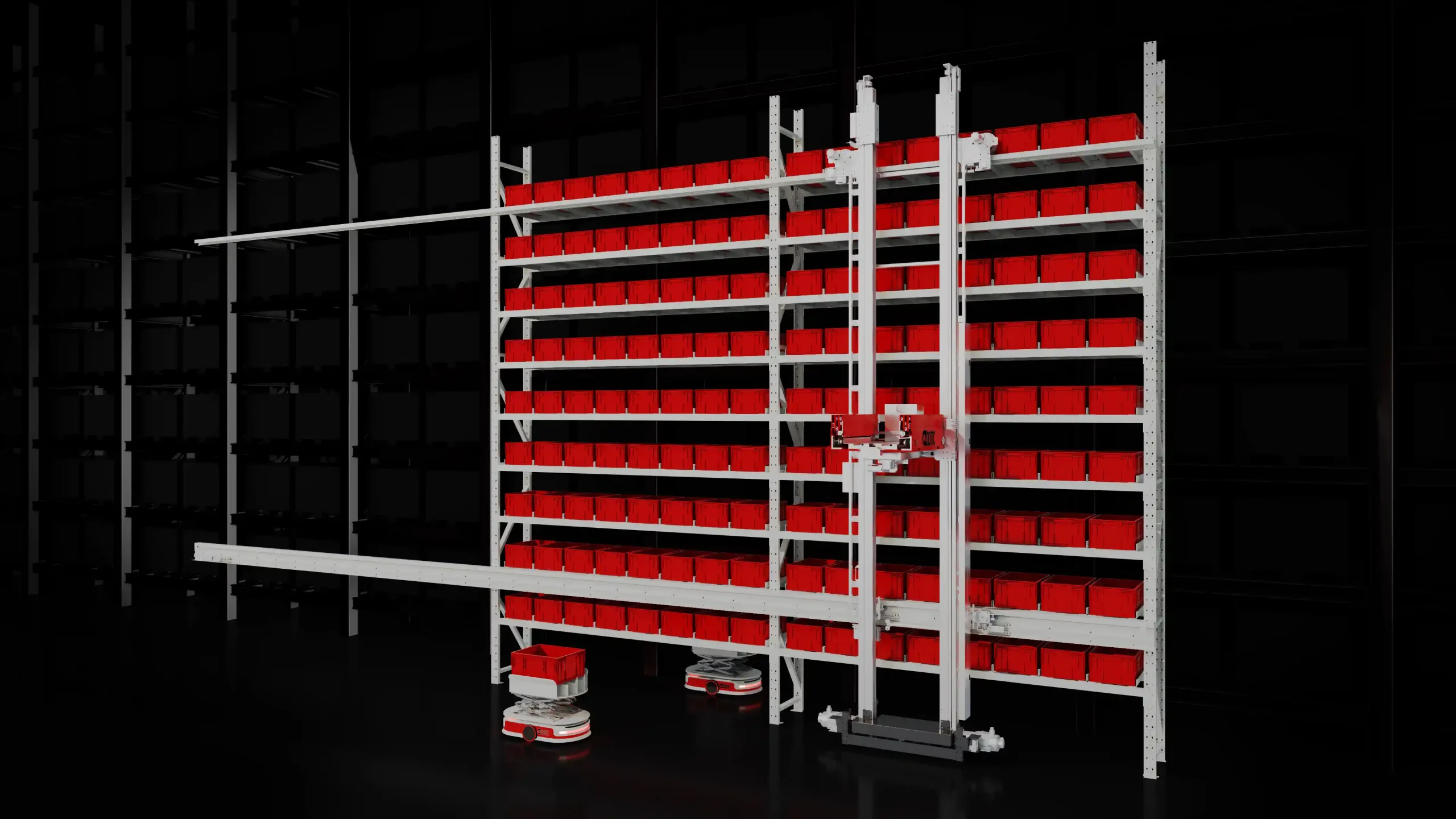
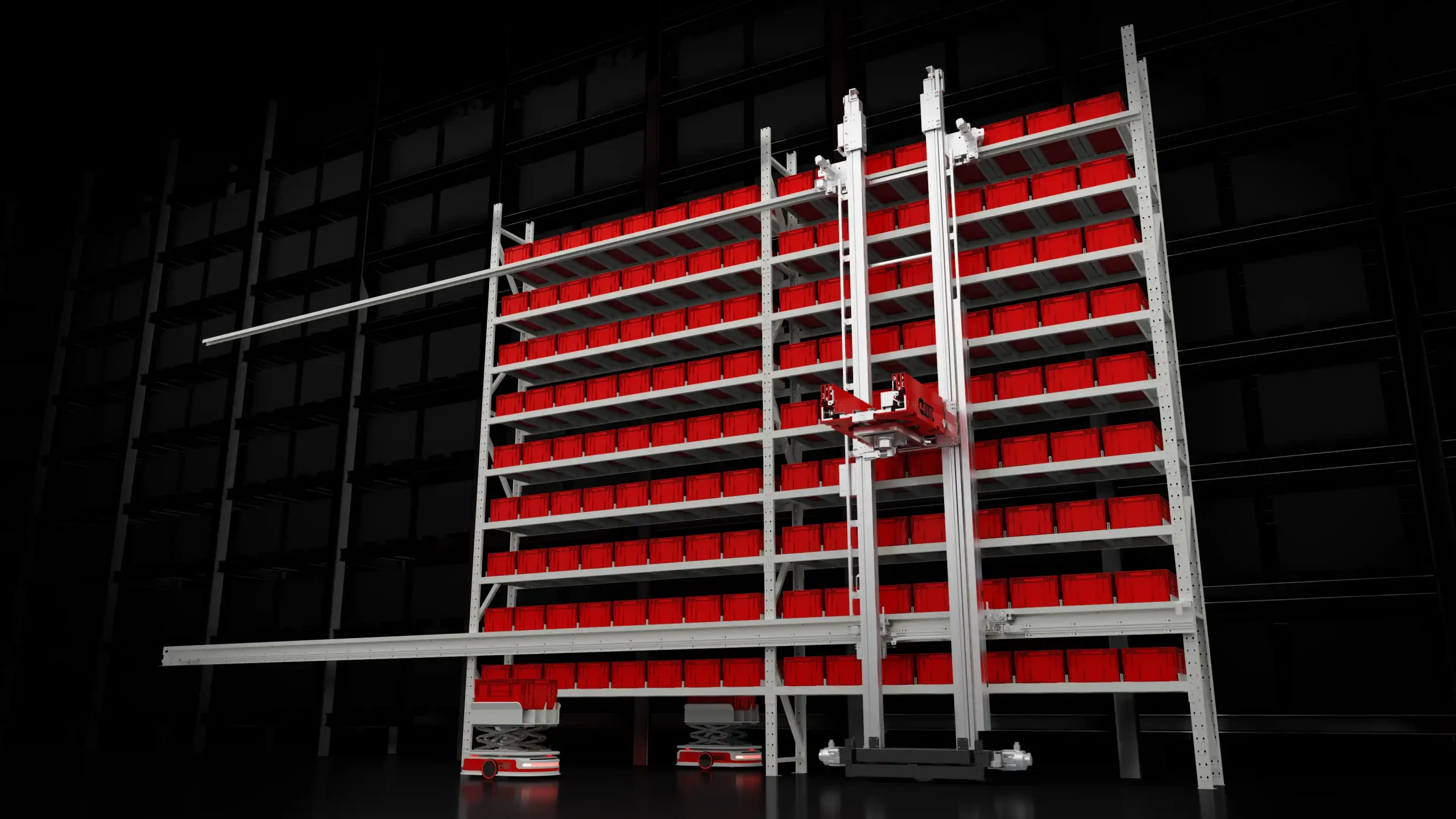
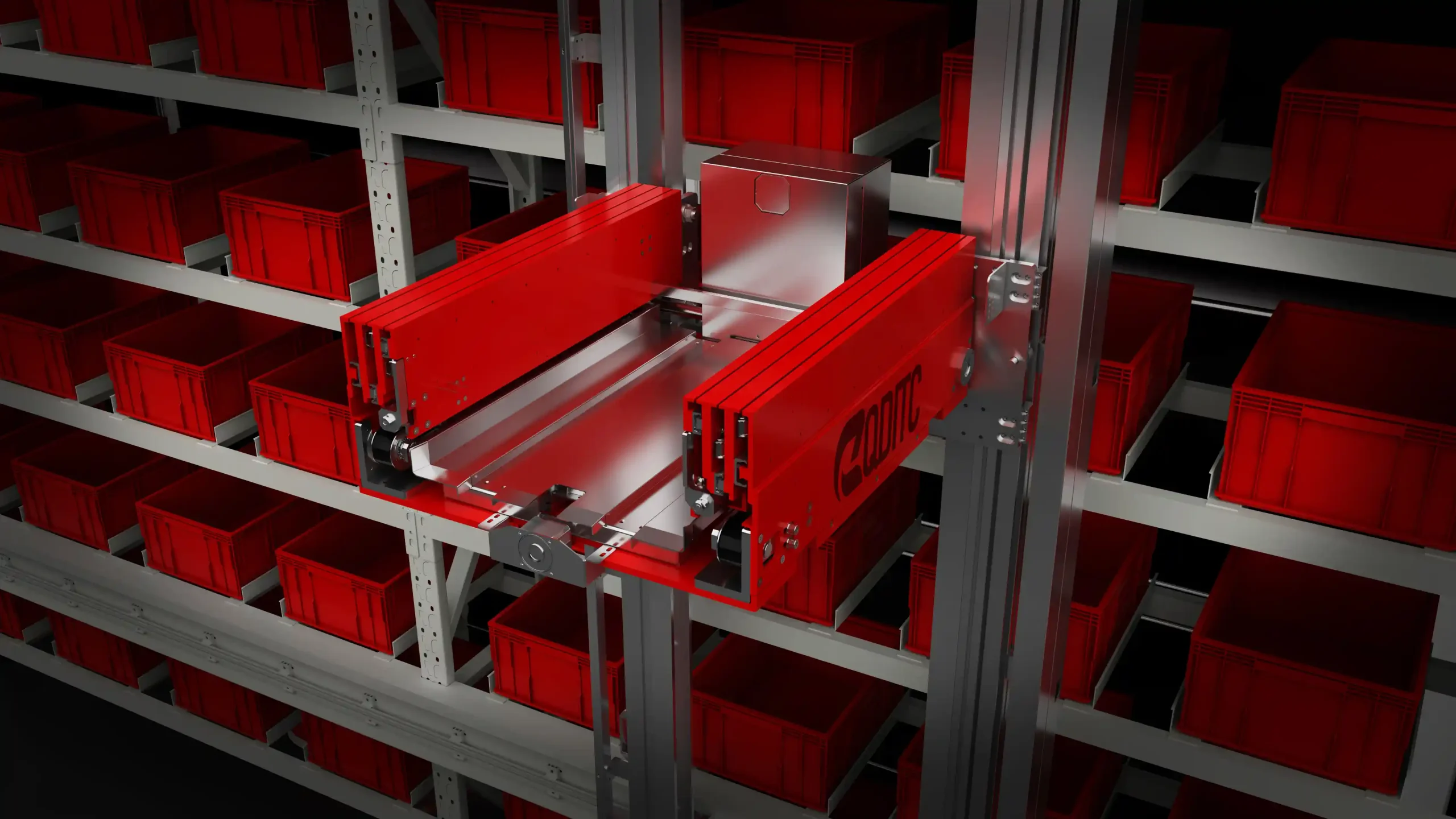
The technology’s real strength shows up in future-proofing logistics operations. Pairing RFID with automated storage and retrieval systems multiplies the benefit. The SmartLoad-RackBot, with implementation cycles reduced by over 70% and speeds more than twice traditional miniLoad systems, gains significantly from RFID’s instant location data. Items moving through the system update their positions automatically, supporting multi-directional picking and placing without manual intervention. Large-scale warehouses and complex supply chains find this capability essential for maintaining competitive throughput.

What is the typical ROI for implementing RFID in a warehouse?

Most warehouse RFID implementations reach positive ROI within 12 to 24 months. The savings come from multiple directions: reduced labor costs through automated scanning, fewer inventory discrepancies, and lower stockout rates. Better visibility improves inventory turns and order fulfillment accuracy. For operations handling high volumes or high-value goods, error reduction converts directly into measurable financial gains. The initial investment is higher than barcode systems, but the operational math often justifies it within two years.

Matching Technology to Your Actual Requirements

The barcode versus RFID decision comes down to operational specifics, not general preferences. Barcodes work well for precision tracking in moderate-volume environments where manual scanning fits the workflow. They deliver reliable item-level identification with straightforward implementation. RFID makes sense when real-time tracking, automated inventory, and scalability become operational priorities—typically in large-scale facilities demanding high throughput and comprehensive supply chain visibility.

gq-smartload3

Several factors shape the choice: inventory volume and velocity, real-time data requirements, supply chain complexity, and long-term scalability plans. Solutions like the PG-VLM: Vertical Lift Module or SN-VSM: Vertical Sort Module integrate with either barcode or RFID systems, depending on how much automation the operation needs. Anhui Qiande provides consultation to help assess these factors and design an inventory management approach that fits both operational objectives and budget constraints.

FeatureBarcode SystemsRFID Systems
CostLower initial investmentHigher initial investment
SpeedSlower, single-item scanningFaster, multi-item scanning
AccuracyHigh (line-of-sight required)High (no line-of-sight required)
AutomationManual-intensiveHighly automated
Data VisibilityPoint-in-timeReal-time
EnvironmentSensitive to damage, dirtMore robust, less sensitive to environment
ScalabilityLimited for high volumesHigh, supports large-scale operations

Can barcode and RFID systems be integrated within the same WMS?

Yes, and many operations run hybrid tracking systems that combine both technologies. Barcodes handle low-value, high-volume items where per-unit tag cost matters. RFID tracks high-value assets or components requiring real-time visibility. Proper WMS integration keeps data synchronized across both systems, maintaining a unified inventory view. This approach lets operations allocate resources based on what each inventory category actually needs rather than forcing a single technology across everything.

Getting Implementation Right

Deploying new warehouse tracking technology requires attention to system integration, staff training, and data migration. Fifteen years of industrial warehousing equipment production has taught us that the transition phase determines long-term success more than the technology choice itself. The process starts with assessing existing infrastructure and defining clear objectives—skipping this step creates problems that surface months later.

VCM1

System integration demands particular care when connecting new tracking technologies with existing WMS platforms. Modular design and open API interfaces, like those built into the SmartLoad-RackBot, make integration more manageable. Staff training determines whether the system gets used correctly or worked around. Post-implementation support and continuous optimization keep the system aligned with evolving business needs rather than becoming a static installation that gradually falls behind operational requirements.

Which industries benefit most from RFID tracking compared to barcodes?

Industries with high inventory volumes, complex supply chains, or strict regulatory requirements gain the most from RFID. Automotive manufacturing tracks work-in-progress and finished goods across multiple production stages. Retail operations use real-time inventory counts to maintain stock accuracy across locations. Healthcare facilities track assets, manage critical supplies, and maintain compliance with patient safety requirements. These applications share a common thread: the operational cost of not knowing where something is exceeds the cost of RFID infrastructure.

Partner with Anhui Qiande for Warehouse Optimization

Ready to move forward with intelligent warehouse management and automation? Anhui Qiande Intelligent Technology brings 15 years of experience to digital upgrading projects, delivering cost-effective solutions matched to specific operational needs. Contact us to discuss how our industrial warehousing equipment can improve your inventory accuracy and operational efficiency. Reach out via email at miaocp@qditc.com or call +86 15262759399.

China Warehouse Control System: Conveyor, Sorter & Storage Integration

Managing a busy warehouse in China means juggling dozens of moving parts at once. A Warehouse Control System sits at the center of that complexity, directing conveyors, sorters, and storage units so they work together instead of against each other. For facilities handling high volumes or tight delivery windows, this layer of real-time coordination often makes the difference between smooth operations and constant firefighting. The solutions we build are shaped by what Chinese logistics operations actually need—speed, precision, and equipment that talks to each other without friction.

Why WCS Has Become Central to Chinese Logistics

The growth of e-commerce and manufacturing across China has pushed warehouses toward higher throughput targets than ever before. Companies are turning to warehouse automation technology not as a luxury but as a baseline requirement for staying competitive. A well-executed WCS implementation China bridges the gap between strategic planning systems like WMS and the physical equipment doing the work on the floor. Without that bridge, automated storage systems and conveyor lines operate in isolation, creating bottlenecks that manual intervention cannot fix fast enough.

The WCS handles real-time decisions—where to route a parcel, when to speed up or slow down a conveyor, which storage location to assign. This level of control directly impacts supply chain efficiency and determines whether a facility can scale during peak seasons. For smart warehouse solutions in the Chinese market, digital upgrading through WCS is less about keeping up with trends and more about operational survival.

How WCS Coordinates Conveyors, Sorters, and Storage

A Warehouse Control System earns its value by making different types of industrial warehousing equipment work as a single coordinated system. Conveyor system integration, automated sorting solutions, and storage system optimization all depend on a control layer that can process real-time data and issue commands without delay. The result is smoother product flow, fewer jams, and better use of available space.

HCM-2

Keeping Conveyors Moving Without Bottlenecks

Conveyor system WCS manages more than just on/off states. It adjusts speed dynamically based on what is happening downstream, prevents accumulation when a sorter is temporarily overloaded, and balances loads across parallel lines. This kind of automated material handling requires constant adjustment rather than fixed settings. A conveyor running at optimal speed for one hour may need to slow down the next as order profiles shift.

Sorters That Route Accurately at High Speed

WCS-driven sorter technology removes guesswork from parcel routing. The system reads real-time data—barcode scans, weight checks, destination codes—and directs each item to the correct chute or lane. For order fulfillment automation, this precision matters because a single mis-sort can cascade into customer complaints and returns. The SN-VSM: Vertical Sort Module demonstrates this principle by using telescopic forks for automatic storage and retrieval of turnover boxes, integrating cleanly with AGVs and conveyors to maintain throughput.

Storage Systems That Maximize Every Cubic Meter

Intelligent storage management through WCS integration means the system knows not just where items are stored but also the fastest way to retrieve them. Automated storage and retrieval systems (AS/RS) WCS, including vertical carousels and vertical lift modules, receive precise instructions for putaway and picking sequences. This coordination improves inventory accuracy WCS and squeezes more usable capacity out of existing floor space.

Our FX-VCM: Vertical Carousel Module and PG-VLM: Vertical Lift Module handle high-density storage with picking operations managed through a professional material information system. The FXH-HCM: Horizontal Carousel Module uses optimized algorithms to calculate the shortest retrieval path, reducing cycle times for repetitive picks.

Measurable Gains from WCS Deployment

The business case for a Warehouse Control System rests on numbers that show up in operational reports and financial statements. Reduced labor costs, fewer picking errors, and faster order cycles translate directly into improved margins. For e-commerce fulfillment WCS and distribution center automation, these gains compound as volume increases.

Feature AreaBefore WCS IntegrationAfter WCS Integration
ThroughputModerateHigh (2x-3x increase)
Error Rate5-10%<1%
Labor CostsHighReduced by 20-30%
Space UtilizationSuboptimalOptimized (up to 40% more)
Real-time DataLimitedComprehensive

Warehouse operational efficiency improves because the WCS provides visibility into every automated process as it happens. Problems surface immediately rather than during end-of-shift reviews, and adjustments can be made before small issues become expensive ones.

Tailored WCS from Anhui Qiande Intelligent Technology

Fifteen years of building industrial warehousing equipment has taught us that no two warehouses operate the same way. Anhui Qiande Intelligent Technology Co., Ltd. develops customizable WCS China solutions that account for differences in product types, storage configurations, and throughput requirements. Manufacturing WCS integration requires understanding both the software logic and the physical constraints of the equipment it controls.

We design for specific applications—small parts that need high-density vertical storage, oversized materials that require specialized handling, and everything in between. Our SmartLoad-RackBot illustrates this approach: it reduces implementation cycles by over 70% and costs by over 20% compared to traditional miniLoads while doubling operational speed. Multi-directional picking and placing capabilities, combined with an open API for integration with other automation devices, make it adaptable to evolving requirements.

RACKBOT

What to Look for in a WCS Partner

Selecting a WCS provider in China involves more than comparing feature lists. Local support WCS capabilities matter because problems that arise during implementation or daily operations need fast, on-site resolution. Scalable WCS solutions should accommodate growth without requiring a complete system replacement when volumes increase.

Key WCS software features to evaluate include real-time monitoring dashboards, reporting that connects to business metrics, and proven connectivity with the equipment already in your facility. A provider with deep experience in industrial warehousing equipment understands the mechanical realities that software alone cannot solve. Long-term partnership matters because a WCS is not a one-time installation—it evolves alongside your operation.

VCM2

Frequently Asked Questions About Warehouse Control Systems

What is the primary difference between a WMS and a WCS in a modern warehouse?

A WMS handles inventory management and planning decisions like order processing and stock allocation. A warehouse control system operates at the execution level, issuing real-time commands to automated equipment. The WMS decides what needs to happen; the WCS makes it happen by directing conveyors, sorters, and storage systems.

How can a WCS specifically enhance the performance of automated conveyor and sorter systems?

A WCS improves conveyor and sorter performance through continuous real-time adjustments. It optimizes material flow efficiency by modifying speeds based on downstream conditions, balancing loads across parallel paths, and routing items to correct sorting destinations without manual intervention. This coordination reduces idle time and prevents the accumulation that slows throughput.

What are the typical challenges of WCS implementation in China, and how are they overcome?

WCS implementation challenges China typically include integration complexity with legacy systems and the customization required for specific operational workflows. Working with an experienced provider who offers robust local support WCS addresses these issues. Anhui Qiande’s 15 years of experience means we have encountered most integration scenarios and developed proven approaches for seamless deployment.

Can Anhui Qiande’s WCS solutions integrate with existing warehouse equipment?

Yes. Our WCS solutions are built for compatibility with existing industrial warehousing equipment, including legacy systems from other manufacturers. Custom integration work ensures that new automation connects smoothly with what is already installed. The open API interface in products like our SmartLoad-RackBot supports connections to diverse automation devices, reducing integration friction.

Start the Conversation About Your Warehouse

A Warehouse Control System tailored to your operation can shift daily performance in measurable ways. Anhui Qiande Intelligent Technology Co., Ltd. brings 15 years of industrial warehousing equipment experience to every project, delivering integrated solutions for any storage configuration or material type. Reach out to discuss what a WCS could do for your facility. Call +86 15262759399 or email miaocp@qitc.com.

QDITC WMS: Optimizing Industrial Warehousing with Smart Integration

Industrial warehousing has a way of humbling even the most experienced operations managers. What looks straightforward on paper—receiving goods, storing them, picking orders, shipping them out—becomes exponentially more complex when you’re dealing with thousands of SKUs, multiple storage zones, and the relentless pressure to ship faster while making fewer mistakes. After 15 years of building warehousing equipment and watching how facilities actually operate, we’ve learned that the gap between “functional” and “optimized” often comes down to how well your warehouse management system talks to everything else in your operation.

How QDITC WMS Addresses Real Industrial Warehouse Challenges

QDITC’s industrial warehouse management system tackles the operational friction points that slow down facilities every day. The system handles the full arc of warehouse activity—from the moment goods arrive at the dock through final dispatch—without requiring constant human intervention to keep things moving.

What makes this work in practice is the connection between software decisions and physical warehouse layout. A warehouse management system that doesn’t understand your actual storage configuration will generate picking routes that waste time and create congestion. Our approach starts with understanding the space before configuring the software.

Real-time Inventory Tracking That Actually Works

Inventory accuracy sounds like a basic requirement until you’ve watched a team spend three hours hunting for a pallet that the system says is in aisle 7, bay 12. Real-time inventory tracking through our industrial warehouse management system uses barcode scanning and RFID integration to maintain accurate counts without relying on periodic physical inventories.

The practical benefit shows up in reduced safety stock requirements. When you trust your inventory numbers, you don’t need to pad them with extra buffer stock “just in case.” This frees up working capital and storage space simultaneously. The system flags discrepancies immediately rather than letting them compound over weeks until the next cycle count reveals a mess.

Faster Order Fulfillment Through Intelligent Routing

Order picking typically consumes more labor hours than any other warehouse activity. Our industrial warehouse management system optimizes pick paths based on actual warehouse geometry and current inventory locations, not theoretical ideal states.

The system assigns tasks dynamically, balancing workload across available pickers while minimizing travel distance. When orders share common items, it batches them intelligently. When rush orders arrive, it reprioritizes without disrupting the entire queue. The result is faster dispatch times and fewer late shipments—metrics that directly affect customer relationships.

Customization Options That Reflect Real Storage Diversity

No two industrial warehouses store exactly the same things in exactly the same way. A facility handling automotive components has different requirements than one managing pharmaceutical ingredients or food products. Our industrial warehouse management system adapts to these differences rather than forcing operations into a generic template.

This flexibility comes from 15 years of seeing what actually varies across facilities. Temperature zones, hazmat protocols, lot tracking requirements, shelf life management—these aren’t edge cases. They’re standard requirements that a warehouse management system needs to handle natively.

Adapting to Specialized Storage Environments

Cold storage operations need the system to track temperature exposure time and prioritize picks to minimize door-open duration. Hazardous material storage requires segregation rules and documentation that general-purpose systems often handle poorly. High-density storage configurations like vertical lift modules or carousel systems need integration at the control level, not just the data level.

Our industrial warehouse management system handles these scenarios because we’ve built the hardware that creates them. When you manufacture vertical carousel modules and automated storage systems, you develop software that actually understands how they operate.

Integration with ERP and Manufacturing Systems

A warehouse management system that exists in isolation creates data silos and manual reconciliation work. Our system connects to enterprise platforms—SAP, Oracle, and others—through robust API integration. It also links to manufacturing execution systems for facilities where production and warehousing happen under the same roof.

This connectivity means purchase orders flow automatically into receiving expectations. Sales orders translate directly into pick tasks. Inventory adjustments sync without someone manually entering the same data twice. The reduction in administrative overhead often surprises operations teams who’ve grown accustomed to the friction.

gq-smartload3

Why Hardware Integration Determines WMS Effectiveness

Software that can’t control hardware is just a database with a nice interface. The real power of an industrial warehouse management system emerges when it directly orchestrates the physical equipment moving goods through your facility.

Anhui Qiande Intelligent Technology Co., Ltd. builds both the software and the automated storage equipment. This matters because integration happens at the design phase, not as an afterthought. Commands from the warehouse management system translate into immediate physical actions without middleware translation layers that introduce latency and failure points.

Coordinating Automated Material Handling Equipment

Our industrial warehouse management system directs automated guided vehicles, conveyor systems, and robotic picking systems WMS as unified components of a single operation. The software knows where every AGV is, what it’s carrying, and where it’s headed. It sequences conveyor movements to prevent jams and optimize throughput.

The SmartLoad-RackBot system illustrates what tight integration enables:

FeatureSmartLoad-RackBotTraditional miniLoad
Implementation Cycle ReductionOver 70%
Cost ReductionOver 20%
Energy ConsumptionLess than 35%100%
SpeedMore than twice100%
Space Utilization (Front/Back/Above/Below Tunnel)Less than 35%100%
Equipment WeightLess than 35%100%
Delivery Cycle (Standard Products)Shortened by over 50%100%

These numbers reflect what happens when the warehouse management system and the automation hardware are designed together rather than bolted together.

IoT Sensors and Predictive Equipment Management

Modern warehouse equipment generates continuous data streams—motor temperatures, cycle counts, vibration patterns, power consumption. Our industrial warehouse management system ingests this sensor data and uses it for more than just monitoring.

Predictive maintenance becomes possible when the system recognizes patterns that precede equipment failures. A conveyor motor drawing slightly more current than usual might indicate bearing wear that will cause a breakdown in three weeks. Catching this early means scheduled maintenance during a slow period rather than emergency repairs during peak shipping hours.

Strategic Value Beyond Daily Operations

Implementing an industrial warehouse management system delivers benefits that extend beyond immediate operational improvements. The data visibility and process control create strategic advantages that compound over time.

Supply chain resilience improves because you can see problems developing before they become crises. Inventory positions, order backlogs, and equipment status are visible in real time. When disruptions occur—supplier delays, demand spikes, equipment failures—the system provides the information needed to respond intelligently rather than reactively.

The analytical capabilities support continuous improvement efforts. Which picking zones create bottlenecks? What times of day see the highest error rates? Where does inventory accuracy degrade fastest? These questions have answers in the data, but only if you’re collecting it systematically.

Implementation Without Operational Disruption

Deploying a new industrial warehouse management system while maintaining ongoing operations requires careful planning and experienced execution. We’ve done this enough times to know where the pitfalls hide.

The process starts with detailed mapping of current workflows, storage configurations, and integration requirements. System configuration happens in parallel with user training, so the team is ready when the switch occurs. We plan cutover timing around business cycles to minimize risk during high-volume periods.

Post-implementation support matters as much as the initial deployment. Questions arise, edge cases appear, and optimization opportunities emerge once the system is handling real transactions. Our team stays engaged through this stabilization period and beyond.

Working with Anhui Qiande

Anhui Qiande Intelligent Technology Co., Ltd. brings 15 years of industrial warehousing equipment production to every engagement. We manufacture the hardware—vertical carousel modules, vertical lift modules, horizontal carousel systems—and develop the software that controls them.

This combination means we understand warehousing problems from multiple angles. We know what equipment can do because we build it. We know what software needs to handle because we’ve seen the operational scenarios. And we know how to make them work together because that’s been our focus for a decade and a half.

Start the Conversation

If your warehouse operations could use better inventory visibility, faster order fulfillment, or tighter integration between systems and equipment, we should talk. Reach us at +86 15262759399 or miaocp@qditc.com to discuss what an industrial warehouse management system tailored to your specific storage challenges might look like.

Frequently Asked Questions About QDITC WMS

How does QDITC WMS maintain inventory accuracy in facilities with high transaction volumes?

The system captures every inventory movement through integrated scanning and RFID at the point of action—receiving, putaway, picking, and shipping. This eliminates the lag between physical events and system records that causes accuracy to drift. Automated cycle counting runs continuously in the background, flagging discrepancies for immediate investigation rather than letting them accumulate. For facilities processing thousands of transactions daily, this approach maintains accuracy rates that periodic physical inventories simply cannot achieve.

What does integration with existing ERP systems actually involve?

Integration uses standard API connections to exchange data with platforms like SAP and Oracle. Purchase orders, sales orders, inventory adjustments, and shipment confirmations flow automatically between systems. The technical work involves mapping data fields, establishing communication protocols, and testing transaction flows. Our team handles the configuration and works with your IT staff to ensure the connection operates reliably. Most integrations complete within the broader implementation timeline without requiring extensive custom development.

What makes a customizable WMS worth the investment compared to off-the-shelf options?

Generic warehouse management systems force you to adapt your operations to the software’s assumptions. A customizable industrial warehouse management system adapts to how you actually need to work. The payoff appears in reduced workarounds, fewer manual processes to handle exceptions, and better fit with specialized storage requirements. Over a multi-year horizon, the efficiency gains and avoided friction costs typically exceed the initial investment difference. The scalability also matters—as your operation grows or changes, the system grows with it rather than becoming a constraint.

Standalone WMS vs. Integrated WCS: Which Fits Your Automation?

Choosing between a standalone warehouse management system and an integrated WMS+WCS setup is one of those decisions that shapes how a facility performs for years. The difference isn’t just technical—it determines whether your software and your equipment actually work together or just coexist. After watching dozens of warehouses struggle with this choice, the pattern becomes clear: the right answer depends entirely on how much automation you’re running and where you’re headed.

What WMS and WCS Actually Do

A warehouse management system handles the logical side of operations. It tracks inventory across locations, manages order fulfillment workflows, coordinates shipping and receiving, and optimizes where products get stored. The WMS decides which items to pick and in what sequence. It’s essentially the brain that knows what’s in the warehouse and what needs to happen next.

A warehouse control system operates at a different level entirely. The WCS directly controls physical equipment—conveyors, sorters, automated storage and retrieval systems, robotics. It translates high-level instructions into specific machine commands. When the WMS says “pick this order,” the WCS figures out which conveyor section to activate, which AS/RS aisle to access, and how to route the tote through the sorter.

Anhui Qiande’s 15 years in industrial warehousing equipment production has made one thing clear: both systems contribute uniquely to warehouse performance, but they solve fundamentally different problems.

FeatureWarehouse Management System (WMS)Warehouse Control System (WCS)
Primary FocusLogical inventory and order managementPhysical equipment control and material flow
Key FunctionsInventory tracking, order processing, labor management, slottingDirecting conveyors, AS/RS, robotics, real-time task execution
Decision LevelStrategic and tacticalOperational and real-time
Data ScopeEnterprise-wide inventory, order dataEquipment status, material movement data
OptimizationStorage, picking paths, labor utilizationEquipment throughput, physical routing

Standalone WMS Versus Integrated WMS+WCS

The gap between these approaches shows up most clearly in highly automated facilities. A standalone WMS manages inventory and processes without real-time control over automated equipment. It knows an order needs picking, but it can’t directly orchestrate the conveyor routing or AS/RS retrieval sequence. Someone or something else has to bridge that gap—often through manual intervention or separate control interfaces that don’t communicate well.

An integrated WMS+WCS system eliminates that disconnect. The WMS issues commands that flow directly to the WCS, which then coordinates the equipment response. When inventory moves physically, that movement updates the WMS immediately. No lag, no reconciliation headaches, no wondering whether the system reflects reality.

This matters more than it might seem. In a facility processing thousands of orders daily, even small delays between logical planning and physical execution compound into significant throughput losses. The integrated approach keeps everything synchronized.

What Does a WCS Actually Control?

The warehouse control system manages the physical movement of goods through automated equipment. It acts as the intermediary between the WMS and the machinery itself. When a picking task gets assigned, the WCS determines which conveyor zones to activate, sequences the AS/RS retrievals to minimize wait times, and coordinates sorter diverts to route items correctly.

This extends to robotics, automated guided vehicles, and any other material handling equipment in the facility. The WCS optimizes not just individual machine operations but the interactions between them—preventing bottlenecks where two systems might otherwise compete for the same resources.

Matching Your Solution to Your Automation Level

The decision framework here is more straightforward than vendors sometimes make it sound. Start with your current automation footprint and your realistic plans for the next three to five years.

Facilities running primarily manual operations with limited conveyor systems can often operate effectively with a standalone WMS. The inventory management, order processing, and labor coordination capabilities handle the core requirements. Adding a WCS to a mostly manual operation creates complexity without proportional benefit.

Once automation reaches a certain threshold—typically when AS/RS, extensive conveyor networks, or robotics enter the picture—the calculus shifts. The coordination requirements between systems become too complex for manual bridging or loosely coupled interfaces. At that point, integrated WMS+WCS becomes less of an upgrade and more of a necessity.

Budget constraints obviously factor in. But the ROI calculation should account for labor savings, throughput improvements, and error reduction over the system’s lifespan. A facility processing 10,000 orders daily will see different payback periods than one handling 500.

Why Integration Determines Modern Warehouse Performance

Information silos between operational layers create problems that compound over time. When the WMS and equipment control operate independently, data accuracy suffers. The WMS might show inventory in a location that the AS/RS already retrieved. Picking tasks get assigned to zones where conveyors are down for maintenance. These disconnects require human intervention to resolve—intervention that slows everything down and introduces error opportunities.

Integrated systems maintain data accuracy by design. Physical movement updates logical records in real time. Equipment status feeds back into task assignment logic. The system knows not just what should happen but what’s actually happening.

Labor optimization follows naturally from this visibility. Automated equipment handles repetitive movement tasks while workers focus on exception handling, quality checks, and activities that genuinely require human judgment. The data flowing through an integrated system also enables meaningful analytics—identifying bottlenecks, predicting maintenance needs, and surfacing improvement opportunities that would be invisible in siloed operations.

For e-commerce fulfillment operations where speed and accuracy directly impact customer satisfaction, this integration isn’t optional. The volume and velocity requirements simply don’t allow for the delays that disconnected systems introduce.

How Integration Improves Daily Operations

The practical impact shows up in reduced bottlenecks and minimized idle time. When the WMS and WCS share a unified command structure, picking strategies can account for real-time equipment availability. Conveyor routing adjusts dynamically based on current loads. AS/RS retrievals get sequenced to maximize throughput rather than following rigid predetermined patterns.

This coordination enables advanced approaches like wave-less picking, where orders release continuously based on actual conditions rather than scheduled batches. The system adapts to what’s happening on the floor rather than forcing the floor to conform to what the system expected.

Implementation Realities

Successful WMS+WCS deployment requires more planning than most organizations initially expect. Data migration alone can consume weeks—cleaning up inventory records, mapping locations, validating historical data. System testing needs to cover not just normal operations but failure scenarios. What happens when a conveyor section goes down? How does the system handle AS/RS faults? These edge cases matter because they will occur.

User training often gets compressed in project timelines, which creates problems that persist long after go-live. Operators who don’t understand the system’s logic make workarounds that undermine its effectiveness. Supervisors who can’t interpret the data miss opportunities for improvement.

A phased approach minimizes disruption. Starting with core WMS functionality, then layering in WCS integration for specific equipment zones, allows the organization to build competence progressively. Trying to flip everything at once rarely goes smoothly.

Anhui Qiande Intelligent Technology Co., Ltd. brings 15 years of experience to these implementations. Our industrial warehousing equipment—including the FX-VCM Vertical Carousel Module, PG-VLM Vertical Lift Module, FXH-HCM Horizontal Carousel Module, and SN-VSM Vertical Sort Module—integrates with advanced control systems. The SmartLoad-RackBot system reduces implementation cycles and costs significantly. We provide solutions tailored to unique storage spaces and material handling requirements.

RACKBOT

Partner with Anhui Qiande for Your Warehouse Automation

With 15 years of dedicated experience in industrial warehousing equipment production, Anhui Qiande Intelligent Technology Co., Ltd. helps organizations navigate these decisions. Whether you need a standalone WMS or a fully integrated WMS+WCS solution, our expertise ensures you get the right fit for your specific operational requirements. Contact us for a consultation to discuss your automation strategy. Email: miaocp@qditc.com | Tel: +86 15262759399

Frequently Asked Questions About WMS and WCS Integration

Can a WMS work without a WCS in an automated warehouse?

A WMS can manage inventory and order processing independently, but highly automated facilities typically need a WCS to control equipment directly. Without that control layer, the WMS lacks granular, real-time coordination of conveyors, AS/RS, and robotics. The result is usually manual bridging between systems, which creates delays and potential errors in material flow. For facilities with minimal automation, a standalone WMS often suffices. As equipment complexity increases, the WCS becomes essential.

What drives the cost of an integrated WMS+WCS system?

Costs vary substantially based on warehouse size, automation complexity, and customization requirements. Software licensing covers the base platforms. Hardware includes servers, network infrastructure, and the automated equipment itself. Integration services connect the systems to existing ERP platforms and other business applications. Implementation encompasses data migration, configuration, testing, and training. Ongoing maintenance adds annual costs. The initial investment can be significant, but ROI typically comes from efficiency gains, labor reduction, and accuracy improvements over the system’s operational life.

How long does implementation actually take?

Timelines range from several months to over a year depending on scope. A straightforward WMS deployment in a smaller facility might complete in three to four months. A comprehensive WMS+WCS integration across a large, highly automated distribution center could extend beyond twelve months. Data migration complexity, customization requirements, integration with existing systems, hardware installation schedules, and training depth all influence the timeline. Phased implementations spread the work but extend the overall duration.

WMS Reduces Inventory Errors by 90%: Factory Case Studies

Manufacturing facilities lose money to inventory problems every day. The numbers are frustrating: error rates between 5-10% that quietly drain 10-20% of total inventory value through stockouts, overstocking, and the operational chaos that follows. After working with factories across different industries, the pattern becomes clear. Manual processes and disconnected systems create gaps that compound over time. A Warehouse Management System changes this fundamentally. The case studies here show factories achieving 90% reductions in inventory errors, and the mechanisms behind those results apply broadly to any operation struggling with similar challenges.

Why Inaccurate Inventory Costs More Than Most Factories Realize

Inventory errors ripple outward in ways that financial reports often obscure. A stockout does not just delay one order. It halts production lines, forces expedited shipping on replacement materials, and damages customer relationships that took years to build. Overstocking creates its own problems. Capital sits locked in excess materials while storage costs climb and obsolescence risk grows with each passing month.

The real issue is visibility. Without accurate inventory data, demand forecasting becomes guesswork. Operations shift from proactive planning to reactive firefighting. Every decision carries more risk because the underlying data cannot be trusted. This uncertainty compounds across the supply chain, affecting purchasing decisions, production scheduling, and customer commitments.

gq-smartload3

How Warehouse Management Systems Actually Fix Inventory Accuracy

A Warehouse Management System attacks inventory errors at their source. Manual data entry, the primary cause of most discrepancies, gets replaced by automated capture through barcode scanning and RFID technology. Every movement of inventory generates an immediate, accurate record.

The system does more than record data. It guides operations through workflows that prevent errors before they happen. Picking instructions direct workers to exact locations. Verification steps catch mistakes at the point of action rather than during end-of-month reconciliation. Putaway algorithms ensure items land in logical locations where they can be found reliably.

Real-time tracking changes how inventory management works day to day. Cycle counting becomes practical because the system maintains accurate baseline data. Physical inventories, those disruptive events that shut down operations, become less necessary. Problems surface immediately rather than accumulating until someone notices a major discrepancy.

Automated Data Capture Eliminates Manual Entry Errors

Barcode and RFID scanning provide immediate updates on every inventory movement. A worker scans an item during receiving, and the system knows exactly what arrived, when, and where it went. The same precision applies to picks, transfers, and shipments. This eliminates the transcription errors, misread quantities, and forgotten entries that plague manual systems.

The accuracy compounds over time. Clean data enables effective cycle counting programs that maintain precision without operational disruption. Discrepancies get caught and corrected quickly rather than growing into major problems.

Intelligent Picking and Putaway Reduce Human Error

Warehouse Management Systems optimize how items move through the facility. Guided picking strategies like wave, batch, and zone picking direct workers along efficient paths with clear instructions. The system tells them exactly where to go, what to grab, and how many pieces to pick. Mispicks drop dramatically because workers follow verified instructions rather than interpreting handwritten lists.

Smart putaway works the same way. Instead of workers choosing storage locations based on convenience or habit, the system assigns locations based on item characteristics, turnover rates, and picking efficiency. Items end up where they belong, consistently, making retrieval faster and more accurate.

Factory Results That Demonstrate Real Error Reduction

The theoretical benefits of Warehouse Management Systems matter less than actual results. These case studies show what happens when factories implement WMS solutions tailored to their specific operations.

Automotive Component Manufacturer Cuts Errors by 93%

An automotive component manufacturer was dealing with chronic line-side stockouts despite maintaining substantial buffer inventory. Their manual tracking system produced a 12% inventory error rate. Production schedules suffered, and the excess inventory tied up significant capital.

After implementing a Warehouse Management System integrated with their production system, inventory errors dropped 93% within six months. The system enabled precise production inventory control and just-in-time delivery to assembly lines. Stockouts essentially disappeared. Carrying costs fell 25% because they no longer needed excessive buffer stock to compensate for uncertainty.

Component traceability improved as a secondary benefit. The automotive supply chain demands detailed tracking for quality control purposes, and the WMS provided that visibility automatically.

Electronics Assembly Plant Achieves 91% Error Reduction

An electronics assembly plant struggled with component traceability and obsolescence. Their inventory included high-value, diverse components where an 8% error rate caused production delays and material waste. Expired or obsolete components sat undetected while production waited for parts that records incorrectly showed as available.

The Warehouse Management System reduced inventory discrepancies by 91%. Advanced tracking capabilities followed components from receiving through final assembly. The system flagged aging inventory before it became obsolete, enabling proactive disposition. Material waste dropped 15%, and production throughput increased significantly because delays from inventory problems largely disappeared.

Making WMS Implementation Work for Your Operation

Successful Warehouse Management System implementation requires more than purchasing software. The system must align with specific operational needs and integrate properly with existing infrastructure. Rushing this process creates new problems rather than solving existing ones.

Start with a thorough assessment of current operations. Identify where errors originate, how inventory flows through the facility, and what existing systems need to connect with the WMS. Vendor selection should prioritize fit with your specific requirements over feature lists that sound impressive but may not apply to your situation.

Configuration and user training determine whether the system delivers its potential. Workers need to understand not just how to use the system but why the new processes matter. Change management often proves more challenging than technical implementation. People resist new workflows even when the old ones clearly fail.

Post-implementation, the work continues. Regular auditing identifies drift from best practices. Continuous optimization captures additional efficiency gains as users become more proficient and new capabilities become relevant.

Timeline for Seeing Results

Error reduction typically becomes visible within 3 to 12 months after implementation. The timeline depends on existing system complexity, deployment scope, and training effectiveness. Initial improvements often appear within weeks as automated data capture eliminates obvious manual entry errors. Significant reductions develop as the system fully integrates and users gain proficiency with new workflows.

RACKBOT

Benefits That Extend Beyond Error Reduction

Inventory accuracy improvements justify Warehouse Management System investment, but the benefits extend further. Optimized workflows reduce labor requirements for the same throughput. Workers spend less time searching for items, correcting errors, and reconciling discrepancies. This translates directly into labor cost reduction.

Better inventory data supports more accurate demand forecasting. Purchasing decisions improve because planners work from reliable information rather than estimates padded to compensate for uncertainty. Both stockouts and overstocking decrease, freeing capital and reducing storage costs.

Customer satisfaction improves through faster, more accurate order fulfillment. Orders ship correctly the first time. Delivery commitments become reliable because production schedules run on accurate inventory data. These improvements build competitive advantage that compounds over time.

Partner with Anhui Qiande for Advanced Warehousing Solutions

Anhui Qiande Intelligent Technology Co., Ltd. brings 15 years of expertise in industrial warehousing equipment, designing and implementing tailored Warehouse Management System solutions that drive efficiency and eliminate inventory errors. If your operations demand a 90% reduction in inventory discrepancies and a significant boost in productivity, contact our specialists today for a personalized consultation. Let us engineer the correct storage solutions for your unique challenges. Email: miaocp@qditc.com | Tel: +86 15262759399

Common Questions About WMS and Inventory Accuracy

What kind of return can factories expect from WMS investment?

Most factories realize measurable returns within 12-24 months. The savings come from multiple sources: reduced error-related costs, optimized labor utilization, lower carrying costs from better inventory control, and improved customer retention from reliable fulfillment. The specific ROI depends on current error rates and operational complexity, but facilities with significant manual processes typically see the fastest payback.

Which WMS features matter most for preventing errors?

Real-time tracking and automated data capture through barcode or RFID scanning form the foundation. Beyond that, automated putaway and picking logic guide workers through error-resistant workflows. Cycle counting modules maintain accuracy over time without requiring disruptive physical inventories. The combination of these features creates multiple layers of error prevention.

How does a WMS connect with existing factory systems?

Integration with ERP, MES, and other factory systems is essential for consistent data across operations. Modern Warehouse Management Systems use standard integration protocols to share information bidirectionally. Inventory updates flow to financial systems. Production schedules inform warehouse priorities. This connectivity prevents the data silos that undermine accuracy even when individual systems work correctly.

WCS vs WMS: Essential Differences for Warehouse Managers

Modern warehousing has reached a point where the software layer matters as much as the physical equipment. The question of whether to deploy a Warehouse Control System, a Warehouse Management System, or both comes up in nearly every automation project I encounter. Getting this decision wrong means either overspending on capabilities you don’t need or, worse, creating bottlenecks that undermine your equipment investment. The distinction sounds simple on paper, but the practical implications run deep.

What a Warehouse Control System Actually Does

A Warehouse Control System sits between your management software and the physical equipment on your floor. It translates high-level instructions into precise commands that conveyors, automated storage and retrieval systems, and sortation equipment can execute in real time. Think of it as the translator that speaks both languages: business logic from above and machine protocol below.

The WCS receives a directive—say, retrieve item X from location Y—and breaks that down into the specific motor commands, timing sequences, and sensor checks needed to make it happen. Equipment like the SmartLoad-RackBot, a compact alternative to traditional miniLoad systems, depends on WCS integration for its multi-directional picking and placing operations. Without that real-time coordination, you’d have conveyors running into each other and retrieval arms waiting on signals that never come.

What makes WCS distinct is its relationship with time. It operates in milliseconds, pulling data from sensors and programmable logic controllers to make instantaneous adjustments. A pallet slightly off-center on a conveyor? The WCS detects it and compensates. A jam developing at a merge point? The WCS reroutes upstream traffic before the problem cascades.

Orchestrating Physical Movement

The physical orchestration handled by WCS goes beyond simple start-stop commands. It manages the choreography of multiple systems operating simultaneously. Conveyor speeds adjust dynamically based on downstream capacity. Vertical carousel modules like the FX-VCM rotate to position the right bin at the access point precisely when a picker arrives. Vertical lift modules sequence their tray retrievals to minimize wait times.

Putaway operations illustrate this well. When goods arrive, the WCS doesn’t just send them to an open slot. It coordinates the timing so that multiple automated systems can work in parallel without collision or interference. The result is throughput that manual coordination could never achieve.

The Strategic Layer of Warehouse Management Systems

A Warehouse Management System operates at a fundamentally different altitude. Where WCS asks “how do I move this item right now,” WMS asks “where should this item live, who should pick it, and when should it ship.” The scope extends across the entire warehouse operation, touching inventory positioning, labor allocation, and order orchestration.

WMS connects to enterprise resource planning systems and other supply chain platforms, creating visibility that extends beyond warehouse walls. It knows what inventory exists, where it sits, when it expires, and how quickly it moves. That knowledge drives decisions about slotting—putting fast-moving items in accessible locations and slow movers in high-density storage.

The labor management dimension often gets overlooked. A good WMS tracks individual productivity, balances workloads across shifts, and identifies training needs. It can tell you that picker A handles fragile items more carefully while picker B excels at high-volume bulk orders, then assign tasks accordingly.

Driving Decisions with Data

The strategic value of WMS comes from its analytical capabilities. Cycle counting schedules optimize themselves based on inventory velocity and variance history. Batch tracking maintains chain of custody for regulated products. Order wave planning groups shipments to minimize carrier costs while meeting delivery windows.

When a WMS directs retrieval from a vertical carousel module storage system or a vertical lift module storage system, it has already calculated that this location offers the best combination of pick efficiency and inventory rotation. The WCS then executes that decision, but the intelligence originated upstream.

Return on investment calculations for warehouse technology often focus on equipment costs while undervaluing the WMS contribution. Yet the strategic optimization—better slotting, smarter labor deployment, reduced carrying costs—frequently delivers more financial impact than the automation hardware itself.

Comparing the Two Systems Side by Side

The operational scope difference between WCS and WMS becomes clearer when examined directly. One system lives in the world of motors and sensors; the other lives in the world of inventory records and customer orders.

FeatureWarehouse Control System (WCS)Warehouse Management System (WMS)
Primary FocusReal-time equipment control and task executionStrategic planning, inventory, and labor optimization
ScopeAutomated equipment and immediate material flowEntire warehouse operations, inventory, and order fulfillment
Level of ControlGranular, direct control over machinery (e.g., PLCs)Higher-level directives, strategic decision-making
Data FlowReal-time operational data to WMSStrategic data to ERP, operational directives to WCS
Key ObjectiveMaximize equipment utilization, throughput, and efficiencyOptimize inventory, labor, space, and customer service
IntegrationIntegrates with WMS/ERP (receives instructions) and equipmentIntegrates with ERP, OMS, WCS (sends instructions, receives data)

The WCS handles the mechanics of physical movement. The WMS handles the logic of what should move where and why. Neither replaces the other; they address different problems.

RACKBOT

How These Systems Work Together

In a well-designed automated warehouse, WCS and WMS form a continuous feedback loop. The WMS determines that order 47382 needs three items from three different zones. It calculates the optimal pick sequence, assigns the task to an available picker or automated system, and sends the instruction downstream. The WCS receives that instruction and coordinates the physical retrieval—rotating carousels, extending lift trays, directing conveyors to merge the items at a packing station.

As the WCS executes, it feeds real-time status back to the WMS. Item retrieved. Item in transit. Item arrived at packing. This visibility allows the WMS to update order status, trigger the next wave of picks, and adjust labor assignments based on actual throughput rather than estimates.

Equipment like the SmartLoad-RackBot depends on this integration. The robot needs to know not just where to go but what priority to assign competing requests. That priority comes from the WMS, which understands customer commitments and shipping deadlines. The WCS translates that priority into motion sequences.

Horizontal carousel modules and vertical sort modules follow the same pattern. The WMS decides what goes where; the WCS makes it happen. Data flows both directions continuously, creating a system that adapts to changing conditions in real time.

Making the Right Investment Decision

The choice between WCS, WMS, or both depends on your specific operation. A small warehouse with manual processes and modest automation might function well with WMS alone. The strategic inventory and labor management capabilities deliver value without the complexity of real-time equipment control.

Once automation enters the picture, the calculus changes. Conveyors, AS/RS systems, and robotic solutions require the millisecond-level coordination that only WCS provides. Trying to run a SmartLoad-RackBot or FX-VCM without proper WCS integration creates reliability problems and limits throughput.

Several factors should guide your decision:

  1. Current and planned automation level. Heavy reliance on automated equipment demands WCS capability. Manual operations can often defer that investment.

  2. Operational complexity. Multiple picking strategies, cross-docking requirements, and extensive SKU counts push toward comprehensive WMS functionality.

  3. Growth trajectory. If automation expansion is on your roadmap, building the integration architecture now avoids costly retrofits later.

  4. Financial constraints. Both systems require investment. Calculate expected returns based on your specific operational profile rather than generic industry benchmarks.

Anhui Qiande brings 15 years of experience to these conversations. Different storage spaces and materials demand different solutions, and the right system architecture depends on understanding your particular constraints and objectives.

VCM1

Where Warehouse Technology Is Heading

The trajectory of warehouse automation points toward deeper integration and greater intelligence. Artificial intelligence is moving beyond simple pattern recognition into predictive territory. Systems will anticipate demand shifts and reposition inventory before orders arrive, not after.

Internet of Things connectivity continues expanding the data available to both WCS and WMS. More sensors mean more granular visibility into equipment health, environmental conditions, and material flow. That data feeds optimization algorithms that squeeze additional efficiency from existing infrastructure.

Robotic systems are becoming more autonomous. Early warehouse robots followed fixed paths and required extensive infrastructure. Current generations navigate dynamically and collaborate with human workers. Equipment like the SmartLoad-RackBot incorporates open API interfaces specifically to support integration with evolving automation ecosystems.

Sustainability considerations are influencing system design as well. Energy consumption tracking, waste reduction analytics, and carbon footprint reporting are becoming standard WMS features. The Industry 4.0 vision of fully connected, self-optimizing facilities is moving from concept to implementation.

VCM2

Bringing It Together

The WCS versus WMS question ultimately comes down to understanding what each system does well. WCS excels at real-time equipment coordination—the precise, fast, mechanical layer of warehouse automation. WMS excels at strategic optimization—the thoughtful, analytical layer that determines what should happen and measures whether it did.

Most automated warehouses need both. The efficiency gains from automation depend on intelligent orchestration at both levels. Skimping on either creates a bottleneck that limits the value of your entire investment.

Anhui Qiande Intelligent Technology has spent 15 years building and integrating industrial warehousing equipment. That experience informs our approach to system selection and integration. The goal is always a solution matched to your specific operation, not a generic package that sort of fits.

Start the Conversation

Warehouse optimization begins with understanding your current state and future requirements. Anhui Qiande Intelligent Technology brings 15 years of industrial warehousing equipment expertise to that analysis. We work across diverse storage configurations and material types to develop solutions that actually fit.

Reach out for a consultation on WCS and WMS integration strategy. Email miaocp@qditc.com or call +86 15262759399.

Common Questions About WCS and WMS

What separates WCS functionality from WMS functionality?

WCS manages the physical execution layer. It controls automated equipment in real time, coordinating conveyors, retrieval systems, and sortation equipment to move materials efficiently. WMS operates at the planning and optimization layer, managing inventory positioning, labor allocation, and order fulfillment strategy. The WCS asks how to move something right now; the WMS determines what should move where and why.

How do these systems connect to existing warehouse infrastructure?

WCS integrates directly with programmable logic controllers and equipment interfaces, receiving high-level instructions from WMS or ERP systems and translating them into machine commands. WMS connects to enterprise systems for order and inventory data while sending operational directives to WCS and receiving status updates in return. The integration quality determines how well the overall system performs.

What factors determine whether you need WCS, WMS, or both?

Automation level drives the WCS decision. Equipment like the SmartLoad-RackBot or FXH-HCM requires real-time control that only WCS provides. Strategic complexity drives the WMS decision—extensive inventory management, labor optimization, and order orchestration benefit from dedicated WMS capability. Most warehouses with significant automation find that integrated WCS and WMS delivers the best results, combining strategic intelligence with precise execution.

What is a Warehouse Management System: A Factory Owner’s Guide

A Warehouse Management System sits at the center of how materials move through a factory—from the moment raw goods arrive at the dock to when finished products ship out. For factory owners wrestling with inventory discrepancies, slow order turnaround, or underutilized floor space, a WMS offers a path toward tighter control and measurable efficiency gains. Anhui Qiande Intelligent Technology Co., Ltd. draws on 15 years of hands-on experience with industrial warehousing equipment to match the right system configuration to each facility’s specific storage challenges and operational rhythms.

What Changes When a WMS Takes Over Warehouse Operations

A Warehouse Management System shifts warehouse work from reactive problem-solving to proactive orchestration. Instead of staff hunting for misplaced pallets or guessing which bin holds the right components, the system tracks every item in real time and directs each movement with purpose.

The sequence typically unfolds like this. Receiving starts with accurate identification and logging of incoming materials—no more handwritten notes that get lost or misread. The system then calculates the best put-away location, often routing items to automated storage solutions like our FX-VCM Vertical Carousel Module for high-density small-parts storage or the PG-VLM Vertical Lift Module when handling ultra-long or heavy materials that would otherwise consume excessive floor space.

Picking becomes systematic rather than improvised. The WMS generates optimized pick paths, cutting travel time and reducing the mental load on workers who previously had to memorize product locations. Shipping follows the same logic—systematic loading sequences that match trailer capacity and delivery routes.

This integrated approach touches labor allocation too. When the system knows exactly where everything is and what needs to happen next, supervisors can assign tasks based on actual workload rather than rough estimates.

The Modules That Make Manufacturing Warehouses Work

Modern Warehouse Management System solutions break down into functional modules, each handling a distinct piece of the puzzle.

Inventory control software maintains precise visibility into stock levels and locations. This isn’t just about knowing quantities—it’s about knowing exactly which shelf, bin, or carousel position holds each item.

Order fulfillment systems automate the progression from order receipt through picking and packing. For manufacturers feeding production lines, this means components arrive at workstations when needed, not before or after.

Labor management tools track workforce productivity and optimize task assignments. When one zone gets backed up while another sits idle, the system flags the imbalance.

Slotting optimization analyzes picking patterns and product characteristics to position fast-moving items in accessible locations while pushing slower inventory to higher or deeper storage positions. Over time, this alone can shave significant time off daily picking operations.

Why Factory Owners See Real Returns from WMS Investment

The business case for a Warehouse Management System rests on measurable improvements, not abstract promises. Factory owners dealing with inventory counts that never match system records, picking errors that disrupt production schedules, or labor costs that climb without corresponding output gains find concrete relief.

RACKBOT 1

MetricBefore WMS ImplementationAfter WMS Implementation
Inventory Accuracy60-70%98-99%
Picking EfficiencyManual, Error-proneAutomated, Optimized
Labor UtilizationSuboptimalOptimized
Order FulfillmentSlow, InconsistentFast, Reliable
Space UtilizationLimitedMaximized

The jump from 60-70% inventory accuracy to 98-99% deserves attention. That gap represents production delays caused by phantom stock, emergency orders for materials that were supposedly on hand, and the labor hours spent reconciling discrepancies. When a WMS closes that gap, the downstream effects ripple through the entire operation.

Supply chain visibility improves because the system captures data at every touchpoint. Factory owners gain a comprehensive view of material movement—not just what’s in the warehouse now, but what’s arriving, what’s committed to orders, and what’s aging in storage.

Anhui Qiande’s solutions scale with facility needs. A mid-sized manufacturer might start with core inventory and picking modules, then add labor management and advanced analytics as operations mature.

How Manufacturers Calculate WMS Payback

From a financial perspective, Warehouse Management System ROI accumulates through several channels.

Carrying costs drop when inventory levels align more closely with actual demand. Excess stock ties up capital and risks obsolescence, particularly for components with limited shelf life or frequent design revisions.

Throughput increases because workflows run smoother. Bottlenecks become visible in system data before they cascade into production stoppages.

Waste decreases through accurate material allocation. When the system tracks lot numbers and expiration dates, older inventory gets used first. When it knows exact quantities, workers pull precisely what’s needed rather than rounding up “just in case.”

These factors compound. A manufacturer might see payback within 18-36 months, though the timeline varies based on facility size, current inefficiency levels, and implementation scope.

Matching the Right WMS to Your Facility’s Reality

Selecting a Warehouse Management System requires honest assessment of current operations and realistic projections about future needs. The flashiest features mean nothing if they don’t address your actual bottlenecks.

Start with the basics. What types of materials do you handle? A facility storing small electronic components faces different challenges than one managing heavy steel fabrications or temperature-sensitive chemicals. Our experience across diverse storage applications helps identify which system configurations fit which material profiles.

Scalability matters because factories evolve. A WMS that handles current volumes but chokes when throughput doubles creates problems down the road. Cloud-based WMS deployments offer flexibility for growing operations, while on-premise solutions may suit facilities with strict data control requirements or unreliable internet connectivity.

Integration capabilities determine whether the WMS becomes a central nervous system or an isolated tool. If your ERP system can’t communicate with your warehouse software, you’re manually transferring data—and introducing errors at every handoff.

Vendor evaluation should include implementation support, training resources, and long-term maintenance commitments. The software itself is only part of the equation.

RACKBOT

Making WMS Talk to Everything Else in the Factory

A Warehouse Management System that operates in isolation delivers only a fraction of its potential value. The real gains come when it exchanges data seamlessly with other factory systems.

ERP integration ensures that purchase orders, sales orders, and inventory records stay synchronized. When a customer order hits the ERP, the WMS should immediately know about it and begin orchestrating fulfillment.

MES integration connects warehouse operations to production scheduling. If the manufacturing execution system knows that a production run requires specific components at a specific time, the WMS can stage those materials in advance.

API integration and robust data synchronization protocols make these connections possible. Modern systems use standardized interfaces that reduce custom development work, though some legacy system integration still requires careful planning.

The goal is a unified information environment where decisions in one system automatically inform actions in others. This eliminates the delays and errors that occur when humans serve as the data bridge between disconnected software platforms.

Building a Warehouse That Handles Tomorrow’s Demands

Advanced Warehouse Management System capabilities extend beyond basic inventory tracking into predictive and automated territory.

AI and machine learning analyze historical patterns to forecast demand fluctuations, identify slow-moving inventory before it becomes obsolete, and optimize reorder points based on actual consumption rather than static formulas.

IoT integration brings smart sensors into the warehouse environment. Temperature monitors, weight sensors, and location beacons feed real-time data into the WMS, enabling automated alerts when conditions deviate from acceptable ranges.

Robotics integration represents perhaps the most visible advancement. Our SmartLoad-RackBot exemplifies what’s possible—implementation cycles reduced by over 70% compared to traditional miniLoad systems, costs down by over 20%, energy consumption less than 35% of conventional alternatives, and operating speeds more than double. These aren’t theoretical projections; they’re performance characteristics that translate directly to operational economics.

TOWERMAT

Lean manufacturing principles align naturally with advanced WMS capabilities. When the system provides precise visibility into material flow, identifying waste becomes straightforward. When automation handles repetitive storage and retrieval tasks, human workers focus on higher-value activities.

Sustainable warehousing practices benefit too. Energy-efficient automation, optimized space utilization that reduces facility footprint requirements, and accurate inventory management that minimizes waste all contribute to environmental goals alongside financial ones.

Frequently Asked Questions About Warehouse Management Systems

What is the typical ROI for a WMS implementation in a manufacturing plant?

Most manufacturing plants see Warehouse Management System payback within 18-36 months. The returns come from reduced labor costs as picking and put-away become more efficient, improved inventory accuracy that eliminates emergency orders and production delays, and increased throughput from streamlined workflows. Space utilization improvements often surprise facility managers—storing more in the same footprint delays or eliminates expensive expansion projects.

How do I choose the right WMS for my specific factory needs?

Start by documenting your current pain points. Where do errors occur most frequently? Which processes consume disproportionate labor hours? What happens when order volumes spike? Then evaluate Warehouse Management System options against those specific challenges. Scalability matters if you anticipate growth. Integration with existing ERP and MES systems is non-negotiable for most manufacturers. Vendor support quality often determines whether implementation succeeds or stalls.

Can a WMS integrate with existing factory automation systems?

Modern Warehouse Management System platforms are built for integration. They connect with ERP systems for order and inventory synchronization, MES platforms for production coordination, and automated storage equipment like our FX-VCM Vertical Carousel Module or PG-VLM Vertical Lift Module. Standardized APIs handle most connections, though legacy system integration sometimes requires additional middleware or custom development.

What are the common challenges during WMS implementation?

Data migration tops the list—transferring inventory records, location mappings, and historical data from old systems without corruption or loss requires careful planning. Employee resistance emerges when workers fear the new system will eliminate their jobs or make their expertise obsolete. Training addresses this, but so does involving key staff in the selection and configuration process. Integration complexity with legacy systems can extend timelines, particularly when older equipment lacks modern communication protocols.

Transform Your Factory Operations with Anhui Qiande

A Warehouse Management System has become essential equipment for factory owners serious about operational efficiency and supply chain control. The technology drives measurable improvements in accuracy, throughput, and cost management while providing the flexibility to scale with business growth.

Anhui Qiande Intelligent Technology Co., Ltd. brings 15 years of industrial warehousing equipment experience to every project. We understand that each facility presents unique storage challenges and material handling requirements—and we configure solutions accordingly.

Ready to discuss how a Warehouse Management System fits your operation? Contact us at +86 15262759399 or miaocp@qditc.com. We’ll walk through your current setup, identify improvement opportunities, and outline a practical path forward.

ASRS Maintenance Schedule: Peak Performance & System Longevity

ASRS Maintenance Schedule: Practical Approaches to System Longevity

Keeping an automated storage and retrieval system running smoothly requires more attention than most facility managers initially expect. The mechanical complexity alone demands regular intervention, and when you factor in the software layer, sensor calibration, and the sheer number of moving parts working in concert, maintenance becomes less of a periodic task and more of an ongoing relationship with the equipment. A well-structured ASRS maintenance schedule prevents the kind of cascading failures that can shut down operations for days.

Why Proactive Maintenance Matters More Than Reactive Fixes

The difference between proactive and reactive maintenance shows up most clearly in the numbers. Facilities that stay ahead of problems rather than chasing them tend to see unscheduled downtime drop by as much as 75%, with equipment lasting 20-30% longer than systems that only get attention when something breaks. That extended automated storage and retrieval system lifespan translates directly into better returns on what is typically a substantial capital investment.

Reactive maintenance creates a vicious cycle. A small bearing issue ignored during a busy period becomes a seized motor. That seized motor causes a crane to stop mid-aisle. Suddenly, an entire section of inventory becomes inaccessible during peak shipping hours. The cost of ASRS downtime compounds quickly when you account for labor sitting idle, orders delayed, and the premium rates emergency repair services charge. Regular ASRS servicing catches the bearing wear before it progresses, scheduling the replacement during a planned maintenance window rather than a crisis.

Key Components That Demand Scheduled Attention

Every ASRS installation has its own configuration, but certain components consistently require monitoring across system types. Cranes, conveyors, robotic elements, and sensors each have distinct failure modes and inspection intervals. The SmartLoad-RackBot systems, for instance, maintain their high-speed operation and energy efficiency only when their diagnostic routines run regularly and flag anomalies before they affect throughput.

A comprehensive preventive maintenance checklist for ASRS covers three domains. Mechanical elements need visual inspection, lubrication schedules, and wear measurement. Electrical systems require connection integrity checks, motor current monitoring, and safety interlock verification. Software components demand version management, backup verification, and communication protocol testing. Seasonal maintenance for ASRS adds another layer, accounting for temperature swings that affect lubricant viscosity and humidity changes that can impact sensor accuracy.

Building Inspection Routines That Actually Work

The statistic that 80% of maintenance issues are preventable with regular checks sounds almost too good to be true, but it reflects a straightforward reality. Most mechanical failures announce themselves before they happen. Unusual sounds, vibration patterns, temperature increases, or subtle performance degradation all serve as early warnings. The challenge lies in creating inspection routines that actually catch these signals.

Effective routines balance thoroughness with practicality. A daily walkthrough might take fifteen minutes and focus on obvious visual anomalies, unusual sounds, and safety system status. Weekly checks add lubrication points and basic calibration verification. Monthly inspections dig deeper into wear patterns and electrical connections. Quarterly reviews examine structural integrity and conduct more comprehensive functional testing. Adhering to ASRS safety protocols during every inspection protects both the technician and the equipment. Proper operator training for ASRS maintenance ensures the people conducting these checks know what normal looks like and can recognize when something has shifted.

What Predictive Technologies Actually Deliver

Predictive maintenance has moved from buzzword to practical tool over the past decade. IoT sensors continuously monitoring vibration, temperature, current draw, and acoustic signatures generate data streams that AI-driven analytics can interpret. The promise of data-driven maintenance for ASRS lies in scheduling interventions precisely when components need attention, neither too early nor too late.

The results justify the investment in most high-utilization environments. Facilities using predictive approaches report downtime reductions between 20% and 50%, depending on their baseline and implementation quality. Maintenance scheduling software for ASRS integrates these predictive insights with inventory management and production schedules, identifying optimal windows for service that minimize operational impact. The technology works best when it complements rather than replaces human judgment. Sensors detect anomalies, but experienced technicians determine appropriate responses.

RACKBOT 1

The Financial Case for Staying Ahead of Problems

Proactive maintenance pays for itself, though the exact return varies by installation. Systems designed for demanding applications, like the PG-VLM: Vertical Lift Module built to handle heavy and ultra-long materials, maintain their robust performance characteristics only when maintenance keeps pace with operational demands. Deferred maintenance on such systems doesn’t just risk breakdowns. It gradually degrades performance in ways that may not be immediately obvious but show up in cycle times and energy consumption.

A facility implementing a robust ASRS maintenance program can reasonably expect to save around 30% in operational costs over a five-year period compared to a reactive approach. Those savings come from multiple sources. Fewer emergency repairs mean lower labor costs and parts premiums. Better warehouse automation uptime means more productive hours. Optimizing ASRS performance through regular calibration and adjustment maintains throughput rates. Extended equipment life delays capital replacement cycles. The cumulative effect makes the maintenance investment look modest by comparison.

Safety Considerations That Justify Specialized Expertise

ASRS installations present genuine safety hazards. Heavy loads moving at speed, automated equipment operating in proximity to personnel, electrical systems with substantial power requirements. These aren’t abstract concerns. Specialized ASRS maintenance addresses safety as a primary objective, not an afterthought.

Systems like the FX-VCM: Vertical Carousel Module and FXH-HCM: Horizontal Carousel Module incorporate multiple safety features. Light curtains, emergency stops, access interlocks, and load sensors all require regular verification. Specialized maintenance ensures these protective systems remain fully functional, not just present. The data supporting this focus is compelling. Facilities with specialized training programs see accident rates drop by approximately 40% while maintaining compliance with applicable safety regulations.

Preventing Problems Before They Become Incidents

Risk mitigation in ASRS environments requires systematic attention to potential failure modes. Mechanical failures can drop loads or cause collisions. Electrical faults can create fire hazards or unpredictable equipment behavior. Software glitches can cause positioning errors or communication failures. Each category demands specific inspection and testing protocols.

Effective warehouse automation safety practices integrate with operational procedures. Lockout/tagout protocols prevent unexpected equipment activation during maintenance. Defined exclusion zones keep personnel clear of moving equipment. Regular emergency stop testing confirms that safety systems will function when needed. This proactive approach to risk management supports continuous, safe operation while meeting regulatory requirements.

Why Certification and Training Matter

Complex ASRS installations require technicians who understand both the general principles and the specific implementation details. Certified technicians bring diagnostic skills that reduce troubleshooting time by roughly 50% compared to general maintenance staff. They also make fewer repair errors, with some facilities reporting 30% reductions in rework.

Training programs serve two purposes. They develop in-house capabilities for routine maintenance and first-response troubleshooting. They also help facility staff recognize when a problem exceeds their expertise and requires specialized support. Operator training for ASRS maintenance creates a first line of defense that catches issues early while ensuring that complex problems get appropriate attention.

Managing Spare Parts Without Tying Up Excessive Capital

Spare parts inventory represents a balance between preparedness and capital efficiency. Too little inventory means extended downtime waiting for parts. Too much means money sitting on shelves depreciating. A well-managed spare parts strategy can reduce ASRS repair times by 25-50% while keeping inventory investment reasonable.

The strategy starts with identifying critical components. What parts, if they failed, would cause the longest downtime? What’s the lead time for obtaining replacements? What’s the failure probability based on usage patterns? For systems like the SN-VSM: Vertical Sort Module, certain components warrant immediate availability while others can be ordered when predictive indicators suggest approaching end of life.

Emergency maintenance procedures for ASRS depend heavily on parts availability. Having the right replacement ready transforms a potential multi-day outage into a scheduled maintenance window. The cost of carrying critical spares looks modest compared to the cost of ASRS downtime during an extended wait for parts.

TOWERMAT1

Finding the Right Maintenance Partnership

The decision about who handles ASRS maintenance shapes long-term operational outcomes. Some facilities develop comprehensive in-house capabilities. Others rely entirely on external providers. Most find that a hybrid approach works best, with internal staff handling routine tasks and specialized partners addressing complex issues.

Anhui Qiande Intelligent Technology Co., Ltd. brings 15 years of industrial warehousing equipment production experience to maintenance partnerships. That manufacturing background provides insight into system design intent and common failure modes that pure service providers may lack. Comprehensive warehouse automation support covers everything from routine preventive maintenance to emergency response, ensuring systems including the SmartLoad-RackBot operate at their designed performance levels. The commitment to providing appropriate solutions for different storage spaces and materials extends to maintenance approaches tailored to specific installation requirements.

Common Questions About ASRS Maintenance

How often should ASRS systems be inspected?

Inspection frequency depends on utilization intensity and environmental conditions, but general guidelines provide a starting framework. Monthly visual checks catch obvious issues. Quarterly functional tests verify performance parameters. Annual comprehensive overhauls address wear items and conduct thorough system evaluation. High-utilization facilities or those operating in challenging environments may need more frequent attention. A detailed preventive maintenance checklist for ASRS helps define appropriate intervals for each component category.

What causes most ASRS failures?

Mechanical wear tops the list, particularly in high-cycle components like bearings, chains, and drive systems. Electrical faults, often related to connection degradation or component aging, rank second. Software issues, while less common, can be particularly disruptive when they occur. Insufficient lubrication accelerates mechanical wear and represents one of the most preventable failure causes. A robust ASRS maintenance schedule addresses all these categories, reducing the need for reactive ASRS troubleshooting.

Can maintenance be automated or should it be outsourced?

Both automation and outsourcing have roles in effective ASRS maintenance programs. Predictive maintenance systems automate monitoring and diagnostics, flagging issues that need attention. However, physical interventions still require skilled technicians. Outsourcing to experienced ASRS maintenance providers ensures access to specialized expertise without the overhead of maintaining that capability in-house. Most facilities benefit from a hybrid approach that balances internal capabilities with external specialized services.

What lifespan can properly maintained ASRS systems achieve?

Well-maintained ASRS installations commonly operate reliably for 15-25 years. That extended ASRS system lifespan significantly improves return on the initial investment. Achieving this longevity requires consistent attention to the maintenance schedule, timely replacement of wear items, and periodic upgrades to address obsolescence in control systems and software. The difference between a system that lasts 12 years and one that lasts 22 years often comes down to maintenance quality rather than initial equipment selection.

Partner With Anhui Qiande for ASRS Maintenance Excellence

Your ASRS investment deserves maintenance support that matches its operational importance. Anhui Qiande Intelligent Technology Co., Ltd. combines 15 years of industrial warehousing equipment manufacturing experience with comprehensive maintenance capabilities. From preventive maintenance programs to emergency response, our team focuses on keeping your automated storage and retrieval systems performing at their designed specifications.

Unexpected downtime affects more than just the maintenance budget. It disrupts shipping schedules, ties up labor, and can damage customer relationships. Proactive maintenance partnerships prevent those disruptions before they occur. Reach out at +86 15262759399 or miaocp@qditc.com to discuss how tailored maintenance solutions can protect your investment and support your operational goals.

ASRS Price Guide 2025: Investment & ROI for Intelligent Warehouses

Navigating the complexities of warehouse automation requires a clear understanding of investment. Automated Storage and Retrieval Systems (ASRS) are crucial for modern logistics, yet budgeting for them can be challenging. With 15 years of experience, Anhui Qiande provides precise solutions, guiding businesses through ASRS investment decisions for optimal ROI.

Navigating ASRS Costs: Your 2025 Guide to Smart Automation Investment

Modern warehousing increasingly relies on automated storage and retrieval systems (ASRS) for efficiency. These intelligent systems optimize space, reduce labor costs, and enhance operational speed. However, accurately budgeting for ASRS implementation presents a significant hurdle for many businesses. Understanding the various cost components and potential returns is essential for informed decision-making. Anhui Qiande, with 15 years of proven experience in industrial warehousing equipment, specializes in providing correct solutions. We help clients navigate these complexities, ensuring their ASRS investment aligns with strategic goals and delivers substantial ROI. Our expertise covers everything from initial planning to long-term operational support. We analyze current 2025 ASRS pricing trends to offer transparent and comprehensive cost breakdowns. This guide will clarify the financial aspects of intelligent warehousing.

Entry-Level ASRS Systems: Initial Costs and Scalability Potential

Entry-level ASRS solutions offer an accessible entry point into warehouse automation. These systems are typically modular and designed for smaller operations or specific processes. They provide foundational benefits like improved inventory accuracy and space utilization. We emphasize scalability, allowing businesses to expand their systems as needs grow. This approach future-proofs the investment, preventing costly overhauls later. Examples include vertical lift modules (VLMs) and horizontal carousels. These systems are ideal for managing small parts or specific inventory batches.

What is the average cost of an entry-level ASRS system?

The average cost for an entry-level ASRS system typically ranges from $150,000 to $500,000. This figure usually includes the core hardware, basic software, and initial installation. For instance, a single Vertical Carousel Module (FX-VCM) or a Horizontal Carousel Module (FXH-HCM) falls within this range. These systems are designed for efficient storage and picking of various materials. They offer a more reasonable design, lower cost, and faster efficiency compared to manual methods. Costs vary based on capacity, customization, and integration requirements.

ComponentEstimated Cost RangeDescription
ASRS Unit (e.g., VLM, H-Carousel)$100,000 – $350,000Core hardware for automated storage.
Basic Software & Controls$20,000 – $70,000System management and operational software.
Installation & Commissioning$30,000 – $80,000Setup, testing, and initial operational readiness.
Training$5,000 – $15,000Operator and maintenance staff instruction.

VCM1

Full-System ASRS Implementation: Comprehensive Cost Breakdown Factors

Implementing a full ASRS system involves numerous cost factors beyond just the hardware. These projects require detailed planning and integration to meet complex storage needs. Anhui Qiande leverages its expertise to provide correct solutions for diverse storage spaces. We consider every aspect, from software integration to site preparation. Our approach ensures a holistic budget that accounts for all implementation factors. This includes specialized equipment like SmartLoad-RackBot, designed for high-speed, multi-directional picking.

Key components include:
1. Hardware: This encompasses the ASRS units themselves, such as Vertical Lift Modules (PG-VLM) or Vertical Sort Modules (SN-VSM). These handle pallet or tray storage or single item access.
2. Software: This includes the Warehouse Management System (WMS) and Warehouse Control System (WCS). These systems manage inventory, optimize storage, and direct automation.
3. Integration: Connecting the ASRS with existing ERP systems and other warehouse equipment is crucial. This ensures seamless data flow and operational synchronization.
4. Installation: This involves structural modifications, power requirements, and the physical setup of the system.
5. Customization: Tailoring the ASRS to specific material types or operational workflows adds to the cost. This might include specialized trays for lrregular profiled items.
6. Training: Comprehensive training for operators and maintenance staff is essential for efficient use.
7. Project Management: Overseeing the entire implementation process, from design to go-live.

Article Recommendation

For those considering a comprehensive overhaul of their warehouse operations, understanding the nuances of a full ASRS implementation is crucial. We recommend exploring our detailed guide on 《Warehouse Automation Transformation: A Step-by-Step Guide》 to gain deeper insights into managing such complex projects effectively.

Calculating ASRS ROI: Justifying Your Intelligent Warehouse Investment

Calculating the Return on Investment (ROI) for ASRS is vital for justifying the investment. This involves quantifying both direct and indirect benefits. Direct benefits include significant labor savings and optimized space utilization. Indirect benefits encompass reduced error rates, improved inventory accuracy, and enhanced throughput. Our systems, like the SmartLoad-RackBot, reduce implementation cycles by over 70% and cut costs by over 20% compared to traditional miniLoads. This directly contributes to a faster ROI. We provide a clear framework to help businesses assess their potential returns. This framework considers various operational improvements.

How do I calculate the ROI for an ASRS implementation?

Calculating ASRS ROI involves several steps.
1. Identify all initial investment costs, including hardware, software, and installation.
2. Quantify ongoing operational savings, such as reduced labor and energy consumption.
3. Estimate improvements in efficiency, like increased throughput and reduced errors.
4. Use the formula: ROI = (Total Benefits – Total Costs) / Total Costs * 100%.
5. Consider the project timeline for a comprehensive financial benefits ASRS analysis.

MetricDescriptionQuantifiable Impact
Labor SavingsReduced manual handling and staffing needs.FTE reduction, lower wage expenses.
Space OptimizationIncreased storage density in existing footprint.Reduced need for new facility, lower rent.
Inventory AccuracyMinimized picking errors and lost inventory.Reduced write-offs, improved customer satisfaction.
Throughput IncreaseFaster order fulfillment and material flow.Higher sales volume, improved customer service.
Energy ConsumptionOptimized power usage for automated systems.Lower utility bills.

RACKBOT

Beyond Purchase Price: Long-Term Ownership and Maintenance Costs

The true cost of an ASRS extends far beyond the initial purchase price. Long-term ownership involves ongoing operational costs and maintenance. These include energy consumption, which is significantly lower for modern systems like SmartLoad-RackBot (less than 35% of traditional miniLoad). We emphasize the importance of selecting reliable suppliers for durable equipment and accessible spare parts. Preventative maintenance is crucial for maximizing ASRS lifespan and minimizing downtime. Regular upgrades ensure the system remains efficient and compatible with evolving technologies. Anhui Qiande offers comprehensive field service and digital services to support long-term operational excellence.

TOWERMAT

Optimizing Your ASRS Budget: Strategies for Cost-Effective Solutions

Optimizing your ASRS budget requires strategic planning and informed decision-making. We advocate for phased implementation, allowing businesses to scale their automation gradually. Vendor negotiation is also key to securing competitive pricing and favorable terms. Leveraging modular designs, such as those found in our FX-VCM or PG-VLM systems, provides flexibility and cost efficiency. Anhui Qiande excels at providing correct solutions for different materials and storage needs. Our products are designed for reasonable cost, higher efficiency, and greater environmental friendliness. This ensures a cost-effective ASRS solution tailored to your specific requirements.

What factors significantly impact the total price of a full ASRS system?

Several factors significantly impact the total price of a full ASRS system. These include the type of ASRS chosen (e.g., crane-based, shuttle, carousel), its size, and storage capacity. The complexity of integration with existing warehouse management systems is also a major driver. Customization for unique material handling requirements or specific environmental conditions adds to the cost. Finally, the level of automation desired, including pick-and-place robotics or conveyors, influences the overall investment.

FactorImpact on PriceDescription
System TypeHighCrane-based systems are generally more expensive than carousels.
Size & CapacityHighLarger systems with higher storage density cost more.
Software IntegrationMediumComplexity of WMS/ERP integration affects software and labor costs.
CustomizationMediumSpecialized handling for unique items increases design and engineering.
Automation LevelHighAddition of robots, conveyors, and other automated equipment.

gq-smartload3

Partner with Anhui Qiande: Your Expert in Intelligent Warehousing Solutions

With 15 years of proven experience in industrial warehousing equipment, Anhui Qiande Intelligent Technology Co., Ltd. is dedicated to providing precise, cost-effective ASRS solutions tailored to your unique storage spaces and material handling needs. Don’t navigate the complexities of ASRS investment alone. Contact our specialists today for a personalized consultation and discover how our intelligent systems can optimize your operations and deliver significant ROI. Reach us at +86 15262759399 or miaocp@qditc.com to begin your journey towards a more efficient and profitable warehouse.

Frequently Asked Questions About ASRS System Costs

How does facility size and layout influence ASRS system pricing?

The physical dimensions and existing layout of your warehouse significantly impact ASRS costs. Larger facilities or those requiring extensive customization for irregular shapes or existing infrastructure will incur higher design, engineering, and installation expenses. The type of ASRS (e.g., vertical lift module storage system, shuttle systems, crane-based) also depends on space availability, directly affecting the overall investment for automated storage and retrieval system.

Can ASRS systems be financed, and what are common payment structures?

Yes, ASRS systems can often be financed through various methods including direct purchase, leasing, or even ‘robot-as-a-service’ models. Payment structures vary widely, from upfront capital expenditure to monthly operational expenses. Many vendors, including experienced providers like Anhui Qiande, can guide you through financing options that align with your budget and investment strategy for warehouse automation projects.

What are the hidden costs associated with ASRS implementation that businesses often overlook?

Beyond the initial hardware and software, businesses frequently overlook costs such as site preparation and infrastructure upgrades, extensive data integration with existing WMS/ERP systems, specialized training for operators and maintenance staff, ongoing software licensing fees, and unexpected downtime during the transition phase. A thorough ASRS price guide should always account for these less obvious, yet critical, expenditures.