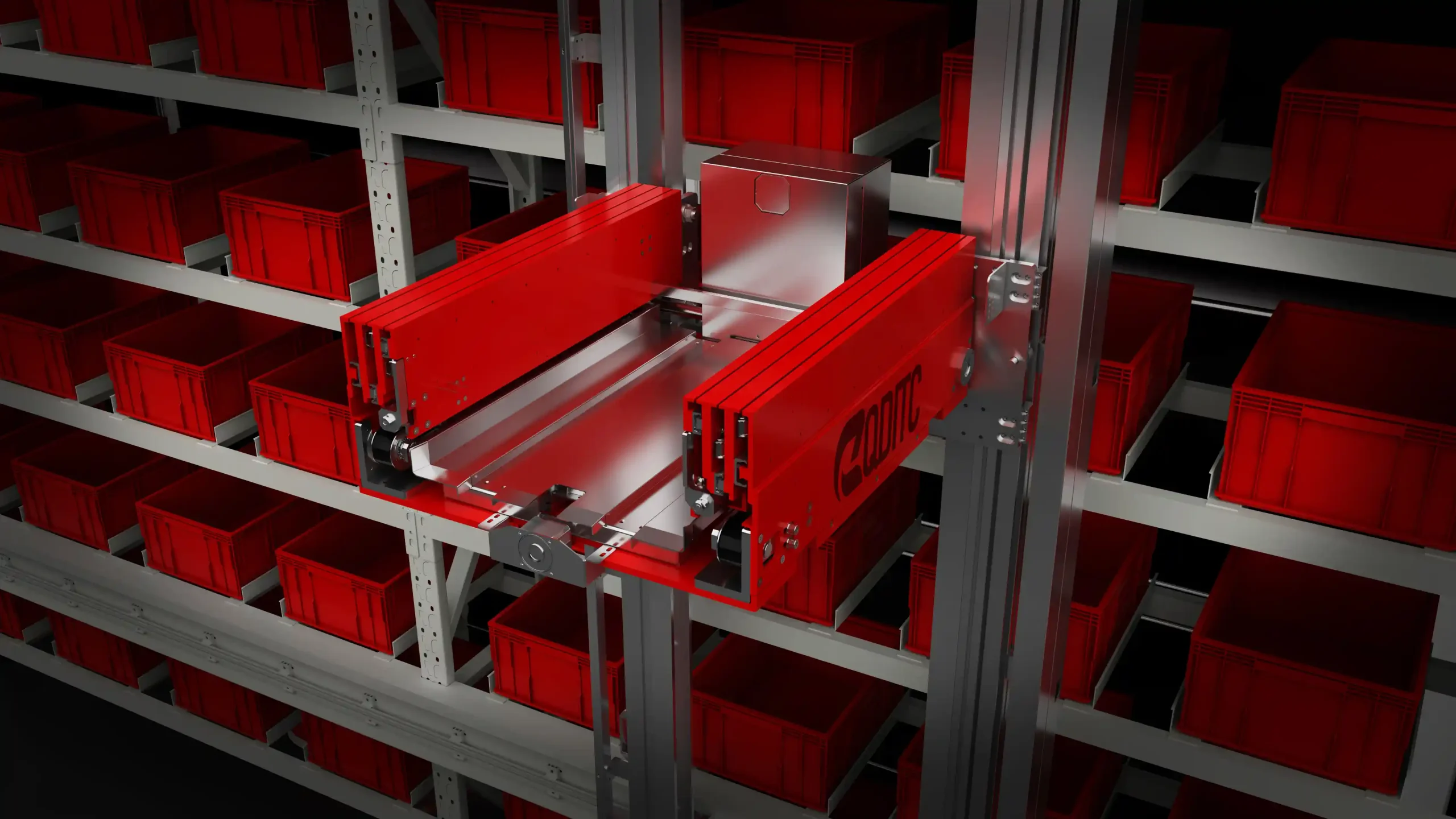
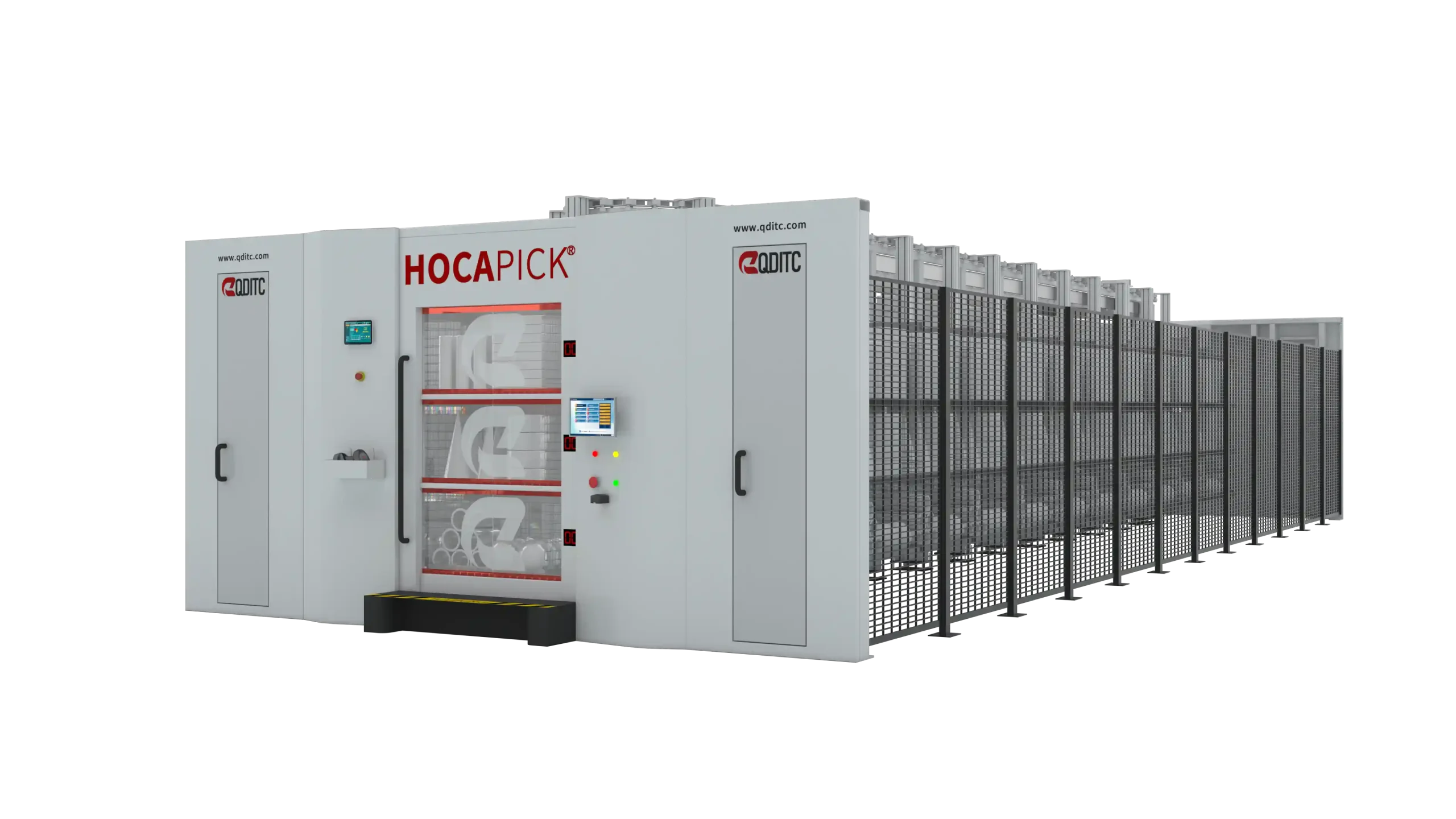
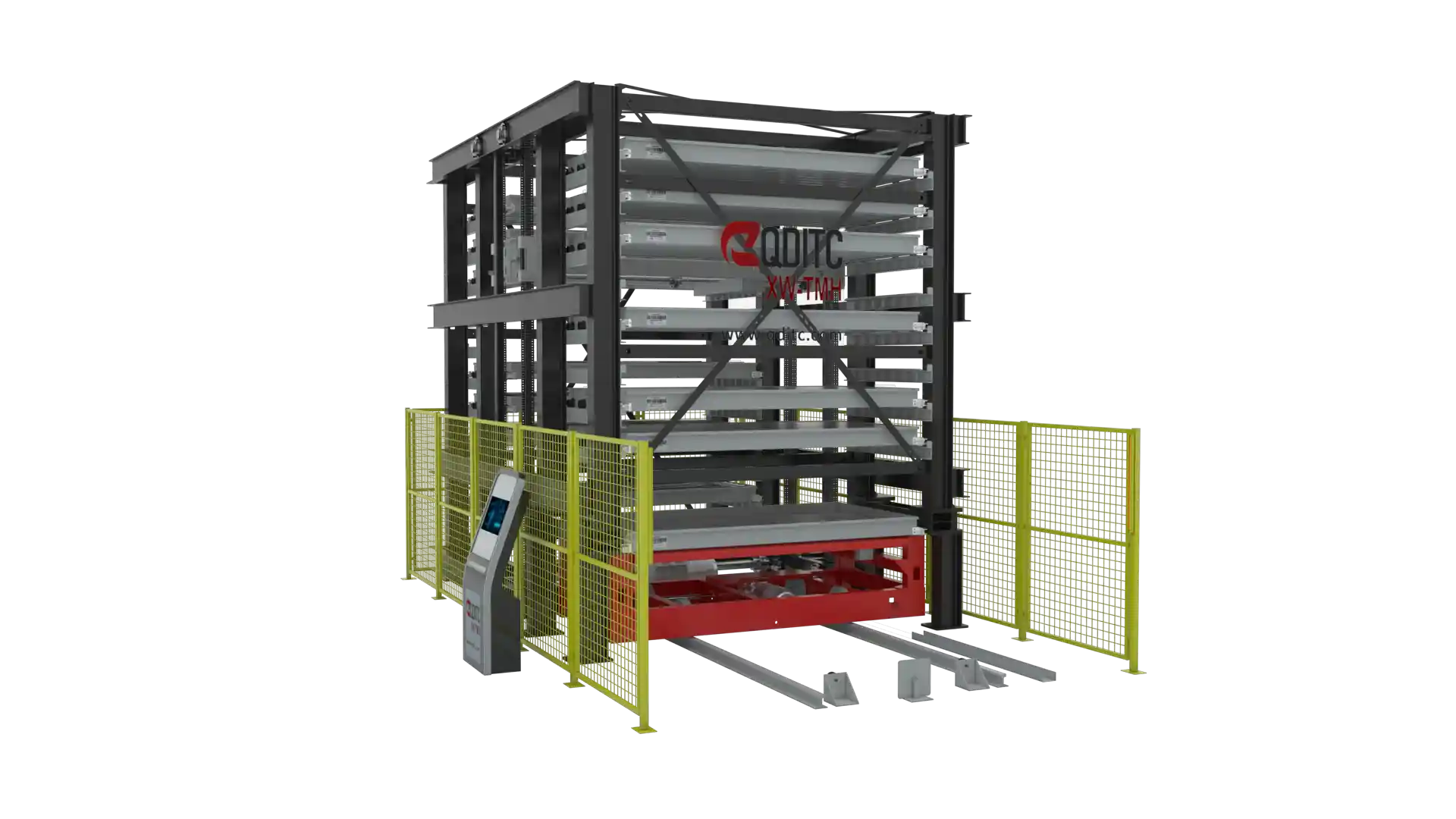
Vertical Buffer Storage: Optimizing WIP Flow with Automation

Manufacturing operations demand precision, speed, and adaptability. Optimizing work-in-process flow remains a persistent challenge, often constrained by inefficient material handling and storage layouts. Vertical buffer storage systems address this directly, integrating automation to streamline production lines and improve operational throughput. These systems manage intermediate inventory dynamically, positioning materials exactly when and where downstream processes require them.

What Vertical Buffer Modules Actually Do in a Production Environment

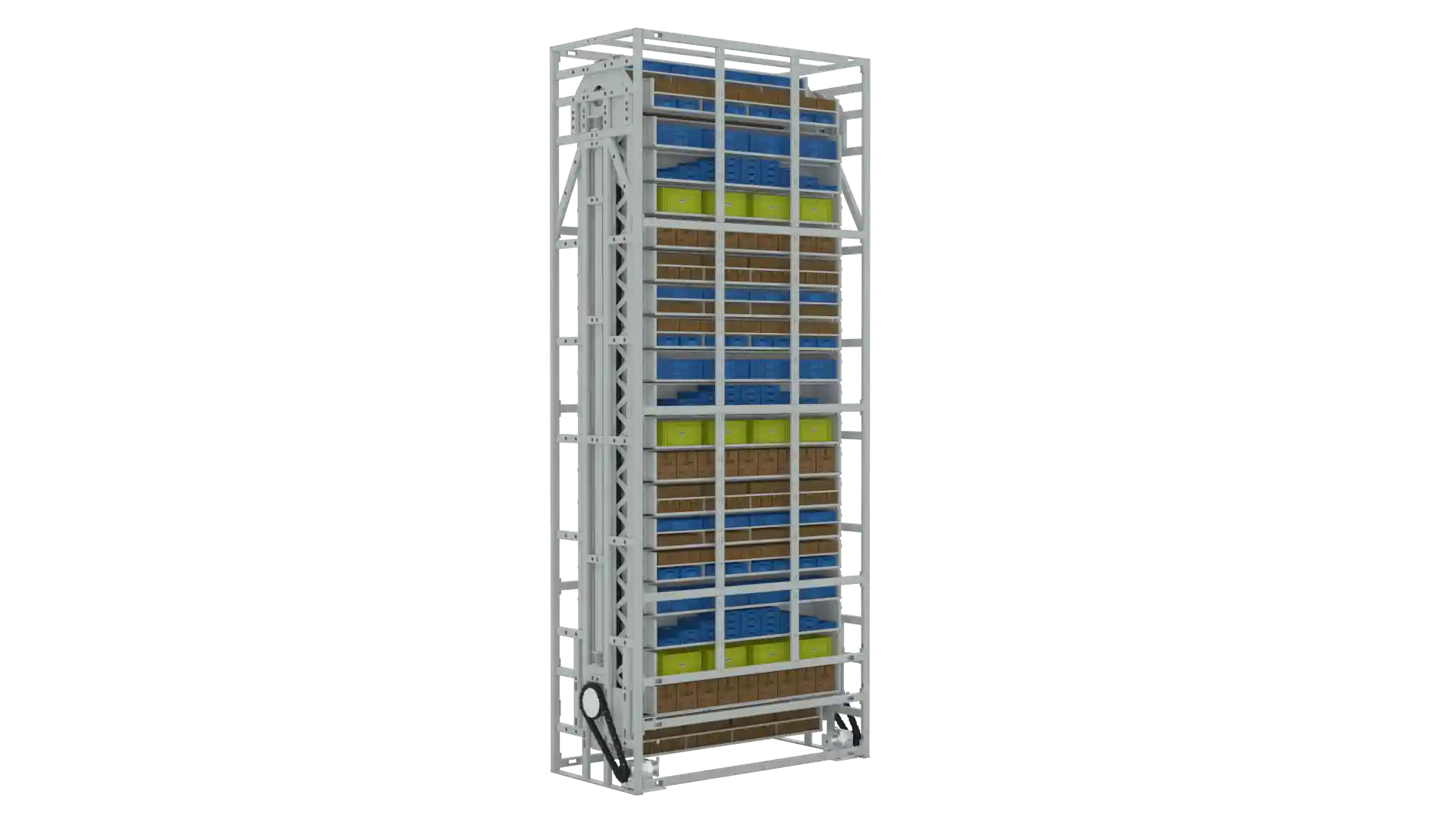
Vertical buffer modules are automated storage and retrieval systems engineered specifically for work-in-process materials within manufacturing or assembly environments. They function as dynamic holding points, temporarily storing components or sub-assemblies between production stages. This capability supports lean manufacturing principles by minimizing waste and enabling tighter inventory control. The vertical orientation matters: these modules leverage height rather than floor area, a significant advantage in facilities where square footage is expensive or already allocated.
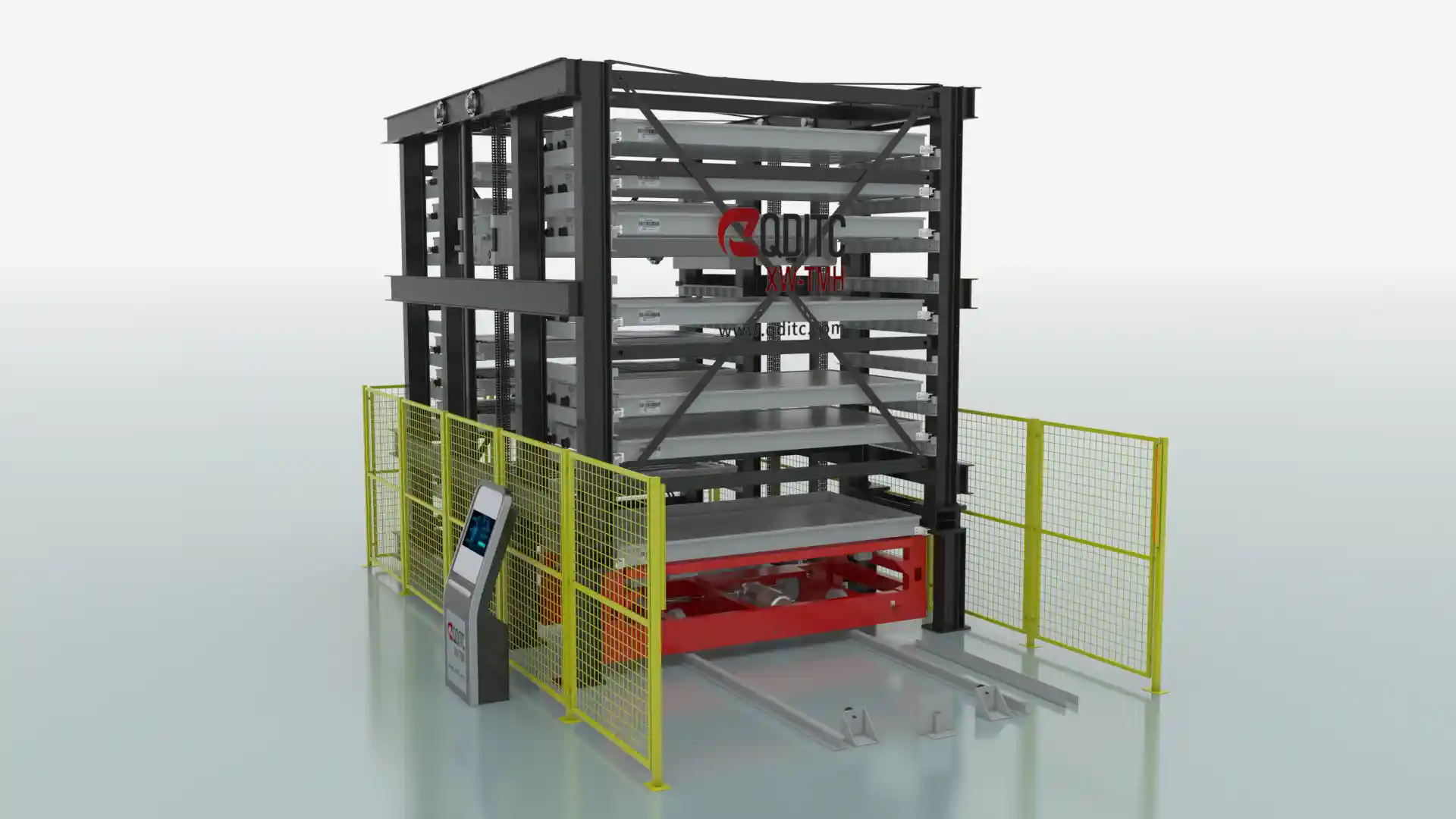
TOWERMAT

A vertical buffer module receives, stores, and retrieves items through an integrated control system. When a production stage completes its task, finished or semi-finished items convey to the buffer module. The system stores these items in compact, high-density locations until the subsequent stage is ready. This automated material handling maintains continuous production flow, prevents bottlenecks, and optimizes cycle times. The control logic allows precise sequencing and kitting, delivering parts in the correct order to assembly lines without manual intervention.

How Automated Buffer Systems Handle WIP Movement

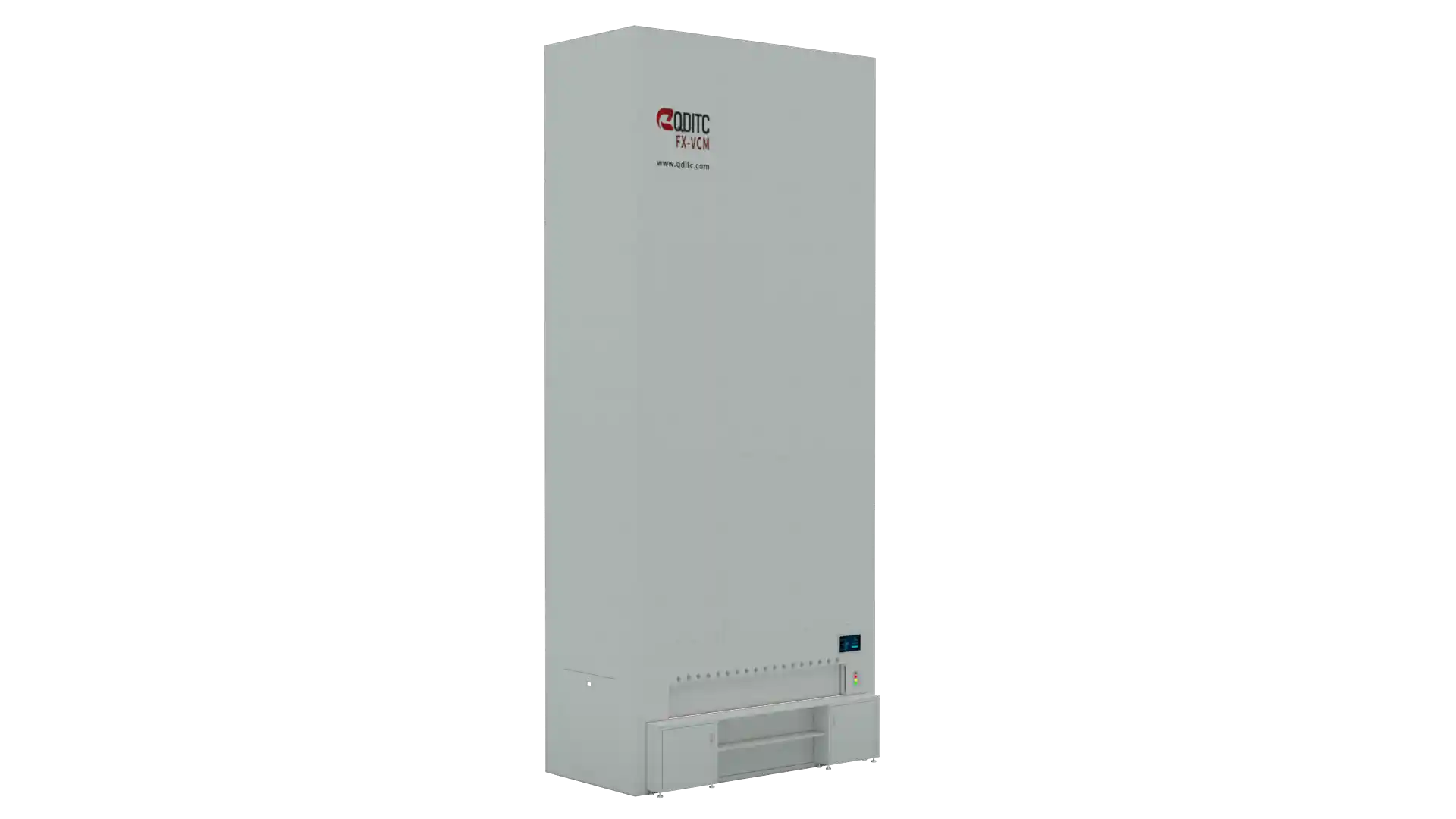
Automated buffer systems combine mechanical components, advanced controls, and intelligent software. Their operational principles center on maximizing storage density while ensuring rapid, accurate material delivery. The FX-VCM Vertical Carousel Module, for example, uses vertical rotation technology to store a wide range of materials in a limited footprint. The PG-VLM Vertical Lift Module handles ultra-long, ultra-wide, or heavy items with tray capacities up to 1000kg.

Key components include storage racks, a retrieval mechanism such as a crane or elevator, input/output stations, and a control system. The control system, typically integrated with a Warehouse Management System or Manufacturing Execution System, tracks every item’s location and status in real time. This enables dynamic slotting and intelligent sequencing, presenting materials to the next workstation just-in-time. The result: minimized queue times, reduced manual intervention, and lower risk of production stoppages from material shortages or misplacements.

Where Throughput Gains Come From

Automated buffer solutions improve throughput because materials move between stages without manual delays. Cycle time reduction follows directly, enabling faster production and quicker response to demand shifts. These systems also reduce the need for large, static buffer inventories on the production floor. The freed space can be reallocated for production capacity or other purposes.

One automotive component manufacturer we worked with had a manual staging area occupying a substantial portion of their assembly floor. Material flow disruptions were frequent. After deploying an automated vertical buffer system, they achieved a 30% reduction in floor space dedicated to WIP and a 15% increase in line throughput within six months. The improvement translated directly into faster time-to-market for their products.

FeatureManual Buffer SystemAutomated Buffer System
Space UtilizationLow density, high footprintHigh density, small footprint
Retrieval SpeedVariable, labor-dependentFast, consistent, precise
Error RateHigher, human-proneVery low, system-controlled
Real-time InventoryPoor visibilityFull visibility
Labor RequirementHighLow
Throughput ImpactProne to bottlenecksSmoother, higher output

Calculating ROI on Vertical Buffer Storage Systems

The return on investment for automated buffer solutions comes from multiple sources. Labor costs drop immediately as manual material handling tasks shift to the system. Space savings reduce operational overhead or enable production expansion within existing facilities. Increased output and improved product quality contribute to higher revenue and customer satisfaction.

Inventory carrying costs also decrease. With precise, real-time inventory management, companies maintain lower buffer stock levels, reducing capital tied up in inventory and cutting obsolescence risk. Just-in-time strategies become more feasible, streamlining the supply chain further. The enhanced control and predictability improve supply chain resilience, allowing faster adaptation to demand fluctuations. Modular vertical buffer systems scale with production needs, protecting the initial investment as operations grow. If your current WIP staging creates measurable throughput constraints, a detailed capacity analysis can clarify the payback timeline for your specific conditions.

Selecting and Implementing the Right Buffer Module

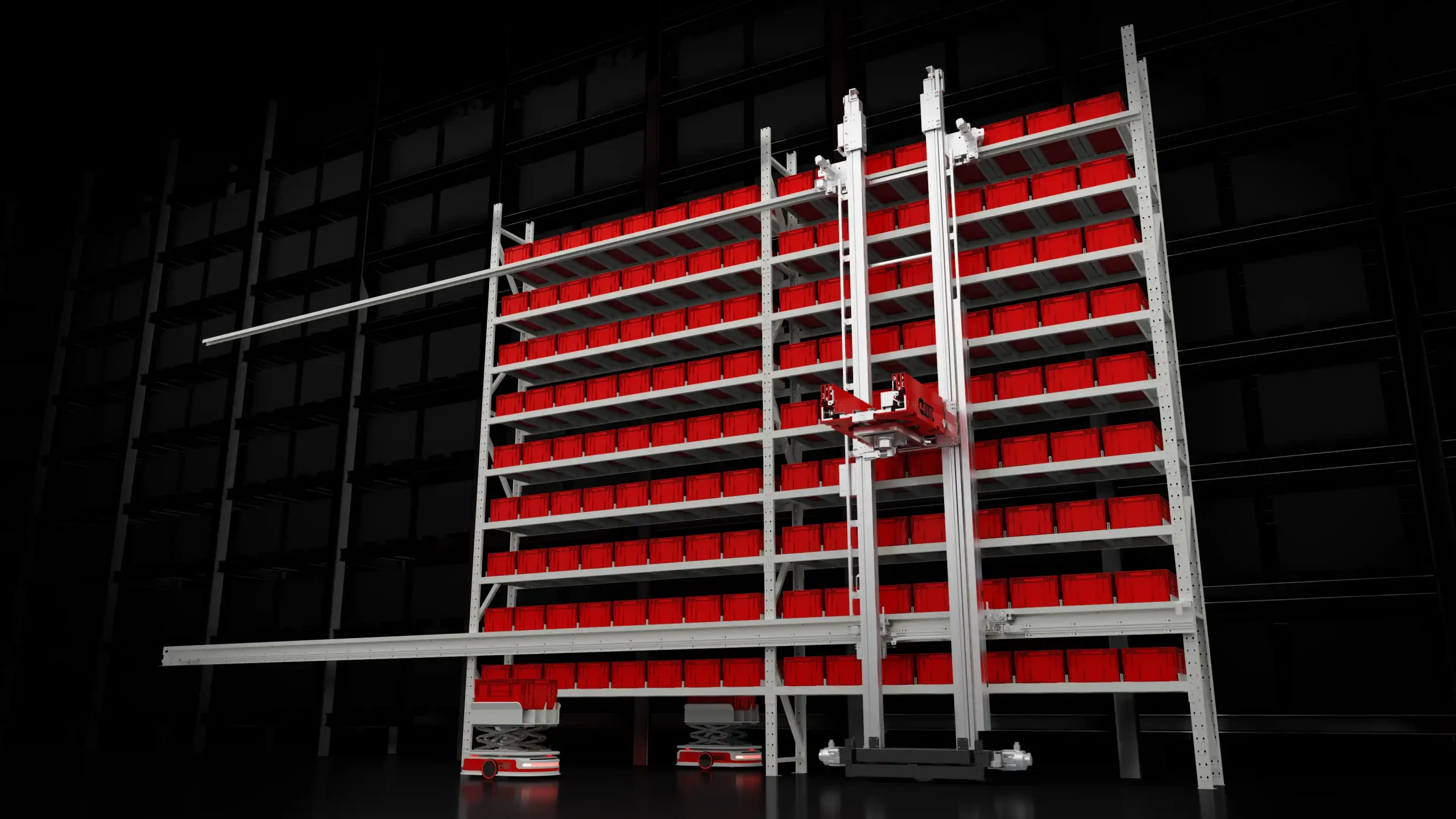
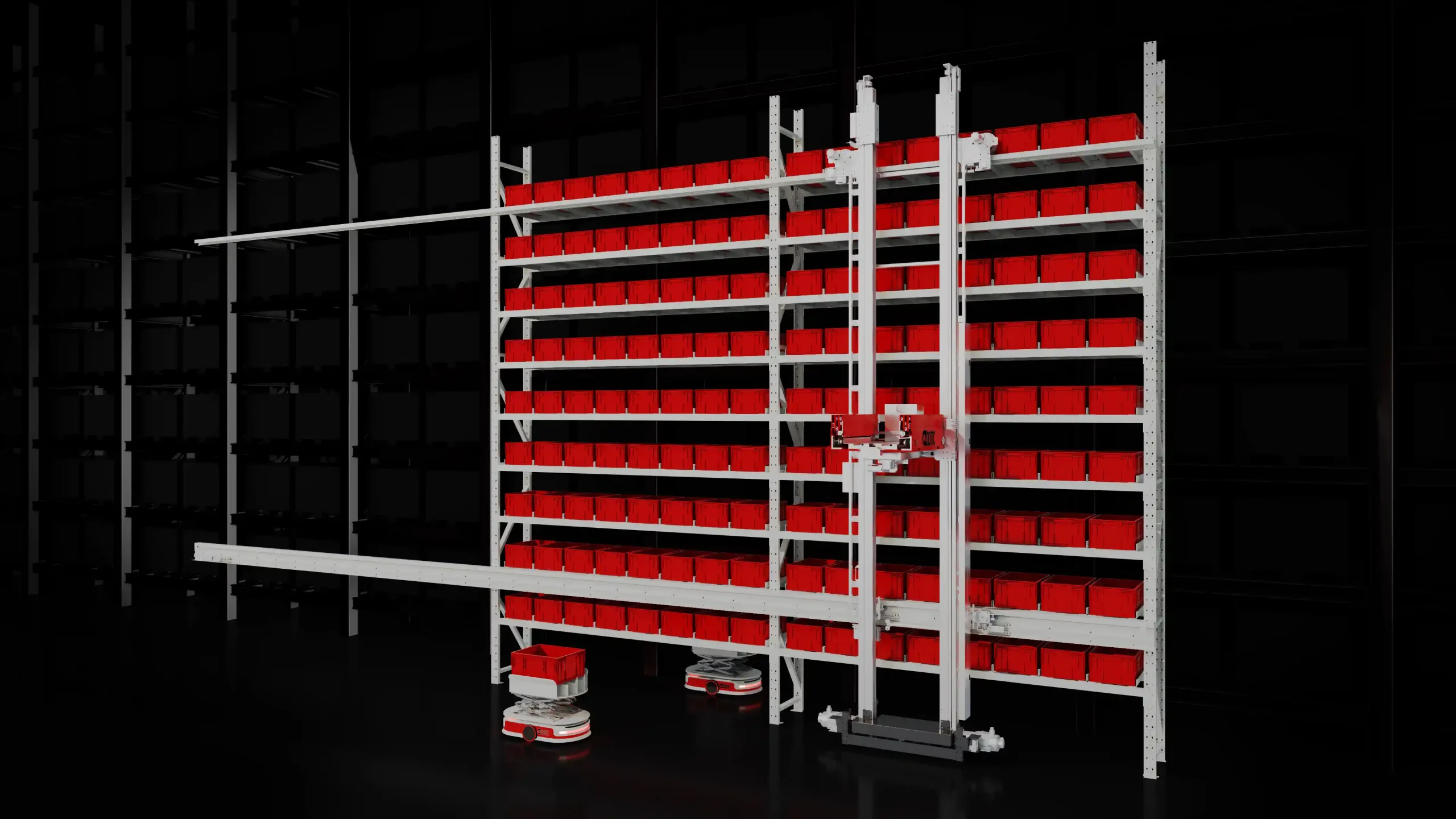
Successful implementation requires careful analysis of current material flow. Start by identifying bottlenecks and quantifying the volume and characteristics of your work-in-process items. Technology selection follows from this analysis. The SN-VSM Vertical Sort Module offers single-item access and integrates well with AGVs and conveyors. The SmartLoad-RackBot provides a compact alternative to traditional miniLoad systems with reduced implementation cycles and energy consumption.

System design must align with specific flexible manufacturing and discrete manufacturing requirements. This includes assessing integration with existing infrastructure, such as conveyors or robotics, and ensuring seamless data exchange with current WMS or MES platforms. A well-executed project plan, from initial design through commissioning and training, determines whether the automated buffer system delivers its projected benefits and achieves real-time inventory accuracy.

Frequently Asked Questions

How does a vertical buffer module system handle diverse product sizes or weights?

Vertical buffer module systems typically feature adjustable shelving, customizable carriers, and control software that accommodates a range of product dimensions and weights. This adaptability allows a single system to serve multiple production lines or product variations. The PG-VLM, for instance, handles tray loads up to 1000kg while the FX-VCM accommodates lighter, smaller items in the same facility footprint.

What are the primary safety features of automated buffer systems?

Automated buffer systems incorporate light curtains, emergency stop buttons, safety interlocks, and controlled access points. These measures protect personnel during material handling operations around high-speed automated machinery. System design typically follows regional safety standards and integrates with facility-wide safety protocols.

Can automated buffer systems integrate with existing WMS or MES platforms?

Most modern automated buffer systems connect to existing Warehouse Management Systems and Manufacturing Execution Systems through standard APIs. This integration enables real-time inventory management and synchronized production flow. The connectivity is necessary for comprehensive digital manufacturing and accurate production scheduling.

What is the typical ROI period for investing in vertical buffer storage?

ROI periods vary based on system complexity, labor cost savings, and space utilization gains. Many installations report payback within 18 to 36 months. The timeline depends heavily on current labor costs, floor space constraints, and throughput bottleneck severity. A site-specific analysis provides more accurate projections than industry averages. To discuss requirements for your facility, contact Anhui Qiande at miaocp@qditc.com or +86 15262759399.

If you’re interested, check out these related articles:

WMS Pricing 2025: Drivers, Budgeting, and ROI Strategies
Intelligent Storage Systems: VLM, VSM, VCM, VBM, ASRS Comparison
Intelligent ASRS Solution for SME Factories: Affordable Entry Options
QDITC WMS+WCS Implementation: Timeline, Training, Go-Live
ASRS Throughput Calculation: Specifying Systems for Peak Demand
Vertical Sort Module Selection: Key Questions for Buyers

Selecting a vertical sort module requires careful consideration beyond initial price. It represents a strategic investment in warehouse automation, directly impacting operational efficiency, throughput, and long-term profitability. Buyers must evaluate various factors to ensure the chosen system aligns with current needs and future growth trajectories. This involves asking precise questions about manufacturer capabilities, system performance, integration, and financial implications.

What Manufacturer Experience Actually Tells You About Long-Term Risk

Choosing a manufacturer with proven experience and robust support infrastructure minimizes long-term operational risks and ensures system longevity. A manufacturer’s track record reflects their ability to deliver reliable solutions and stand behind their products. We look for a deep understanding of material flow and specific industry challenges.

When assessing potential suppliers, I always scrutinize their history and client testimonials. In a recent project for a manufacturing client expanding their parts distribution, we encountered a situation where a vendor promised rapid deployment but lacked a clear plan for post-installation training and spare parts. Our team decided to proceed with a manufacturer who, while having a slightly longer lead time, provided a detailed 5-year support agreement and guaranteed local technical assistance. This decision resulted in a 99.8% uptime during the first year of operation, significantly exceeding the client’s initial 98% target, and minimized unexpected operational disruptions. This experience reinforced the value of thorough manufacturer vetting.

Here are key aspects to consider:

Evaluation AreaKey Questions for ManufacturersImportance
ExperienceHow many vertical sort module installations have you completed in our industry?High
SupportWhat are your typical response times for technical issues?High
TrainingDo you offer on-site training for our operational staff?Medium
WarrantyWhat are the terms and duration of your equipment warranty?High
PartsWhat is your process for spare parts availability and delivery?High

Anhui Qiande Intelligent Technology Co., Ltd. brings 15 years of experience in industrial warehousing equipment production. We focus on providing correct solutions for different storage spaces and materials, ensuring our clients receive systems designed for their specific requirements.

How to Evaluate Throughput, Accuracy, and Room for Growth

Understanding a module’s throughput, accuracy, and adaptability to future growth is crucial for meeting current demands and ensuring long-term operational efficiency. A vertical sort module must handle current volumes efficiently while offering room for expansion without requiring a complete system overhaul. This requires a detailed analysis of your operational data and future projections.

Throughput requirements are often the primary driver for sortation system investment. I advise clients to analyze peak demand periods and projected growth rates. A system that can process 1,000 items per hour today might be insufficient if your business anticipates a 30% increase in order volume within two years. Accuracy is equally important; mis-sorts lead to costly re-handling and customer dissatisfaction.

Consider the SN-VSM: Vertical Sort Module, a solution designed for precise material handling.

FeatureDescriptionBenefit
DesignUtilizes supports on both sides to secure material boxes; telescopic forks for automatic storage and retrieval.Enhanced stability and precision for diverse items.
AccessSimple, excellent single item access function.Streamlined picking and placing operations.
SpecificationsWide range of specifications available.Adaptable to various application scenarios and item sizes.
IntegrationCan be used with AGV, conveyors, and other automated equipment.Flexible integration into existing or new automated systems.
DeploymentOperates standalone or in conjunction with other modules.Versatile deployment options for different warehouse layouts.

VCM1

This vertical sort module is designed to optimize space utilization and streamline sorting processes. Its modular nature allows for customization based on the application scenario and characteristics of stored items, ensuring that the width and depth of the storage unit perfectly accommodate the chosen turnover boxes.

Why Integration Planning Determines Whether Automation Pays Off

Smooth integration with existing warehouse management systems (WMS) and infrastructure is vital to avoid costly disruptions and maximize overall efficiency. A new vertical sort module should not operate as an isolated island but as a cohesive part of your broader automated warehouse solutions. This involves careful planning and communication between your team and the system provider.

Integration challenges often arise from disparate software systems or incompatible hardware interfaces. We prioritize solutions that offer open API interfaces and proven compatibility with industry-standard WMS platforms. This ensures that data flows between the sortation system and other warehouse operations, such as inventory management and order fulfillment. Without proper integration, the benefits of automation can be severely limited by manual data entry or bottlenecks at transfer points.

RACKBOT 1

When evaluating integration, consider these points:
1. Software Compatibility: Confirm the sort module’s control software can communicate with your existing WMS and ERP systems.
2. Physical Interface: Assess how the vertical sort module connects with existing conveyors, AGVs, or other material handling equipment.
3. Data Exchange: Define the data points that need to be exchanged (e.g., item ID, destination, status) and the method of exchange (e.g., API, flat files).
4. Testing Protocols: Establish clear testing procedures to validate data flow and physical interaction before full deployment.
5. Operator Interface: Ensure the human-machine interface (HMI) is intuitive and provides clear operational feedback to warehouse staff.

What Total Cost of Ownership Reveals That Purchase Price Hides

A comprehensive financial evaluation, beyond initial purchase price, reveals the true economic impact and return on investment of a vertical sort module. Focusing solely on the upfront cost can lead to unexpected expenses down the line, diminishing the perceived value of the investment. We advocate for a Total Cost of Ownership (TCO) approach.

TCO encompasses not only the acquisition cost but also installation, training, energy consumption, maintenance, spare parts, and potential downtime. A system with a lower initial price but higher energy demands or frequent maintenance requirements might prove more expensive over its lifespan. Conversely, a higher initial investment in a more energy-efficient and reliable system can yield significant savings and a faster return on investment (ROI).

Cost ComponentDescriptionImpact on TCO
AcquisitionPurchase price of the module and associated hardware.Initial capital outlay.
InstallationLabor, site preparation, and commissioning costs.One-time setup expense.
EnergyElectricity consumption during operation.Ongoing operational expense, varies by efficiency.
MaintenanceRoutine servicing, preventative measures, and repairs.Recurring expense, impacts uptime.
SparesCost of replacement parts over the system’s lifespan.Variable, depends on system reliability.
TrainingEducating staff on operation and basic troubleshooting.Initial investment for competency.
SoftwareLicenses, updates, and integration with WMS.Ongoing or one-time, critical for functionality.

PICKUPSTATION2

Our solutions are designed with long-term value in mind. The SmartLoad-RackBot, while not a vertical sort module itself, demonstrates our commitment to cost-effective, high-performance solutions. It reduces implementation cycles by over 70% and costs by over 20% compared to traditional miniLoad systems, with energy consumption less than 35% of traditional alternatives. This philosophy extends to our vertical sort modules, aiming for efficiency and reduced TCO.

How Modular Design Protects Your Investment as Requirements Change

Selecting a modular, adaptable system with an eye on emerging technologies ensures the solution remains relevant and efficient as business needs evolve. The pace of change in industrial logistics requires systems that can adapt rather than become obsolete. This means considering both hardware flexibility and software capabilities.

Modular design is paramount for future growth. A system built with interchangeable components or expandable sections allows for easy upgrades or capacity increases. This avoids the need to replace the entire system when requirements shift. If your product mix changes to include larger or smaller items, a modular vertical sort module can often be reconfigured with different sized turnover boxes or handling mechanisms. Systems that support data analytics for sortation provide valuable insights into operational performance, allowing for continuous optimization. Integrating safety standards for automation from the outset also ensures compliance and protects your workforce as your operations scale.

TOWERMAT

We observe that businesses frequently underestimate their future growth. A vertical sort module should not only meet today’s demands but also anticipate tomorrow’s. This includes considering how the system can integrate with future technologies like advanced robotics or artificial intelligence for predictive maintenance. If your situation involves significant volume fluctuations or product mix changes, it is worth discussing modularity requirements before committing to a system architecture. A forward-thinking approach to system selection protects your investment and maintains operational agility.

Optimize Your Sortation Operations

Choosing the right vertical sort module requires a strategic approach, focusing on long-term value, performance, and adaptability. Anhui Qiande Intelligent Technology Co., Ltd. leverages 15 years of expertise to provide tailored, reliable industrial warehousing equipment solutions for diverse storage spaces and materials. We are committed to designing systems that enhance efficiency and support your operational growth.

To discuss specific requirements for your sortation needs, contact us at miaocp@qditc.com or +86 15262759399.

Frequently Asked Questions

How long does it typically take to implement a new vertical sort module?

Implementation timelines vary significantly based on system complexity and warehouse readiness. Expect a process from initial consultation to full operation to take anywhere from 3 to 12 months, including design, manufacturing, installation, and training for sortation equipment. Proper planning with your chosen manufacturer is key to a smooth rollout.

What are the key performance indicators for a vertical sort module?

Key performance indicators for a vertical sort module include throughput rate (items sorted per hour), sort accuracy percentage, uptime percentage, and mean time to repair (MTTR). Space utilization efficiency and energy consumption per sorted item also matter. These metrics provide a clear picture of the system’s operational effectiveness and return on investment.

How do I ensure smooth integration of a new sortation system?

Begin with a detailed audit of your existing IT infrastructure and material flow processes. Share this information transparently with potential suppliers. Prioritize systems with open architecture and proven integration capabilities with common warehouse management systems. Conduct thorough testing in a simulated environment before full deployment, focusing on data exchange and physical interfaces.

What kind of after-sales support should I expect from a manufacturer?

Expect a multi-faceted support package including technical assistance, spare parts availability, and routine maintenance services. A reputable manufacturer should offer clear service level agreements detailing response times and resolution protocols. Comprehensive training for your staff on system operation and basic troubleshooting is also vital to maximize uptime and operational independence.

What are the common pitfalls to avoid when purchasing a sortation system?

Key pitfalls include underestimating future growth needs, neglecting module integration capabilities with existing systems, and focusing solely on upfront cost rather than total cost of ownership. Thorough due diligence on both the system’s technical fit and the manufacturer’s support is necessary for success.

Can vertical sort modules be customized for unique product sizes or handling requirements?

Yes, most reputable manufacturers offer significant customization options to accommodate unique product dimensions, weights, and handling characteristics. Discuss your specific material handling challenges early in the process to ensure the custom vertical sort solutions meet your precise operational demands. Reach out to our team at miaocp@qditc.com to explore configuration options for your application.

If you’re interested, check out these related articles:

Mini-Load vs. Unit-Load ASRS: Choosing Your Business Scale
ASRS Maintenance Schedule: Peak Performance & System Longevity

How to Choose Vertical Carousels: New, Used, or Refurbished

Vertical carousel systems change how warehouses handle storage and retrieval. The question most operations managers face is straightforward: buy new, buy used, or go refurbished? Each path carries different cost structures, risk profiles, and long-term implications for throughput and maintenance budgets. This breakdown covers what actually matters when evaluating each option, from warranty coverage and component condition to integration requirements and total cost of ownership over a realistic equipment lifespan.

How Vertical Carousels Change Warehouse Throughput

Vertical carousel storage systems convert dead vertical space into active picking zones. Instead of operators walking aisles and climbing ladders, the system rotates inventory to a fixed access point at ergonomic height. This goods-to-person approach cuts retrieval times significantly, often by 60% or more compared to static shelving in high-SKU environments.

The operational benefits extend beyond speed. Picking accuracy improves because operators work from a single station with clear item presentation rather than hunting through shelves. Inventory control tightens when every pick and put-away registers through the control interface. Safety incidents drop when workers no longer need to reach overhead or use step ladders repeatedly throughout a shift.

VCM1

For facilities running multiple shifts or handling time-sensitive order fulfillment, these systems become infrastructure rather than equipment. The decision about acquisition method shapes how that infrastructure performs over its service life.

What You Get When Buying New Vertical Carousels

New vertical carousels arrive with current-generation components, full manufacturer warranties, and the ability to specify exactly what your operation needs. Dimensions, tray configurations, weight capacities, control interfaces, and software packages can all be tailored during the order process. This level of customization matters when your inventory includes non-standard items or when the system must integrate tightly with existing warehouse management systems.

The equipment lifespan for new units typically exceeds twenty years with proper maintenance. Manufacturer support during that period includes firmware updates, parts availability guarantees, and access to trained service technicians. Energy efficiency tends to be higher on current models, which compounds into meaningful operating expense reductions over two decades of continuous use.

The FX-VCM Vertical Carousel Module handles diverse material types across manufacturing, healthcare, and distribution applications. Its vertical rotation technology keeps the mechanical complexity low while maximizing storage density in constrained floor plans. The PG-VLM Vertical Lift Module takes a different approach with modular wall panel construction and tray capacities reaching 1000kg, which opens possibilities for ultra-long materials, heavy tooling, and mold storage that would overwhelm lighter-duty systems.

SpecificationFX-VCM Vertical Carousel ModulePG-VLM Vertical Lift Module
Design approachVertical rotation, low mechanical complexityModular wall panels, high-speed extraction
Primary applicationsMixed materials, general warehouse useHeavy items, oversized materials, mold storage
Space efficiencyHigh density in limited footprintMaximum capacity per square meter
Tray capacityStandard configurations availableUp to 1000kg per tray
Integration capabilityWMS compatibleWMS compatible

The capital investment for new equipment runs higher than alternatives, but the calculation changes when you factor in warranty coverage, energy costs, maintenance predictability, and the absence of unknown service history.

The Real Cost Picture for Used Vertical Carousels

Used vertical carousels attract attention because the sticker price can run 30% to 70% below new equipment costs. That spread depends on age, condition, original manufacturer, and how motivated the seller is to move the unit. For operations with tight capital budgets, the initial savings look compelling.

The risk profile shifts substantially compared to new or refurbished options. Used equipment typically sells without warranty coverage. Any mechanical failure, control system fault, or structural issue becomes an immediate operating expense rather than a warranty claim. The previous owner’s maintenance practices remain largely unknown, and documentation often arrives incomplete or missing entirely.

Parts sourcing presents another variable. Older control systems may require components that manufacturers no longer stock. Mechanical parts for discontinued models sometimes exist only through aftermarket suppliers at premium prices, if they exist at all. A single hard-to-find bearing or motor can sideline a system for weeks while procurement tracks down alternatives.

Pre-purchase inspection becomes essential rather than optional. The assessment should cover motor condition, chain wear, bearing play, structural alignment, control system functionality, and safety device operation. Electrical systems need particular attention since intermittent faults may not appear during a brief demonstration. If the seller cannot provide maintenance records, assume the worst-case scenario when calculating total cost of ownership.

Some used purchases work out well. A five-year-old system from a facility that ran single shifts and maintained equipment rigorously can deliver years of reliable service at a fraction of new cost. The challenge lies in distinguishing those units from equipment that was run hard, maintained minimally, and sold when problems became expensive.

Calculating actual savings on used equipment

The 30% to 70% discount on purchase price represents only the starting point for cost analysis. Add installation expenses, which may run higher than new equipment if the used system requires site-specific modifications. Factor in any upgrades needed for current safety compliance or WMS compatibility. Estimate repair costs for the first two years based on component age and condition assessment. Include productivity losses from potential unplanned downtime.

After this accounting, some used purchases still pencil out favorably. Others reveal that the apparent savings evaporate into repair invoices and lost throughput. The calculation depends entirely on the specific unit, its history, and your operation’s tolerance for uncertainty.

Why Refurbished Vertical Carousels Occupy the Middle Ground

Refurbished vertical carousels undergo systematic restoration before resale. The process typically includes complete mechanical inspection, replacement of worn components, control system evaluation and potential upgrade, structural assessment, and cosmetic refinishing. The result is equipment that performs at or near original specifications without the full capital requirement of new systems.

The key distinction from used equipment lies in the work performed and the warranty provided. Reputable refurbishment suppliers replace motors, chains, bearings, and other wear items rather than simply testing them. Control systems often receive software updates or hardware upgrades that bring older platforms closer to current capabilities. The supplier then backs the work with a warranty, typically ranging from six months to two years depending on the scope of refurbishment.

HCM-2

This approach extends equipment lifespan while reducing the uncertainty that comes with used purchases. Total cost of ownership typically falls between new and used options, with reliability closer to the new end of the spectrum. For operations that need vertical carousel capacity without the full investment of new equipment, refurbishment offers a defensible middle path.

Fifteen years of production experience informs our approach to refurbished systems. Every unit undergoes rigorous quality verification and component replacement before delivery. The goal is equipment that performs reliably from day one, backed by support infrastructure that keeps it running.

Distinguishing new from refurbished in practical terms

New vertical carousels offer complete customization, current-generation technology, and full manufacturer warranty periods that often extend five years or longer. Every component is unused, and the system arrives configured exactly to specification.

Refurbished units start from existing equipment, which limits customization to what the original design allows. Tray configurations can often be adjusted, and control interfaces may be upgradeable, but fundamental dimensions and weight capacities are fixed by the base system. Warranty coverage from the refurbisher typically runs shorter than manufacturer warranties on new equipment.

The performance gap between a well-refurbished system and new equipment is often smaller than the price gap. For operations where the existing system dimensions and capacities meet requirements, refurbishment delivers substantial value.

Inspection priorities for refurbished systems

The refurbishment process matters as much as the original equipment quality. When evaluating a refurbished vertical carousel, focus on what work was actually performed rather than accepting general claims about restoration.

Request documentation showing which components were replaced versus inspected and retained. Motors, chains, bearings, and drive components should be replaced or rebuilt to specification rather than simply cleaned and reinstalled. Control systems should run current software versions with demonstrated WMS integration capability if your operation requires it.

Structural inspection should confirm that the frame shows no signs of stress cracking, misalignment, or corrosion that could affect long-term operation. Safety devices including light curtains, emergency stops, and anti-pinch mechanisms must function correctly and meet current regulatory requirements.

Warranty terms reveal the refurbisher’s confidence in their work. Longer coverage periods with clear terms indicate a supplier willing to stand behind the equipment. Ask about spare parts availability and service response times, since post-sale support determines whether a good purchase stays good over its service life.

Matching System Selection to Operational Requirements

The new versus used versus refurbished decision depends on factors specific to your operation rather than general rules. Throughput requirements, facility constraints, integration needs, and budget parameters all influence which option makes sense.

Start with throughput. How many picks per hour does the operation require? What growth is anticipated over the next five to ten years? New systems offer the most flexibility to specify capacity for future needs. Refurbished systems work well when current requirements match available equipment specifications. Used systems carry more risk when throughput demands are high, since unplanned downtime hits harder in fast-paced operations.

Facility constraints shape the physical options. Available height determines maximum system size. Floor space limitations may favor certain footprint configurations. Power availability and floor load capacity can eliminate some equipment from consideration. These parameters should be established before evaluating specific units.

WMS integration requirements vary by operation. Some facilities need real-time inventory tracking, automated pick sequencing, and full data exchange with enterprise systems. Others operate with simpler requirements where basic control interfaces suffice. New equipment offers the most integration flexibility. Refurbished systems can often be upgraded to current connectivity standards. Used equipment may require significant investment to achieve modern integration capability.

Budget parameters obviously matter, but the relevant number is total cost of ownership over the expected service period rather than purchase price alone. A used system that costs 50% less but requires 30% more maintenance spending and delivers 15% lower throughput may not actually save money.

Anhui Qiande Intelligent Technology Co., Ltd. brings fifteen years of experience to these evaluations. We work through the specific storage space, material characteristics, and operational requirements that define what your facility actually needs. That analysis drives the recommendation, whether the answer is new equipment, a refurbished system, or something else entirely.

RACKBOT

Frequently Asked Questions

What service life should I expect from a vertical carousel system?

New vertical carousels routinely operate for twenty years or longer when maintenance schedules are followed. The mechanical systems are designed for continuous duty, and component replacement at appropriate intervals keeps performance consistent. Refurbished systems extend the life of existing equipment, often adding ten to fifteen years of service depending on the scope of restoration. Used equipment lifespan depends heavily on prior service history and current condition, making generalizations unreliable. Regular servicing, prompt attention to wear indicators, and timely parts replacement maximize operational duration regardless of acquisition method.

Do vertical carousels work with existing warehouse management systems?

Current vertical carousel systems are designed for WMS integration as a standard capability. Communication protocols, data formats, and API structures follow industry standards that most warehouse management platforms support. The integration enables real-time inventory tracking, automated pick list management, and performance analytics that improve operational visibility. When evaluating new or refurbished equipment, confirm specific compatibility with your WMS platform and version. Used systems may require control upgrades to achieve modern integration capability, which should factor into the total cost assessment.

Which safety features matter most on vertical carousel equipment?

Light curtains that stop system motion when the access zone is breached provide primary operator protection. Emergency stop buttons should be accessible from the operator station and any other position where someone might need to halt the system quickly. Anti-pinch mechanisms prevent injury from moving trays. Interlock systems ensure the carousel cannot operate with access panels open. These features should function correctly on any system regardless of age or acquisition method. For used or refurbished equipment, verify that safety devices meet current regulatory standards rather than only the standards in effect when the system was originally manufactured.

Can refurbished vertical carousels be customized?

Customization options on refurbished equipment are more limited than new systems but often more flexible than buyers expect. Tray configurations can typically be modified within the structural constraints of the original design. Control interfaces may be upgradeable to current platforms. Software capabilities depend on the control system generation and available updates. Fundamental parameters like overall dimensions, maximum weight capacity, and rotation speed are fixed by the base equipment. When specific customization requirements exist, discuss them early in the evaluation process to confirm whether a refurbished system can accommodate them.

If you’re interested, check out these related articles:

China Warehouse Control System: Conveyor, Sorter & Storage Integration
ASRS Manufacturer China: OEM Solutions for Integrators
Intelligent ASRS Solution for SME Factories: Affordable Entry Options
How QDITC Designs End-to-End ASRS Solutions for Warehouses

Moving Forward with Your Vertical Carousel Decision

The evaluation process does not need to be complicated. Define your throughput requirements, facility constraints, and integration needs. Establish a realistic budget that accounts for total cost of ownership rather than purchase price alone. Then assess specific equipment options against those parameters.

Anhui Qiande Intelligent Technology Co., Ltd. has spent fifteen years helping operations match vertical carousel systems to their actual requirements. If your facility is evaluating storage automation options, a conversation about your specific situation will clarify which direction makes sense.

Email: miaocp@qditc.com
Phone: +86 15262759399

How Vertical Carousels Accelerate E-commerce Order Picking

How Vertical Carousels Actually Speed Up E-commerce Order Picking

E-commerce fulfillment lives and dies by pick rate. When order volumes spike, manual picking breaks down in predictable ways: operators spend more time walking than picking, error rates climb, and dispatch windows slip. Vertical carousels solve this by inverting the fundamental picking equation. Instead of sending people to products, the system brings products to people.

The math is straightforward. In a manual warehouse, travel time typically consumes 50-60% of each pick cycle. A vertical carousel eliminates most of that. The operator stands at a fixed station while the carousel rotates to present the requested item. Combine this with pick-to-light guidance and you get both speed and accuracy in a single motion.

What a Vertical Carousel System Actually Does

A vertical carousel is a series of carriers mounted on a track that rotates vertically, like a Ferris wheel for inventory. When the warehouse management system receives an order, it signals the carousel to rotate until the correct carrier reaches the pick window. The operator sees a light indicating exactly which bin to pick from, pulls the item, confirms the pick, and moves to the next order. The entire sequence takes seconds.

This goods-to-person approach works particularly well for e-commerce operations handling diverse SKU ranges. Rather than dedicating floor space to wide aisles and horizontal racking, a vertical carousel stacks inventory upward. A system occupying 20 square meters of floor space can store what would otherwise require 100 square meters of conventional shelving.

The FX-VCM Vertical Carousel Module handles everything from small components to archived documents. Carrier configurations adjust to match product dimensions, and the integrated material information system tracks every item location. When an operator requests a pick, the system already knows exactly where the item sits and rotates to that position before the operator finishes scanning the order.

Where the Speed Gains Actually Come From

Picking speed improvements from vertical carousels compound across multiple factors. Travel time drops to near zero. Search time disappears because the system presents the exact location. Error rates fall because software guidance removes guesswork.

PICKUPSTATION1

We worked with an online electronics retailer that was drowning in picking errors and missed dispatch windows. Their manual process required operators to navigate a 5,000 square meter warehouse with printed pick lists. Error rates ran around 2.5%, which translated to expensive returns and customer complaints. After installing a vertical carousel system, their picking accuracy hit 99.8% and average fulfillment time dropped 40% within three months. They absorbed a 25% increase in daily orders without adding warehouse space or headcount.

The throughput gains hold up under pressure. During peak season, when manual operations typically degrade, carousel systems maintain consistent cycle times. The system does not get tired, does not take shortcuts, and does not misread pick lists.

Why the Space and Cost Numbers Matter for Scaling

Vertical carousels change the economics of warehouse expansion. Instead of leasing additional floor space when order volumes grow, you can often add carousel modules within your existing footprint. A single carousel can replace 60-70% of the floor space that conventional shelving would require for the same inventory volume.

VCM2

The cost structure shifts in several ways simultaneously. Labor costs per pick drop because operators handle more picks per hour. Error-related costs fall because mis-picks and returns decline. Facility costs stabilize because you delay or avoid expansion. The table below shows how these factors compare:

FeatureManual PickingVertical Carousel Picking
Space UtilizationLow (horizontal spread)High (vertical density)
Picking SpeedSlow to moderateFast to very fast
Accuracy RateModerate (human error)High (software-guided)
Labor EfficiencyLow (high travel time)High (minimal travel)
ScalabilityLimited (requires more space)Flexible (add modules)
Cost ReductionHigh labor, potential errorsLower labor, fewer errors

The scalability question matters most for growing e-commerce operations. Carousel systems are modular by design. When you need more capacity, you add another unit and integrate it with your existing WMS. The new module starts picking within days of installation, not months.

What to Get Right During Implementation

Carousel implementation fails when businesses treat it as a hardware purchase rather than a systems integration project. The carousel itself is only useful if it talks to your WMS, your order management system, and your inventory tracking. Data flow between these systems determines whether picks queue efficiently or stack up in bottlenecks.

RACKBOT

Start by mapping your actual pick profiles. What are your fastest-moving SKUs? What is your typical order composition? How do pick volumes distribute across shifts? This data shapes carrier configuration, system sizing, and pick station layout.

Ergonomics at the pick station directly affects sustained throughput. An operator who has to reach awkwardly or bend repeatedly will slow down over an eight-hour shift. The pick window height, lighting, and confirmation interface all need to support natural motion. If your operation involves height-constrained spaces, the FXH-HCM Horizontal Carousel Module offers similar automation benefits with a different footprint profile.

If your current fulfillment process involves manual picking across multiple zones, consider discussing carousel integration options before committing to a specific configuration. The right system layout depends on your specific order profiles and facility constraints.

How Carousel Systems Fit Into Broader Automation Strategies

Vertical carousels rarely operate in isolation. Most e-commerce operations that adopt them eventually connect carousel picking to conveyor systems, automated packaging, and shipping sortation. The carousel becomes one node in a larger automated flow.

HCM-2

The modular architecture of systems like the FX-VCM supports this kind of incremental automation. You can start with a single carousel handling your highest-velocity SKUs, prove the ROI, then expand to additional units or integrate with other handling equipment. Each addition builds on existing infrastructure rather than requiring a complete system redesign.

This adaptability matters because e-commerce product mixes shift constantly. A carousel system that handles today’s SKU range needs to accommodate whatever products you add next quarter. Adjustable carrier configurations and software-driven slotting optimization let you reorganize inventory without physical rework.


How do vertical carousels improve e-commerce fulfillment speed?

The speed gain comes from eliminating travel time. In manual picking, operators walk to each pick location, locate the item, then walk to the next location. A vertical carousel brings the item to a fixed pick station, cutting travel time to zero. The WMS queues picks in optimal rotation sequence, so the carousel presents items in the order the operator needs them. Combined with pick-to-light guidance that shows exactly which bin to pull from, operators complete picks in seconds rather than minutes. Throughput typically doubles or triples compared to manual methods.

What are the cost savings associated with carousel picking systems?

Cost savings accumulate across three categories. Labor costs drop because each operator handles more picks per hour, so you need fewer pickers for the same volume. Space costs fall because vertical storage density reduces your required footprint, delaying or eliminating facility expansion. Error costs decline because software-guided picking cuts mis-picks to below 0.5%, which means fewer returns, fewer reshipping costs, and fewer customer service interventions. For operations processing thousands of orders daily, these savings compound quickly.

Are vertical carousels suitable for all types of e-commerce products?

Vertical carousels work best for small to medium-sized items that fit in standard carriers, typically products under 50kg and within carrier dimension limits. They excel with high-SKU-count inventories where fast retrieval matters, including electronics, cosmetics, apparel accessories, and pharmaceutical products. For oversized items, extremely heavy goods, or products requiring specialized handling, other automated systems like Vertical Lift Modules or robotic picking cells may be more appropriate. Most e-commerce operations find that carousels handle 70-80% of their SKU range effectively. To discuss which system configuration matches your specific product mix, contact us at miaocp@qditc.com or +86 15262759399.

If you’re interested, check out these related articles:

ASRS Solutions for China Manufacturing: Factory Pricing & Integration Guide
WCS vs WMS: Essential Differences for Warehouse Managers
QDITC WMS+WCS Implementation: Timeline, Training, Go-Live
WMS Reduces Inventory Errors by 90%: Factory Case Studies
ASRS in Automotive Manufacturing: Cut Picking Time by 50%

Vertical Carousel Storage: Maximizing Warehouse Space and Efficiency

Industrial operations keep running into the same wall: floor space runs out before storage needs do. Vertical carousel storage systems solve this by converting overhead clearance into working inventory positions. The technology routes items to operators instead of sending operators to shelves, which cuts retrieval time and keeps picking accuracy high. Manufacturing plants, distribution centers, and specialized facilities like hospital pharmacies have adopted these systems to hold more product in less square footage while speeding up material flow.

How Vertical Carousel Technology Actually Works

A vertical carousel is an automated storage and retrieval system that moves carriers along a vertical track, delivering stored items directly to an operator at a fixed access window. The mechanism resembles a Ferris wheel: shelves rotate in a continuous loop, and the control system calculates the shortest path to bring the requested bin to the pick point. Operators stay in one position while inventory comes to them.

The main structural elements are a rigid steel frame, a vertical track assembly, and a series of carriers (shelves or bins) mounted on the track. When a pick command enters the system, the controller determines whether clockwise or counterclockwise rotation reaches the target carrier faster, then drives the motor accordingly. Dwell time at the access window is programmable, and most systems include light-directed picking indicators to guide operators to the correct bin position on the carrier.

Carrier pitch (the vertical spacing between shelves) and carrier depth determine what fits inside the unit. Standard configurations handle items from small fasteners up to mid-sized tooling, with load ratings typically ranging from 200 kg to 900 kg per carrier depending on the model. Ceiling height sets the upper limit on how many carriers a single unit can hold; installations in facilities with 6 m ceilings commonly achieve 20 or more carrier positions per unit.

Our FX-VCM Vertical Carousel Module is engineered with multiple carrier pitch and depth options to match different item profiles and throughput requirements. The frame design accommodates ceiling heights from 2.5 m to 16 m, and the drive system maintains consistent rotation speed regardless of load distribution across carriers.

VCM1

Measurable Gains from Vertical Carousel Installation

Vertical carousel storage systems address three persistent problems in traditional warehousing: slow picking caused by travel time, inventory inaccuracies from manual handling, and ergonomic strain from reaching, bending, and climbing. Consolidating inventory into a vertical footprint and automating retrieval produces measurable improvements in each area.

A manufacturing client we worked with had small parts spread across 12 rows of static shelving. Operators walked an average of 180 m per pick cycle, and inventory counts consistently showed 4% to 6% variance. After installing three vertical carousel units, the same inventory fit into a footprint 70% smaller than the original shelving. Average pick time for small components dropped 45%, and inventory variance fell below 1% within the first quarter of operation. The freed floor space was reallocated to a secondary assembly cell, which increased overall plant output without expanding the building.

MetricTraditional ShelvingVertical Carousel Storage
Floor space per SKUHigh (horizontal spread)Low (vertical density)
Pick cycle timeDominated by travelDominated by rotation (typically 15–30 seconds)
Inventory variance3%–8% typicalBelow 1% with software control
Operator postureReaching, bending, ladder useItems presented at 800–1100 mm height
Throughput ceilingLimited by walking speedLimited by rotation speed and batch sequencing

VCM2

Where Vertical Carousels Fit in Industrial Operations

Vertical carousels perform best in environments where floor space costs more than ceiling height and where retrieval speed directly affects downstream processes. The technology handles a broad range of item types, but the strongest fit is small to medium parts with high SKU counts and frequent access.

Manufacturing facilities use vertical carousels for fastener storage, electronic components, maintenance tools, and kitting operations that feed assembly lines. Distribution centers deploy them for slow-moving SKUs that do not justify full pallet positions but still require reliable availability. Healthcare settings store pharmaceuticals, surgical supplies, and controlled substances, where the enclosed design adds a layer of security and audit tracking. Archives and records management operations use them for document boxes and media storage, where climate control inside the unit protects sensitive materials.

The common thread across these applications is a need for organized, high-density storage combined with fast, accurate retrieval. If operators currently spend more time walking to inventory than picking it, or if inventory shrinkage and misplacement are recurring issues, vertical carousels address both problems simultaneously.

PICKUPSTATION1

Selecting the Right Vertical Carousel Configuration

Matching a vertical carousel to an operation requires data on item dimensions, weight distribution, pick frequency, and integration requirements. Undersizing the unit creates bottlenecks; oversizing wastes capital and floor space.

Start with the item profile. Measure the largest and smallest items that will go into the system, then determine carrier pitch and depth accordingly. If item sizes vary widely, adjustable carrier dividers or mixed-pitch configurations may be necessary. Next, calculate the total cubic volume of inventory to be stored and compare it against the unit’s usable carrier volume to confirm fit.

Throughput requirements set the performance baseline. If the operation needs 200 picks per hour from a single access point, the carousel’s rotation speed and the operator’s handling time must combine to meet that rate. For higher throughput, multiple units with batch sequencing or dual-access configurations (front and rear openings) may be required.

Integration with warehouse management systems (WMS) or enterprise resource planning (ERP) software determines how pick commands reach the carousel and how inventory movements are recorded. Most modern vertical carousels support standard communication protocols and can exchange data with existing systems through middleware or direct API connections.

Ceiling height and floor load capacity are physical constraints that narrow the selection. Units designed for low-clearance environments (under 4 m) use different drive configurations than tall units (10 m and above). Floor load ratings must account for the combined weight of the frame, carriers, and maximum inventory load.

Our team works through these variables during the specification process, matching unit dimensions, carrier configurations, and control options to each client’s storage profile and workflow. The goal is a system that fits the space, handles the inventory, and integrates cleanly with existing operations.

PICKUPSTATION2

Economic Case for Vertical Carousel Investment

Vertical carousel systems carry higher upfront costs than static shelving, but the payback period is often shorter than expected once labor savings and space recovery enter the calculation.

Labor cost reduction comes from eliminating travel time. If an operator previously walked 8 km per shift retrieving parts from static shelving, and a vertical carousel reduces that to near zero, the time recovered can be redirected to value-adding tasks or absorbed into a smaller headcount. Facilities with high labor rates or tight labor markets see faster payback on this factor alone.

Space recovery has two economic paths. If the facility is leased, consolidating inventory into vertical carousels may allow a move to a smaller building or avoid a planned expansion. If the facility is owned, the freed floor space can be repurposed for production, additional storage, or revenue-generating activities. Either path converts the space savings into measurable financial benefit.

Inventory accuracy improvements reduce carrying costs and prevent stockouts. When variance drops from 5% to under 1%, safety stock levels can be reduced, freeing working capital. Fewer stockouts mean fewer expedited shipments and fewer production delays.

Security and environmental protection reduce shrinkage and damage. Enclosed carousels with access controls limit who can retrieve high-value items, and the sealed environment protects inventory from dust, moisture, and handling damage.

ROI FactorMechanismTypical Impact
Space recovery50%–75% floor space reductionLower lease cost or capacity gain
Labor efficiencyElimination of travel and search time40%–60% reduction in pick labor hours
Inventory accuracySoftware-controlled location trackingVariance below 1%, reduced safety stock
ErgonomicsItems delivered at waist heightFewer injuries, lower workers’ compensation claims
SecurityEnclosed, access-controlled storageReduced theft and product damage

RACKBOT

How much floor space does a vertical carousel recover compared to static shelving?

Vertical carousels typically reduce the floor footprint required for the same inventory by 50% to 75%. The exact figure depends on the original shelving layout, the ceiling height available for the carousel, and the item mix being stored. A facility with 10 m ceilings storing small parts will see a larger percentage reduction than a facility with 4 m ceilings storing bulky items. The recovered space can be repurposed for production, additional storage, or left as clear aisle for material handling equipment.

What operational advantages does vertical storage provide beyond space savings?

Vertical storage systems deliver faster picking through automated goods-to-person retrieval, higher inventory accuracy through software-controlled location tracking, and improved ergonomics by presenting items at a comfortable working height. The enclosed design also protects inventory from dust, moisture, and unauthorized access. These factors combine to reduce labor costs, lower error rates, and decrease product damage over the system’s operating life.

Which item types are best suited for vertical carousel storage?

Items that fit well in vertical carousels are small to medium in size, have high SKU counts, and require frequent access. Examples include electronic components, fasteners, hand tools, maintenance spare parts, medical supplies, pharmaceuticals, and archival documents. The system’s carrier configuration can be adjusted to accommodate different item dimensions and weights, but extremely heavy or oversized items may require alternative storage solutions.

What makes a vertical carousel a better choice than traditional shelving?

Vertical carousels outperform traditional shelving when floor space is constrained, picking speed affects downstream operations, or inventory accuracy is a persistent problem. The automated retrieval eliminates travel time, the enclosed design improves security, and the software integration reduces manual tracking errors. For operations where these factors are significant cost drivers, the performance gap between carousels and static shelving justifies the higher initial investment.

What does a vertical carousel installation typically cost?

Installation costs vary based on unit size, carrier configuration, integration requirements, and site conditions. A single mid-sized unit with standard software integration typically falls in the range of $40,000 to $80,000 installed, though larger or more complex configurations can exceed that range. The payback period depends on labor rates, space costs, and throughput gains, but many installations recover the investment within 18 to 36 months. If your operation is evaluating vertical carousel storage, our team can provide a detailed cost and ROI analysis based on your specific inventory profile and workflow requirements.

Connect with Our Experts

To discuss specific requirements for vertical carousel storage in your facility, contact us. Our team draws on 15 years of experience in industrial warehousing equipment production to match system configurations to each client’s storage profile and operational workflow.

Email: miaocp@qditc.com
Phone: +86 15262759399

If you’re interested, check out these related articles:

WMS Software for China Manufacturing: Pricing & Implementation
ASRS Manufacturer China: OEM Solutions for Integrators
ASRS Solutions for China Manufacturing: Factory Pricing & Integration Guide

Vertical Lift Module Alternatives: US Warehouse Comparison

Optimizing warehouse operations in the United States starts with understanding what automated storage can actually deliver. Vertical Lift Modules sit at the center of that conversation—dense storage, faster retrieval, and a smaller footprint than traditional shelving. But VLMs are not the only option. The US market offers several Vertical Lift Module alternatives, each built around different assumptions about what a warehouse needs. For operations managers evaluating automation, the question is not whether VLMs work, but which system fits the specific throughput, item profile, and facility constraints they are working with.

How Vertical Lift Modules Actually Work

Vertical Lift Modules are automated storage and retrieval systems that stack trays in two vertical columns with an extractor mechanism running between them. When an operator requests an item, the extractor pulls the correct tray and delivers it to an access opening at ergonomic height. The operator picks the item, and the tray returns to storage. This goods-to-person approach eliminates the walking and searching that consume most of a picker’s time in conventional shelving environments.

The space recovery numbers are real. A VLM can reclaim up to 90% of the floor area that static shelving would occupy, converting vertical height into usable storage. In urban US markets where warehouse lease rates run $15 to $25 per square foot annually, that density translates directly to cost avoidance. A facility storing 10,000 SKUs in a VLM footprint that would otherwise require 8,000 additional square feet is avoiding $120,000 to $200,000 in annual real estate cost before counting any labor savings.

Beyond space, VLMs impose discipline on inventory management. Every tray position is tracked. Every pick is logged. The system knows what is stored, where it sits, and when it was last accessed. Picking accuracy in well-implemented VLM installations consistently exceeds 99%, compared to 95% to 97% in manual operations. That 2% to 4% gap sounds small until you calculate the cost of mis-picks, returns, and expedited reshipping across thousands of orders per month.

The enclosed design also matters for certain inventory categories. Pharmaceutical components, electronics, and precision tooling benefit from protection against dust, humidity variation, and unauthorized access. A VLM is not just storage; it is a controlled environment.

VCM1

Which Manufacturers Compete with Modula in the US

The US market for VLMs includes several established manufacturers beyond Modula. Kardex Remstar, Hanel, and Schaefer all offer systems with distinct engineering philosophies. Kardex emphasizes speed and software sophistication. Hanel focuses on compact footprints for facilities with ceiling height constraints. Schaefer integrates VLMs into broader intralogistics systems. Each has strengths depending on what a warehouse prioritizes.

For operations handling heavier or oversized items, the competitive landscape looks different. Standard VLMs from most manufacturers cap tray loads at 350 to 600 kilograms. Facilities storing molds, tooling, or heavy components need systems engineered for that weight class.

The comparison below outlines key specifications across several systems available in the US:

FeatureAnhui Qiande PG-VLMKardex Remstar Shuttle VLMHanel Lean-LiftSchaefer LogiMat
Max Tray LoadUp to 1000kgVaries by model (e.g., 500kg)Varies by model (e.g., 600kg)Varies by model (e.g., 350kg)
Storage Item TypeUltra-long, wide, heavy materials, molds, toolsSmall parts, components, toolsSmall parts, components, toolsSmall parts, components, tools
Modular DesignStandard, compact wall panelsYesYesYes
SpeedHigh-speed operationFastFastGood
Software IntegrationProfessional material information systemWMS/ERP integrationWMS/ERP integrationWMS/ERP integration
Safety FeaturesVarious safety designsComprehensive safety sensorsMultiple safety light barriersIntegrated safety systems

The table reveals a pattern: most VLMs cluster around similar specifications for small parts storage. Differentiation emerges at the edges—heavier loads, specialized item profiles, or specific software requirements.

What Drives the Supplier Selection Decision

Choosing a VLM supplier involves more than comparing spec sheets. The total cost of ownership extends well beyond the purchase price, and the variables that matter most depend on the specific operation.

Integration capability is the first filter. A VLM that cannot communicate with existing warehouse management or ERP systems creates a data island. Operators end up maintaining parallel inventory records, which defeats much of the accuracy benefit. Most modern VLMs support standard integration protocols, but the depth of integration varies. Some systems offer real-time bidirectional communication; others require batch updates or manual reconciliation steps. For high-velocity operations, that difference affects order fulfillment speed.

Service infrastructure is the second filter, and it is where procurement teams often underweight risk. A VLM is a mechanical system. Extractors wear. Sensors drift. Control boards fail. The question is not whether maintenance will be needed, but how quickly it can be completed when something breaks.

I worked with an electronics manufacturer in the Midwest who selected a VLM based primarily on purchase price. The system performed well for the first 18 months. Then a drive motor failed. The supplier’s nearest service technician was 600 miles away, and the replacement motor had to be shipped from overseas. The VLM sat idle for 19 days. During that period, the facility reverted to manual picking from overflow shelving, throughput dropped by 40%, and two customer shipments missed their delivery windows. The cost of that single incident exceeded the price difference between the selected system and a competitor with a regional service center.

Anhui Qiande maintains a support model built around minimizing that risk. With 15 years in industrial warehousing equipment production, we have learned that the installation is the beginning of the relationship, not the end. Spare parts availability, remote diagnostics, and documented service response times are part of the evaluation criteria that matter.

Facilities considering VLMs should assess: What is the supplier’s average response time for service calls in my region? Where are spare parts stocked? What is the escalation path if a standard repair cannot resolve the issue? These questions reveal more about long-term ownership cost than any line item on a quote.

Where VLMs Improve Warehouse Throughput

The operational case for VLMs rests on two mechanisms: eliminating unproductive travel and reducing physical strain on operators.

In a conventional warehouse, pickers spend 50% to 70% of their time walking between locations. A VLM collapses that travel to zero. The operator stands at a fixed access opening, and the system delivers items in sequence. Throughput per operator increases proportionally. A facility that previously required six pickers to process 500 orders per shift might achieve the same volume with two or three operators working VLM stations.

The ergonomic benefit compounds over time. Repetitive bending, reaching, and climbing contribute to injury rates and turnover in manual warehouses. VLMs present items at waist height, within a controlled reach envelope. Operators report lower fatigue, and facilities report fewer workers’ compensation claims. In a labor market where warehouse turnover rates exceed 40% annually at many operations, reducing physical strain has retention value.

For small parts storage, VLMs consolidate thousands of SKUs into a footprint that would otherwise require extensive shelving aisles. A single VLM tower might hold 5,000 to 15,000 SKUs depending on item size and tray configuration. That consolidation simplifies inventory management and accelerates cycle counts. Instead of walking aisles with a scanner, an operator can verify inventory at the access opening as trays are presented.

Anhui Qiande’s PG-VLM addresses a segment that standard VLMs do not serve well: ultra-long materials, wide panels, molds, and heavy auxiliary components. With single-tray capacity up to 1000 kilograms, the system handles items that would otherwise require floor storage or specialized racking. For facilities managing tooling inventories or production support materials, this capability eliminates a category of manual handling that is both time-consuming and injury-prone.

gq-smartload3

How VLM Costs Translate to Return on Investment

The financial case for VLMs depends on three variables: labor savings, error reduction, and space utilization. Each contributes differently depending on the operation’s baseline.

Labor savings are typically the largest component. If a VLM reduces picking labor by 50% to 70%, and the facility was previously running six pickers at $45,000 annual loaded cost each, the system is generating $135,000 to $189,000 in annual labor savings. Against a VLM purchase price of $150,000 to $300,000 installed, payback falls in the 12 to 24 month range before accounting for other benefits.

Error reduction adds a second layer. Mis-picks cost money in multiple ways: the direct cost of return shipping, the labor to reprocess the order, the inventory carrying cost of the returned item, and the customer relationship damage that is harder to quantify. A facility processing 10,000 orders per month at 97% accuracy generates 300 errors monthly. At $25 average cost per error (a conservative estimate for B2B operations), that is $7,500 per month or $90,000 annually. Improving accuracy to 99.5% cuts that cost by 83%.

Space utilization savings depend on local real estate costs and the facility’s growth trajectory. A VLM that defers a warehouse expansion by three years or allows a facility to avoid relocating to a larger building generates savings that dwarf the equipment cost.

Modular VLM design protects the investment against changing requirements. A facility can start with a single tower and add capacity as volume grows, rather than overbuilding upfront. This scalability reduces the risk of the automation decision and aligns capital deployment with actual demand.

RACKBOT

Frequently Asked Questions

What is the typical ROI for investing in a Vertical Lift Module?

Most facilities achieve payback within 12 to 36 months, depending on labor costs, order volume, and baseline picking efficiency. The primary drivers are labor reduction (50% to 70% fewer pickers for equivalent throughput), error cost elimination (2% to 4% accuracy improvement), and space savings (up to 90% floor area reduction versus static shelving). High-volume operations with expensive labor markets see faster returns; lower-volume facilities may extend toward the 36-month end of the range.

Are VLMs suitable for all types of US warehouses?

VLMs work best in facilities with high SKU counts, frequent picks, and constrained floor space. They are less suitable for operations handling primarily large, bulky items that do not fit standard tray dimensions, or for facilities with very low pick frequency where the automation investment cannot be justified. Ceiling height matters too; a VLM needs at least 10 to 12 feet of clearance to deliver meaningful density benefits, and taller installations (20 to 40 feet) maximize the space recovery advantage.

How does VLM software integrate with existing warehouse management systems?

Modern VLMs connect to WMS and ERP platforms through APIs, database links, or standard communication protocols. The integration typically handles inventory updates, pick instructions, and transaction logging. Implementation complexity varies; some systems offer plug-and-play connectors for common WMS platforms, while others require custom development. During supplier evaluation, request documentation of completed integrations with your specific WMS version and ask for reference contacts who can speak to the implementation experience. If your facility’s requirements include specialized material handling or heavy-load storage, discussing integration specifics early in the evaluation process helps identify potential gaps before they become project delays. To explore how Anhui Qiande’s VLM solutions might fit your operation, contact us at miaocp@qditc.com or +86 15262759399.

If you’re interested, check out these related articles:

ASRS vs. Automated Guided Vehicles: Choosing Your Solution
ASRS Price Guide 2025: Investment & ROI for Intelligent Warehouses
QDITC WMS+WCS Implementation: Timeline, Training, Go-Live
Intelligent Storage Systems: VLM, VSM, VCM, VBM, ASRS Comparison
WMS for Multi-Location Factories: Centralized Inventory Control

VLM System Costs: What Influences Vertical Lift Module Pricing

Investing in automated storage solutions like Vertical Lift Modules represents a significant strategic decision for any modern warehouse or manufacturing facility. Understanding the factors that determine VLM system costs is paramount for accurate budgeting and projecting return on investment. This article provides a detailed breakdown of VLM pricing, from initial purchase to long-term operational expenses, guiding decision-makers toward informed choices.

Understanding the Core VLM Investment

Industrial warehousing operations frequently encounter challenges when planning initial capital expenditures for automated systems. A Vertical Lift Module is an enclosed automated storage and retrieval system that consists of two columns of trays with an extractor/inserter in the center. This mechanism automatically stores and retrieves trays as needed, optimizing vertical space. The initial VLM system cost breakdown involves various components, each contributing to the overall material handling equipment investment. The core investment hinges on the specific technology chosen and its inherent design.

Here is a comparison of common automated storage solutions:

System TypePrimary FunctionKey FeaturesCost Impact
PG-VLMVertical storage/pickingHigh-speed operation, heavy tray capacity (up to 1000kg), modular designHigher initial VLM system cost due to precision engineering, space optimization
FX-VCMVertical carousel storageRotating shelves, suitable for varied item types, professional material information systemModerate VLM system cost, good for diverse small to medium items
FXH-HCMHorizontal carousel storageHorizontal rotation, dense storage for limited height, multi-machine linkageLower VLM system cost, efficient for high-throughput, limited vertical space
SN-VSMVertical sort moduleAutomatic storage/retrieval of turnover boxes, telescopic forks, AGV integrationModerate to high, specialized for box handling and integration
SmartLoad-RackBotMiniLoad ASRSReduced implementation time, lower energy consumption, high speed, compactPotentially higher initial cost, but significant long-term operational savings

VCM1

What Drives VLM System Pricing Beyond the Base Model

The complexity and scale of a VLM system directly correlate with its price, reflecting engineering and material demands. Several factors influence VLM system pricing. The VLM capacity impact on cost is significant because taller units with more trays or larger tray dimensions require more materials and sophisticated lifting mechanisms. Throughput requirements also play a role. Systems designed for high-speed retrieval and continuous operation incorporate more robust motors and advanced control systems, increasing the initial investment.

Customization options further refine the overall project budget. Standard models offer a baseline, but specific operational needs frequently necessitate modifications. If a client requires specialized tray dividers for fragile components or a unique interface for their existing warehouse management system, these additions will increase the VLM system cost. Environmental controls for temperature-sensitive items or enhanced security features for high-value goods also add to the complexity and price.

An aerospace parts manufacturer we worked with needed specific tray configurations for delicate turbine blades. This customization increased the unit price by approximately 15% but reduced handling damage by 90% over two years, validating the investment. The lesson here is that customization costs should be weighed against the operational problems they solve, not evaluated in isolation.

VLM customization directly impacts the project budget by adding specific engineering, material, and integration costs. While standard VLM models offer a baseline, tailored features such as specialized tray designs, climate control, enhanced security, or unique software interfaces require additional development and manufacturing resources. These custom elements can increase the overall VLM system cost by 10% to 30%, depending on their complexity and scope. These investments often yield substantial operational benefits, including improved efficiency, reduced errors, and better protection for stored items.

What Operational Costs Should You Budget for After Installation

Overlooking long-term operational costs can significantly skew the perceived return on investment of a VLM system. The initial VLM system cost is only one part of the financial picture. VLM installation costs depend on site readiness, the complexity of integration with existing infrastructure, and the need for specialized equipment or labor. Once installed, maintenance costs become a recurring factor. These include routine preventive maintenance, wear-and-tear part replacements, and potential emergency repairs.

Software integration price also contributes to the long-term cost. While many systems offer proprietary software, seamless integration with existing Warehouse Management Systems or Enterprise Resource Planning platforms often requires additional development or licensing fees. The availability and cost of spare parts matter too. A reliable supplier ensures minimal downtime and predictable expenses.

Here is a comparison of typical operational cost considerations:

Cost CategoryDescriptionImpact on BudgetManagement Strategy
InstallationSite preparation, assembly, integrationVariable (5-15% of unit cost)Detailed planning, pre-site surveys
MaintenancePreventive, corrective, spare partsOngoing (3-7% of unit cost annually)Service contracts, in-house training
SoftwareLicensing, WMS/ERP integrationInitial & ongoing (2-10% of unit cost)API compatibility, modular software
EnergyElectricity consumptionOngoing (variable based on usage)Energy-efficient models, smart scheduling
TrainingOperator and maintenance staffInitial (one-time or recurring)Comprehensive programs, digital manuals

HCM-1

Owning a Vertical Lift Module involves several ongoing costs beyond the initial purchase. Regular maintenance keeps the system at optimal performance and extends its lifespan, which can be managed through service agreements. Energy consumption for operation is another recurring expense. Software licensing fees, especially for advanced features or WMS integration, may apply annually. The cost of spare parts and periodic training for new staff also contribute to long-term operational costs, making a comprehensive budget essential from the start.

How Software, Maintenance, and Training Affect Long-Term VLM Performance

Effective integration and ongoing support are critical for maximizing the efficiency and lifespan of automated warehousing solutions. The software integration price is a key component because robust software ensures the system operates at peak performance. This includes linking the VLM with existing WMS or ERP systems to provide real-time inventory data, optimize picking sequences, and streamline material flow. A well-integrated system reduces manual data entry errors and improves overall operational visibility.

Training costs for VLM operators and maintenance personnel are a worthwhile investment. Properly trained staff operate the system more efficiently, troubleshoot minor issues, and perform routine maintenance, reducing reliance on external support and minimizing downtime. After-sales support from the manufacturer is another critical factor. A reputable manufacturer provides timely technical assistance, readily available spare parts, and continuous software updates, all of which contribute to the system’s long-term reliability. The manufacturer’s reputation directly impacts the quality and availability of this support, so it deserves scrutiny during the selection process.

RACKBOT 1

How to Calculate VLM ROI Beyond the Purchase Price

A comprehensive return on investment calculation for VLM systems must factor in labor savings, space optimization, and improved accuracy. The initial VLM system cost is offset by significant operational benefits over time. Space utilization benefits are immediate because maximizing vertical storage allows companies to reduce their physical footprint or increase storage capacity within the same area. This often allows for deferment of warehouse expansion projects, representing substantial capital savings.

Footprint reduction also translates into lower operational costs, such as reduced heating, cooling, and lighting expenses for the storage area. Improved picking accuracy dramatically cuts down on errors, returns, and associated labor. A VLM system guides operators directly to the correct item, minimizing human error.

A manufacturing client in the automotive sector implemented our PG-VLM system for small parts storage. Within six months, their picking accuracy improved from 95% to 99.8%, and they reduced their required storage footprint by 60%, directly impacting their bottom line. These quantifiable improvements demonstrate why investing in a VLM system makes financial sense for operations with the right profile.

Here are key ROI metrics for VLM systems:

ROI MetricDescriptionTypical ImpactCalculation Factor
Space SavingsReduced floor space requirementUp to 85% space recoveryReal estate cost, expansion deferment
Labor ReductionFewer personnel for picking/putaway30-50% reduction in direct laborWages, benefits, training costs
Picking AccuracyReduction in picking errors>99% accuracy rates achievableReturns, rework, customer satisfaction
Throughput IncreaseFaster retrieval and putaway times2-4x faster than manualOrder fulfillment rates, customer service
Inventory ControlReal-time tracking and visibilityEnhanced data integrityShrinkage, obsolescence, capital tied up

TOWERMAT1

Frequently Asked Questions

What is the typical price range for a VLM system?

The typical price for a VLM system varies from $50,000 to over $200,000, depending on height, tray capacity, and specific features. Basic models for smaller operations fall at the lower end, while highly customized or larger systems command a higher VLM system cost. This range reflects the diverse configurations and technological advancements available in the market.

How long does VLM installation typically take?

VLM installation typically takes a few days to a week, though larger or more complex systems requiring extensive site preparation or integration with existing WMS/ERP might extend this timeline. Proper planning and coordination with the manufacturer minimize VLM installation costs and downtime. Experienced installation teams work efficiently to ensure minimal disruption to operations.

Can VLM systems be integrated with existing warehouse management software?

Most modern VLM systems are designed for integration with existing warehouse management systems or enterprise resource planning software. This software integration component is important for optimizing inventory control and operational efficiency. Open API interfaces ensure compatibility and smooth data exchange, enhancing your overall digital infrastructure.

What are the main benefits of investing in a VLM system?

Investing in a VLM system offers significant benefits, including superior space utilization by maximizing vertical storage, improved picking accuracy, enhanced worker safety, and substantial labor cost reductions. These advantages contribute to a strong overall warehouse automation ROI. The system’s ability to deliver parts directly to the operator also minimizes walking and searching time. If your operation handles a high volume of small to medium parts with frequent picks, it is worth discussing throughput requirements and tray configurations before committing to a specific model. Contact us at miaocp@qditc.com or +86 15262759399 to discuss your specific requirements.

If you’re interested, check out these related articles:

ASRS Throughput Calculation: Specifying Systems for Peak Demand
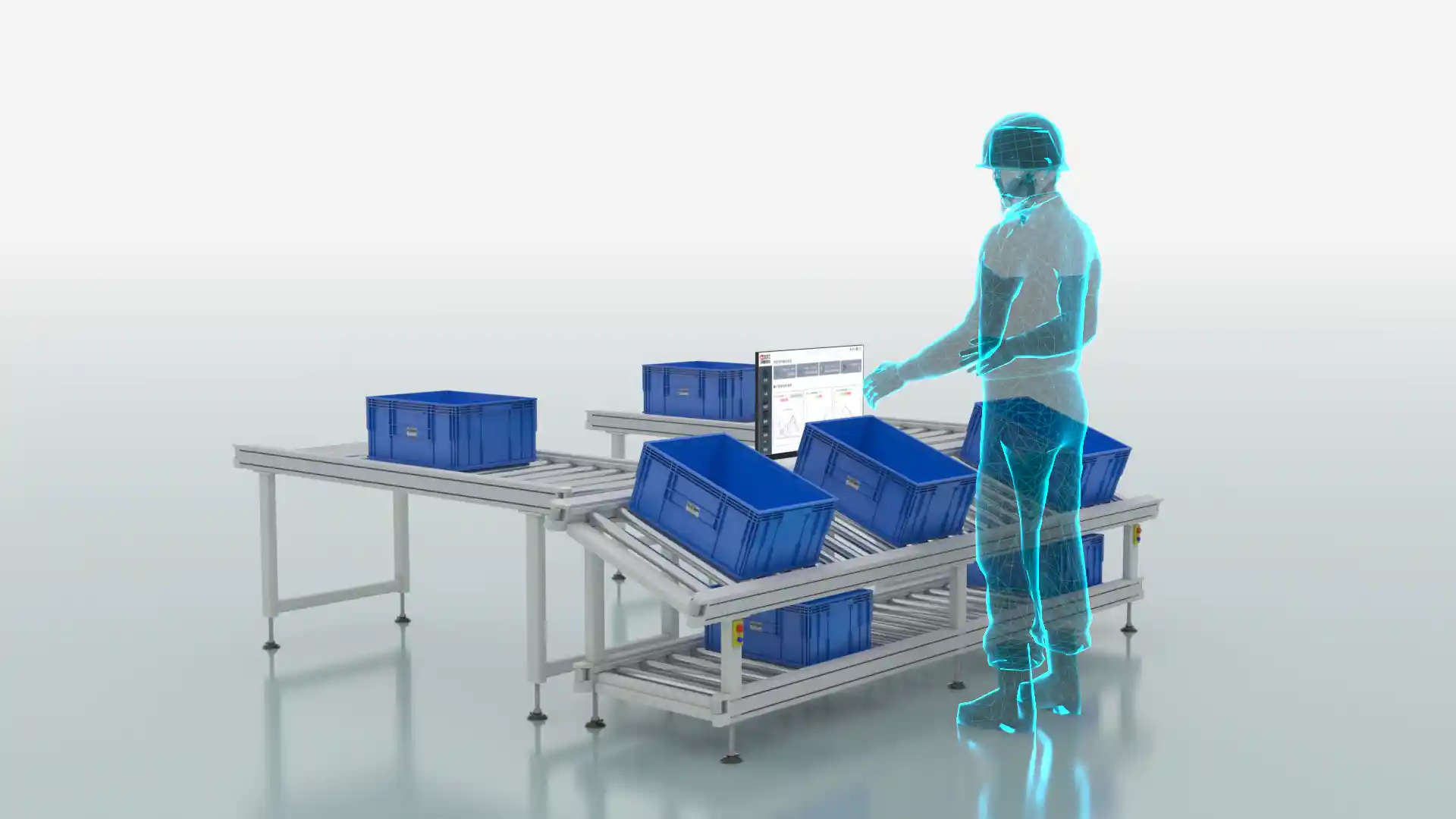
WMS Barcode vs. RFID: Choosing Your Warehouse Tracking System
ASRS Software Architecture: Integrating WCS, WMS, and ERP

Cleanroom VLM: Vertical Storage for Semiconductor & Electronics

Understanding Vertical Lift Modules in Cleanroom Environments

Vertical Lift Modules are automated enclosed storage systems that utilize the full vertical height of a facility. They consist of two columns of trays with an automatic extractor/inserter in the center, which delivers requested trays to an access opening. This design inherently offers a compact, enclosed storage solution critical for maintaining cleanroom integrity and optimizing space.

Unlike traditional shelving, VLMs minimize human interaction with stored items, significantly reducing the risk of particle generation and contamination. This sealed environment is essential for compliance with cleanroom standards such as ISO 14644, which specifies air cleanliness by particle concentration. Automated material handling within these units ensures that sensitive components remain protected from the moment they enter storage until they are retrieved for production. The principle of goods-to-person delivery means operators work from a single access point, further limiting exposure and maintaining environmental control.

TOWERMAT

How VLMs Recover Floor Space in High-Cost Cleanroom Facilities

In cleanroom facilities where every square meter carries significant construction and operating costs, vertical storage systems recover up to 85% of floor space compared to conventional shelving. This conversion of unused overhead volume into organized storage capacity directly contributes to improved throughput efficiency by reducing travel distances for personnel and accelerating material retrieval times.

We frequently observe that implementing such systems allows for a more logical layout of production lines, enhancing overall operational flow. In a recent project for a microelectronics manufacturer, we integrated a series of PG-VLM units directly into their Class 100 cleanroom. This enabled them to consolidate component storage from three separate areas into a single, compact footprint, reducing material retrieval times by an average of 40% and freeing up 150 square meters of floor space for additional processing equipment. This directly contributed to a 10% increase in daily production capacity.

The modular design of modern VLMs allows for flexible configuration and scalability, adapting to evolving storage needs without extensive cleanroom modifications. These systems integrate with existing inventory management systems, providing real-time data on stock levels and locations. Automated retrieval ensures that the right component is delivered to the right place at the right time, minimizing errors and improving the overall efficiency of cleanroom operations.

FeaturePG-VLM: Vertical Lift ModuleFX-VCM: Vertical Carousel Module
Storage CapacityUltra-long, ultra-wide, heavy materials (up to 1000kg/tray)Various types, standard items
Space UtilizationHigh-density vertical storageHigh-density vertical storage
Cleanroom SuitabilityExcellent (modular wall panel, sealed)Good (enclosed, specific material boxes)
Retrieval SpeedHigh-speed operation to access openingFaster efficiency, vertical rotation
Material TypesMolds, tools, raw materials, valuable finished productsMold inspection tools, archives, electrical components
Key AdvantageHandles heavy, bulky items with precisionVersatile for diverse, smaller items

How VLMs Protect Sensitive Electronics from ESD and Contamination

Protecting sensitive electronic components from electrostatic discharge, particle contamination, and ensuring full traceability throughout the manufacturing process is paramount. VLMs designed for cleanroom use incorporate specific features to safeguard these critical items.

Vertical storage systems ensure ESD protection through several integrated measures. They often feature conductive shelving or trays that dissipate static charges, preventing accumulation that could damage sensitive components. Grounding mechanisms are built into the structure, and specialized materials are used in construction to prevent triboelectric charging. This creates a controlled environment where components are shielded from static electricity throughout their storage cycle.

Particle contamination control is achieved through the enclosed design of VLMs, which acts as a barrier against airborne contaminants. Many cleanroom-compatible VLMs include HEPA or ULPA filters and positive pressure systems to maintain a clean internal environment. Dust-free storage is a core benefit, as the automated nature means less human movement and less particle generation within the storage area itself. This is particularly vital for wafer storage, where even minute particles can render a semiconductor wafer unusable.

Component traceability is enhanced through integrated software that tracks every item stored within the VLM. Each tray or compartment can be assigned a unique identifier, linked to a centralized inventory management system. This provides a complete audit trail detailing when an item was stored, by whom, and when it was retrieved. This level of granular tracking is essential for quality control, regulatory compliance, and rapid recall if a defect is identified.

VCM1

What ROI Can Manufacturers Expect from Cleanroom VLM Implementation

Implementing VLMs in semiconductor and electronics manufacturing yields significant return on investment through reduced operational costs, enhanced productivity, and improved quality control. The initial investment in automated storage is quickly offset by savings in floor space, reduced labor costs due to automation, and minimized product damage or loss. Enhanced control over inventory leads to optimized stock levels, reducing carrying costs and preventing costly production delays.

VLM technology is compatible with a wide range of cleanroom classes, typically from ISO Class 8 down to ISO Class 4, and in some specialized cases even lower. The specific cleanroom class compatibility depends on the VLM’s design, materials, filtration systems, and sealing mechanisms. Manufacturers offer models tailored with features like stainless steel construction, sealed motors, and integrated air filtration to meet the stringent requirements of stricter cleanroom classifications.

Industry 4.0 integration capabilities allow these systems to communicate with other automated equipment and enterprise software, creating a connected manufacturing ecosystem. This improves supply chain resilience by providing real-time visibility into material availability and movement. The scalability of VLM solutions means they can grow with production demands, offering a future-proof investment. We have observed that companies deploying VLMs often see a reduction in operational costs related to inventory management by as much as 25% within the first two years. This comes from factors such as reduced picking errors, faster inventory counts, and a decrease in damaged goods.

PICKUPSTATION1

Where Cleanroom Storage Technology Is Heading

The continuous evolution of automation and artificial intelligence integration will further enhance the capabilities and efficiency of cleanroom storage solutions. We anticipate more sophisticated predictive maintenance for VLMs, minimizing downtime in critical semiconductor fabrication plants and electronics assembly lines.

Software integration with Warehouse Management Systems and Manufacturing Execution Systems will become even more advanced, offering real-time analytics and self-optimizing storage strategies. This will allow for more intelligent placement of precision components, prioritizing frequently accessed items or those with specific environmental requirements. The development of more compact and energy-efficient VLM designs will also continue, addressing both space constraints and sustainability goals. Maintenance requirements for VLMs in cleanrooms will focus increasingly on non-shedding materials, specialized lubricants, and remote diagnostic capabilities to ensure minimal disruption to the controlled environment.

If your facility is evaluating cleanroom storage options, it is worth discussing specific ISO class requirements and integration parameters before committing to a system configuration.

Discover Advanced Cleanroom Storage Solutions

Anhui Qiande Intelligent Technology Co., Ltd. provides 15 years of expertise in industrial warehousing, offering customized VLM solutions designed for the unique demands of semiconductor and electronics manufacturing. To discuss specific requirements for your cleanroom storage needs, contact us at miaocp@qditc.com or +86 15262759399.

Frequently Asked Questions

What are the primary benefits of using VLMs in semiconductor cleanrooms?

VLMs significantly optimize space, reduce particle contamination risks, and enhance inventory management for sensitive components like wafers. They improve throughput efficiency by automating retrieval, minimizing manual handling, and supporting strict cleanroom standards. This leads to a more controlled and productive manufacturing environment.

How do VLMs integrate with existing cleanroom infrastructure and software?

Modern VLMs are designed for integration with existing Warehouse Management Systems and Manufacturing Execution Systems. This software integration ensures real-time component traceability and data exchange, which is necessary for Industry 4.0 environments without disrupting established cleanroom protocols. Data accuracy and accessibility are greatly improved.

What maintenance considerations are unique to cleanroom-compatible VLMs?

Maintenance for cleanroom VLMs focuses on minimizing particle generation and ensuring component longevity. This includes using specific lubricants, sealed motors, and non-shedding materials, alongside scheduled preventative maintenance to uphold cleanroom standards and operational reliability. Technicians often follow strict protocols to prevent contamination during service. To discuss maintenance scheduling or service agreements, contact us at miaocp@qditc.com or +86 15262759399.

If you’re interested, check out these related articles:

Vertical Sort Modules: Cutting Pick Errors in Retail Distribution
ASRS vs. Automated Guided Vehicles: Choosing Your Solution
ASRS for E-Commerce: Boosting High-Volume Order Picking Efficiency
What is a Warehouse Management System: A Factory Owner’s Guide
QDITC WMS+WCS Implementation: Timeline, Training, Go-Live

VLM vs Vertical Carousel: Choosing Your Parts Storage Solution

Modern industrial operations demand precise and efficient management of parts and inventory. Selecting the correct automated parts storage solution is a strategic decision that directly impacts operational efficiency and cost control. This choice often narrows down to Vertical Lift Modules (VLMs) or vertical carousels, each offering distinct advantages for optimizing warehouse space and improving material flow. Understanding their core functionalities and performance profiles is essential for making an informed investment.

How Vertical Lift Modules Actually Work

Vertical Lift Modules are enclosed automated storage systems consisting of two columns of trays with an extractor mechanism positioned in the center. This extractor automatically retrieves and delivers stored items to an operator at an ergonomic height, embodying the “goods-to-person” principle. The approach significantly reduces the time and physical effort associated with manual picking, though the degree of improvement depends heavily on your current baseline and the specific items being handled.

A VLM system integrates several key components for intelligent operation. The primary elements include the trays, which hold the inventory; the extractor, a robotic mechanism that moves vertically to retrieve and store trays; and sophisticated control software that manages inventory locations, optimizes tray sequencing, and interfaces with existing warehouse management systems (WMS). The PG-VLM, for example, is designed with a modular wall panel structure, allowing for high-speed operation and quick access to stored materials.

VLMs achieve superior storage density by dynamically adjusting the spacing between trays based on the height of the items stored on each tray. This intelligent height-sensing technology eliminates wasted vertical space, often saving up to 85% of floor space compared to traditional shelving. Dynamic optimization ensures that every cubic meter of the unit is utilized effectively, though actual savings vary based on your current storage configuration and ceiling heights.

VLM throughput varies depending on the model, configuration, and the nature of the picking tasks. These systems are engineered for high pick rates, especially for diverse items. The PG-VLM offers high-speed operation and a substantial storage capacity per tray, up to 1000kg, making it suitable for heavy and ultra-long materials. This capability supports rapid retrieval and put-away cycles, enhancing overall operational speed.

TOWERMAT

What Makes Vertical Carousels Different

Vertical carousels operate on a different principle, utilizing a series of rotating shelves or carriers that move vertically around a track, presenting stored items to an operator at a fixed access point. These systems are particularly effective for high-volume, repetitive picking tasks involving smaller, uniform items. Their continuous rotation brings the required parts directly to the operator, minimizing travel time.

Vertical carousels can be configured with various carrier types, including shelves, bins, or specialized compartments, to accommodate a range of small to medium-sized parts. While less flexible in dynamic height adjustment than VLMs, the modularity of their carriers allows for tailored storage solutions. The FX-VCM Vertical Carousel Module offers a wide range of specifications, enabling its use across diverse application scenarios, from small electrical components to archive documents.

Safety is paramount in automated systems. Vertical carousels incorporate standard safety features such as emergency stop buttons, light curtains that detect obstructions, and safety interlocks that prevent operation if access points are compromised. These measures ensure operator protection and prevent accidents during system operation, making the equipment more stable, reliable, and secure.

By delivering parts to the operator at a comfortable, waist-level height, vertical carousels significantly reduce the need for bending, stretching, or climbing. This ergonomic design improves worker well-being, reduces fatigue, and can lower the risk of workplace injuries. The FX-VCM’s simple yet excellent vertical rotation technology contributes to a more comfortable and efficient working environment.

VCM1

Where VLMs Outperform Vertical Carousels

While both VLMs and vertical carousels automate storage and retrieval, their underlying operational mechanics result in distinct performance profiles across key metrics such as throughput, storage capacity, and adaptability to varying inventory. Understanding these differences is crucial for optimal system selection.

VLMs typically offer higher storage density due to their dynamic tray spacing, which optimizes vertical space utilization more effectively than the fixed carrier heights of carousels. They also provide enhanced security, as the enclosed design and controlled access points protect valuable or sensitive inventory. VLMs offer greater flexibility for varying item sizes and weights, making them suitable for a broader range of applications.

VLMs generally achieve superior storage density within a smaller footprint because they can adjust internal tray spacing dynamically. This means a VLM can store more items in the same physical space by eliminating wasted air. Vertical carousels, while also space-efficient compared to static shelving, offer consistent but less flexible capacity; their carriers typically have fixed heights, which can lead to unused space if item sizes vary significantly.

VLMs often have fewer continuously moving parts than vertical carousels, which can lead to lower overall maintenance requirements. Both systems necessitate regular preventative maintenance, including inspections of mechanical and electrical components, to ensure optimal performance and longevity. Energy consumption varies by model and usage patterns, with modern systems from both categories designed for energy efficiency.

Here is a direct comparison of key attributes:

FeatureVertical Lift Module (VLM)Vertical Carousel
Storage DensityHigh, dynamic tray spacingMedium-High, fixed carrier heights
Item VersatilityHigh (variable sizes, weights up to 1000kg per tray)Medium (uniform, smaller to medium-sized items)
ThroughputHigh, optimized for diverse pickingHigh, optimized for repetitive, high-volume picking
SecurityHigh (enclosed, controlled access)Medium (enclosed, but continuous rotation)
FootprintCompact, maximizes vertical spaceCompact, utilizes vertical space
MaintenanceGenerally lower due to fewer continuous moving partsRegular due to continuous rotation mechanism

PICKUPSTATION1

How to Match System Type to Your Inventory Profile

Choosing between a VLM and a vertical carousel requires a comprehensive assessment of your specific operational needs, inventory characteristics, and long-term strategic goals. This decision is not merely about equipment; it is about integrating a solution that drives overall warehouse performance.

The return on investment for a VLM can be significant, often realized within 1-3 years. This rapid payback is driven by reduced labor costs, as the goods-to-person system minimizes manual travel and search times. We observed this directly with a client in the automotive parts distribution sector. Their manual picking process led to a 7% error rate and an average picking time of 45 seconds per line item. After implementing a PG-VLM system, their picking accuracy improved to 99.8%, and average picking time dropped to 15 seconds per line, resulting in a 30% reduction in operational labor costs within the first year. This tangible improvement underscores the financial benefits of intelligent automation.

The type of parts you store (size, weight, fragility), their retrieval frequency, and your existing warehouse layout are critical in determining the most suitable system. VLMs excel with a wide range of item sizes and weights, including heavy or irregularly shaped components, and are ideal for operations with diverse inventory. Vertical carousels are often preferred for high-volume, uniform small parts where rapid, repetitive access is key.

Considering future growth, potential changes in inventory profiles, and the need for integration with evolving warehouse management systems is vital for a long-term viable solution. A modular and scalable system, capable of adapting to new demands, provides greater flexibility. Our solutions are designed with open API interfaces to ensure seamless integration with various automation devices and existing software, preparing your operations for future digital upgrading.

What These Systems Actually Save You

Implementing automated storage extends beyond simple equipment installation; it represents a strategic move towards a more efficient, safer, and cost-effective warehousing environment. These advanced solutions are foundational to digital manufacturing transformation.

Automated storage systems can save up to 85% of floor space compared to traditional shelving. They achieve this by utilizing vertical height and compact design for optimal space utilization. Instead of spreading inventory across a wide area, these systems condense it vertically, freeing up valuable floor space for other operational activities or future expansion.

Integrated software provides real-time tracking of every item, significantly reducing errors and enabling precise inventory management through automated picking and put-away processes. This digital control minimizes human error, prevents stockouts, and ensures that inventory records are consistently accurate, which is crucial for lean manufacturing principles.

Automated systems significantly reduce labor costs by minimizing manual travel and search times for operators. They also enhance safety by bringing goods to the operator at an ergonomic height, thereby reducing the risk of injuries associated with bending, lifting, or reaching. This creates a safer, more productive work environment.

RACKBOT

Frequently Asked Questions

Are automated storage systems suitable for all types of parts?

No, suitability depends on part size, weight, and retrieval frequency. VLMs excel with diverse items, including heavy or oversized components, while vertical carousels are often ideal for smaller, high-volume parts. Selecting the right system optimizes storage density for specific applications and inventory characteristics.

How long does it take to implement a new VLM or vertical carousel system?

Implementation timelines vary significantly based on system complexity and warehouse integration requirements. A typical installation can range from a few weeks for a standalone unit to several months for a fully integrated solution, requiring careful planning for minimal operational disruption and seamless software integration with existing systems.

What are the ongoing maintenance requirements for these automated systems?

Both VLMs and vertical carousels require routine preventative maintenance, including inspections of moving parts, sensors, and electrical components. Regular servicing ensures optimal performance, extends equipment lifespan, and prevents costly downtime. If you are evaluating maintenance schedules for your facility, contact us at miaocp@qditc.com or +86 15262759399 to discuss specific requirements.

Smart Warehouse Digital Services: Predictive Maintenance & Data Analytics
ASRS Solutions for China Manufacturing: Factory Pricing & Integration Guide

VLM Parts Management: Transforming Industrial Parts Logistics

Understanding Vertical Lift Modules in Industrial Settings

Parts storage in most industrial facilities still runs on static shelving and manual retrieval. The result is predictable: operators walk kilometers per shift, picking errors compound, and floor space fills up faster than production demands justify. A Vertical Lift Module addresses these problems by storing items in trays inside an enclosed column and delivering the correct tray to an ergonomic access opening on demand.

The operating principle is straightforward. An internal extractor moves vertically between two columns of trays, locating the requested tray and presenting it to the operator. The system measures item height automatically and adjusts tray spacing to eliminate wasted vertical space. This dynamic allocation means a VLM storing mixed inventory achieves storage densities that fixed shelving cannot match, regardless of how carefully you plan shelf heights in advance.

What makes this relevant for industrial parts management is the combination of density and retrieval speed. A single VLM can replace 10 to 15 conventional shelving bays while cutting average pick time from minutes to seconds. The operator stays at one workstation instead of traveling between aisles, and the system logs every transaction for real-time inventory visibility. For facilities handling thousands of SKUs across maintenance, production, and spare parts inventory, this shift from passive storage to active material handling changes the economics of warehouse space.

VLM System Overview

Why VLM Delivers Measurable Gains Over Conventional Shelving

The performance gap between VLM and traditional storage shows up in three areas that directly affect operating costs: floor space consumption, labor productivity, and inventory accuracy.

Floor space recovery is the most visible benefit. A VLM exploits ceiling height that conventional shelving leaves unused. In facilities with 8 to 10 meter ceilings, a single unit can consolidate inventory that previously occupied 85% more floor area. For operations in high-rent industrial zones or those facing capacity constraints without room to expand, this vertical consolidation often justifies the investment before considering any labor savings.

Picking efficiency improves because the system eliminates travel time. In a manual warehouse, operators spend the majority of their shift walking between locations rather than picking. A VLM reverses this ratio. The machine retrieves the tray while the operator processes the previous pick, creating a continuous workflow that can sustain 200 to 300 picks per hour depending on item characteristics and order profiles.

Inventory accuracy reaches levels that manual systems struggle to maintain. Every tray movement is recorded, every pick is logged against a specific location, and cycle counting becomes a software function rather than a physical audit. Facilities that previously accepted 3 to 5% inventory variance as normal often see error rates drop below 1% after VLM implementation. This precision matters most for high-value components, safety-critical spares, and items with regulatory traceability requirements.

FeaturePG-VLM: Vertical Lift ModuleFX-VCM: Vertical Carousel Module
Primary UseUltra-long, ultra-wide, heavy itemsVarious types of materials, archives
Storage CapacityUp to 1000kg per trayHigh density in limited space
Operation SpeedHigh-speed operationSimple, excellent vertical rotation
DesignModular wall panel, compactMore reasonable, lower cost
Material HandlingAuxiliary picking platformRotating tables, different material boxes

Worker safety is a secondary benefit that compounds over time. Operators no longer climb ladders, reach overhead, or bend repeatedly to access low shelves. The ergonomic access opening presents items at waist height, reducing strain injuries and the associated workers’ compensation costs. In facilities running multiple shifts, this reduction in physical demand also affects fatigue-related errors late in the shift.

How VLM Accuracy Affects Production and Fulfillment

Picking errors in parts management create costs that extend well beyond the immediate mispick. A wrong component shipped to a customer triggers returns processing, replacement shipping, and potential damage to the supplier relationship. A wrong part delivered to an assembly line can halt production until the correct item arrives. In MRO operations, a mispicked spare part during an equipment failure extends downtime and multiplies the cost of the original breakdown.

VLM systems reduce these errors through a combination of controlled access and software-guided picking. The operator sees only the tray containing the requested item, and pick-to-light indicators can highlight the exact bin location within that tray. This guided workflow eliminates the visual search that causes most manual picking errors, particularly in facilities storing thousands of similar-looking components.

We implemented a VLM system for an automotive parts distributor that had been running at a 15% picking error rate with manual shelving. The errors were concentrated in their fastener and electrical connector inventory, where visual similarity between part numbers made manual selection unreliable. After six months of VLM operation, their error rate dropped below 1%, and order fulfillment speed increased by 40%. The reduction in returns processing alone covered a significant portion of the system cost within the first year.

Pick Station Configuration

Real-time inventory visibility also prevents a category of errors that occur before picking begins. When stock levels update instantly after every transaction, the system can flag backorders before they reach the picking queue, prevent allocation of reserved inventory, and trigger replenishment at accurate reorder points. This data integrity supports lean manufacturing principles by ensuring that production schedules reflect actual material availability rather than database records that lag behind physical reality.

Selecting and Implementing the Right VLM Configuration

The implementation process starts with inventory analysis rather than equipment selection. The relevant variables are item dimensions, weight distribution, retrieval frequency, and throughput requirements. A facility storing heavy tooling and dies has different requirements than one managing electronic components or medical device inventory. The PG-VLM handles tray loads up to 1000kg and accommodates oversized items that would not fit in standard configurations. The FX-VCM offers a cost-effective solution for general inventory with moderate weight requirements and high storage density needs.

Ceiling height and floor loading capacity constrain the physical installation. A VLM can extend to 14 meters or more in facilities with sufficient clearance, but the floor must support the concentrated load of a fully loaded unit. Older buildings may require structural assessment before installation. Access opening height and orientation affect operator workflow and can be configured for seated or standing operation, single or dual access points, and integration with conveyor systems or pick carts.

Software integration determines whether the VLM operates as a standalone system or as a component of broader warehouse automation. Most modern units support standard interfaces for warehouse management software and ERP systems, enabling real-time inventory synchronization, pick list downloads, and transaction logging. For facilities already running WMS platforms, the integration typically involves API configuration rather than custom development.

Vertical Carousel Module

Anhui Qiande Intelligent Technology Co., Ltd. brings 15 years of implementation experience to this selection process. The goal is matching system capabilities to operational requirements, whether that means a single unit for a tool crib, multiple linked machines for a distribution center, or integration with AGVs and robotic picking for high-volume applications. If your current storage configuration is creating bottlenecks or your facility is running out of floor space, a site assessment can identify whether VLM is the right solution for your specific inventory profile.

Where VLM Fits in Automated Warehouse Development

The current generation of VLM systems represents a mature technology with a clear value proposition for parts management. The next development phase involves deeper integration with other automated material handling equipment and more sophisticated software capabilities.

Integration with autonomous mobile robots and AGVs creates material flow systems where human operators handle exceptions rather than routine transactions. The VLM retrieves and stages items, a robot transports them to the point of use, and the operator intervenes only when the system encounters a condition it cannot resolve automatically. This architecture is already operating in high-volume distribution centers and is becoming practical for smaller facilities as robot costs decline.

Predictive analytics will allow VLM systems to anticipate demand patterns and optimize storage locations dynamically. Items with increasing retrieval frequency can migrate to faster-access positions, seasonal inventory can be consolidated or dispersed based on forecast demand, and the system can pre-stage orders before picking requests arrive. These capabilities require integration with demand planning systems and sufficient historical data to train the prediction models.

Automated Retrieval System

For MRO parts management specifically, VLM provides the inventory control that maintenance operations require but rarely achieve with manual systems. Critical spares can be secured with access controls, usage patterns can inform reorder decisions, and the system can track warranty status and shelf life for components with limited storage periods. As maintenance operations face pressure to reduce inventory carrying costs while maintaining equipment availability, this level of control becomes a competitive requirement rather than an operational luxury.

Optimize Your Industrial Parts Management

Inefficient parts retrieval, wasted warehouse space, and rising operational costs are solvable problems. Anhui Qiande Intelligent Technology Co., Ltd. helps businesses achieve optimized parts management and significant cost savings through 15 years of expertise in tailored VLM solutions. To discuss a customized VLM strategy for your specific storage and retrieval needs, contact us directly.

Email: miaocp@qditc.com
Phone: +86 15262759399

Frequently Asked Questions

What is the typical ROI for investing in a VLM system?

Most facilities see payback within 1 to 3 years, though the timeline depends heavily on local labor rates, real estate costs, and the inefficiency level of the existing storage system. The calculation includes direct labor savings from reduced picking time, floor space recovery that can be repurposed or avoided in lease costs, and inventory accuracy improvements that reduce carrying costs and stockouts. A facility paying premium rates for warehouse space in a major metropolitan area will see faster payback than one operating in a low-cost region with available expansion room.

How does VLM technology handle different sizes and weights of parts?

The system uses adjustable tray configurations and automatic height measurement to accommodate mixed inventory. When an item is stored, sensors measure its height and the software assigns a storage location that minimizes wasted vertical space. Tray weight capacities range from standard configurations handling 250 to 300kg up to heavy-duty units supporting 1000kg per tray. This flexibility allows a single VLM to store small electronic components alongside heavy tooling, with the system optimizing storage density automatically based on actual item dimensions.

Can a VLM system integrate with existing warehouse management software?

Modern VLM systems are designed for integration with WMS and ERP platforms through standard API interfaces. The typical integration enables real-time inventory synchronization, pick list downloads from the host system, and transaction logging that updates inventory records immediately after each pick or put-away. The specific integration effort depends on your existing software architecture, but most implementations use documented interfaces rather than custom development. Your WMS vendor or the VLM manufacturer can confirm compatibility before purchase.

What maintenance is required for Vertical Lift Modules?

Routine maintenance includes inspection of the extractor mechanism, lubrication of moving components, and periodic software updates. Most manufacturers recommend quarterly preventive maintenance visits, with the specific schedule depending on operating hours and environmental conditions. The mechanical systems are designed for industrial duty cycles and typically operate for years between major component replacements. Maintenance contracts are available and often make sense for facilities without in-house automation technicians, ensuring that minor issues are addressed before they cause unplanned downtime.

How does a Vertical Lift Module improve warehouse efficiency?

A VLM improves efficiency by eliminating the travel time that dominates manual picking operations. Instead of walking to a storage location, the operator requests an item and the system delivers it to a fixed workstation. This reversal of the traditional picking model allows a single operator to sustain throughput rates that would require multiple workers in a conventional warehouse. The vertical storage format also recovers floor space, and integrated inventory tracking eliminates the search time and counting errors that slow manual operations.

What are the key benefits of using VLM for parts management?

The primary benefits are space recovery, picking speed, and inventory accuracy. A VLM can consolidate inventory that previously required extensive floor space into a compact vertical footprint, freeing area for production or other uses. Retrieval times drop from minutes to seconds because the system delivers items to the operator rather than requiring travel to storage locations. Inventory accuracy improves because every transaction is logged automatically, eliminating the discrepancies that accumulate in manual systems. Secondary benefits include improved worker safety from ergonomic access heights and better security for valuable or controlled items.

Is a Vertical Lift Module suitable for all types of industrial parts?

VLMs handle the majority of industrial parts inventory effectively, from small fasteners and electronic components to heavy tools, dies, and molds. The limiting factors are tray dimensions and weight capacity. Standard configurations accommodate items up to approximately 4 meters in length and 300kg per tray, while heavy-duty units extend to 1000kg. Items that exceed these dimensions or have irregular shapes that prevent stable tray storage may require alternative solutions. A detailed inventory analysis during the selection process identifies any items that fall outside VLM capabilities and determines whether they represent a significant enough portion of your inventory to affect system selection.

QDITC ASRS Case Study: 3,000 sqm Factory Transformed in 90 Days
Intelligent Storage Systems: VLM, VSM, VCM, VBM, ASRS Comparison
ASRS in Automotive Manufacturing: Cut Picking Time by 50%